Evil Psychopaths, page 7
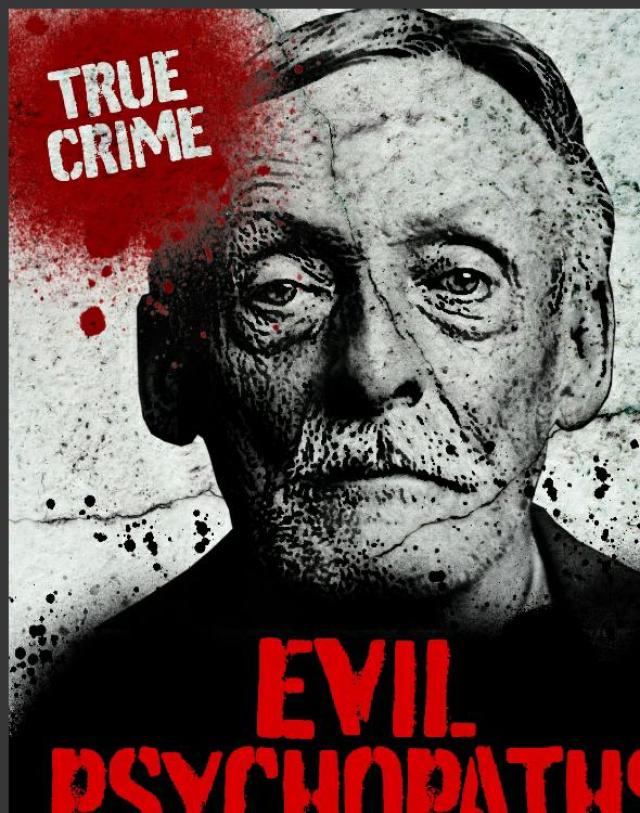


A good-looking young man with excellent prospects, Cream had been having a good time in London, going out with a number of well-bred and wealthy women from the better parts of town. But he also saw the seamier side of the city. It was hard to avoid, as women and children put themselves up for sale in places like Waterloo Bridge. He developed a loathing for them, believing them to be the embodiment of evil.
Meanwhile, back in Canada his wife, Flora, died. The death certificate listed cause of death as ‘consumption’, but it seems likely that Cream may have killed her from several thousands of miles away. Her doctor ascertained that she had been taking medicine that Cream had been sending her. When, on his orders, she stopped taking it, the symptoms from which she had been suffering seemed to dissipate.
In 1878, Cream suddenly returned to Canada, setting up his surgery where he practiced as a physician and surgeon. A year after his arrival, he found himself in trouble when a woman patient, Kate Gardener, was found dead, stinking of chloroform in a woodshed behind the building in which he practiced. She was found to have been pregnant when she died and it seemed obvious that she had gone to Cream seeking an abortion. He confirmed this but claimed that he had refused to help her. He said she had killed herself with chloroform she had bought over the counter from a pharmacist. The examining board thought otherwise as there was no empty bottle beside her body and her face was badly scratched, as if the drug had been administered forcibly. They ruled that her death was murder, but, amazingly, Cream was not indicted. Nonetheless, his career in Canada was over.
In August 1879, he moved to Chicago where he set up shop after passing the Illinois Board of Health Exam. His surgery was located conveniently close to Chicago’s red light district, making him handily placed to work as an abortionist outside office hours. He took on an intermediary, a ‘midwife’, who took a cut of his earnings for putting women in touch with him. He was a bit more proficient than the quacks who operated in these areas but his distaste for women grew, as his need to have sex with them also did. One associate told later of the pornographic photographs he carried around with him and another described his habit of taking drugs – pills made of strychnine, morphia and cocaine. He claimed that they worked as an aphrodisiac.
In early 1880, one of his patients, a prostitute named Mary Anne Faulkner, died and it took a good lawyer to get him off with claims that he had been summoned only after the woman had got into difficulty following an abortion that had gone wrong. Another woman, Ellen Stack, had died after consuming some pills he had given her, anti-pregnancy pills, he had called them. They had contained strychnine. Once again he escaped justice when the authorities could not positively prove that he had given them to her.
It would, ironically, be the murder of a man that would be his undoing. Daniel Stott had sent his wife, Julia, to Cream’s surgery to pick up medicine. She had begun an affair with Cream and when Stott became suspicious, Cream had added strychnine to the medicine. It helped that Stott was a wealthy man and Mrs Stott would inherit his money when he died which he duly did in June 1881. Cream seemed to have literally got away with murder, but for some reason created unnecessary interest in the case when he wrote to the coroner accusing the pharmacist of adding too much strychnine to the medicine. Perhaps he was concerned about his reputation, losing a patient in this way, but Stott was exhumed and, sure enough, they found large amounts of strychnine in his body. Cream was immediately suspected and, fearing arrest, he fled to Canada. Unfortunately, Mrs Stott decided to save her own neck by becoming a witness for the prosecution. Cream was arrested in Ontario and sent back to Chicago where he was tried, found guilty and sent to Joliet prison.
He remained locked up for ten years, but his brother succeeded in getting him paroled by judiciously bribing prison and state officials. He was freed in July 1891.
He returned to Canada to stay with his brother and collect an inheritance left to him by his late father. By now, the years of harsh 19th century prison life had taken their toll on Thomas Cream – his face looked older than his years and his hair was thinning. His drug use had also taken its toll and his eyes, watery and yellow, were a manifestation of this. But, once again, he resolved to start again and boarded a ship for Liverpool where he arrived on 1 October.
He travelled to London and was soon established in a first-floor apartment at 103 Lambeth Palace Road in south London, close to St Thomas’s Hospital. It was a rough area, teeming with poor children and their mothers clad in dirty dresses and shawls. Death and disease were everywhere and no one worked.
Soon, Cream, now calling himself ‘Dr Thomas Neil’, and claiming to work at St Thomas’s, had resumed his interest in poison. Ellen ‘Nelly’ Donworth was the daughter of a labourer and had become a prostitute to escape the hard work involved in being a bottle-capper in Vauxhall. She lived in Commercial Street with Ernest Linnell, a private in the army. On 13 October, she went out early in the evening telling a friend that she was going to see a man she had met. Later, she was seen by another acquaintance with a well-dressed man emerging from a pub and then much later she had to be helped home by yet another friend after being seen in an incapable condition in Morpeth Place. The friend, James Styles, put her to bed in her boarding house but by this time she was suffering from agonising pain that seemed to make her body convulse. She claimed, between gasps of pain, that her gentleman friend had given her a couple of drinks from a bottle containing a white liquid. Styles called a doctor who had her taken to St Thomas’s but she was dead before she arrived.
The post mortem discovered large doses of strychnine in her stomach.
It was not surprising as poisonous chemicals were relatively easy to obtain in those days. Cream had got it from a chemist on Parliament Street and all he had to do was sign a register. He had lied, saying that he was a doctor attending a series of lectures at St Thomas’s. He had bought the strychnine in the first week of October, in the form of nux vomica that contained two alkoloids, brocine and strychnine. He must have mixed the poison into the liquid he fed to Nelly Donworth.
Around 10 October, he ordered gelatin capsules that he intended to use on his next victim.
Matilda Clover lived at 27 Lambeth Road with her two-year-old son. An alcoholic, she had been abandoned by the boy’s father and had been forced to earn her living on the streets ever since. On 20 October, she left the house to meet a man she called ‘Fred’ outside the Canterbury Theatre. She returned to her room at around nine that evening in the company of the man who later left. Some hours later, the other occupants of the house heard screams coming from her room. They found her in agony, thrashing about on her bed and unable to breathe. She gasped that ‘Fred’ had given her some pills and she was sure that they had contained poison. A few hours later, she was dead.
Strangely, her death was not found to be murder, her claims about Fred’s pills being ignored. Her doctor stated instead that her death was a result of mixing alcohol with a sedative he had prescribed for her. No one linked Matilda Clover’s death with that of Nelly Donworth just a week earlier. The truth was that they were prostitutes and nobody really cared one way or another how they had died.
In November, Dr Cream was summoned back to Canada so that his father’s property could be divided up amongst his family. He was sorry to go as he had by now formed a relationship with a Hertfordshire woman, Laura Sabbatini. He escorted Ms Sabbatini with a view to making her his wife on his return. It was an odd facet of his character that while he was intent on killing prostitutes, he was still keen to have a respectable pretty wife. He set her up in a dress-making business and sailed to Canada in the first week of January 1892, returning four months later and taking up residence once more at 103 Lambeth Palace Road. He immediately contacted Laura and asked her to marry him. They became engaged.
Meanwhile, he was stalking the dark and dingy streets of London’s less salubrious districts. One night he introduced himself to Lou Harvey, a prostitute who was walking her beat in Piccadilly. He told he was a doctor from America, currently working at St Thomas’s.
Lou Harvey was a careful and intelligent woman. Her real name was Louise Harris, for instance, and she gave also gave Cream a false address. She was suspicious of his claim to be a doctor from America and decided to be cautious. Nonetheless, she spent the night with him at a hotel in Covent Garden.
They agreed to meet that night at Charing Cross underground station from where they would go for a drink and a visit to the theatre. They met and went for a drink at the Northumberland public house. As they walked back down to the Embankment beside the river, he told her she looked pale and handed her two capsules, telling her to take them. Louise only pretended to put them in her mouth, however, and when he looked away from her for a moment, she tossed them over the wall into the river. Cream told her he was expected at the hospital and that he would see her later at the theatre. Needless, to say, he did not turn up at the theatre and he would have been surprised to see her there. She was supposed to be dead by then.
He now decided to kill two women in one night, an opportunity that arose when he introduced himself to a couple of prostitutes strolling together. Alice Marsh and Emma Shrivell lived in adjoining rooms at 118 Stamford Street, a dreary thoroughfare close to Waterloo Station. Cream accompanied them to one of their rooms, had his fun with them and left. Several hours later, the two girls were dying in agony.
The newspapers were now in a frenzy, headlines screaming about the ‘Lambeth Poisoner’. The police, meanwhile, were nowhere.
Once again, Cream behaved very strangely. He tried to blackmail well-respected men, accusing them of killing the prostitutes. Two famous surgeons received letters and a Member of Parliament and a peer of the realm were also the recipients of blackmail letters. Police immediately recognised that the handwriting on the letters was similar although they were purportedly written by the same man.
His next big mistake was to describe the murders in some detail to a former New York detective that he had become friendly with. He claimed to be only surmising what had happened, but seemed to know more about the killings than had been announced in the media. He also mentioned the names of two women – Matilda Clover and Lou Harvey – one of whom the police did not know had been murdered and the other who was still alive.
The detective became suspicious and mentioned his strange encounter to his friend, Inspector Patrick McIntyre of Scotland Yard. He and McIntyre began to speculate that this Dr Neil was the Lambeth Poisoner. It seemed almost certainly to be the case when they realised that one of the men whom Cream had blackmailed under another name, lived at the same address as him in Lambeth Palace Road.
They began to investigate the background of Dr Thomas Neil. A detective was dispatched to Canada where he uncovered Cream’s dubious past. His movements were closely watched and they saw him use prostitutes. Fortunately, these women survived their encounters with him. Two prostitutes that he had met came forward to say that they had seen him in the company of Matilda Clover. Her body was exhumed and they were unsurprised to find that there were traces of strychnine.
Cream was arrested on 3 June.
The inquest into the death of Matilda Clover seemed to be going well for him at first. There seemed to be nothing more than hearsay evidence to support the charges of murder and he appeared to be relatively untroubled by the ordeal. Then, one day, a new witness was called. He looked up in amazement to see Lou Harvey, the woman he thought he had killed weeks ago, enter the court. When they asked if the man who had given her pills was present in court she had no hesitation in turning and pointing at Thomas Cream. He was charged with murder and taken to Newgate Prison.
At his trial, there was little doubt about the verdict and the jury took a mere nine minutes to find him guilty. The judge placed the black hat on his head and sentenced him to death.
Dr Thomas Neil Cream, the ‘Lambeth Poisoner’ was hanged on 16 November 1892. He left one tantalising mystery, however. In the moment before the trapdoor opened, he began to speak. ‘I am Jack…’ was all that he was able to utter before he plunged to his death. Was he Jack the Ripper? He had been in prison in the United States when the Ripper had been plying his trade. Or had he? Some suggest he bribed his way out of Joliet earlier than the stated date, or that a double had taken his place. It seems unlikely, but then so was the existence of a man such as Dr Thomas Neil Cream.
H. H. Holmes
He called it his ‘Castle’.
It was built on three stories and boasted one hundred rooms. With soundproof sleeping chambers, complete with peepholes, asbestos-padded walls, gas pipes, walls that slid across, making a room bigger or smaller as necessary, and trapdoors with ladders leading down to the rooms below. It was a maze of secret passages and false doors and a number of the rooms were filled with gruesome torture equipment. Chillingly, there was also a specially equipped surgery. He is thought to have placed victims in special rooms into which he pumped lethal gas, watching their death throes through peepholes. On occasion, he might even set fire to the gas to add a little more excitement. When he tired of that, there was always the ‘elasticity determinator’, an elongated bed to which a victim was tightly strapped and then stretched. He liked to experiment. Chutes, the sides greased for easier dispatch, led down to a two-level basement with a large furnace burning fiercely. Once he had finished with a corpse, he would slide it down a chute to the basement where he would use vats of acid and other chemicals to get rid of any evidence that it had ever existed. Or, he might remove all the flesh and sell the skeleton to a local medical school.
H. H. Holmes, real name Hermann Webster Mudgett, arrived in Chicago in the 1880s. The city was brimming with excitement as well as visitors, as the World’s Fair or Great Exposition was about to take place. Some estimates put the number of visitors to the city at a staggering twenty-seven million for the six months in which the Exposition ran, putting a strain on the forces of law and order, but also offering opportunities for crime and for psychopaths such as Mudgett, now going under the name Holmes. Holmes relished the thought of the countless vulnerable, single women fresh to the big city who would be prey to the charms of a successful ‘doctor’ with very good prospects such as himself. When he met anyone, he described himself as a well-off graduate of a prestigious medical school.
He found work as a prescription clerk in a pharmacy at 63rd and South Wallace Streets when he first came to town. The female owner of the premises where he worked left town suddenly, or ‘went to California’, as Holmes said at the time. She and her daughter were never heard of again and it is almost certain that he killed them. He took ownership of the business and bought an empty property across the road, on 63rd Street.
He began to raise money through murder and fraud in order to build his ‘Castle’ and then let rooms to young women who had come to Chicago to enjoy the fair. Of course, they quickly disappeared – he had tortured and murdered them and sold many of their skeletons to medical schools. The women he employed fared no better and probably proved even more lucrative for him. They were forced to take out life insurance policies as a condition of their employment and he claimed on these as he dispatched the women. He also carried out hundreds of illegal abortions in the Castle’s dark rooms and many of the patients did not survive the procedure.
Holmes’s finances were in a mess at the end of the World’s Fair and, with creditors moving in, he abandoned Chicago and moved to Fort Worth, Texas. He had killed a couple of railroad heiress sisters, but before killing them, had arranged their affairs so that he would inherit property they owned in Texas. He intended to construct another death factory, along the lines of the Castle in Chicago, but the authorities in Texas were not as easy to fool as those in Chicago and he abandoned the project.
He set off on his travels around the United States and Canada and is thought, in all likelihood, to have continued in his murderous ways, although no bodies were found to corroborate this.
It was his killing of a business partner, Benjamin Pitezel and his children that was his downfall. Pitezel and Holmes had concocted a scheme whereby Pitezel would fake his death so that his wife could collect on a $10,000 insurance policy. This would be split with Holmes whose role in the scheme was to provide a body to stand in for Pitezel. But Holmes, who never really liked Pitezel, actually did kill him and used the real corpse to collect the insurance money. He told Mrs Pitezel that her husband was hiding out in South America and persuaded her to allow him to have custody of three of her five children. The three children were killed in various locations as he traveled across America.
But, his luck was finally running out. Pinkerton’s detective agency had been on his heels for a while and they finally arrested him in Boston in November 1894. They had long had suspicions about his activities, but it was only when they gained entry to the Castle that these suspicions were confirmed. They found a number of intact skeletons and countless fragments of human bones, including the pelvis of a fourteen-year-old.
When investigators finally examined the Castle, after Holmes’s arrest, the media had a field day. ‘The Castle is a Tomb!’ screamed the headline in the Chicago Tribune. The Philadelphia Inquirer called it a ‘charnel house’. True crime writers made it a staple of the genre. In Philadelphia, a Holmes Museum opened. As for the narcissistic Holmes, he wrote a memoir, Holmes' Own Story, in which the Alleged Multimurderer and Arch Conspirator Tells of the Twenty-two Tragic Deaths and Disappearances in which he is Said to be Implicated. ‘My sole object in this publication is to vindicate my name from the horrible aspersions cast upon it,’ he wrote, ‘and to appeal to a fair-minded American public for a suspension of judgment.’ He attempted in the book to make himself seem completely normal and, typical of the narcissistic tendency of the psychopath, saw the book as being of literary merit.