H. M. S. Cockerel, page 41
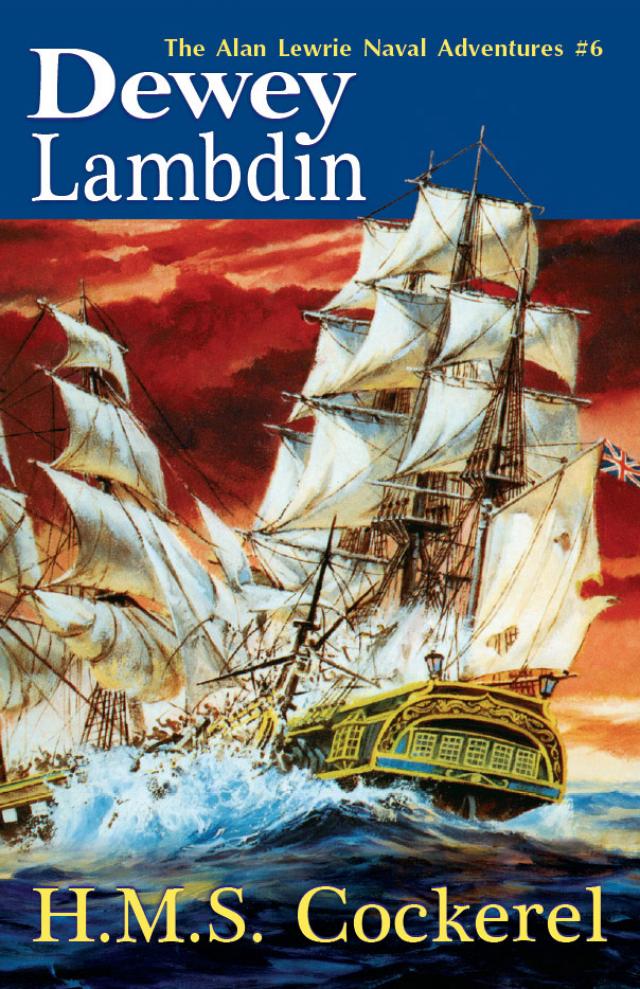


The frigate! The most dangerous warship present had finally put about, taken in her stuns’ls and stays’ls, and was close on the wind on the larboard tack. But she was at least four miles down alee, and four more miles farther to the nor’west. To beat back to Radical where she was at the moment would be the better part of an hour, since she would have to tack first. And Lewrie was mortal certain he’d not be anywhere near his current position when she arrived.
The second corvette had fallen off, had hauled her wind, a little below the ruin of the first, as if she were about to go alongside to aid her. She was less than a mile off, still on Radical ’s starboard quarter.
No, not to aid, Lewrie saw—to shoot! Her gun ports were open, already blossoming with orange-y flashes and gushes of smoke! Feathers of spray leaped into the air astern, glass and transom wood shattered as round-shot lashed her stern. A portion of the taffrail went flying, and one of the lanterns burst asunder.
“Cease fire, cease fire!” he directed. “Mister Porter, lay us on the wind! Man the braces and sheets, ready to haul taut! Quartermaster, helm alee. Lay her full-and-by.”
“Full-an’-by, sir, aye,” the senior man grunted, already heaving on the spokes.
He’d whittled the odds down, thoroughly disabled one corvette— and most importantly, placed himself so advantageously that the frigate might have to spend the rest of the morning to catch him up. And close-hauled, Radical would all the time be driving roughly sou-sou’west, to the Balearics, into shelter, into the patrol areas, perhaps, of Spanish warships which might aid him.
No, he thought; let’s not be greedy ourselves. Get back up to wind-ward, draw this last one after us, if he wishes. I think we might run him a decent chase. He follows us, the transports get clean away, too. If he follows.
With a shrug, he realised that the corvette and frigate might be more amenable to going to the aid of their crippled consort, or bagging the transports, after all, and letting Radical escape, too tough a bone to gnaw. Realising, too, that he’d shot his bolt, in essence. Fought and won, without getting his precious civilian charges slaughtered by artillery and sword-swinging boarders. Well, not too many, he amended.
Yet, what if they went after the transports, at least? Aye, I’ve saved most of my own, but those others are just as full of émigrés , just as packed with women and children. Can I turn a blind eye? Perhaps I must. Every man for himself now, and save what you can?
The corvette astern turned back onto the wind, barely a minute after Radical had altered course. This put her, from Lewrie’s view by the wheel, just atop the starboard corner of the taffrail, bows-on to him, heeled hard over as she laboured for every last inch of windward progress. She got a gust, he saw, a puff of wind that he did not, and she pinched up higher as that gust backed, clawing out ten yards or so.
“Mister Porter, I think we’re ready to send the topmen to loose the fore and main t’gallants,” Lewrie ordered, then checked himself . . . aghast. “And let fall the main course! Let fall and sheet home!” He flushed with anger that he’d been so remiss, so muzzy without sleep!
As more canvas appeared aloft, Radical heeled further over and began to surge, hobbyhorsing over the waves, casting first her bows, then her stern toward the sky. Spray began to dash alongside, droplets wetting the starboard gangway.
“Mister Lewrie, sir,” Cony called, appearing from below. “Got a leak, sir. Starb’rd side, forrud. Betwixt th’ cathead an’ fore chains. Think we got hulled by one o’ their shot.”
“Bad?” he muttered.
“On this tack, aye, sir,” Cony winced. “Suckin’ water like a drain. Got a couple o’ chair-makers down there, nailin’ on a patch t’ slow h’it down, but we need to fother a patch from over-side. There’s nigh on five inch o’ water in th’ bilges now, an’ it’s climbin’. An’ the seams’re workin’, o’ course, but that’s nothin’ new, sir. But, I ’spects, long’z we beat t’ windward, sir, they’ll work ’arder. Need t’ pump soon, sir.”
A hole in her quick-work, starboard side, heeled over starboard, too—that would practically shovel water into her. And she’d flood forrud, when what she needed most of all, close-hauled, was for the bows to ride high and light over the water, reducing the effort which went into beating. Should her bow end get too heavy, she’d slough in and snuffle, all the fineness of her entry and forefoot cancelled out.
“Tell Mister de Crillart to secure his guns for now,” Lewrie decided after a moment’s thought. “Work the forrud chain pumps. Maybe some will trickle past, aft. And tell Mister de Crillart to send men to the quarterdeck. We’ll shift two of the eight-pounders right-aft to the taffrail, for stern-chasers. Maybe raise her bows a couple of inches, and take some pressure off the shot hole. Fother from inboard, spare sail and bosun’s stores, once your . . . chair-makers finish their plugs.”
“Aye, sir.”
There was a rustling in the air, an atonal whistling that rose up the scales. Then round-shot cracked overhead, to sail past and hit far up to windward on the larboard side. The French corvette had her bow-chasers working. Radical heeled a little farther and slowed.
“Watch yer luff!” Lewrie said, rounding on the helmsmen.
“Wind veered ahead, sir. ’Adda bear off,” the senior hand replied, working on a massive tobacco quid, gazing aloft, as he regained the spokes he’d lost, sailing most intently by his luff, and the Devil with the compass at that moment. Course did not matter; but the very razor’s edge of the apparent wind, where lay safety in both speed and windward advantage, did.
Another shot from the corvette astern, this time pocking a hole in the main tops’l, as gunners loosed one of the quarterdeck eight-pounders from the breeching-rope ring-bolts, and laid on block and tackle to a fresh set, farther aft. Tethered like a trussed hog, the cannon must be restrained, moved gingerly from one lashing to the next, before being sited at one of the pair of stern-chase gun ports in the taffrail.
The French corvette reached the point in Radical ’s wake where the wind had veered ahead. She wavered, fell off perhaps a point, no more. And sailed through it, pinching up once more as the wind steadied. Pinched up higher, luffing up a touch, trading forward progress for another ten yards uphill to weather. She was head-reaching them.
And she was faster, Lewrie realised by the time the first gun was ready at the taffrail, and the second began to be moved. Larger, she loomed back there, framed now from the wheel squarely in the center of the taffrail. She’d gained about one hundred yards in a little less than five minutes.
Three-quarters of a mile . . . Lewrie’s mind creaked over his sums. Two thousand yards to the sea mile, five minutes to make an hundred so . . . she’ll have her jib boom over the rail in a little over an hour?
A horrible harpy-like ululation came up from astern. There was a crash forward, aloft. The main t’gallant yard shattered, lee side draping like a broken wing. Multiple bar-shot.
“Maybe less than an hour,” he sighed softly, sensing defeat at last. “Goddamn fool! Could have stayed to windward, run, never took time to fight! Gave up a mile advantage to windward . . . for nothing!”
“Le canon, il est préparée, capitaine,” a French gunner called out, patting the breech of his eight-pounder. “Nous tirerons?”
“ Oui. Tirez. Blaze away,” Lewrie nodded, too spent to care.
The gunner directed his small crew to charge, to shot, to runout. He knelt, hopped, fiddled with the quoin, had it spiked to the right a touch, then waved the men away. He primed, waited . . . then lit it off. With a sharp bang the eight-pounder reeled inwards. A waterspout leaped up to the right of the corvette’s bows, close under her jib boom and bowsprit.
Lewrie watched, groggily detached and above it all. There was a chance, he was sure, that their stern-chasers might damage the French vessel enough to slow her, to rob her of just enough speed to reel out this pursuit ’til nightfall. Late afternoon should fetch Minorca under Radical ’s bows. Did God grant them just a morsel of luck . . . !
The corvette fired in reply; both her bow-chasers barked together this time, so near was she to being dead astern, framed on the very last vestige of his ship’s foaming, spreading wake. One ball flew high, low above the starboard gangway, to smash into the forecastle bulkhead up forward. The second slammed into her transom again, low down, below the wardroom windows. There were muffled screams below. If the surgeons had been using the midshipmen’s berth, the cockpit, as their surgery . . . ! On the orlop! Those were women’s screams!
Just as easily, the corvette could pick her apart, too. Shoot Radical ’s rigging to lace and slow her down, rendering her helpless. Then surge alongside, cannon blazing point-blank, boarders ready . . . Strike the colours, he mused? Surrender to the inevitable?
Then those French boarders, those revolutionary, Republican men with steel in their hands and blood lust in their eyes, would murder everyone aboard, soon as they found out what his passengers were, and cheat the guillotines. British sailors could expect no better treatment, either. They’d butcher and slaughter as merciless as pirates, those victory-drunk, vengeful French Republican sailors, niceties of nationality be-damned.
For a stark moment of bleakness, Lewrie looked upon his death as a given, an inevitability soon to be realised. Outrunning them wasn’t in the cards. One more well-aimed shot could end it all, and render his ship as crippled as that first unfortunate corvette.
God, a little help here, I’m runnin’ out of options, he prayed. Haven’t a bloody clue what to do next. Shot my last bolt? So weary
I can’t think! Got a storm in Your pockets? A slant of wind?
Another round-shot sighed in, singing a piccolo tune. Smashed into the transom again, blowing a cloud of splinters aloft from starboard as it demolished the wardroom quarter-gallery.
He surprised himself when he snickered aloud at that.
Thankee, God! Already scared so shitless . . . and here they just blew out the “jakes”! Strike? Stand on, clueless . . . or fight?
“Mister Spendlove? Oh, there you are,” Lewrie said of a sudden, turning away from his fell musings. “Right, then. Summon all the officers, foot, horse and Marine. We’ve some scheming to do.”
C H A P T E R 8
We are too slow,” Lewrie announced, amidships of the quarter-deck nettings, looking down into the waist at his assembled “crewmen.” And Lieutenant de Crillart translated for him, phrase for grim phrase. “We cannot outrun her. We cannot strike our colours, either, and surrender. You know what that would mean . . . for yourselves . . . and your families.”
As that was turned into French, he peered into their bleak-set faces, lips compressed and mouths pale. Women and children had come up from the horrors of the echoing, drumming orlop, drawn by the cheering, and the lack of dangerous noises which had followed, the absence of broadsides being fired, gun-trucks thundering and squealing. A bang or two now and then from far aft, the keen of round-shot from the Frog corvette was nothing in comparison. They, too, stood with faces grim. Some whimpered, cooed to vex-some, querulous children, dandled babes in arms who sensed what was to come, without waiting for a translation.
They stood with their men where they could, those who still had men, listening as Lewrie stood four-square above them, delivering what even he thought was a “whistling past the graveyard” peroration.
Roman Legions got perorated before every battle, to boost their fighting spirit, Alan recalled from translating so many of them in his school-day Latin classes—wondering if his was on a par with the ones delivered just before Lake Trasimeno, or Crassus’s before his army was wiped out at Cannae.
“The Royal Navy frigate put about to summon help,” he lied with a straight face, unable to tell them they were beyond aid. “The French frigate downwind yonder is too far away to matter. This last enemy vessel pursuing us is our greatest danger.”
While Charles turned that into French, he looked alee, raising his eyebrows in perhaps the only delight he could discover. The enemy frigate was too far downwind, dithering. She’d come hard on the wind on the larboard tack for a time, clawing her way south, but had gone about to starboard tack, to take a look at her injured consort before hardening up once more. She’d abandoned her pursuit of the two-decker on the horizon and the horse transport, and was now approaching those two transports Lewrie had earlier used as shields, content with taking something, at least, after a frustrating morning’s work. That put her five miles alee, instead of four, and a full hour away, even should the transports strike to her at once.
“Ahum,” Charles prompted with a fisted cough, drawing Lewrie in-board once more.
“They have well-drilled gun crews . . . we do not,” Alan continued, pointing astern. As if in punctuation, two round-shot droned overhead, making everyone duck and cringe. “We cannot stand . . . beam to beam . . . and trade shot with them. But!” he cried, leaning one hand on the net and light wood railing, above the tangle of fallen mizzen topmasts, and pointing at them with the other. “You have defeated one ship. And you will defeat this one! We will close with her . . . they will not expect us to do that. We will lash to her . . . and we will board her! We have men of the 18th Regiment of Foot, the fearsome Royal Irish, among us. Among us we have brave infantry, Royalist infantry . . . gallant cavalrymen. And we have hard-handed men of the French Royal Navy . . . and best of all . . . my British tars . . . shoulder to shoulder . . . with their cutlasses . . . they may cut and slash their way to the Gates of Hell, may the Devil himself take arms against them!”
Right, I don’t believe it, either, Alan groaned to himself, seeing what little encouragement the French civilians felt to his blood-thirsty promises, his mounting harangue. They looked like bored voters.
“And when we board her,” Lewrie concluded, “you courageous gentlemen of la belle France. . . you must strike them down! Sans merci! It is your blood or theirs. We must conquer them . . . or they will conquer you. When the time comes, fearless gentlemen of France . . .”
Bloody toady’s what you are, me lad, he thought, in spite of all.
“Strike for your beloved, murdered monarchs! Strike for your nation! Strike for your honour! And strike,” Lewrie softened from a hoarse shout to a voice they had to strain to hear, “for the lives of your wives . . . your children . . . your dear ones . . . strike to protect the helpless babes. Put your own lives at risk . . . and fight like true men. ’Stead of kneeling like whipped animals at the foot of the guillotine.”
He paused, seeing some steel appear in their eyes, some heads up more erect. And some trembling like treed cats, with tears upon their cheeks, faces twisted with impending grief and fear into death grimaces.
“We dare all!” he called, loud once more. “We will fight! As men! If we die as men . . . we die on our feet, not on our knees! They . . . those Revolutionaries astern of us, have only their hatred to die for. Where are their families, where are their convictions? Be ready!”
The two stern-chasers went off with a close double bang, to end his peroration. And a thin cheer from the gunners aft, who’d finally hit something, said more than anything he could further compose.
He looked to Madame Hortense de Crillart beside her son Louis, trying to be as brave as a Spartan matron who’d send her children off to battle, urging them to come home “with your shield . . . or on it”—dead before dishonoured. Sophie de Maubeuge stood trembling with her, eyes wide in fear, eyes only for Charles. Phoebe Aretino, not too far away from them, among the lower-class dependents . . . and the few suddenly widowed or orphaned, therefore shunned, as if it was catching. “The ladies must go below once more, out of harm’s way. See to your children and each other. Be as courageous as your menfolk will be.”
Lewrie turned away, to stride to the wheel and look aft at his foe. She was up within a half a mile of them by then, edging even more upwind of Radical. He could see down her starboard side.
“Magnifique, mon ami,” Lieutenant de Crillart said, coming to join him. “Ve Français . . . très dramatique, hein? I add to you’ speech, pardon. . . on’y un peu. Now, vot ve do to defeat zem?”
“Frankly, Charles, I haven’t a bloody clue,” Lewrie confessed.
“Ah.”
The corvette would have to swing off the wind and lose all the progress she’d made upon them, if she wished to employ her main artillery. To swing up harder to the wind would put her in-irons, so it was not the starboard battery, which he could see, that would be the threat. She could fall off, haul her wind, slew about briefly, and touch off a broadside from her larboard battery before coming back to full-and-by. But that would sacrifice her slight, and hard-won, windward advantage. And perhaps an eighth of a mile of separation, which she would have to make back up.
“She’ll stand on, as she is,” Lewrie muttered aloud. “Quarter-hour more, and she’ll be upwind of us . . . ’bout an hundred yards or so. And off our larboard quarter. That is, if they don’t shoot something else away from our rigging beforehand.”
“Ze wind an’ sea . . .” Charles pointed out with a sour shrug: a drop in the wind, a calming of the seas. Neither vessel hobbyhorsed any longer, cleaving smoother paths. That was advantage to the French, they knew. They would have less wave resistance, could go faster to windward, and pinch up to gain even more windward position without a heavy quarter-sea butting against their bows when they did so. And it would make their foredeck a much less boisterous gun platform, so their aim would surely improve.
“Préparez . . . tirez!” one of the French gunners called out to his men. The larboard, upwind stern-chaser barked. “Hourra! Le coup au but!” he crowed in triumph.
“Oh, well shot!” Lewrie exclaimed. The eight-pounder round-shot had hit along the starboard side, fine on the bows, among the pin-rails for the jib sheets, right next to the starboard bow-chaser. Men had spilled wounded or frightened from the gun. And the corvette’s jib sheets had been set free. The taut ellipses luffed and spilled wind, nagging to leeward, bulging flaccid, losing their knife- edge tautness. Inner and outer flying jibs and fore topmast stays’ls balanced a ship working to windward, gave her the fore-and-aft drive to lay her there, slicing the apparent wind. Without them, she would have to fall off. Square sails, no matter how braced round, could never drive a ship that close to the wind.