H. M. S. Cockerel, page 40
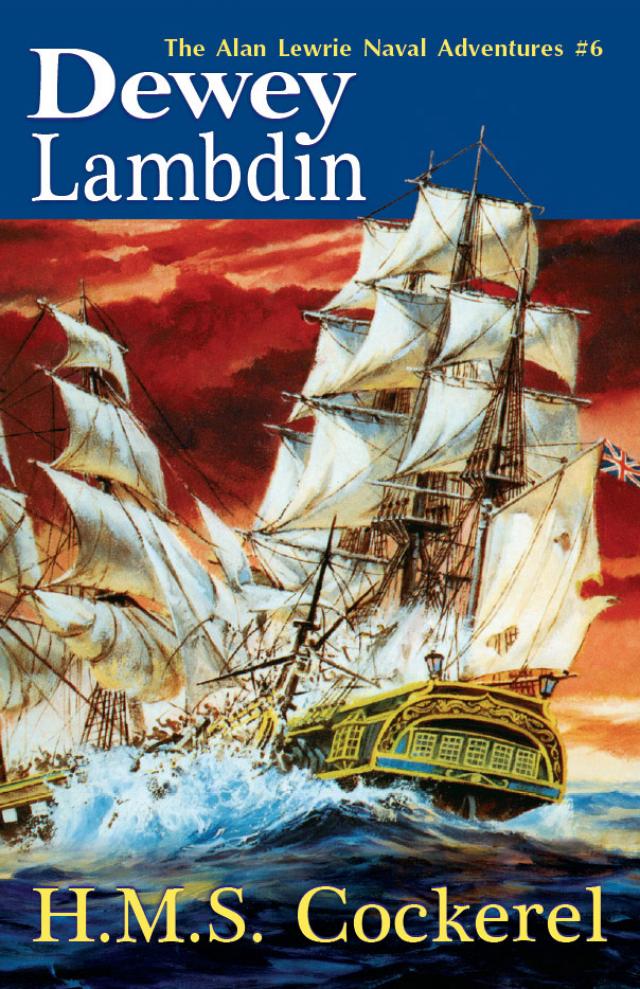


But, no. Cockerel kept on wheeling about, her yards going farther round until they were almost end-on to his view, courses, top’ls and t’gallants bellying taut and full, the profile of her low, sleek hull entirely presented. Cockerel had come about, aye—tacked since it was the quickest maneuvre—and was now sailing west-sou’west, not to join forces with him, not to stand off on a parallel beat, downwind and safe. She was running!
“Oh, you bloody man, you perverse, bloody man!”
Didn’t matter, he grumped; me aboard this tub, nor anyone else. least it ain’t personal, the . . . ah! He’d never know who he abandoned. Couldn’t care less!
All his plans in shambles, for the moment without a clue, faced with the prospect of fighting those three French ships alone once more. Let down by his own Navy.
“You filthy bastard!” he yelled, just for the temporary relief. “You bloody . . . coward!”
C H A P T E R 7
Calmly, Lewrie thought, as he climbed down to the quarter-deck; calm and deliberate. They’re not Navy, they’re not used to my ways . . . Hands behind his back, chin tucked in low, eyes down in thought, pacing to the wheel to look into the compass bowl for a moment.
His natural reaction, so untypically English, as Charles pointed out, would be to curse and rave, gibber with anger, foam at the mouth or fall flat on the deck and pound upon it. Which would set off panic, by the bagful. And there would go any thoughts of resistance from all his already barely-willing volunteers.
What to do, then, he asked himself, scheming in a fury, conflicting notions at odds in his head. Hold this course, keep the wind-gauge? He turned to glower aft.
The two hired transports were astern, just a little left of dead astern, still running with the sou’east winds large on the larboard side. Close-hauling would make no sense for them. They were on their very best point of sail already, and to claw up to windward to try and escape made them slower, their capture even more certain. And sooner. Farther left and beyond were the French warships, astern of the transports, a little downwind of them, sailing only a touch closer to the wind, making rapid time, even so.
They hadn’t gone close-hauled? he frowned in puzzlement. Waiting another half-hour before they came level with ’em, passed them, really . . . before they turned up toward them, or tried to cut ahead of their bows and take them? Leaving it damned late, when they could do it now . . .
Another half-hour, and Radical would be so far to windward of the transports, and the French, no one could ever touch them. Though Radical would have abandoned them, letting them take the brunt of things, like a sledge in a Russian winter would throw meat scraps to slow down pursuing wolves. Throw out servants, he’d read . . . yum, yum, hot and tasty!
Stacked almost overlapping from his angle of view, frigate in the lead, echeloned down to leeward so each would have clear air on her quarter. Why to leeward? he asked the aether. More speed, aye, but . . . for what purpose? Shouldn’t they be rushing right at the transports, and at him, too? Beam-reach in line-ahead, and still have clear air, no blanketing . . .
“Damme!” he laughed of a sudden. “You greedy pigs!”
The transports were meat on the table, the French could scoop them up anytime. They were standing on, going for the horse transport and the tantalizing glimpse of that two-decker on the sou’west horizon far ahead. And suddenly it came to him—they would separate. With Cockerel running away, the lead frigate would dash on, overhaul the two-decker horse transport because she looked such a rich prize, and leave the corvettes to face off with him, then take the two ships astern!
“Bosun Porter?” he called. “Hands to the braces. We’ll haul our wind. Quartermaster, new course, sou’west. Trim for a beam-reach.”
“Aye aye, sir,” Porter replied obediently. Yet sounding dubious, as if he was of a mind that sailing high upwind was much safer.
Radical came off her laboured beat, sloughing and slowing, yards reangled to cup the wind that now blew at right-angles across her decks. Those decks leveling as she sat down flat on her keel, on the easiest point of sail. And Lewrie waited, pacing aft to the taffrails, then to the starboard gangway ladder, over and over.
“Deck, there!” the lookout shrilled a few nervous minutes later. “Two chase goin’ close-hauled astern! Lead ship, standin’ on!”
The frigate had left her consorts, stuns’ls and stays’ls still flying, t’gallants and tops’ls bellied windful. The corvettes, though, had drawn level with the stern of the trailing transport and had turned upwind.
“Mister Porter, hands to the braces! Stations to close-haul!” Radical had slowed on her beam-reach, the transports had made up some ground on her, still labouring, though, about a mile and a half astern, almost in line-ahead behind her.
Right, you bugger, stay greedy, he sneered to the distant frigate, standing on so swiftly, so effortlessly. Swung away as she was toward the wind once more, Radical would soon have her abeam of her last position. Up to windward of the transports. Two or three miles of hard distance between the more powerful ship and where Radical could be in ten minutes. And the corvettes would still be to leeward of him, too.
He waited a little longer, fingers fretting against each other, peering stoically at the frigate, which was now off his starboard quarter. Now? No, not yet. Wait a bit . . . breathe deep to shout? No . . .
“Mister Porter, stations for stays!” he boomed at last. “Ready to come about to the starboard tack! Mister de Crillart, secure your gunners, all tackles a’taut! Bowse the starboard battery secure!”
“Manned!” Porter screeched at last. Lewrie looked down to see de Crillart give him an assuring fist in the air.
“Helm alee! Rise, tacks and sheets!”
Slow, a bit “crank,” indifferently balanced with all the civilian stores put aboard catch-as-catch-can, Radical swung up to the eyes of the wind, luffing and clattering, groaning and complaining. British men for the most part served the ship, men he’d drilled and trained, aided by raw landsmen who were terribly confused by sail-handling, much less the use of a foreign language. But she came about—crossed the wind. Reluctantly, she was about, on the starboard tack.
“Haul taut! Now, haul! Mains’l haul! Meet her, Quartermaster. Nothing to leeward for now! Mister Porter, we’ll haul our wind soon! Remain at stations!”
North by east she stood, running almost a reciprocal course to the transports, getting everything flaked down and sorted out, sailors still ready at the braces and jib sheets, driving for a moment within six points of the apparent wind. Rushing back toward the transports, their combined speeds hauling them near rapidly.
“New course, nor’east, Quartermaster, helm up! Let her fall off four points, no more. Trim for a reach, Mister Porter! Then prepare to take in the main course.”
Suddenly, after what had felt like hours of snail’s pace, things were overlapping each other, almost too fast to be dealt with. Leading transport on the larboard bows, now, dashing to abeam in the blink of an eye, trailing transport coming up rapidly. French corvettes beyond, and still not near enough to ease off their beats to open fire, just beyond the range-of-random-shot. Radical slowing, as she lost the drive of the main course. The transports weren’t half a mile alee. People cheering, waving coats and hats.
Haven’t a bloody clue, he sneered. But thankee, anyway. Second transport, huge two-decker, working alive like a crowded anthill, awash in people, coming up fast, her bowsprit framed in the fore-mast chains, just over the larboard anchor’s cathead.
“Helm up, Quartermaster, shave her arse! Ease her, Porter! Man for a gybe! Mister de Crillart, once we’ve gybed round the transport . . . be ready to open fire on the nearest corvette with the starboard battery!”
Radical pointed herself at the transport’s sides, changing the cheers to cries of consternation for a moment. Abeam of her, passing close, jib boom aimed at her quarter-galleries and stern, the helmsmen judging it to a nicety of perfection to dash almost under her counter and transom . . . using them as a shield, a fence between Radical and the corvettes.
“Ready to wear ship!” he called. “Main clew garnets, buntlines, spanker brails, weather main, lee cro’jack braces . . . haul taut!”
The transport’s stern was a pistol-shot away, before the mizzen chains. A second’s more separation, then . . .
“Up, mains’l and spanker, clear away after bowlines, brace in on the afteryards! Up helm!” Lewrie yelled, on tiptoes with excitement.
Around Radical came again, balky and truculent, even slower than she’d been to tack, without the main course’s power, yet trimming about, her crew throwing themselves upon the proper rigging from long training.
Round she came, until she lay with her bows due west, gun ports coming open, gunners hopping about to remove quoins below the breeches for maximum elevation, shimming them up again as they aimed, a touch at a time, preparing to concentrate their fire on the leading corvette, the one nearest them, about a mile away, still close-hauled.
“Préparez. . . tirez!” de Crillart shouted, waiting for the uproll.
Radical ’s starboard broadside went off as one; twelve-pounders firing solid-shot, the eighteen-pounders spewing disabling-shot. Gigantic gushes of powder smoke wreathed her, to be whisked away to leeward, thinning out as her shot neared the target, shrieking and wailing as they flailed in the air, tumbling and spinning.
They threw themselves on the guns, to swab out, clear the vents, directing gawping civilians to keep their eyes in-board, on their work, for their very lives. Only the senior gunners knelt to peer out empty gun ports to see the results, linstocks at their sides, jammed in the deck by the sharp ends like ancient spearmen. Powder monkeys scampered up with fresh charges. Loaders hefted more disabling-shot.
“Well, damme!” Lewrie gloated as the corvette was struck; struck for fair! She seemed to quiver from mast-trucks to keel as that flailing, slashing ironmongery amputated her fore-royal mast, tore away her fore-t’gallant yard, sliced through fore stays and jib halliards, spilling everything forward of the mast into a sagging ruin! And tore gaping holes in her fore-tops’l and course, spilling their wind, those ravaged sails ripping open, tearing across as far as the bolt-rope edges!
“You see, mon ami? ” de Crillart crowed. “Now, encore! ”
Guns charged and shotted, run out through the ports, cartridges punctured and vents primed. Slowly, clumsily, guns squealing and complaining on their low trucks, tacklemen taking forever—one side of a piece hauled too forcefully, the other too weakly, jibbering them about before the ports as if they were iron mastiffs hunting for a scent.
The corvette had fallen off the wind— had to fall off, with her windward-driving jibs gone, all unbalanced. She showed her profile, but also began to display a line of open gun ports, parallel to Radical.
Quoins inserted deeper this time, lowering the aim of the barrels, gunners shouting and babbling, waving their hands to instruct their raw assistants to shift the lay of the guns with crow levers and handspikes to right or left. Then the excess crewmen were hustling away to avoid the recoil, the roar and the stink, after overhauling the tackles. A last once-over, then matches were blown on, lowered near the vents . . .
On the uproll. “Tirez!”
Another brutal clap of sound, another howling broadside! Guns rolled backwards to snub on the breeching ropes, making the stout bulwarks cry, rope groan, iron ring-bolts squeal. They juddered and they reeked, some slewed off-line, gushing thin trails of spent smoke. And their frigate, shaken to her heart by the force of the run-back.
A moaning in the air, a shrill shrieking, as round-shot returned toward them. Dull thuds, splashes alongside towering over the bulwarks, iron ball flying across the ship, sizzling sibilantly. Crisp bangs up above, where the furled main-course yard was struck, one end turning to a shattered stub as the ball glanced off.
The corvette twitched anew, her mainmast struck this time. More destruction rained down from aloft onto her decks, to dangle in her overhead boarding nettings. There was a hole in her spanker where bar-shot pierced it, a handful of men in her mainmast fighting-top spilled out by a whirling multiple bar-shot. Her main t’gallant mast above shook, then slowly leaned forward under the press of the wind, as upper shroud lines parted, the crosstree braces shattered.
More fire was returned, raggedly. As if in retribution, a shot screamed over Radical ’s quarterdeck, slapping a hole in her spanker . . . just over Lewrie’s head. Forward, the starboard gangway bulwark caved in as an eight-pounder round-shot pierced it, making a rent about two feet across, and the air was awhirl with jagged oak splinters. Three French infantrymen standing behind the rent were ripped away, tossed over the rope railings into the waist, onto the gun deck, riddled with wood and iron shards. Another ball struck lower down, below the gunwale, with a dull thonk, creating wails of sudden terror among the noncombatants on the orlop deck. A third hit a closed gun port, behind which tacklemen were sheltering, waiting for orders to throw themselves on the guns once more. There were screams of pain and disbelief as two volunteers were cut down, cries from a dozen more throats as they beheld the ruins of men, twitching and thrashing bloody at their feet.
Lieutenant de Crillart and his senior gunners were there in an instant, to shout them down, shove them back to their duties, urging them to be brave . . . no longer gently tutorial. The time was past for that.
“Loblolly boys!” Lewrie shouted, directing the pasty whey-faces framed in the midships companionway hatch. “Help ’em, damn yer eyes!” The dentist appeared, seized the one at the top of the companionway ladder and dragged him out. They skittered fearful, as low as hounds to the decks, following him with a mess table turned into a stretcher. Three men were dead, abandoned round the base of the mainmast, while two who screamed and wept were carried below to whatever further horrors awaited them at the surgeons’ hands.
The range had closed to about three-quarters of a mile. Alan took a quick look astern for the second corvette. She was coming on, still on the wind, bows pointed almost directly at him. There was a bloom of gunsmoke from her larboard forecastle chase gun. Still about a mile off, he decided; still time to hurt the other even worse.
“Hit her again, Charles! Rip her guts out!” he shouted. “Hurry!”
Shocked as they were, though, the gun crews hadn’t much “hurry” in them. A well-served artillery piece could average three rounds in two minutes, in Royal Navy practice. These poor fellows were lucky to get off one in a minute and a half.
The corvette managed to fire again, a ragged, stuttering broadside. More shot coming for them, trembling volunteers flinging themselves flat on the deck to hide from it. Radical quivered as she was struck twice, thrice . . . then thrice again.
Not bad shootin’, Lewrie thought, for a crew who’d been in port so long, without much chance for live-firing practice. Quivering in his boots himself, willing himself not to flinch or duck. Damme!
There was a crash above his head, a groan of rivened timber, and he looked up to see their mizzen-royal and t’gallant masts shot away, to come down in a spiral like a badly sawn tree!
“’Ware below!” he shouted, scampering aft, away from its arrival. Jack-knifing upon themselves, the masts dropped, trailing rope rigging and furled canvas, yard ends flailing blindly, ripping across the face of the mizzen tops’l before the entire mess speared into the deck just at the forward edge of the quarterdeck, hung up by the broken spars on the nettings over the waist. Down with it had come two topmen, and one of the aristocratic French marksmen from the fighting-top.
“Cut it away, sir?” Spendlove yelled through chattering teeth at his side.
“No men to spare,” Lewrie groaned. “No, leave it. But see to the men who were aloft.”
“Aye, sir,” Spendlove nodded, his eyes wide. But he dashed off on his errand, chivvying loblolly boys to their ministrations.
“Préparez!” de Crillart screeched from forward and below, ordering his spare tacklemen away to the sides. “Tirez!”
Slow they might be, quaking and gulping hot bile in near terror, but the gun crews were still slaving away, sticking to it like men. A broadside lashed out and away, ordered, controlled and well aimed by the steadiest older men. Eight-pounders yapping, twelve-pounders erupting in harsher barks . . . and the four eighteen-pounders bellowing, almost going off as one immense avalanche of noise, fired on the uproll, when the ship would hang pent for a breathless second of steadiness.
The French corvette took the brunt of it, as the sea beside her frothed with near misses and ricochets from the lighter guns. Heavier twelve-pound round-shot tore through her sides this time, flinging bulwarks and scantlings into trash, flicking planks into the air. And her mainmast was shot away completely! It was shorn off, halfway between gun deck and fighting-top, that massive trunk carved in twain. It jumped, hung suspended for a second upon the very air, then the shattered butt slid forward, and it teetered, half-turned and fell to starboard, and all above it came crashing down in disparate bits, the fighting-top to hammer itself onto her starboard gangway, crushing everything beneath its brutal weight! She showed her coppering as she rolled and rocked.
“Cheer, lads, cheer!” Lewrie shouted, encouraging his English sailors. “Charles! Vivats, vive. . . what you call ’em! Make ’em yell and cheer! Look what they just did! ”
The poor, scared buggers, he thought. Aye, cheer, you bastards. Put some heart in yourselves, at last! You can do it, if you try!
For a moment, they gaped in total disbelief, then began to yell, to throw their hats in the air, clap each other on the back, embrace and buss in Gallic fashion, and exult.
Not Navy practice, is it, Alan asked himself with a smirk, but they needed that. Now maybe they’ll have more confidence. Now, just where do we stand? he wondered, peering about. He went to the side to look out with his telescope, past the ruin of the corvette, which was sagging down to leeward, all her masts and sails trailing over the side and acting like a sea anchor. She wouldn’t be going anywhere but round about in circles for awhile, not until they hacked all that loose. And without replacement upper masts and mainmast, nowhere very quickly for some time after, either, with only her mizzen standing.