Sisi, page 46
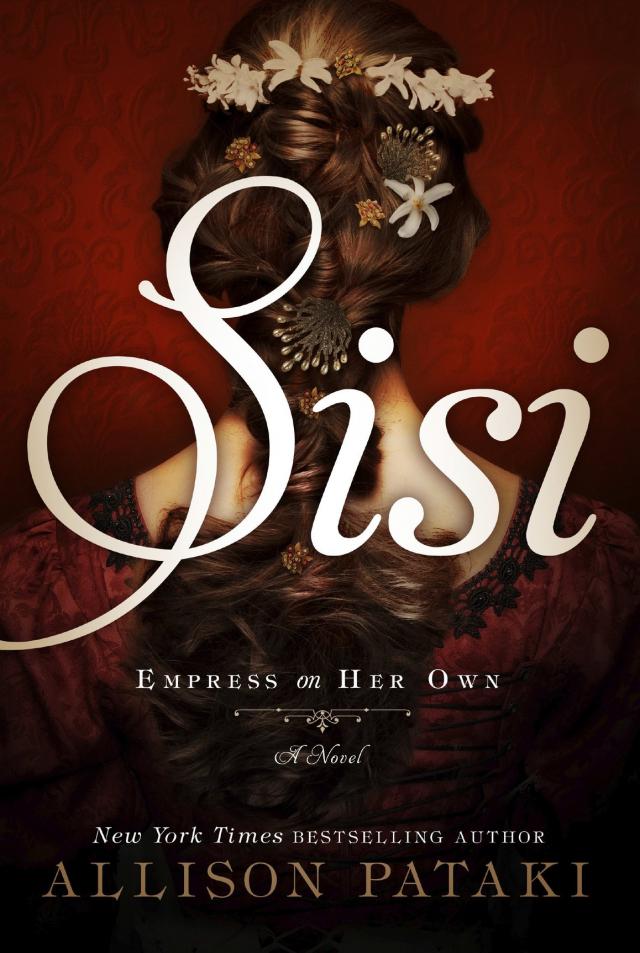


And what of our confounding, chimerical, elusive leading lady herself? Sisi was in fact as intelligent, well educated, moody, charming, intrepid, and complex as one would think. She loved and could recite from memory Shakespeare and Heine and ancient Greek epics. Her toilette and dress rituals were as elaborate as I describe them to be; it took hours to wash and style her floor-length hair. The extreme measures to which she went to preserve her legendary beauty are also historically accurate. Sisi was fiercely concerned with her weight and maintaining her youthful physique. She ate sparingly, exercised vigorously, and laced her corset so tightly that when you look at her dresses today, it’s staggering to see her dimensions—even after four children.
Sisi was nearly paralyzed with fear over the thought of aging or losing her famously good looks, and she approached her physical self-preservation with the gusto of a scientist seeking a magical anti-aging elixir. I loved walking her former rooms in the Hofburg and in Schönbrunn and seeing her handwritten recipes for different homemade tinctures to nourish her skin and tame her plentiful waves. Perhaps my two favorite boudoir secrets of Sisi’s are the facts that she (1) slept with raw veal on her face to fend off wrinkles and (2) hooked a string from her hair to the ceiling to relieve the weight of her copious coif.
In addition to horseback riding, her beauty regimens, and her studies, traveling became one of Sisi’s obsessions and favorite diversions. Later in life, Sisi became so manic in her drive to escape and to seek entertainment and to travel that I couldn’t possibly include all of the places she actually visited. The book would have turned from a novel into a travel guide, and our heads would be spinning at the itinerant existence she maintained. She traveled everywhere from Amsterdam to Cairo to the most far-flung Greek islands. The details of her sprawling Achilleion villa at Corfu are historically accurate, and so are Franz Joseph’s frustrations when Sisi abandoned her new Greek palace so shortly after its completion.
While Sisi was gone on her frequent travels, Katharina Schratt, “the friend,” kept Franz Joseph happy by his imperial hearth. As bizarre as it may seem, I have related the circumstances surrounding this three-way relationship as I found them in the history. Franz Joseph first came to admire Katharina Schratt when she played Kate in The Taming of the Shrew. Frau Schratt then in fact came to the Kaiserbund meeting in Moravia to perform. The Russian tsar became smitten with the young actress, giving her gifts as he does in this novel, and Franz Joseph became visibly jealous. Sisi, detecting her husband’s interest, realized that Frau Schratt could be the answer to her and Franz Joseph’s marital impasse. Sisi then actively cultivated a relationship with Frau Schratt, making it perfectly clear to both her husband and the actress that Katharina was welcome in their home and in their familial circle. The Katharina Schratt relationship was probably an even bigger deal in real life than I made it in my novel. “The friend” soon had a villa at Bad Ischl adjoining the emperor’s Kaiservilla, and Franz Joseph would visit her each morning when he was there. While historians debate whether or not their liaisons had a physical component, what cannot be disputed is the committed, long-term relationship that the two enjoyed, and the deep love they openly expressed toward each other. And the fact that Sisi never displayed even the slightest jealousy over Frau Schratt’s daily presence in her husband’s life. In fact, it seemed to improve the harmony of the imperial marriage; Franz Joseph’s letters to Katharina Schratt burst with declarations of his affection for the actress while also waxing poetic about his unwavering love for his beautiful and elusive wife. As I said—one cannot make this stuff up.
As we marched closer to the tragic day of September 10, 1898, I found myself growing more and more despondent for Sisi and Franz Joseph. I’ve outlined the schedule and circumstances of Sisi’s last days in Switzerland much as they occurred. She did in fact visit the Countess Rothschild and decline the countess’s offer of a private yacht. She did decline a security detail, in spite of repeated warnings that Geneva was rampant with criminal and anarchist activity. It is suspected that someone at or near the Hôtel Beau Rivage leaked the news of Sisi’s visit, because the city learned of her presence there in spite of the alias she used. Luigi Luccheni, who had come to town to assassinate France’s Duke of Orléans, changed his plans and fixed his blade on Austria-Hungary’s empress. Remarkably, Sisi’s thick hair did soften her fall, and neither she nor anyone who saw the strike realized that a tiny blade had been stuck into her breast. She and Irma continued onward and boarded the steamer, and Sisi did remark, as she does in the novel, that perhaps the man had been trying to steal her watch. It wasn’t until she collapsed on the boat that anyone realized she was bleeding and had been the victim of a stabbing that would soon prove fatal.
In this novel filled with both heartbreak and joy, perhaps nothing moved me more than finding the tenderly prophetic words of Franz Joseph’s final note to Sisi: “I commend you to God, my beloved angel.” I relayed Franz’s grief-stricken reaction to his wife’s murder with historical accuracy, because really, it lacked for nothing by way of heartrending and moving detail. The emperor found out about Sisi’s death via telegram while working in his study, surrounded by portraits of the woman whom he adored. In spite of it all, Franz Joseph had never stopped worshipping at the altar of Sisi. And now, after all of their separation and heartache, the stoic leader showed unprecedented anguish at learning that the wife he’d longed for and missed for all those years would never return home to him. He railed against God and did in fact demand, “Is nothing to be spared me in this world?” while also murmuring through his tears, “No one will ever know the love we had for one another.”
With tears in my own eyes, I sought to conclude the book with some measure of peace and hope, confident that Sisi was at last reunited with those she had loved and lost. Our heroine finally found rest in an afterlife for which she had always hoped and prayed, and, at last, she and Franz Joseph are finally joined together in the perfect harmony that so long evaded them in life.
A NOTE ON SOURCES
Writing this book was an exquisite and life-altering journey for me, and one that involved many literal journeys. I traveled from Budapest to Gödöllő; from Vienna’s Schönbrunn and Hofburg palaces to the hills of Salzburg; from Munich to Madeira and beyond. Retracing Sisi’s footsteps was the most inspiring way to enter into her world and imagine it as it might have been. I savored so many moments, such as walking up the aisle of her wedding church, looking out her bedroom window over her daily panorama, studying her glimmering dining table and her writing desk, and imagining her seated before her vanity bureau.
I’m so grateful to the countless and remarkable historians and curators and researchers who have kept the imperial residences so well preserved and who honor these deceased Habsburg icons by allowing us to see their world as they themselves inhabited it. So, too, do I owe a debt of gratitude to all those scholars who have labored over countless newspapers, journals, letters, and eyewitness accounts, those who have translated and distilled and breathed life into Sisi’s original thoughts and words and experiences.
The scholarly work on Sisi and the Habsburgs is boundless and rich and worth exploring. In addition to my trips to the imperial residences and my conversations with historians there, I relied exclusively on nonfiction accounts, all of which came with extensive bibliographies and source references. I thank these talented historians for making my job one of pure delight and inspiring discovery. While this list is by no means exhaustive, readers who are interested in learning more about this extraordinary empress’s life might enjoy any of the following:
A Nervous Splendor: Vienna 1888–1889 by Frederic Morton
Empress Elisabeth of Austria 1837–1898 by Renate Hofbauer
Fin-de-Siècle Vienna: Politics and Culture by Carl E. Schorske
Franz Joseph and Elisabeth: The Last Great Monarchs of Austria-Hungary by Karen Owens
The Fall of the House of Habsburg by Edward Crankshaw
The Habsburg Monarchy, 1809–1918 by A. J. P. Taylor
The Lonely Empress: Elizabeth of Austria by Joan Haslip
The Reluctant Empress: A Biography of Empress Elisabeth of Austria by Brigitte Hamann
The Sporting Empress: The Story of Elizabeth of Austria and Bay Middleton by John Welcome
The Swan King: Ludwig II of Bavaria by Christopher McIntosh
Twilight of the Habsburgs: The Life and Times of Emperor Francis Joseph by Alan Palmer
To Dave: you are the reason I can write about love.
ACKNOWLEDGMENTS
While writing is typically a solitary venture, the process of actually turning that writing into a book is anything but. I am so thankful to the many people who helped bring Sisi to life.
Special thanks go to my literary agent Lacy Lynch and the team at Dupree Miller & Associates; my editor, Kara Cesare, as well as Susan Kamil, Avideh Bashirrad, Leigh Marchant, Sally Marvin, Nina Arazoza, Allyson Pearl, Gina Centrello, Loren Noveck, and the entire team at The Dial Press and Random House; Lindsay Mullen, Katie Nuckolls, Alyssa Conrardy, and the whole Prosper Strategies crew; and to Beth Adams, Jonathan Merkh, Carolyn Reidy, and everyone at Simon & Schuster/Howard Books, I thank you for beginning this journey with me and continuing to be invaluable partners.
To the numberless historians, curators, translators, and biographers who have excavated Sisi from history and have allowed her to come to life in my imagination: my words will never be sufficient to express how deep my gratitude runs.
And of course to my parents, my siblings, my in-laws, my treasured friends: each one of you has supported and encouraged, nourishing not only my passion for Sisi but for life and for writing and telling stories.
And to my husband, best friend, and cocreator, Dave: you inspire me every single day. I could not imagine life’s journey without you beside me.
By Allison Pataki
The Traitor’s Wife
The Accidental Empress
Sisi
ABOUT THE AUTHOR
Allison Pataki is the author of the bestselling novels The Traitor’s Wife and The Accidental Empress. The daughter of former New York State governor George E. Pataki, she was inspired to write about Sisi thanks to her family’s deep roots in the former Habsburg Empire of Austria-Hungary. Pataki is the cofounder of the nonprofit organization ReConnect Hungary. She graduated cum laude from Yale University with a major in English and is a regular contributor to The Huffington Post, as well as a member of the Historical Novel Society. She lives in Chicago with her husband and their daughter.
allisonpataki.com
Facebook.com/AllisonPatakiPage
@AllisonPataki
What’s next on
your reading list?
Discover your next
great read!
* * *
Get personalized book picks and up-to-date news about this author.
Sign up now.
Allison Pataki, Sisi