Sisi, page 2


Sisi looked away for a moment, blinking as she absorbed the startling news. If Néné’s letter had seeped sad resignation, a contemplative widow’s acceptance that her life’s dreams would never be realized, then Sophie-Charlotte’s note burst with youthful cheer, raw and naïve exuberance, an as yet unshaken optimism that felt as fragile and ill-fated as a bowl of blown glass in a child’s hands. Sisi turned back to her sister’s words.
Oh, my darling sister, you know our cousin Ludwig as well as I do. Perhaps even better, as he always tells me that you alone of the sisters (other than me, of course!) truly know him and love him. And how he returns that love to you! How he admires you! And how happy it makes me when he tells me that I, of all our sisters, most resemble you in beauty and sensitivity.
Oh, Sisi, mine is a blissful, giddy state of happiness. Ludwig, King of Bavaria, to be my husband!
He is a man without equal. Why, look at his palaces. He has taste and elegance enough to make me feel like quite the simpleton. And not to mention how beautiful he is to look on. I know that every girl in Bavaria is sick with envy, as they should be. I have won for myself the best husband in our country! Perhaps the world! (Your beloved Franz Joseph excluded, of course.)
You will come home to Bavaria for the wedding, won’t you? I shall tell Ludwig that you will—the promise of seeing you will induce him to name a wedding date!
I am now and shall remain your most loving and devoted sister,
Sophie-Charlotte
Sisi put Sophie-Charlotte’s letter down and folded it twice, an inexplicable sense of uneasiness settling over her. She was taken aback that the happy news filled her with such misgivings. Her sister was correct: Sisi did love Ludwig. He was her cousin and—other than Néné—her most cherished childhood playmate. She and Ludwig had spent so much of their youths together in Bavaria, the two of them running wild through the fields around Possenhofen and sharing their fantastic daydreams for both the present and the future. Perhaps Ludwig had even been a bit in love with the young Sisi. He had hinted at it enough.
But Ludwig—now to be Sophie-Charlotte’s husband? The idea did not fill Sisi with the joy that such news ought to have aroused. Were they well suited? Certainly her mother, Duchess Ludovika, would be elated at such a match, thrilled by the fact that her youngest daughter would remain so close to her home in “Possi.” And Sophie-Charlotte was euphoric, evidently. Sisi tucked her sister’s note into her escritoire, determined to revisit the topic later. She did not wish to rob her darling baby sister of any of her bridal joy, but neither did she herself have the most optimistic view of matrimony these days. She’d need to think before crafting her reply.
Only two letters remained, and Sisi stared at them now. The top one bore the seal of ARCHDUCHESS GISELA, IMPERIAL PRINCESS OF AUSTRIA AND HUNGARY. Gisela, Sisi’s twelve-year-old daughter, writing from the Imperial Court in Vienna. Gisela rarely wrote. She and Sisi were not close; they had never been given a chance at closeness. Gisela, from her earliest days as an infant, had preferred her grandmother, the Archduchess Sophie, the woman who could somehow be as soft and maternal with her grandchildren as she was cold and domineering with her daughter-in-law.
Sisi stared at the letter now, shifting in her seat as if troubled by a sudden bodily discomfort. The thought of her eldest girl pierced deep, to a hollow, hidden recess of her heart—to the place where time and distance failed to heal, failed to cover the wound with the scar tissue of acceptance and resolve. No, not now, Sisi thought. Not after the good day she’d had. Not when she was about to walk down the hall to the nursery to see her darling baby. Not when he—Andrássy—was only a few minutes away, expected for dinner. Sisi did not wish to weep now. She stiffened in her chair, tucking Gisela’s letter into the inner folds of her dressing robe; she’d read it later. Later, when she might savor these rare words from her daughter. When the tears could come and the black night could enfold her in its inconspicuous privacy, where weeping went unwitnessed, where no one might see the extent of her longing or the depth of her despair over the loss of her two eldest children.
Sisi threw her shoulders back and flipped to the next and final letter. It bore a familiar handwriting, a recognizable crimson seal. And it stoked a familiar plunging feeling in her stomach, a brew of discomfort different from that stirred by Gisela’s writing—this was a more muted discomfort, a dull throb where the pain at Gisela’s letter had been a searing stab. But still, Sisi suppressed a groan as she ripped the seal. The letter came from Franz Joseph. Her husband, her emperor. This was the extent of their marital union these days: they wrote regularly between Hungary and Austria, though they hadn’t seen each other in months.
Franz Joseph’s letters were like he was: straightforward, reasonable, devoid of anything resembling the imaginative or sentimental. Dispassionate descriptions of his daily routine where he outlined the interminable hours he spent at his desk, surrounded by paper work and petitions and ministers, always summing up his accounting of the hours with the declarative statement: “But that is simply how it must be; one must work until one is thoroughly exhausted.” He included brief accounts of Gisela and Rudolf; Sisi’s heart always tripped when she saw their names in writing. Gisela. Rudy. The two children she had never been allowed to love. The two children who, upon their births, had been yanked from her arms and whisked away, installed in the imperial nursery where their every minute passed under the watchful and covetous eye of their paternal grandmamma, the Archduchess Sophie.
The children were both “in fine form,” Franz assured her now. Of course. Everyone in the imperial family was always expected to be “in fine form.” Sophie saw to it that no chink ever appeared in the gilded luster of the perfectly ordered and respectable imperial household. Not in the House of Habsburg, where custom and order and tradition dictated the unbending routine of every day, keeping the machine of imperial authority humming smoothly, ensuring that everyone knew precisely what was expected of him or her. Sophie had seen to that years ago, for though Franz Joseph wore the emperor’s crown, it was his mother who ran the imperial household.
Sisi rarely spoke to her mother-in-law directly, but Sophie was present in every letter sent by Franz. She loomed large over her son’s written words, just as she loomed large over the daily comings and goings at his court. Any mention of life in Vienna inevitably included Sophie, the emperor’s closest advisor and the dominant figure in his—and Sisi’s precious little ones’—days. Sisi groaned, balling Franz’s letter in her fist and throwing the paper across the room.
But Sisi reined in her thoughts before they galloped headlong down that dark and disconsolate corridor—that familiar clutch of agony against which she fought so regularly. Valerie. She said the name aloud, as if to banish the demons circling her, as if to soothe herself with its sacred sound. Her darling, her youngest child. The baby safely cocooned in the nursery here at Gödöllő. The baby whose conception had finally compelled Sisi to leave Vienna and her mother-in-law and the whole Imperial Court behind. To come here, to Hungary, where she might at last be free of Sophie’s authority and be allowed to raise at least one child as her own, to pour out all of the denied maternal longings with which her soul had throbbed.
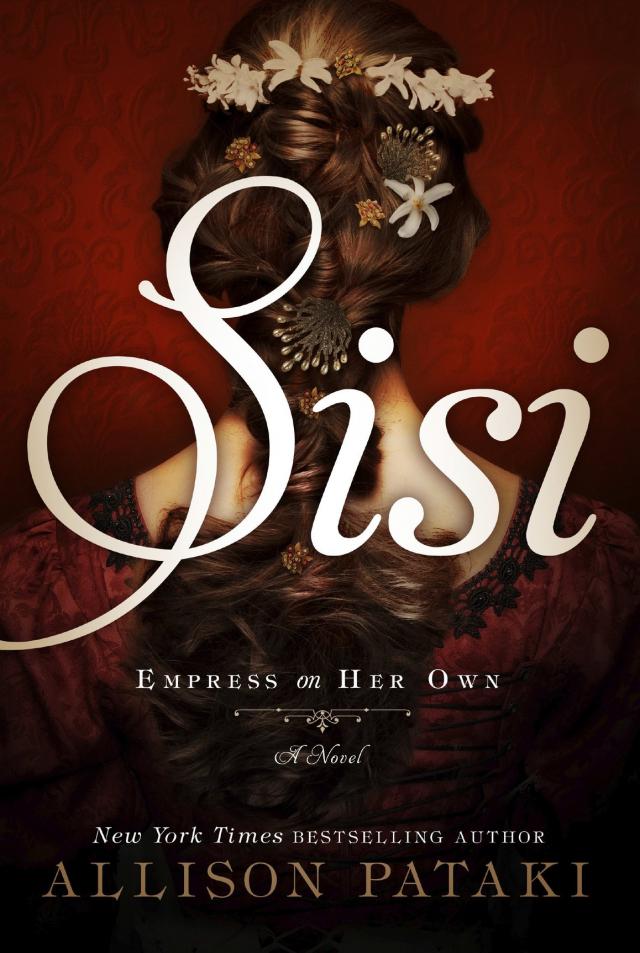
“Are we finished? I long to hold my Valerie.” Sisi fidgeted in her chair, eyeing the imperial hairdresser, Franziska Feifalik, in the mirror as the woman arranged the finishing touches on Sisi’s braided hairstyle. Yet another thing that was more pleasant about her life here away from court: Sisi could wear her famous ankle-length hair in loose braids with crowns of wildflowers instead of the formal hairdos and heavy, jewel-encrusted diadems she wore at court and events of state. Hairdos that inevitably caused a headache by the end of the evening.
“Just one more moment, Empress.” Franziska wove one last thread of wildflowers through Sisi’s chestnut curls, her fingers skillful and quick. “Et voilà, done! Another masterpiece, if I say so myself.”
Sisi rose from her seat and crossed to the wardrobe, where she selected a tight-fitting gown of cream-colored satin trimmed with gold-stitched flowers. She covered her neck and ears and wrists with pearls to match the dress and the fragrant white petals in her hair. As her ladies buzzed around her, fastening buttons and adjusting the folds of lush fabric, Sisi nodded at her reflection in the mirror, satisfied. “Good,” she said, “I believe we are done here.” She could all but hear the collective sigh of relief from her three attendants in the room: Franziska, the Polish hairdresser; Ida, her Hungarian attendant; and Marie Festetics, the Hungarian countess and longtime member of Sisi’s personal retinue. Not one person in the Austrian empress’s inner circle was Austrian. Just the way Sisi wanted it.
“A bit overdressed for the nursery, but perhaps darling Valerie will enjoy these splendid pearls.” Sisi smiled as she turned from side to side, scrutinizing her appearance one final time before the full-length mirror. She was always exacting when it came to her dress and hair. She hadn’t garnered her reputation as “the most beautiful woman alive”—even more beautiful than that French enchantress, Empress Eugénie—by being careless. But tonight it was even more important than usual, for tonight Andrássy would be joining her at dinner.
And now it was Sisi’s favorite hour of the day. “Is everything as it should be?” Sisi swept into the bright nursery, its walls painted a cheerful blue, a shade that she herself had selected, free of her mother-in-law’s unsolicited opinions. Sisi crossed straight to the bassinet and lifted the baby into her arms, breathing in Valerie’s powdery, milky fragrance. She covered Valerie’s cheeks with kisses. The baby answered with a soft, rolling coo, and Sisi pulled her even closer, overwhelmed by a fresh wave of bottomless, intoxicating love for the little girl.
“Indeed, Empress, the archduchess is pink and merry today.” The governess was a soft-spoken British girl by the name of Mary Throckmorton. Even-tempered and unexcitable, Miss Throckmorton was the opposite of Sisi, who was tempted to respond to every gurgle and whinny from the baby with the utmost alarm and solicitousness.
“Her crying has ceased? And she’s eaten enough?” Sisi asked, shifting the baby in her arms so that her eyes might take in every inch of Valerie’s plump, rosy flesh. Just perfect, her little girl was. Her own little angel.
“I believe her crying was due to this,” Miss Throckmorton said, leaning forward. With skilled hands, she pulled Valerie’s tiny lips apart and revealed a lone white tooth.
“Her first tooth,” Sisi gasped, placing a fresh round of kisses on the baby’s cheeks. “Oh, my darling girl! My most precious angel! Growing up so quickly. Already cutting her teeth! Oh, the poor little lamb. Miss Throckmorton, you are to provide the archduchess with any comfort she requires during this time that she is cutting her teeth. Do you understand?”
“Of course, Empress,” the governess replied, her tone remaining even.
“My girl!” Sisi said, her own voice humming with maternal pride.
In response, Valerie let out another coo, her chubby hand reaching for her mother’s face. Sisi sat with the baby on the nursery floor. There they played, the two of them so absorbed in each other that it was difficult to say which was more enamored. Valerie was dazzled by the spectacle of her mother’s glossy waves, the shine of her pearls, her wide and constant smiles. And Sisi was besotted, delighted by every single detail of her darling daughter. Her “only child,” as Sisi often described Valerie when speaking to Ida and Marie Festetics. The sole recipient of the outpouring of the natural mother-love that, for years, had been stifled within her, drying up like the milk that she had never been allowed to feed to her first little loves.
Of course Sisi still felt love for Gisela and Rudy as well. And of course she had loved her darling firstborn, the Princess Sophie, who had died of a fever while still a toddler. A part of Sisi had never recovered from that blow. But it was simply that, with the other two children installed back in the imperial nursery in Vienna, Sisi had never been allowed to form any meaningful sort of bond with them. They had never been allowed to suckle at her breast or take comfort in her arms, to know her as a mother, and she had never been allowed to cherish them as she had longed to. Her visits to the imperial nursery, when sanctioned by her mother-in-law, had always been quick and dictated by protocol. Accompanied by Archduchess Sophie’s ministers and attendants and overseen by Sophie herself. Visits filled with critiques and censures and thinly veiled reminders of Sisi’s inadequacy. Sisi knew what Sophie had said at their births; she’d heard the whispers, the reports of her mother-in-law’s scorn. Of course Sisi should not raise the children—why, she is only a child herself! And with their natural preference tending, after a time, to their grandmother, Sisi’s children had filled her heart as much with aching anguish as with warm and maternal affection. Until Valerie. Her fourth and final babe. A surprise, an unexpected gift of grace, and Sisi’s chance, at last, to be Mamma.
—
After putting Valerie to bed, ensuring that she would be neither too warm nor too chilly in her sleep, Sisi left the nursery and made her way with Countess Marie and Ida to dinner.
It was as she descended the stairway, her heart still aglow from the visit with Valerie, that Sisi spotted the tall silhouette in the front hall, a figure darkened just slightly by shadow where the candlelight did not quite reach. Sisi paused, midstep, taking a moment to gather her composure. It was either that or fly down the stairs and into his arms—a response that would hardly be appropriate.
Andrássy must have heard Sisi’s descent, because he turned in that moment, his dark-eyed gaze landing squarely on her. “My queen.” He strode across the hall toward the bottom step. He always used her Hungarian title of “queen” rather than the Austrian one of “empress.” She belonged to his land, to his people. She loved that.
“Andrássy.”
“Sisi.”
She forced her pace to remain steady as she descended the final steps and glided toward him, yet she was unable to suppress the smile that burst across her face.
“The sight of you dazzles me anew each time.” He extended his hand, taking hers in his grip and lifting it to his lips. So many breaches of protocol, Sisi thought. No one, with the exception of the ladies-in-waiting who dressed her, was permitted to touch her. And certainly no man other than Franz should dare to place a kiss on her hand. But even worse, she wasn’t wearing gloves, so that Andrássy’s lips now touched her bare flesh, that most sacred of imperial surfaces. Oh, how she loved being in Hungary!
“How are you?” He spoke in a low voice, as if they alone occupied the massive hall. Which they might as well have, since Marie and Ida—experts in discretion—had excused themselves into a side conversation.
“I’ve been very well. And now I’m even better.” She beamed at him. “How was your journey from Vienna?”
“Long. But I had something to look forward to.” His eyes held hers a moment too long before traveling down to her gown, her waist, taking in her whole appearance. He smiled approvingly, and she felt a warm flush travel from the base of her spine up to her cheeks.
And then, because he knew her heart so well, his next question followed quickly: “And how is Valerie?”
Sisi couldn’t help but grin even more broadly now. “I’ve just come from the nursery. She has cut her first tooth.”
“Her first tooth already! My, have I been away that long?”
“You’ve been away far too long,” Sisi said, her eyes remaining fixed to his. The very fact of him—his indisputable physical presence after so long away—seeped into her and through her, soothing her, like the cooling balms with which her ladies plied her sore muscles after too much riding, or the fragrant almond oil with which the hairdresser massaged her scalp and tamed her layers of unruly hair. He was here, once more, before her. His mind and his words and the longed-for sight of his tall, striking figure. She breathed out slowly before saying, “I was tempted to use my imperial power to summon you back to me; I didn’t know how much longer I could bear it.”
Andrássy smiled, an open, relaxed look. “Well, now I’m here. And glad of it.” Never mind that the gossipers in Vienna and across Austria whispered that Valerie was his, Andrássy’s child. That people claimed he had given her this home at Gödöllő as a gift from the Hungarian parliament purely so that the two of them might have a haven for their private meetings. Never mind that some called the youngest princess “the Hungarian child” and theorized that of course the mother had chosen to raise the girl in Hungary, as that was the land of her parentage. Both Sisi and Andrássy knew that it was untrue. As did the emperor. Even Valerie’s pale blue eyes and faultless ivory skin attested clearly to Franz’s paternity—they had nothing of the swarthy darkness of Andrássy. But never mind all that, Sisi thought. As long as Franz Joseph wasn’t troubled by the rumors, Sisi did nothing more than laugh at their viciousness and give thanks for the distance between herself and her critics.
“The night is a splendid one, and you would look splendid in it. Shall we?” Andrássy scooped Sisi’s arm into his and escorted her through the French doors into the back gardens, where they stepped into the indigo light of Gödöllő’s thickening evening. Behind them, Marie and Ida trailed at a discreet distance.
“Will you stay here?” Sisi asked. Their footsteps landed in unison on the terrace as, from the nearby stables, a horse let out a long, languid whinny.
“I confess I would like nothing more than to stay. But I thought that, to avoid any whisper of scandal, perhaps I should stay in Budapest.”
“No,” Sisi said, her tone decisive. “You’ll tell them you are staying in Budapest. But in fact, you’ll stay here. Oh, at least for a few days?”
Andrássy paused their walk and, his arm still linked with hers, stared sideways at Sisi, deliberating. He cut a tall, fine figure in his full dinner coat and tails.