Sisi, page 17


The tales of his patronage of Richard Wagner made Sisi’s blood roil. Wagner’s profligacy was legendary across Europe. The man might have been a genius when it came to composing music—but his exploits with women, liquor, gambling, and brawling were just as epic. How could anyone even say that Ludwig’s money went toward the art that he thought he was financing?
Sisi traipsed across the yard, ignoring Shadow as he found her and ambled along beside her. She did not even acknowledge her surroundings until, with a stab of longing, she noticed that she stood before the dogwood copse. Andrássy! She could have wept with her yearning for him. But it was then that she noticed the thin, hunched figure hiding behind the nearby bushes.
“Rudolf?” She knew it was her son; she had caught a glimpse of his military uniform. Her heart lurched—had the boy found out about her and Andrássy? Was that why he had come to this particular spot?
“Oh, hello, Mother.” The boy emerged from the bushes, acting as if he were surprised to see her there, though, clearly, he had noticed her approach and had taken cover.
“What are you doing here?” Her voice sounded stern, surprising even her.
“Nothing.” His cheeks flushed a scarlet red, giving him an almost feverish look. She could tell he was lying—about something. He threw a furtive glance back toward the cluster of bushes, and Sisi followed his stare with her steps. There, in the shrubs, she found it. A vile, putrid, rotting mound of small carcasses. Dead and bloodied birds. The worst part of her discovery, however, was that not all of the birds were dead. Some of them were still writhing and whimpering, clearly clinging to life while in the throes of agony.
Sisi shrieked, stepping back. “What? Rudolf, what is the meaning of this? Why are there so many dead and injured birds?”
And then she noticed the small rifle beside the pile. Her mouth fell open. “Rudolf? Did…did you…shoot all of those poor animals?”
“No,” Rudolf said, stepping away from the bushes. “No,” he said again, shifting from one foot to another. “I found them,” he added, not at all convincingly. And then the boy spotted the dog beside Sisi, its furry tail wagging with dumb and innocent joy. “Shadow must have killed them,” Rudolf said. “I…I brought them here to bury them.”
Sisi could have wept in relief. How would she have recovered from the shock of discovering that she had a sadist and an animal torturer for a son? But then a troubling thought struck her. “Then…then why is your rifle right there?”
Rudolf paused, swallowing, casting his eyes downward. “I…I brought them here to bury them. I thought it would be a nice spot.”
“But why the gun?” Sisi asked, her voice low and toneless.
“I had my gun on me. I always have my gun on me when I’m out in the wild. Father told me there are wolves all about. I had it, but I put it down to bury the birds.”
Sisi thought about this for a moment, her heart thrashing in her breast. Nothing about the story could be proven wrong, however odd it seemed to her. She’d never known her dog to hunt birds, but she didn’t know Rudolf to be a killer, either. She nodded once, choosing to believe her son’s story. The other alternative was too horrifying for her to consider.
Back inside the house, Sisi admitted to herself that she wished her family would leave and return to Vienna. She and Franz had had a good autumn together, it was true. He had recovered from his grief over his mother’s death with his usual stoicism and had even made for pleasant company lately. They had ridden together on occasion. They had enjoyed regular family dinners in the more casual setting that Hungary allowed them. As always, he, like her, grew more relaxed the longer he was away from court. Though they weren’t lovers, they were friends, and she didn’t dread his company the way she once had.
And yet, now that autumn was nearly over, Sisi couldn’t deny that she wanted her house to herself again. She wanted the flood of Franz’s footmen and servants and ministers gone. She wanted the return of her quiet evenings with just her and Valerie and Ida and Marie before the cozy fire. She wanted to be there, without everyone else, if Andrássy were to return. And though she regretted to admit it, she was tired of Gisela’s constant and naïve chatter about her upcoming wedding.
But, even more important than all of this, Sisi had grown increasingly uncomfortable around Rudolf. She was unsettled by his rapidly shifting moods—sweet and sensitive one moment, withdrawn and melancholy the next. She was made anxious by the tension that so clearly existed between father and son; Franz Joseph would attempt to draw Rudolf into some conversation about the military or the government, and the young man would reply with a bit of poetry or a fact he had read in one of his botany books. The two men had nothing in common except for the fact that Rudolf was destined for the same throne that Franz now occupied, and they regularly depended on Gisela or Sisi to serve as interpreter. But even more than all of this, Sisi was unnerved by the fact that, lately, she could not quite tell whether Rudolf was telling the truth when he spoke to her.
So when Franz announced that evening at dinner that he had given orders for the household to be packed up, Sisi had to struggle to hide her relief. “Yes,” she said, nodding at the announcement. “I imagine you do need to get back to Vienna.”
Franz nodded, cutting into his breaded schnitzel with his quick, controlled motions. “We’ll leave next week.”
“I shall stay for a while,” Sisi said, her tone tenuous at first. But then she drew in a long inhale. “Valerie and I will stay.”
Rudolf and Gisela exchanged a meaningful glance across the table, one that Sisi ignored. She was more concerned that Franz had stopped cutting his meat, placing his fork and knife down and propping his elbows on the table. He stared at his wife. “Elisabeth, you know that I appreciate your independence. And I honor your wishes, whenever possible, even to the detriment of my own desires and the well-being of our two older children….” He looked toward Rudolf and Gisela, and they nodded, as if this was something about which the rest of the family regularly conferred. “But on this occasion, I cannot grant your request.”
“But…it wasn’t a request.” Sisi bristled, both offended and frustrated. “I will come back, eventually. It’s just that, for now—”
Franz raised a gloved hand, silencing her. “We must go back. All of us.”
“Why?” she asked, her tone defiant. He had granted her her freedom years ago. Her freedom to live where she wished, to travel where she wanted. They had reached this understanding after so many years of unhappiness together; why did he now renege on that?
“Because, my dear wife, the entire world is about to descend on Vienna. I’ve already sent Andrássy back ahead of us—that’s why he left so early this morning. You and I are to host the world’s fair.”
The world’s fair? The international event that had driven London to erect the Crystal Palace and had brought millions of visitors and francs to Paris? Was she so removed from Vienna and the news of her capital that she hadn’t even known that her family was next in line to host the spectacle?
“This event…” Franz was stroking his graying whiskers, nodding at his wife as if to tell her that she had no choice. “It promises to boast all sorts of marvels and thrilling sites—but a glimpse of the surpassingly beautiful Empress Elisabeth is what the people most want to see.”
VI
This is not life, but a fantasy! The world’s fair…devours everything. All other interests seem to have disappeared, and the craze for making merry as wildly as possible prevails over everything else, as if in truth all seriousness had disappeared. It is almost frightening.
—COUNTESS MARIE FESTETICS, SISI’S LADY-IN-WAITING
CHAPTER 6
Vienna
Spring 1873
Even the stoic and sensible Viennese, a population who prided themselves on not often being impressed, couldn’t help but look twice, some of them even pausing to gawk, at the colossal rotunda that seemed to rise higher each day, climbing upward from the capital’s Prater park. Sprawling outward into a vast maze of alleyways and arcades, exhibition booths and imposing pavilions, the fairgrounds of Vienna’s World Exposition promised to play host to the greatest show the world had ever seen. Millions of spectators were expected to descend on the city from around the world, each person ravenous to behold the inventions and wonders peddled by the tens of thousands of exhibitors who had been fortunate enough to secure booth space on the fairgrounds, with vendors and visitors coming from as far afield as America, Japan, and northern Africa.
If the sights, sounds, and scenery of the world’s fair provided the lure to pull these millions to the city, the party’s hosts, Franz Joseph and his famously beautiful Empress Elisabeth, were expected to dazzle them all once they arrived, for the Viennese press loved to write about nothing more—save for the empress’s setbacks at court—than the empress’s elaborate wardrobe tastes and her otherworldly beauty, the natural riches that made her and the emperor the envy of all other world rulers.
—
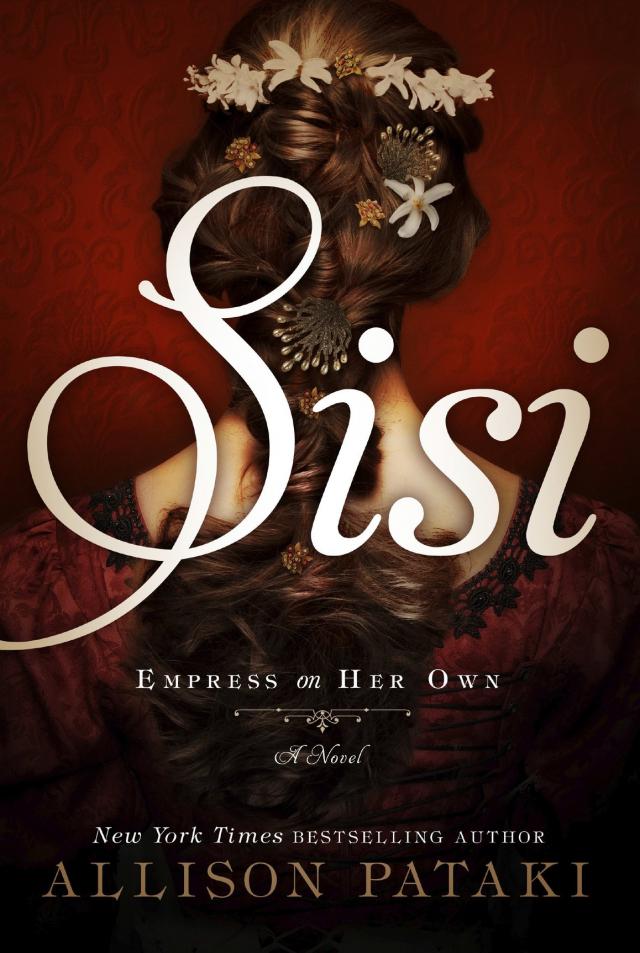
It was a bright morning in early May, the first week the exhibition was officially open to the public. Sisi stood in her bedroom sipping her tea and considering different dress options with Marie and Ida. Valerie played with a doll on the carpet while the hairdresser, Franziska, stood nearby, diligently preparing her ivory combs and crystal hair ornaments like a soldier readying swords and daggers before battle.
“How about this one?” Sisi pointed toward a magnificent gown of shimmering indigo silk, its skirt broad beneath a tight waist and glittering sapphire ornamentation. “Will it impress those stern Germans?”
“Marvelous choice, Your Majesty.” Marie nodded her approval, relieved to have Sisi’s deliberations over, as Ida crossed to the wardrobe to select the matching shoes and appropriate corset. “We don’t have much time, Empress, as we are expected to meet the emperor downstairs in just a few hours,” Marie prodded gently. “Would it please Your Majesty to finish breakfast so that you may begin to dress?”
“And I still need a couple of hours for the hair,” Franziska interjected. Marie threw the woman an irritated glance, and Sisi suppressed the urge to smirk at their daily rivalry. Marie resented how long it took the woman to comb and braid and style the empress’s thick, floor-length locks. Hours every day. Yet Marie did not protest this morning, for she knew that the ornate hairdos that this stylist fashioned—having originally trained backstage on the elaborate coiffures of the opera house—were a large part of Sisi’s striking overall appearance.
Outside the spring weather was mild and clear, a welcome reprieve after a damp spell of chilly rain. Days like this never failed to make Sisi think of the fields outside of Vienna and the woods as far as Gödöllő, and she wished herself outside of the city and atop her new horse. But that would not be happening any time soon, not while the world’s fair was going on.
Sisi sighed. “Don’t you think our grand new fairground rotunda looks like a giant wedding cake topped with Schlag cream?” She settled into a chair as Franziska began to ply her thick chestnut waves. While the hairdresser worked, Sisi flipped through the morning’s newspapers. “Our world-famous Viennese pastry chefs have outdone themselves once more.” She continued to riffle through the pages. “Ah, and there I am, looking like a potted plant at one of our endless opening ceremonies. Goodness, does my brow really crinkle like that when I’m trying to look serious?”
Hours later, once her hair had been sufficiently pinned and braided, each wave adorned with strands of sapphire, crystal, and diamond ornaments, Sisi rose. “Now, time to get into the harness,” she sighed, looking at the corset held forth by Ida.
“We’re going to have to sew you into this gown, Your Majesty,” Ida said. “It’s so snug, there’s no other way.”
Sisi nodded, clutching the frame of the bed as she held her breath. “They’ve all claimed that they wish to see my figure—and see it they shall.” As her midsection was cinched ever tighter to its famously narrow eighteen inches, Sisi thought aloud: “If only they would all come together, at the same time, for one nightmare of a week. Instead, it shall consume the entire spring and summer.”
It had already been a frenzied spring, what with Gisela’s wedding the previous month and the feasts and parties that such an event had included. Then Johann Strauss had debuted his new waltz, “Wiener Blut,” dedicating it as a wedding gift to the young bride. Next the Court Theater had put on A Midsummer Night’s Dream especially for the empress, as it was known to be her favorite play, and Sisi didn’t dare decline the performance. Already she was exhausted by the court calendar and the chaos of the crowded city, and yet she was staring ahead to the busiest few months of her life with the hosting of the fair.
Andrássy had filled her and Franz Joseph’s schedules with a ceaseless stream of foreign dignitaries and crowned heads who would be traveling to Vienna. They would all be coming on social visits, yes, looking to be entertained, but Sisi was under no illusion that these would be enjoyable visits for her or Franz. Andrássy expected her to work—to strengthen and solidify the bonds with new allies such as Germany and Russia, to show gratitude and appreciation to loyal friends such as Saxony and Belgium, to reassure the skeptical satellites such as the Balkan states and Bohemia, and to charm or neutralize the potential foes such as England and Spain. And then, inexplicably, there would be the visit at the end of the summer from the shah of Persia, that outlandish man who apparently dyed the manes of his horses pink and traveled in the company of his astrologers, his “ladies of pleasure,” and his own equipage of goats and rams.
Just days earlier on May Day, the first of the month, Sisi and Franz Joseph had attended the fair’s opening ceremony and feasts, declaring Vienna’s World Exposition officially open to the public. It had been an exhausting ordeal from the moment that her imperial coach was swarmed by the crowds on her entrance into the Prater park grounds. The mob, a mixture of Viennese and foreign visitors, had waited outside for hours in the freezing rain. Upon seeing Sisi’s coach, a rare sight given her recent travels, they had charged her, sending her horses into a paralyzed panic as the crowd climbed up onto the wheels of the coach, fighting to peek through the windows and catch a glimpse of her stunned face.
Inside the rotunda was an almost blinding explosion of color and fabric and ostentatious wealth—the opposite of the gray, rain-soaked day outside. The Viennese who had been fortunate enough to win a place at the opening ceremonies had spared no small detail, and Sisi had looked out over a sea of feathered hats, pearl-trimmed gowns in every color, corsages bursting with fresh flowers, and mustached men in top hats.
Sisi sat beside Rudolf on the dais while Franz welcomed the giddy crowd and pronounced the world’s most anticipated—and expensive—fair officially open. Next they attended a concert during which Master Strauss led the orchestra through several of his waltzes and a Handel march. Rudolf sat sulky and withdrawn throughout the ensuing feast, his deep melancholy all the more noticeable because of the otherwise festive feel all around them. Sisi hadn’t seen him smile since saying farewell to Gisela.
And today, Sisi and Emperor Franz Joseph were poised to welcome their first and most important official visitor—Crown Prince Frederick of Germany. Germany’s favored nation status had been made clear by Frederick’s prime billing in the roster of royal visitors. “The crown prince shall be joined by his wife and mother?” Sisi asked, confirming with Marie what she had spent the previous night reviewing.
Her attendant now consulted the detailed program, a pamphlet the palace aides had distributed with the coming week’s schedule. “That is correct, Madame.” Marie nodded. “His wife, the Crown Princess Victoria, as well as His Majesty’s mother, Germany’s Empress Augusta.”
“Poor Franz,” Sisi said as she turned toward the mirror to admire the different views of her elaborately braided hairdo. She marveled at the way Franziska had placed the sapphires and diamonds in her waves to catch glints of spring sunshine. As she slipped on a pair of white gloves, she added: “I think that my outfit is a burden. How must he feel?”
As was dictated by custom, Franz Joseph would not appear in his usual Austrian cavalry uniform but instead would honor his foreign guest by wearing the military uniform of the visiting nation. Putting on the white and gold of the Prussian grenadier would be a bitter experience for Franz indeed, as that was the uniform that had defeated his own forces just a few years earlier during the Austro-Prussian War.
“I feel as if I am doing battle against my own self when I put it on,” Franz had confessed to Sisi the night before.
Nevertheless, as Sisi swept into the courtyard, trailed by Rudolf, Marie, Ida, and Baron Nopcsa, she found her husband dutifully stuffed into the white-and-gold jacket and trousers. A ridiculously shiny helmet rested atop his head, its feathers quivering as her husband paced, turning his head from side to side to inspect the members of his entourage. He stopped in his place when his wife’s entrance was announced.
While everyone else bowed, Franz strode toward Sisi and reached out his hand, taking in her appearance with an appreciative smile. “There is my secret weapon,” he said. Sisi let him gawk—let all the members of the retinue gawk. She knew she looked fresh and lovely in her indigo gown of delicate silk and gossamer, her diamond and sapphire jewels accenting her thick tresses while the snug fit of the gown highlighted her trim figure and narrow waist.
“Did you sleep at all last night?” she asked, stepping toward him.
“Not a wink.”
“That makes two of us,” Sisi said.
Andrássy stood behind Franz and avoided eye contact with Sisi. Franz scanned the courtyard, asking, “All here? Then we are ready to go. Let’s be off—we don’t want to keep our precious brother, Prince Frederick, waiting.”