Hanging the Devil, page 1


Also by Tim Maleeny
The Cape Weathers Investigations
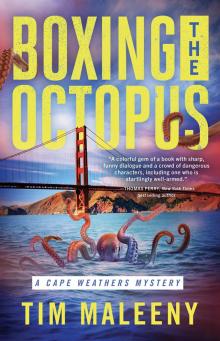
Boxing the Octopus
Greasing the Piñata
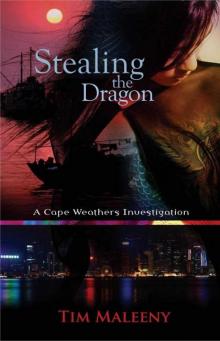
Stealing the Dragon
Beating the Babushka
Standalone Novel
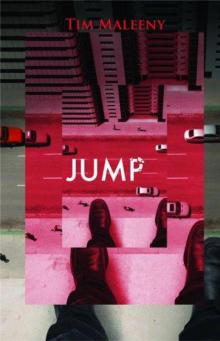
Jump
Copyright © 2023 by Tim Maleeny
Cover and internal design © 2023 by Sourcebooks
Cover design by theBookDesigners
Cover images by leungchopan/Shutterstock, Latite06/Shutterstock, Kropotov Andrey/Shutterstock
Sourcebooks, Poisoned Pen Press, and the colophon are registered trademarks of Sourcebooks.
All rights reserved. No part of this book may be reproduced in any form or by any electronic or mechanical means including information storage and retrieval systems—except in the case of brief quotations embodied in critical articles or reviews—without permission in writing from its publisher, Sourcebooks.
The characters and events portrayed in this book are fictitious or are used fictitiously. Apart from well-known historical figures, any similarity to real persons, living or dead, is purely coincidental and not intended by the author.
Published by Poisoned Pen Press, an imprint of Sourcebooks
P.O. Box 4410, Naperville, Illinois 60567-4410
(630) 961-3900
sourcebooks.com
Cataloging-in-Publication Data is on file with the Library of Congress.
Contents
Front Cover
Title Page
Copyright
1
2
3
4
5
6
7
8
9
10
11
12
13
14
15
16
17
18
19
20
21
22
23
24
25
26
27
28
29
30
31
32
33
34
35
36
37
38
39
40
41
42
43
44
45
46
47
48
49
50
51
52
53
54
55
56
57
58
59
60
61
62
63
64
65
66
67
68
69
70
71
72
73
74
75
Epilogue
Excerpt from Boxing the Octopus
1
2
Acknowledgments
About The Author
Back Cover
For Kathryn
a truly original work of art
“Good artists copy. Great artists steal.”
—Pablo Picasso
1
Grace stared at the Buddha, but the Buddha didn’t blink.
His eyes focused on something beyond Grace, a distant vision of an unattainable future. He looked serene, but Grace thought he was being stubborn. She knew a lot about being stubborn.
The Buddha was eleven hundred years old. Grace was eleven.
Her eyes started to water, and Grace blinked first. She was annoyed, convinced this particular Buddha would come to life and smile, if only she could outlast him.
It was the second-oldest statue in the Hall of Buddhas and the tenth to face her in a test of wills. Grace was working her way through the Asian Art Museum one exhibit at a time, a game designed to keep her restless imagination occupied while her uncle, Han, patrolled the building.
Grace chose a different exhibit to explore every night until she got tired, then she slept on a couch in the main hall until her uncle’s shift ended at dawn. Technically, only her uncle was allowed to be in the museum after hours, but his supervisor said it was okay until they made new arrangements. Han had been the night guard for two years and had a sterling reputation. He assured Grace that no one would know as long as she didn’t break any priceless artifacts.
Han didn’t feel comfortable leaving her alone in his small apartment. Not until they got word from her father.
Grace let her gaze drift to the placard set into the column below the statue. This particular Buddha was from northern China, near a town unknown to Grace. The red dot on the little map seemed incredibly far from her home in Hong Kong, a world away from where she stood now.
It had been a week since she arrived in San Francisco to stay with her uncle, but a lifetime since she held her father’s hand in Victoria Park. Grace’s eyes stung at the memory. She told herself it was from the staring contest and blinked away the tears as she read the Buddha’s quote inscribed below the map.
Even death is not to be feared by one who has lived wisely.
Grace wondered if her parents lived wisely. She wondered if they were even still alive.
Her father said a million people were gathering in Victoria Park that day, the biggest protest Hong Kong had ever seen. When Grace was older and Hong Kong was independent, she could say she had been there. Her stepmother told him to stop saying such things aloud, that they shouldn’t have come.
Her father shrugged and laughed. He took out his cell phone and held it at arm’s length, mugging for the camera as they rode a wave of humanity into the park. Grace asked her stepmother why so many people were holding umbrellas.
When the tear gas canisters started falling like rain, she understood.
Now, standing in a museum half a world away, memory of the tear gas made her eyes sting all over again. The Buddha looked at her with infinite compassion, but that didn’t make Grace feel any better. He still refused to blink.
Grace exited the gallery. She would conquer the Buddha another night.
She turned left and stepped onto a glass walkway, a translucent path to the escalator that would take her downstairs. To her right, a wall of glass rose seamlessly to fuse with a massive skylight supported by green copper bands. Grace imagined she was walking through a dragon’s rib cage.
Through the glass was an outdoor patio one floor below on the roof of the adjacent building. Small tables had been arranged for an event tomorrow night. Umbrellas were set at regular intervals. At street level was Civic Center Plaza, a rectangular park at the center of the city, and beyond that, San Francisco City Hall. The building loomed over the park, its dome and spire illuminated in a soft red glow.
The red was new. Last night it had been blue. Grace figured the person in charge of lighting the building must change the color depending on their mood. She stood staring out the window, grateful for the distraction, cheeks crackly from drying tears.
An enormous shadow swept across the sky and eclipsed the dome. Grace recoiled from the window, thinking it was a giant bat. Maybe a dragon.
Then she heard the rotors.
A helicopter flew low across the square. Grace pressed her hands against the window to steady herself as the glass floor began to vibrate. The helicopter was matte black, flickering in and out of existence as Grace tried to track it against the night sky. It tilted suddenly, like someone rocking on their heels, and spun halfway around to approach the museum.
Grace realized it wasn’t going to land in the park, it was angling for the patio directly below where she was standing. As the helicopter rotated sideways, Grace could see inside the cockpit.
The pilot stared back at her. He looked scared.
Grace called to her uncle as he bounded up the escalator holding a walkie-talkie in his left hand. Han waved her away from the window and grabbed her by the hand to drag her back inside the Hall of Buddhas. As they reached the threshold, Grace looked over her shoulder.
The body of the helicopter was spinning wildly. Something was wrong.
Grace felt her uncle’s hand slip from hers as a metallic scream penetrated the glass, sounding almost human. The helicopter seemed to freeze in midair.
The pilot couldn’t see the steel cable that ran from the top of the main building to the corner of the patio, but Grace could. It tore free of the building in an explosion of plaster as the helicopter blades bit into the cable. The frayed end wrapped around the main rotor shaft like a string on a spinning wooden top. The helicopter lurched sideways as the main rotors seized in place while the back rotor kept spinning.
Grace stood transfixed as calamity unfolded. Uncle Han grabbed her roughly by the shoulders and shoved her through the doorway. Grace slid across the marble floor as the helicopter crashed through the glass wall where she’d been standing.
She came to a halt near the column where the Buddha rested as glass shards flew like dragonflies, a thousand steel bolts screamed, and marble turned to shrapnel. She pressed her face to the floor and wrapped her arms around her head. Bits of stone pelted her hands and plaster fell across the floor like snow. She felt a sudden surge of heat and opened her eyes.
Smoke filled the room. Grace shouted her uncle’s name but couldn’t hear over the din. She scrambled to her feet and looked around. The broken tail of the
The mangled cockpit squeezed into the gallery entrance. Flames were licking the floor.
The head of the Buddha lay on the floor. The tail rotor that beheaded the statue was embedded in the wall behind Grace. Blood was dripping from the blade.
Her uncle’s body lay a few feet away. His head was nowhere in sight.
A scream caught in Grace’s throat and she turned away, but what she saw then terrified her even more. Men silhouetted against the flames. Three shadows moving toward her.
Grace blinked smoke from her eyes and felt tears burning her cheeks, but she forced herself to look at her dead uncle. The only person she had known in this strange city.
Then she turned and ran.
2
The monkey ran along the top of the wall, its tail held high as it skirted the barbed wire and security cameras. It was a macaque, with gray fur encircling a round, pink face that was pinched and angry. Its yellow eyes were twin spotlights that tracked Wen with every step.
Wen suspected the monkey was following him but realized how paranoid that sounded. Besides, a menacing macaque was the least of his problems. He had tried to stay positive since arriving in Xinjiang, grateful he managed to smuggle his daughter, Grace, out of the country before he was arrested.
It had taken the police almost a week to round up all the protestors, matching surveillance footage with known addresses. Wen worried what Grace might do if he couldn’t get word to her.
He compartmentalized all other feelings, especially for his wife. His last memory, his wife lying on the grass, eyes staring at nothing, blood streaming across her forehead from where the baton struck her temple. Wen lost sight of her when the riot police swarmed around her prone figure. That’s when he threw Grace over his shoulder and started running.
Grace never saw her stepmother fall onto the grass at Victoria Park, but that didn’t make it any easier to tell her what happened once they got home. His first wife dead from cancer, his second lying on the grass. Only his daughter safe, for now.
Wen felt his resolve fraying daily, terrified that Grace might leave San Francisco and return to China to find him. His worst nightmare was Grace being apprehended and sent here.
The northwest corner of Hell.
He marched along the wall, another worker in an endless line. None of them locals, all sent to Xinjiang for what the Central Committee euphemistically called vocational training and reeducation. Wen recalled newspapers in Hong Kong, articles written by the state news agency celebrating the region’s poverty-alleviation programs like the factory where he worked now.
Eleven-hour shifts, six days a week. Building mobile phones.
If only he could make a call.
Each shift included two hours of supplemental training consisting of sitting in a classroom listening to lectures on the importance of national unity. One day, while a film was projected from the back of the room and the lights were dimmed, Wen noticed one of his fellow workers nodding off from exhaustion. By the time the lights came up, the man was snoring so loudly the other workers couldn’t stop laughing.
Wen hadn’t seen the man since. Other workers told Wen the man had simply been sent for personal instruction. They called it tutoring. It took a beat before Wen realized they meant torture.
Many of his fellow inmates were Turkic-speaking Uyghurs, Uzbeks, and Kazakhs from former Soviet states close to China’s border. They communicated in broken Mandarin, the only language allowed and a mandatory part of their instruction.
Wen was surprised at the number of Chinese workers. Mainlanders, mostly, but some from Hong Kong. On his second day, Wen met an older man named Bohai who used to be a bookseller in Causeway Bay. They stayed close, taking comfort in being able to converse in Cantonese, if only out of earshot of the guards.
“What did you do,” asked Bohai, “before you came here?”
“I teach art history at the university in Hong Kong.” Wen wasn’t ready to use the past tense to describe his life of a week ago. “But that’s not why I’m here.”
“No one knows why they’re really here,” replied Bohai. “But we have our suspicions.”
“What are yours?”
“My customers’ taste in literature veered westward,” said Bohai. “Nabokov, Ayn Rand, Orwell, even Stan Lee. Comic books are wonderfully subversive.” He smiled and shook his head. “When government officials started coming by the store, I should have packed up and moved to Taiwan. Instead, I removed the covers from party-approved books and used them to wrap my customers’ favorite novels. It was only a matter of time before I wound up here.”
“For how long?” Wen had asked.
Bohai held up his left arm to reveal a naked wrist. “There are no watches in purgatory.”
Wen had to ask, “When did you stop counting the days?”
“Seventy-nine days ago.” Bohai winked. “Do yourself a favor and stop asking dumb questions.”
“I have a daughter.”
“Then do her a favor,” said Bohai, “and pray that she forgets all about you.”
3
Grace remembered her father and what he had told her about fear. It helps you prioritize.
Her immediate priority was to become invisible. The three figures had emerged from the smoke and were getting closer. If she tried to reach the escalator, she would definitely be spotted.
If I can see them, they can see me.
Grace dropped to her stomach and swept her arms outward like a swimmer, propelling her body backward across the marble floor. She scooted twelve feet on her belly until she could squeeze behind the largest standing Buddha in the gallery.
The statue was from Thailand and once flanked the entrance of a temple damaged during the Burmese-Siamese war. Grace knew the history from having read the placard on her first night in the museum, but right now she cared more about its height than heritage. Six feet tall and three feet wide at the base, it was the best cover she could find.
Grace peered around the statue and saw the silhouettes take shape.
Three men, the first slightly built, the second short and stocky. As the smoke dissipated, Grace could see they were Chinese. Both were dressed in loose-fitting, black coveralls. They paused in their advance and glanced at the figure on their left, as if awaiting orders.
The third man was still a shadow, tall and ephemeral. Wrapped in tendrils of smoke, as if the fog had accompanied him inside. Grace craned her neck to get a clearer angle, but the figure blurred as wind poured through the broken window.
Someone was yelling.
Cries mixed with the moaning wind and metallic groans from the shattered face of the building. A human voice clearly discernible and impossible to ignore. The three intruders turned toward the broken shell of the helicopter, and Grace edged her way around the statue.
Grace would have to get closer to exit the gallery and reach the main hall, then slip down the escalator before the men turned around. She hoped that once she reached the escalator, she was small enough to keep her head below the railing and not be seen.
Grace took a deep breath and scampered in a crouch until she reached the arched door of the gallery. Cold air swirled around the hallway as the smoke cleared.
Grace got her first good look at the third man and felt a sudden chill.
He was dressed all in white, pants loose in the leg but tight at the ankles, sleeves long and open. What struck Grace most was his hair, long and flowing, pale as the moon. He extended a hand toward the man on his left, and Grace glimpsed the bone-white skin of his arm and the gaunt fingers devoid of color.
Guǐ.
A ghost. The word came unbidden, and Grace stood, frozen, as she realized the screams were coming from inside the cockpit of the helicopter.
Someone was trapped. Her brain told Grace to run, this was her chance.
Her feet were more stubborn.
Being closer to the gallery than the escalator on her left, Grace knew she was exposed, but the shouts were an undertow pulling at her conscience. She inched forward to get a better look as the wind shredded the last of the fog and smoke.
The pilot was pinned in the cockpit, his legs trapped under the flight console.
The cockpit was a broken eggshell, the windscreen cracked, the aluminum doors mashed like a discarded can of soda. A translucent panel separated the pilot from the main cabin of the helicopter, which was surprisingly intact. Wooden crates of various sizes filled the cramped space near the passenger seats.