Hanging the Devil, page 32


The crew unloaded their cargo, and Bohai stayed ashore. Junjie never left his side.
The little macaque had been fiercely loyal, and Bohai never doubted he would be dead or imprisoned if not for his genetically enhanced friend. Junjie could sense when someone was following them or merely taking an interest. He could smell their suspicion.
Once in Taiwan, they made a cautious week’s journey to Taipei, where Bohai had contacts waiting. Another month to get identification papers, during which time Bohai scouted locations in the Da’an District, where he could begin another life. Now he stood behind the cash register of his new bookstore, grateful for second chances and wistful over lost friends.
The high shelves were crowded with daily newspapers, monthly comics, and books new and used, organized by language and genre. Junjie grabbed two volumes off the counter and hopped to the nearest shelf, happily restocking while Bohai stuffed an envelope full of cash. The fisherman kept his side of the bargain, and Bohai would keep his—half his income for a year seemed a small price to pay when so many others had paid with their lives.
Bohai finished counting and glanced idly at the open newspaper on the counter.
For weeks he’d been following stories of an underground artist who recently emerged in China. Paintings appeared on factory walls, subways, sidewalks, and buildings all over the country, yet no one knew the identity of the artist. The art was beautiful, unconventional, and subtly subversive. The official government stance was one of stern disapproval, while the public waited eagerly for the appearance of the next work of art.
They were calling him the Banksy of Asia. Many believed he was a young painter from the art village of Dafen; others insisted it was a couple, a man and woman with complementary styles. The newspaper Bohai was reading suggested something bigger, a movement begun in Dafen that had grown into a vast underground network of artists working in concert.
That last scenario gave Bohai a deep sense of satisfaction that bordered on hope.
Junjie leapt onto the counter and chattered excitedly. Bohai was glad to have a friendly face from his past life, albeit an unexpected one. He thought of his friend, Wen, and so many others left behind.
Bohai looked around his store at books from all over the world. He knew better than most that the best way to keep someone’s memory alive was to tell their story. Pushing the newspaper aside, he reached under the counter and grabbed a sheaf of paper. Junjie handed him a pen.
With a macaque at his elbow and a smile on his lips, Bohai began to write.
Read on for an excerpt
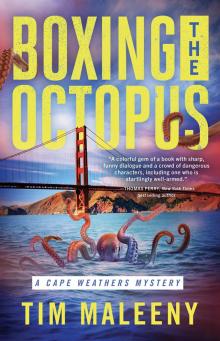
from Boxing the Octopus,
another exciting Cape Weathers Mystery!
1
As he suspected, the village was full of misery, fear, and blood.
The Doctor adjusted his headphones, cranking the volume. After visiting the first two villages, he couldn’t get the sounds of dying out of his head.
Nothing a little Katy Perry or Ariana Grande couldn’t fix.
It wasn’t his fault these people were born on the ass end of the planet. One thing he’d learned in medical school is life is cheap, and not everybody gets to live in the first world. Or even in the same century.
There were over a hundred cities in China with populations in excess of a million people, but this wasn’t one of them. After a three-hour drive from the urban sprawl and pollution of Beijing, the Doctor crested a mountain range at the border of Hebei province. The Toyota Land Cruiser barely fit on the dirt track running to the village from the main road, the terrain as inhospitable as the surface of Mars. Some of the homes were only accessible by foot.
The Doctor stepped gingerly into the temporary structure erected on the outskirts of the village. The cots were full, most of them occupied by young children and their grandparents. As cities grew and jobs disappeared from rural China, many teenagers and able-bodied adults left family behind in the villages and headed to the nearest city, in hopes of bringing prosperity back home one day. The Doctor knew that day would never come.
These people were dead before they were born.
One of the nurses handed him a clipboard, but the Doctor already knew what it would reveal. He didn’t have to take off the headphones or listen to her nervous voice explain that everyone who took the placebo was doing fine, but over twenty percent of the patients who took the new drug were writhing in agony, blood seeping from their ears, eyes, and nose.
Three weeks to the day since the drug was ingested. Just like the trials in Tunisia and Angola.
Two more sewers where years of work and millions of dollars got flushed down the drain.
The Doctor thumbed the controls on his phone and skipped over Beyoncé to find a better tune. He needed a new playlist. Beyoncé was overrated, and he desperately needed to cheer the fuck up.
He stepped outside onto the barren earth and stood under the unforgiving sun. The Doctor didn’t want forgiveness, and the irony that this place was hot as Hell wasn’t lost on him.
As his SUV bounced along the rutted road and the village shrank in his rearview mirror, he passed the convoy of mercenaries coming from the opposite direction. They were late, and he wasn’t going to wait around to give them instructions. This was the third village, and they knew the drill. After Tunisia, the Doctor made sure they brought enough propane to keep the burn pit going for days.
…you just gotta ignite the light, and let it shine…
It was almost as if Katy Perry had written that song just for this moment. The Doctor hummed along as he grabbed the satellite phone from the passenger seat. The song would be over soon, and he needed to make a phone call. He kept his eyes on the road ahead as he dialed, not sparing another glance in the rearview mirror.
He had witnessed enough death for one day.
2
No one should witness his own murder.
The thought didn’t occur to Hank because he had other things on his mind.
His partner was fifteen minutes late. Not the end of the world if you’re giving someone a ride to the airport, but a very big deal when you have five million dollars in your vehicle.
Time to go, Lou.
The armored car squatted on the pier, its fat tires clutching the broken asphalt. San Francisco Bay sloshed lazily in his side mirror, and the engine vibrations threatened to rock Hank to sleep. Coffee wasn’t an option unless he felt like pissing in a bottle, and his aim wasn’t what it used to be.
Hank fingered the cross around his neck and considered asking God to find his partner or grant him the divine power of telepathy so he could summon the dipshit from the other side of the pier.
Where the fuck are you?
Lou didn’t answer. Neither did God.
The backside of Pier 39 was almost deserted, only restaurant employees cutting behind the buildings where they worked. Although this access road was quiet, Hank knew the main thoroughfare of the pier was buzzing this time of day, clogged with families from a dozen countries navigating an obstacle course of souvenir shops and chain restaurants on their quest to find the sea lions swimming at the end of the pier.
Visited over ten million times a year, Pier 39 had become San Francisco’s leading tourist attraction, and none of the locals could understand why.
For Hank the pier was simply a job. It was also proof that even a natural beauty like San Francisco could look like a tramp if you dressed her like one.
He had parked along a narrow strip of asphalt running behind the pier, in the shadow of a crooked line of buildings on the east side. This was the last stop before the pier opened onto the street and he drove to the bank.
To his right, the rear entrances of the merchants, and on his left, a wooden railing to protect drunken tourists from falling into the adjacent marina. Sailboats, motorboats, and skiffs bobbed gently in the current from the bay. Hank caught the smell of dead fish every time he breathed through his nose, even though he couldn’t roll down the windows in the armored car.
Hank twisted in his seat and looked to the uppermost level, almost directly above him. A lone window, curtains open, but no sign of movement.
She’s minding the store. Doesn’t have time to wave at you, dumbass.
Hank smiled and felt himself relax. Maybe Lou had found himself a girlfriend on the pier, too. There was a reason Hank preferred making the pickups instead of waiting in the car, but today was his turn to drive.
He glanced at the sloping driveway at the front of the pier, scanning traffic like he was trained to do. Taxis and cars drifted past, a monotonous blur of color.
A forklift emerged from the back of an eighteen-wheeler parked on the shoulder of the main road. The semi was too heavy for the pier, so the forklift turned off the street, boxes stacked high, and headed down the ramp. Hank had parked closer to the marina railing than the stores, so there would be plenty of room for the narrow forklift to pass. His only job was to sit tight.
Hank watched the forklift bounce and shimmy toward him.
A UPS truck followed a moment later, just narrow enough to fit on the ramp. The driver angled to avoid scraping the undercarriage, and Hank got a clear view of the man behind the wheel.
It was Lou.
It took a second to register a familiar face in a confusing context. By the time it clicked, there was nothing Hank could do.
The forklift spun violently against Hank’s front bumper, the steel arms sliding beneath the armored car. The boxes were empty, collapsing and temporarily obscuring Hank’s view. A metallic scream rose with the arms of the forklift. Hank’s world swooned as his front wheels left the surface of the road.
As the broken boxes fell to the ground, the forklift driver leapt from the cab and ran toward the main road. His work was done.
Hank locked eyes with Lou as the UPS truck slammed mercilessly into the back of the forklift, driving it under the armored car like a wedge. The car reared backwards, balancing on its rear wheels for a sickening instant before flipping onto its roof.
The day wasn’t supposed to go down like this.
Sparks flew as the car skidded across the asphalt and crashed through the wooden railing at the end of the pier. Free fall, and then the armored car struck the water. Hank bit through his tongue, the blood tasting like an unpaid debt.
He was upside down and sinking, and he couldn’t roll down the window. Boats sloshed into view through the windshield. He threw his weight against the door but only a small gap appeared. Water poured in, drowning any hope of escape.
He tried to take a deep breath, but the frigid water had other ideas. Reflexively, Hank reached for the gun on his hip, but the small part of his brain still working remembered the glass was bulletproof.
The car hit bottom twenty feet down, the water green and murky.
Dashboard lights reflected off the windows, transforming them into mirrors. The only thing Hank could see was himself. He stared at his reflection as the water rose, a lone witness to his own fear.
By the time the water crested above his chin, it was a face he barely recognized, wearing an expression he’d never seen before.
He looked like a man who didn’t want to die.
Acknowledgments
Writing a mystery is like painting an impressionist landscape using your subconscious as the brush. You hope the story that was in your head is now on the page, but the only way to be sure is to ask someone you trust to look over your shoulder, which is why I count myself lucky to be working with the brilliant bibliophiles at Poisoned Pen Press and Sourcebooks. Diane DiBiase is an editor extraordinaire whose keen eye and endless encouragement turned my manuscript into a book. Beth Deveny did the impossible (again) by making sure none of my mistakes were ever seen in print. Eternal thanks to the legendary Barbara Peters for giving me the courage to face the terror of the blank page, to Rob Rosenwald for giving me a home so long ago, and to Dominique Raccah for welcoming me to the Sourcebooks family. Finally, thanks to Clare and Helen for storytelling suggestions, to Kathryn for ongoing inspiration, and to readers and booksellers everywhere for loving books as much as I do.
About the Author
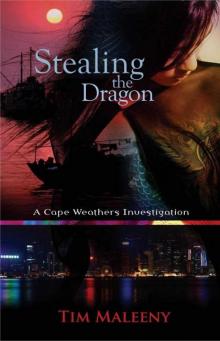
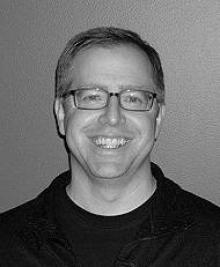
TIM MALEENY is the bestselling author of the award-winning Cape Weathers Mysteries including Stealing the Dragon and Boxing the Octopus, a series Booklist describes as “smart, snappily written, energetic mysteries starring an engaging hero.” Tim’s standalone thriller, Jump, was called “a perfectly blended cocktail of escapism,” by Publishers Weekly, and his short fiction has won the prestigious Macavity Award. “If comic crime fiction is your thing, Maleeny delivers in spades,” says the Irish Times. A former resident of San Francisco, Tim currently lives with his family in New York City, where he is writing diligently whenever he isn’t busy procrastinating.
Thank you for reading this Sourcebooks eBook!
Join our mailing list to learn about new releases, special offers, and bonus content—right in your inbox!
SIGN UP NOW
Tim Maleeny, Hanging the Devil