Strangers on a Pier, page 2
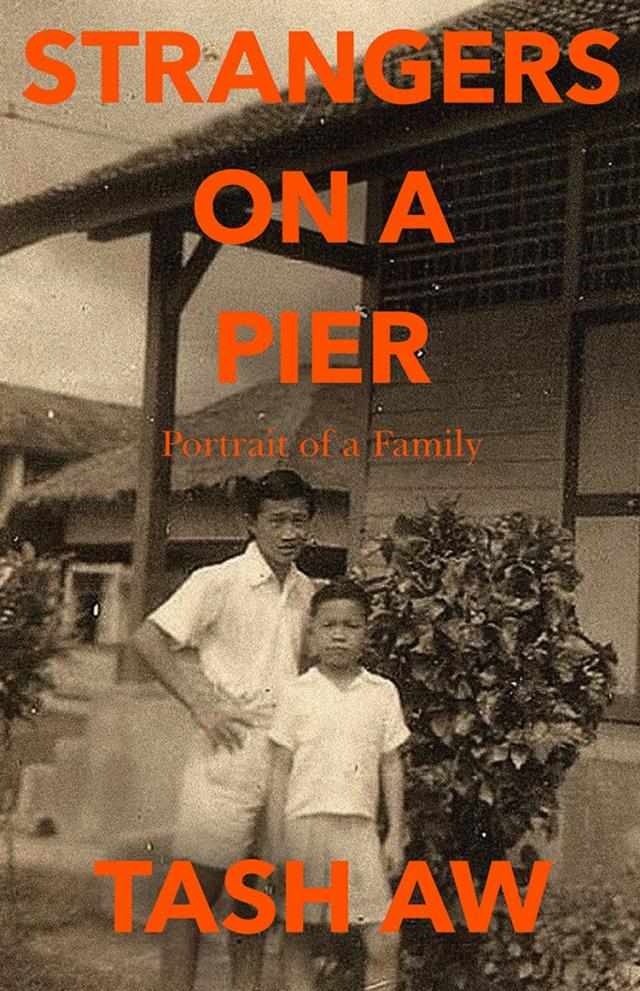


What he can recall is being on a boat from Singapore – yes, it must have been from Singapore – up to Kelantan, the far north-eastern state where the family would settle. On the boat there were other recently arrived migrants from China but also India – Indian Muslims who performed their prayers and then shared their food with him. It was just some rice, but good rice, clean and white and nourishing, one of the best meals he can recall. He can remember my grandfather going away for weeks, maybe months, in search of work, can remember the time of brief abundance when my grandfather had a job and the family could afford to eat properly. He recalls the signwriting that my grandfather, a talented calligrapher, used to do as a sideline job to earn some extra money. For many years afterwards, they would pass black-and-gold signs that hung above certain shops and he would recognise my grandfather’s elegant handwriting. He can remember, too, getting his first pair of shoes at the age of ten and feeling clumsy and heavy-footed. A few of these stories I have heard before; most I have not. He talks, also, about his half-sister, whom I knew but never well. As a girl, she was not deemed worthy of an education and was sent to work at the age of ten on the train between Malaysia and Thailand, where, urchin-like, she stole aboard and sold little packets of food to the passengers. My father would give her a lift up and she would prise open the window with a stick and clamber into the carriage – a plan that worked well until she slipped one day and speared her arm with the stick. This I did not know.
Listening to him, I am struck firstly by how free of resentment he is at his difficult childhood. His stories are not of a deprived-but-happy variety but neither are they full of the rancour you might expect of a person in his position. I remember, now, various conversations between him and his relatives – or, rather, members of the extended Kelantanese clan – on which I had eavesdropped without really meaning to as a child. Some of them, more open and talkative than my father, would discuss their underprivileged rural pasts with what I now recognise as a similar acceptance, a recognition that not everyone is born moneyed and comfortable. They are reconciled to society’s lack of fairness – its hierarchy, if you like – because their stories are underpinned with a natural assumption that they will progress through its ranks:
They will be educated, to some degree.
They will become better off, even if never properly rich.
They will live and work in a big city.
Their children will become professionals and earn healthy salaries.
Their grandchildren will grow up so middle-class and affluent that the idea of deprivation will have no place in their lives, will seem to belong not to their country, but a much poorer neighbour like Cambodia or Bangladesh.
Like most migrants, my father and his Kelantanese clan have uncomplicated aspirations of education, work and upward mobility hardwired into their brains, which explains why America was their ideological Mecca; why I knew what SATs were when I was barely twelve years old and living ten thousand miles from the United States. Britain and the old countries of Europe might have been culturally interesting, but they were too obsessed with their past; the future was America (they could never have imagined the logic-defying rise of their miserable homeland).
‘These are boring poor-people stories,’ he interrupts himself. ‘They’re not very interesting to you.’ I demur, and press for more. Hearing him speak in such detail is rare and, frankly, a bit disconcerting, a bonding process that requires him to reveal more than I am accustomed to experiencing, like the time I was fourteen and he decided, in an awkward manner, to strip off entirely in the locker room after tennis, and we both had to pretend that we were comfortable with it. I suppress my urge to shrug and give up on the conversation, because while not yet on a roll, my father has been talking about things I’ve never heard of before, slowly stripping back the layers of memory, yet there’s a lot more I want to know. We’re still hovering on the periphery, I feel, still a fair distance away from knowing about my grandfather’s first days in Nanyang. My grandfather died years before I was born, when my father was sixteen, and I have never really known anything about him beyond the basic facts of his life: that he had at some point been a village schoolteacher, was a skilful calligrapher, and in his latter years ran a coffee shop; that he died of throat cancer – he had been a smoker, too. Beyond this I know very little, nothing about his temperament, his idiosyncrasies, the little quirks that bring to life the human being behind the official portrait – not that it is a particularly well-drawn portrait in the first place, more like a sketch that has been blurred by years of neglect and left to grow damp so that even its outlines are obscured. This opacity has bothered me for as long as I can remember. But now my father stalls; he doesn’t know what to say next. Our conversation falls into a sudden trough.
And in the silence, I begin to think: that’s what frustrates me about a particular kind of migrant, the ones who drop their cultural baggage entirely in order to assimilate successfully into their new surroundings (as opposed to the other extreme, who cling desperately to memories of the homeland, and can’t wait for the day they can retire and return to the place they have just left). For the problem with the Forgetters is that the need to wipe the slate clean in their adoptive country doesn’t just begin and end with their arrival in their new land; it continues thereafter, repeating itself until it finds a convenient historical ground zero that is emotionally and intellectually untroubled, so that a new narrative about themselves is formed, a glowingly positive trajectory that strives for a clean story arc, complete with neatly packaged doses of pain – ultimately overcome, of course – that punctuate the rise to comfort and success and happiness:
We arrived from China, we were poor; we worked hard, and for a while our lives were difficult (but not really that bad); there were obstacles along the way, but look where we are now.
But how did you even get here? How did you end up in a godforsaken village on the edge of the jungle, where pet dogs got eaten by tigers – what chain of random decisions made you end up there? What were those ‘obstacles’, exactly? And all the silences, what did they hold? (I’m just wondering, because all throughout my childhood years, various close relatives spent long periods in hospital because they were ill, and one or two died from their illnesses and were rarely mentioned again, without any elaborate Chinese funerals to mark their passing, and it was only when I was in my thirties that I discovered that they had in fact been in psychiatric hospitals, squalid archaic institutions that treated mental illness as madness, and the ones who died had committed suicide; and I discern, too, that there is an abnormally high rate of mental health issues affecting the male members of my extended family, both the migrant branch in Malaysia and, historically, the ones who stayed in China – an abnormally high rate of suicide. So, I’m just asking.)
In the story of modern Asia, these messy blotches don’t sit well with the clean lines of our reinvention. We apply them to national narratives, too, wiping out difficult relationships and entire periods of our history that make us feel uncomfortable because they disrupt the plotlines of our rise to middle class-ness, a status the World Bank calls ‘upper middle income’, soon to break into the realms of high income. In this story, minor conflicts of race, religion and class once existed but were swiftly overcome and no longer trouble us today; boundaries between countries that demarcated their cultural and ethnic differences were always in place, and provide justification for current nationalist arguments (there was never any overlap between these two territories, we were never, a mere few decades ago, the same people); there were violent riots in which many people died, but we have learnt from those lessons (no, there were never any massacres). History begins at a particular point and blithely skips a decade here, a half-generation there. Chinese people of any nationality talk endlessly about their history and heritage, make lavish films about it, but always, what they refer to is the ancient dynasties, a thousand or more years ago. One of the four great Chinese classic novels is Romance of the Three Kingdoms, set in a period ending in the third century. Everyone reads it at school, and there are at least seven feature films of it, plus countless TV adaptations. When history is that far back in time, it is safe and unthreatening. What happened thirty, forty, fifty years ago is another matter; that kind of history is more unsettling.
Always, the final act of this narrative involves the gratitude that accompanies the wealth of contemporary Asia. Look where we are now, compared to where we were not so long ago. This is intended to be both a justification for editing out those uncomfortable passages from our screenplay, and also a sort of closure, as if material comfort can provide the kind of finality that we need in order to live our lives happily.
But the problem with the official biopic is that it’s boring. It is short on dramatic tension, despite the rocky moments that the person or the community or the entire country has to survive. It lacks intrigue because it is built on a careful logic that lacks silences, those shadowy unexplored areas that give us a fuller understanding of where we come from, how we are interlinked, where our futures lie. In simple terms, we need to know that messiness in order to know who we are.
My father is right. It is about shame. That is why we edit our stories the way we do, to alter our image not just for others but for ourselves. In Kuala Lumpur and Ho Chi Minh City and elsewhere in South East Asia we rename all the streets so that they bear names of our national heroes rather than the names of the Scots and Englishmen and Frenchmen who once colonised us. The act of reclaiming one’s national heritage is necessary, and inevitable, but it is nonetheless about shame – the shame of having been colonised, of having been the subject of a distant monarch, of having answered to someone stronger and richer. Poverty means frailty, and it is shameful, even now that we have skyscrapers and high-speed trains. We can’t live, comfortably or uncomfortably, with the knowledge that our story was narrated by someone else during those long early chapters, so we edit those passages out. But, as any storyteller knows, the editing process is addictive – buried in the mess there is a perfect story waiting to emerge – so we chisel away obsessively, chipping off entire blocks from the structure, more and more and more, until finally we have an unblemished, featureless mass. This is the form that pleases us.
But consider what happens when you get into a cab in Penang, for example, and ask for Lebuh Leith, which has been called Lebuh Leith on official maps for as long as I can remember, and the driver says, ‘Oh, you mean Leith Street.’ Somewhere beneath the polished surface of our narrative, the messiness still remains; we carry it with us, unexpressed, unacknowledged. The divisions and conflicts of the past remain inside us too, the unexamined, unprocessed trauma, seeping into the way we organise our societies.
This is why the story of how my grandfather came to settle in the depths of Kelantan is important to me. This is why I am here with my father, sitting through the awkward silence and resisting the urge to go and get another soda for myself and a cup of tea for him, or refill the bowl of groundnuts we have been sharing, or check my iPhone for messages, or something else that will relieve the suddenly stilted atmosphere but also put an end to our unexpectedly frank conversation. Somehow, I feel his story might help explain why my face is becoming more angular as I grow older, shedding the chubby cheerfulness that I had throughout my childhood, that comes from my mother’s family. It might explain why I can pass for anyone, anywhere in South East Asia; might explain why no one ever guesses where I’m from. But something has happened – maybe I’ve asked one question too many, maybe I’ve touched a nerve, maybe my father regrets having told me so much.
We contemplate the view of the city in the distance, the Twin Towers rising from a base of smaller high-rises. There is no smog today; from our suburb a few miles away, the city centre looks impossibly snug in the Klang Valley, protected by the mountain range beyond. In this light, the hills look almost blue. A strong breeze starts up, blowing some groundnut shells off the table. My mother is calling from inside the apartment. Still, I wait.
FOUR
A monsoon-season downpour: the rain falling so heavily that the view from the classroom windows has become shrouded in a pearly-grey mist. The sports fields and the line of acacia trees on the perimeter is fuzzy, their outlines uncertain – a watery mirage. Next to the classroom there is a corrugated zinc roof that shelters the canteen; the rain clatters onto it so loudly that it’s difficult to hear ourselves speak. In class, the lesson has been cancelled. Heavy rain, lightning, a power cut – it’s too dark to read. Best of all, our teacher isn’t here, kept away from school like half of the class by the occasional drama of the rainy season: banjir. Floods, not just in the kampung – ‘urban villages’ that are in truth little more than slums – but in the suburbs, on the highways: everywhere, the colour of milky tea, swirling knee-deep, threatening foolhardy motorists with waterlogged exhaust pipes, turning the deep monsoon drains into frenzied torrents that will, in the days to come, yield at least a couple of tragic stories – small children playing next to these impromptu city rivers slip into the currents and are carried away to their deaths. Growing up in Kuala Lumpur, even in a gentrifying suburb, we have a sense that death is never far away.
Inside the classroom, the wind is sweeping the rain through the louvre windows which are old and stuck and won’t close, so we’ve shuffled the wooden desks towards the middle of the room. The substitute teacher – a young recent graduate from teacher training college, huddles over a book, looking up with decreasing frequency to check that we are under control. She is engrossed in her novel, which someone later claims to have spotted, despite her attempts to hide it within the pages of a geography textbook – a torrid bodice-ripper with a swooning woman, one of those Mills & Boon paperbacks that girls from the convent school next door are starting to buy at the second-hand bookstores in the nearby cluster of shops in State, opposite the central car park square where one of our classmates was recently spotted smoking during school hours. We are fifteen years old, and life is about to change for us.
This is the year we take our first major public exams, the Sijil Rendah Pelajaran, or Lower School Certificate, which every pupil of our age in a publicly funded school will sit. When the results are published nationally, there will be articles in the newspapers about students who have overcome disabilities or extraordinary setbacks in their family circumstances to excel in the exams, stories about village schools with an unusually high number of A-grade students – tales that fit nicely into our growing modern narrative of achievement and transformation. Personal success that takes place on a national scale: this makes us feel that we are all changing for the better. But away from the limelight, there will be a more important shift, for we will begin to articulate, with almost adult awareness, the differences in class, money and privilege that exist between us.
As pupils in a public secondary school in Malaysia in the 1980s, we have, up until now, lived in a state of happy ignorance. The teaching is earnest but ineffective. Our classes are too big, and most of the forty-five boys in each class are too distracted by football or music to be serious about work, so the atmosphere during lessons is relaxed, the teachers resigned to their role as idle shepherd, watching over a flock that just wants to do its own thing. We are in an old Catholic school now run by the government, although among the teachers there are still one or two Salesian Brothers, missionaries and teachers whose tropical-white robes cut an increasingly strange figure in a country whose national identity is growing stronger with each year. Its economy is growing, too, and we are riding its optimism.
We are ignorant, most of all, of the divisions that exist between us. We live in a country governed by racial politics, but in school this doesn’t seem to matter. It’s true that there are unofficial cliques that seem to be dominated by one racial group or another – Chinese boys play basketball, Indian boys play hockey, and the school football team is dominated by Malay rocker boys who cut out pictures of Metallica from magazines and stick them to their textbooks. But in class and during breaks, the racial mix is an easy blend of skin colour and language, a patois of English, Malay and Cantonese. We don’t notice, at this stage, the fact that we come from different family backgrounds too. There are boys whose names bear the prefixes Raja or Tengku that mark them as being from the various royal families; there are those like me, who live in aspiring middle-class suburbs nearby; there are boys who come from poorer rural areas, who live in hostels subsidised by the Ministry of Education; there are those whose parents work as janitors and dishwashers. In my year there is a boy called Mahendran, who writes with difficulty, and whose rubber-tapper parents are illiterate (they are not the only ones). There are pupils with learning disabilities, who nonetheless appear at school every day but merit no special attention from the teachers. There are the geeks who excel at math (usually Chinese), as well as small-time gangsters who get into fights after school and occasionally get expelled (usually Chinese); but generally we blend into a single mass that coasts along without drama. We spend time together at breaktime, are at least cordial to each other, are ignorant of just how deep the divisions are between us.
We are here because we are all children of the underprivileged, people who have known, to some extent or another, deprivation. Who were not born into a country that had ever produced a bourgeoisie. Who measure themselves against the countries of the West, with their generations of middle classes and education and stable government. Who want the same thing, now, for themselves and their children. Who believe they will achieve the same stability and wealth and high culture in their lifetimes. We are here because we are part of a process of nation-building, because our parents believe in a common project of construction – of the self, of the society, of the country – that is based on improvement, the constant onward drive of the narrative of modernity. We do not know this, at our age, but we are all part of the way we are telling the story of ourselves, to ourselves.