


A Mickey Rawlings Baseball Mystery Series by Troy Soos
A Mickey Rawlings Baseball Mystery #1
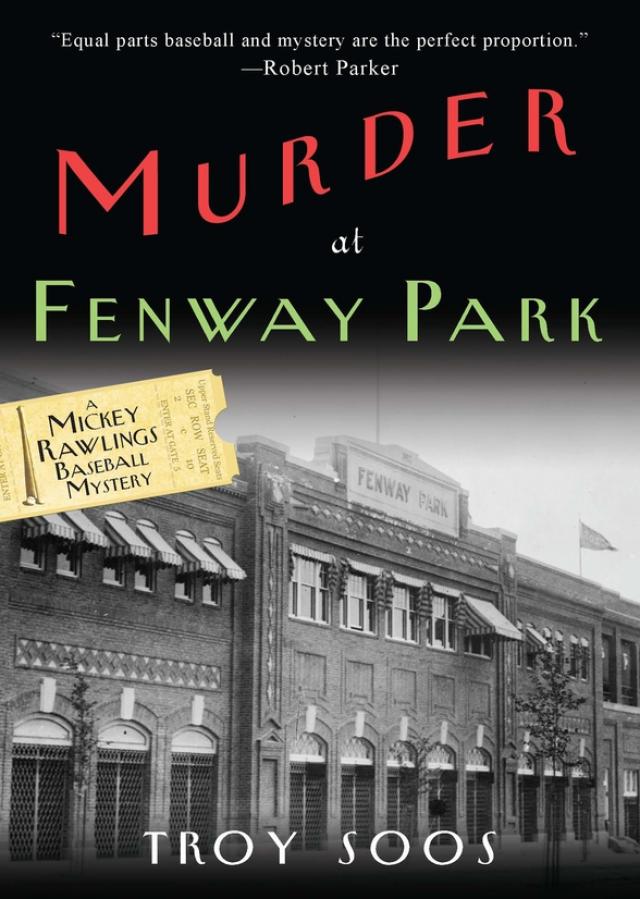
Murder at Fenway Park
Troy Soos
Young Mickey Rawlings stumbles across a murder in 1912 Fenway Park, where he learns an entirely new lesson about foul play as he becomes the number one suspect in a case that forces him to launch his own investigation. Reprint. PW. From Publishers WeeklyOn a visit to Cooperstown, Mickey Rawlings, the oldest living ex-ballplayer, discovers his baseball card and is transported back to the Boston of April 1912--when the newspapers are full of stories about the Titanic , which has just sunk, and Fenway Park is brand new. Rawlings, a utility infielder just brought up by the Red Sox, reports to Fenway and trips over the body of Red Corriden, whose head has been smashed by a baseball bat. Rawlings, who throws up on the corpse, is grilled by Capt. O'Malley of the local precinct and Robert Tyler, the treasurer of the Red Sox. Joining the ball club in New York, Rawlings wonders why the the papers aren't covering the murder; then he learns from one of Tyler's flunkeys that the body was moved to avoid embarrassing the Red Sox. Next he finds out that Corriden was an unwitting accomplice in an effort to cheat Ty Cobb out of the 1910 batting championship and that some people have long memories. After the flunkey is murdered, Capt. O'Malley has more questions for his favorite suspect. Meanwhile readers will suspect ornery Cobb, crooked teammates and the PR-conscious club treasurer. Soos's delightful debut, mixing suspense, period detail and such legendary baseball greats as Cobb, Walter Johnson, Smokey Joe Wood and Tris Speaker, is a four-bagger that will leave readers eager for subsequent innings. Copyright 1994 Reed Business Information, Inc.
Read online
A Mickey Rawlings Baseball Mystery #2
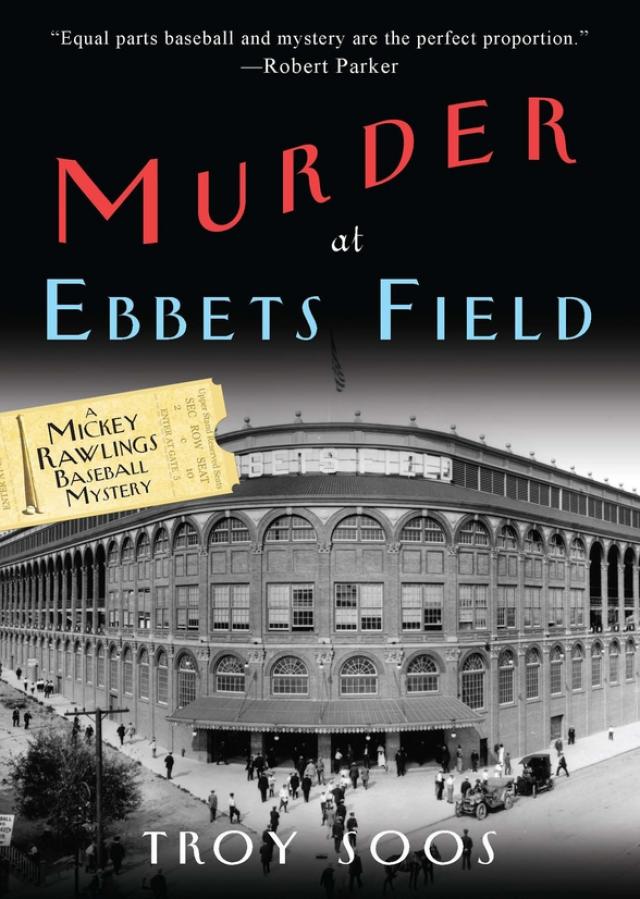
Murder at Ebbets Field
Troy Soos
Slugger/amateur sleuth Mickey Rawlings is back for a second whodunit. August 1914: the Giants are in first place, the Dodgers last, and Mickey might well realize his most cherished dream of playing in the World Series. But as the pennant race heats up, Mickey finds himself matching wits with a killer who has an irritating habit of vanishing into thin air.From Publishers WeeklyAugust 1914. WWI has just started in Europe, the Miracle Boston Braves are hot on the trail of the first-place New York Giants, and Giants' utility infielder Mickey Rawlings is about to pick up where we last left him in Murder at Fenway Park. When the Giants journey to Brooklyn's brand new Ebbets Field to play their arch rivals, the Dodgers, Rawlings is asked to make a baseball movie with the matinee idol of the day, Florence Hampton. After the filming, he joins the movie company at a party in Coney Island, where, next morning, he finds Hampton's lifeless body under a pier. Rawlings, asked to investigate, learns that Hampton was poisoned with arsenic?just as her husband had been a few months before. When the Dodger's batboy is poisoned, Rawlings wonders who's next, and why. With the help of a Brooklyn outfielder by the name of Casey Stengel, and with cameos by John McGraw and Christy Mathewson, Soos offers another breezy read full of the flavor of the times. Copyright 1995 Reed Business Information, Inc.
Read online
A Mickey Rawlings Baseball Mystery #3
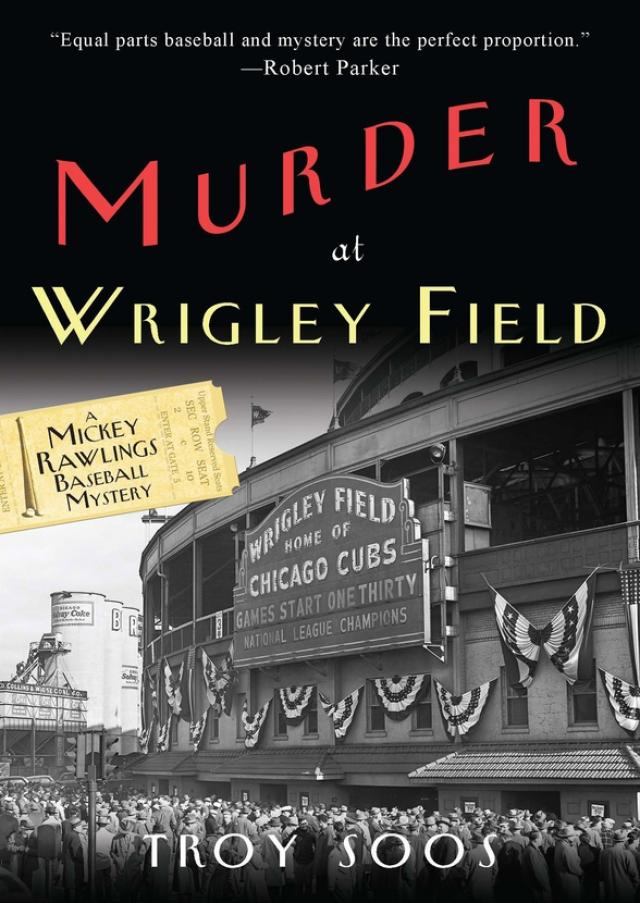
Murder at Wrigley Field
Troy Soos
Starting for the Cubs in war-frenzied 1918 Chicago, star hitter Mickey Rawlings attempts to learn who has been sabotaging the team's efforts and becomes embroiled in a murder investigation after his best friend is killed. Reprint.From Publishers WeeklyIn the summer of 1918, wartime fever grips Chicago, rendering even pretzels and dachshunds verboten. Mickey Rawlings, journeyman second baseman and hero of Soos's last two mysteries (Murder at Fenway Park and Murder at Ebbets Fields) has a new shortstop to work with, Willie Kaiser. With a name like Kaiser, Willie is not the most popular guy in Chicago. On July 4th, while marching in a patriotic parade at Cubs Park (it would not be named Wrigley Field until 1926), Kaiser is fatally shot. Rawlings is determined to find out who did it. Among his suspects are the shortstop who lost his job to Willie; the Patriotic Knights of Liberty, an anti-German vigilante group; and Bennett Harrington, a part owner of the Cubs who would like to be the boss. Learning that Kaiser had worked in Harrington's war plant, Rawlings takes a job there to snoop. His life is endangered by an explosion set up by the plant's security chief, who belongs to the Patriotic Knights. When the security chief's body is found in the Chicago River, Rawlings wonders if he's the next target. Along with a first rate wartime Chicago atmosphere, Soos gives us cameo appearances by such baseball legends as Shoeless Joe Jackson and Bonehead Fred Merkle. Although this tale is slower paced than earlier stories, Rawlings still turns double plays and solves murders with equal grace. Copyright 1996 Reed Business Information, Inc. From Library JournalThis even-tempered Chicago mystery takes place in 1918, when army enlistments depleted the ranks of the Cubs. With someone capitalizing on anti-German sentiments by sabotaging several Cubs games, part-owner Charles Weeghman asks second baseman Mickey Rawlings to find the guilty party. After his best friend, Willie Kaiser, is murdered in the crowded Cubs ballpark, Rawlings sets out to find the killer. Low-key antics, attention to period detail, and subtle plot interweavings underscore this solid, simple work.Copyright 1996 Reed Business Information, Inc.
Read online
A Mickey Rawlings Baseball Mystery #4
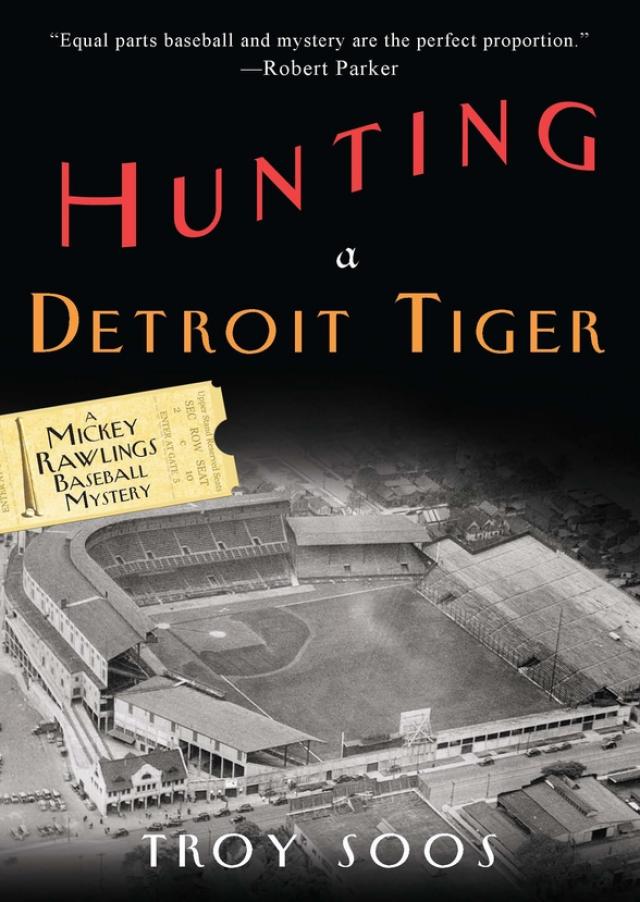
Hunting a Detroit Tiger
Troy Soos
In the midst of the communist scare of 1920, Mickey Rawlings, a utility infielder for the Detroit Tigers, finds himself embroiled in murder and union intrigue, after someone kills would-be union organizer Emmett Siever, a crime for which Mickey is being set up to take the fall.From Kirkus ReviewsThe Detroit papers all say that journeyman infielder Mickey Rawlings shot union organizer Emmett Siever in self-defense during a rally in Fraternity Hall. But although Mickey was on the scene, he doesn't know anything about the shooting--except that he didn't do it, and that the revolver found in Siever's hand was a plant. But ``personnel coordinator'' Hub Donner, brought in by the American League to bust the struggling players' union, decides that the notoriety has made Mickey's signature just the one he needs over a series of articles condemning the union, and he puts major-league screws on him when Mickey won't play ball- -floating rumors about Mickey's anti-union sympathies that have his new teammates on the Tigers freezing him out, and the Wobblies who organized the rally threatening revenge unless he delivers them a better candidate for Siever's killing. Mickey's left with just three questions: How will he survive the 1920 season with the front office and his teammates both at his throat? Why isn't Siever's daughter Constance more distraught at her father's death? And will the Tigers, led by that inimitable sourpuss Ty Cobb, ever climb out of last place? Mickey's fourth outing (Murder at Wrigley Field, 1996, etc.) may be his best nine innings. The union-busting makes the mystery as timely as Donald Fehr, even though all the games are played on real grass. -- Copyright ©1997, Kirkus Associates, LP. All rights reserved.
Read online