The Physics of Energy, page 21


(6.1)
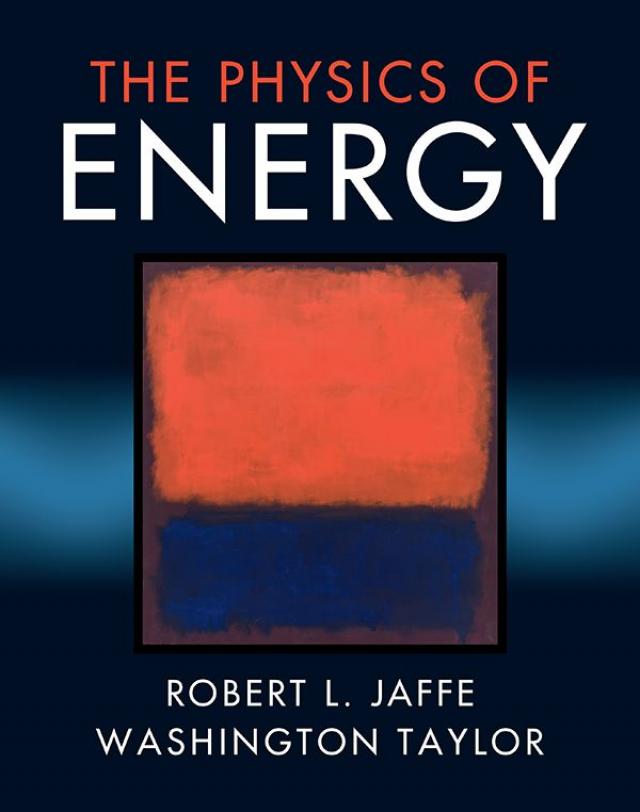
This equation, known as Fourier’s law of heat conduction, provides an excellent description of conductive heat flow in most practical situations. The constant of proportionality k, which is always positive, is called the thermal conductivity of the material. Note the minus sign in eq. (6.1). The gradient of T points in the direction in which heat increases most rapidly, and heat flows in the opposite direction, toward lower temperature. If the material is homogeneous and isotropic (rotationally invariant), k is independent of x and has no directional dependence. In general, k is temperature-dependent. In solids, the temperature dependence of k is fairly weak, and k can either increase or decrease with increased temperature, depending upon the material. The thermal conductivities of gases are more sensitive to temperature. For most purposes, a value at the average of the temperature range studied is sufficient.
The thermal conductivity of a material is the fundamental property that governs its ability to transport heat. Materials with large k are good conductors of heat; those with small k are thermal insulators. The units of k can be read off from eq. (6.1), K. The thermal conductivities of a variety of common materials are listed in Table 6.1. Thermal conductivities vary over many orders of magnitude, as illustrated in Figure 6.3. Excellent conductors of electricity, such as copper, silver, and gold, are also excellent heat conductors. This is no accident: the mobility of electrons that makes them good electricity conductors also allows them to transport heat very quickly.
Table 6.1 Thermal conductivities k and thermal diffusivities a for various substances, including some common building materials, measured near room temperature. Unless otherwise noted, thermal conductivities are from [28]. Thermal diffusivity is calculated from its definition (see §6.5) unless otherwise noted. Since the values of k and a vary significantly among sources, we quote only two significant figures, and in the case of materials with variable composition, only one.
Material Thermal conductivity k (W/m K) Thermal diffusivity a (10−7 m2/s)
Air (NTP) 0.026* 205
Argon (NTP) 0.018* 190
Krypton (NTP) 0.0094* 100
Xenon (NTP) 0.0057* 61
Water 0.57 1.4
Hardwood (white oak) 0.18 0.98
Softwood (white pine) 0.11 1.5
Sandy soil (dry/saturated) 0.3/2.2 2.4/7.4
Peat soil (dry/saturated) 0.06/0.50 1.0/1.2
Rock ≈3 † ≈14 †
Brickwork (common)
Window glass 1.0 5.5
Stone concrete
Carbon steel 45 120
Aluminum 240 900
* from [29], from [30]
Figure 6.3 The approximate ranges of thermal conductivity of various substances. (All in the neighborhood of room temperature unless otherwise noted.) Data from [27].
6.2.3 The Analogy Between Conduction of Heat and Electricity
There is a useful analogy between the flow of steady currents in electric circuits and steady-state heat conduction. In the former case, charge – a conserved quantity – flows in the direction of the local electric field, which is the negative gradient of the time-independent potential . The mathematical description of heat flow is precisely parallel: the conserved quantity is thermal energy, which flows along the negative gradient of the temperature .
Box 6.1 A Derivation of Fourier’s Law?
Deriving the thermal conductivity of a material from first principles turns out to be surprisingly difficult – even more difficult in some cases than deriving the drag coefficient for a complicated object like an automobile. For good conductors such as copper, silver, or aluminum, electrons are primarily responsible for both electrical(σ) and thermal (k) conductivity, and the methods of quantum mechanics and statistical physics providea relationship between σ and k. This relation, , is known as the Wiedemann–Franz–Lorenz law. HereT is the temperature and L is a constant known as the Lorenz number, . The Wiedemann–Franz–Lorenz law explains the everyday observation that excellent conductors of electricity are also excellent conductors of heat.
For insulating solids such as quartz or salt, the analysis is more difficult, and in fact after 200 years of workthere is still no convincing first-principles derivation of Fourier’s law for (electrically) insulating solids. TheGerman-born British theoretical physicist Rudolph Peierls once said, “It seems there is no problem in modernphysics for which there are on record as many false starts, and as many theories which overlook some essentialfeature, as in the problem of the thermal conductivity of non-conducting crystals” [31]. Despite the absence of asatisfying derivation, empirical evidence confirms that all solids obey Fourier’s law, and thermal conductivitiescan easily be measured experimentally.
Heat Flux and Fourier’s Law
The flow of heat through material is described by a heat flux with units W/m2.
For most materials and over a wide range of temperatures, the flux of heat follows Fourier’s law of heat conduction
The coefficient of proportionality k is the thermal conductivity, which ranges from very small (~0.02 W/m K for excellent insulators) to very large (~300 W/m K for the best metallic conductors).
The local flux of charge is described by the electric current density . Ohm’s law (3.29) describes flow through a material with electric conductivity σ,
(6.2)
If we replace j by q, by , and σ by k, we obtain Fourier’s law (6.1) for time-independent heat flow,
(6.3)
For heat conduction, temperature thus plays the role of a “potential.” Its gradient drives the flow of energy that is described by the heat flux q. Thermal conductivity connects the heat flux to the temperature gradient in exactly the same way that electric conductivity relates the current density to the gradient of the potential. The ingredients in this analogy are summarized in Table 6.2.
Table 6.2 The analogy between steady-state heat conduction and steady electric currents. There is a mathematical correspondence between the quantities and equations governing these two phenomena, which are precisely parallel except that in the electric case one is primarily interested in the total current (the flow of charge per unit time), while in the caseof heat the quantity of interest is generally the heat flux (i.e. the flow of energy per unit area per unit time). Therefore the electric resistance includes a factor of 1/(Area), while the thermal resistance does not. The places where the factor of area enters are highlighted in red.
Quantity Electricity Heat conduction
Conserved quantity Q charge U thermal energy
Flux current density heat flux
Motive force electric potential temperature
Conductivity σ k
Physical law Ohm’s law Fourier’s law
Differential form
Integral form
Block resistance
Conservation Law
Just as conservation of charge is described by the local equation (3.33), a similar equation can be used to give a local description of energy conservation in the context of heat flow. Assuming that the material through which heat is flowing is fixed in space so that no energy is transported through convection or material deformation, the same logic that led to eq. (3.31) gives
(6.4)
where u is the internal energy per unit volume. Using Gauss’s law to convert this to a local form, we obtain a conservation law relating the density of internal energy to heat flux,
(6.5)
For compressible materials – gases, in particular – held at constant pressure, the internal energy density u in eq. (6.5) must be replaced by the enthalpy density h; since in this case the material expands or contracts, and additional terms must be added for a complete description (see e.g. [27]).
Because the mathematical analogy between electric and heat flows is exact, we can carry over many results from the study of currents, resistances, and voltage differences to the study of conductive heat flow. In many cases this allows us to determine heat flow for cases of interest simply by borrowing the analogous result from elementary electric current theory.
6.2.4 A Simple Example: Steady-State Heat Conduction in One Dimension
The simplest and perhaps most frequently encountered application of Fourier’s equation is in the context of heat flow across a homogeneous block of material with boundaries fixed at two different temperatures. Situations like this arise in computing heat loss through the walls of a house, for example. Consider a block of material of thickness L in the x-direction and cross-sectional area A in the directions perpendicular to x (see Figure 6.4). The material has thermal conductivity k. One side of the block is maintained at temperature and the other side is held at temperature , with . This setup is precisely parallel to the situation described in §3.2.2 of a homogeneous block of conducting material with a voltage difference between the two sides (Figure 6.5).
Figure 6.4 A homogeneous block of material of thickness L and cross-sectional area A that conducts heat from temperature on one end to on the other end. If the sides of the block are insulated, or if the block is very thin compared to its height and width, then the temperature and heat flux depend only on x.
Figure 6.5 The analogy between thermal resistance and electrical resistance. The only significant difference is one of notation: thermal resistance is defined such that divided by gives the heat flow per unit time per unit area, in contrast to electrical resistance, which is defined relative to total electric current.
If the thickness of the block is much smaller than its other dimensions, then to a good approximation the edges are unimportant and the temperature and the heat flux will depend only on x, so this is essentially a one-dimensional problem with . We assume that there is an infinite reservoir for thermal energy on each side of the block, so that energy can be continuously removed or added on the boundaries through heat flux, without changing the boundary temperatures. Independent of the initial temperature profile, after some initial transient time-dependent changes in the heat flow, the system settles into a steady-state flow, in which the temperature at each point ceases to change with time, . In the steady-state flow, the heat flux q must be constant, independent of both x and t. If were nonzero at some point x, eq. (6.5) would require to be nonzero at x, and the temperature at x could not be constant. So eq. (6.1) reduces to
(6.6)
Thus, in steady state is a linear function of x with slope . There is a unique linear function satisfying , namely
(6.7)
Demanding that the slope be fixes the heat flux q in terms of , , and k,
(6.8)
The total rate at which heat passes through the block is then
(6.9)
This equation is the heat flow analog of Ohm’s law (3.23) for a block of material with homogeneous resistance (3.30).
6.2.5 Thermal Resistance
While the analogy between electrical flow and heat flow described in §6.2.3 is mathematically precise, the notion of resistance is generally treated somewhat differently in these two contexts. In the case of heat conduction, we are often interested in heat conduction per unit area, while for electricity we are generally interested in net current. This has led to a slight, but potentially confusing, difference in notation on the two sides of the analogy. For a given configuration of materials, the thermal resistance is conventionally defined after dividing out the factor of A in eq. (6.9),
(6.10)
so that eq. (6.9) reads . Thus, is defined to be the thermal resistance for a block of material carrying a uniform heat flux, even though is the quantity that would be strictly analogous to (). This notational inconsistency in the heat/electricity analogy is highlighted in Table 6.2.
Analogy Between Conduction of Heat and Electricity
The steady conduction of heat through materials is analogous to the steady flow of electric current through resistive media, with , , . Thermal resistances in series and parallel combine into effective resistances in the same way as electrical resistors in series and parallel.
The units of thermal resistance are K/W in SI units. In the US, thermal resistance is measured in ft2∘F hr/BTU. The conversion factor
(6.11)
is very useful in practical calculations. Literature and specifications relating to insulation often refer to as the R-value of an insulating layer. R-values are often quoted without specifying the units, which must then be determined from context.
The thermal resistance of geometries in which materials are combined in series or in parallel can be determined in analogy with the electric case.
Thermal resistance in series Suppose several layers with thermal resistances , , all with the same area, are stacked in sequence as in Figure 6.6(a). This is analogous to electrical resistors in series (Problem 3.10 in §3). Thus, thermal resistances in series add,
(6.12)
The temperature drop across each layer is given by , where the same thermal current q flows through all the thermal resistances. In analogy with the case of electrical resistors, the total temperature difference is given by .
Figure 6.6 Thermal resistances combine in series and in parallel in analogy to electrical resistances.
Thermal resistance in parallel Suppose thermal resistances with areas , are placed alongside one another, separating materials with a common temperature difference , as in Figure 6.6(b). This is analogous to a system of electrical resistors in parallel, and the inverse resistances add,
(6.13)
with a heat flux through each thermal resistance of , and a total heat flow of . The area factors in eq. (6.13) correct for the factors that were divided out in the definition of .
More complex thermal “circuits” can be analyzed using further electric circuit analogies. Although the heat–electricity analogy is very useful, a few caveats are in order: wires are excellent electric conductors. In well-designed electric circuits, currents stay in the wires and do not wander off into surrounding materials. In contrast, one is often interested in heat transport through poor heat conductors – for example, in the evaluation of building insulation – which may lose heat to adjacent materials more effectively than they conduct it.
A more complex set of issues arise from the fact that the thermal conductivities of actual materials and building products measured under realistic conditions usually differ significantly from those determined from the theoretically ideal values of the thermal resistance . There are several reasons for this. For one thing, in practice convection and radiation also contribute to heat transport in building materials. For small temperature differences, the rates of heat flow from both of these mechanisms are, as for conduction, proportional to (Problem 6.16). Thus, their contributions can be included in an apparent thermal conductivity defined by . Because heat transport by convection and radiation add to conduction, their effect is to lower the apparent thermal resistance compared to the thermal resistance computed from eq. (6.10). In general, for insulating materials in practical situations, empirically determined R-values are more accurate than values of R computed from .
A further aspect of these issues is that the presence of boundary layers (films) of still air near surfaces can significantly increase the measured thermal resistance of a layer of conducting material separating two volumes of air at different fixed temperatures because of air’s small thermal conductivity (see Table 6.1). This is particularly important for thin layers such as glass windows, which have little thermal resistance themselves, and mainly serve to create layers of still air (see Example 6.1). See §29 (Fluids) for more discussion of the behavior of fluids at boundaries.
Example 6.1 The R-value of a Pane of Glass
Glass has a relatively large thermal conductivity, W/m K. Equation (6.10) predicts that the thermal resistance of a 1/8 inch thick pane of glass should be K/W. The measured U-factor of a 1/8 single pane of glass listed in Table 6.3 is 5.9 W/m2 K, corresponding to a nominal R-value of 0.17 m K/W. How can these facts be reconciled?
A moving fluid such as air comes to rest, forming a thin stationary film called a boundary layer at the surface of an object that obstructs the fluid’s flow. This phenomenon is discussed further in §28 and §29. The layers of still air on either side of a window pane add additional thermal resistance in series with the glass itself. The layer on the interior (heated) side, where air movement is less, is typically thicker than the layer on the exterior side, where it is eroded by wind. Standard estimates are m K/W for the interior layer and 0.03 m2 K/W for the exterior layer [28]. Together these account for almost the entire insulating value of the pane of glass, and are included in the quoted U-factor.
Note that the apparent thermal conductance of the layers of still air includes significant effects from radiative heat transfer (see §6.3, and Problem 6.9). Thus it would be a mistake to estimate the thickness of the layers of still air by , which ignores the effects of radiative heat transfer.
Finally, many building systems, particularly windows and other fenestration products, are complex ensembles of materials (e.g. window, frame, spacers, and other hardware), each allowing conductive, convective, and/or radiative heat transfer. Such complex systems – including layers of still air as appropriate – are usually described by a U-factor, an empirically measured total rate of thermal energy transfer per unit area per unit temperature difference,