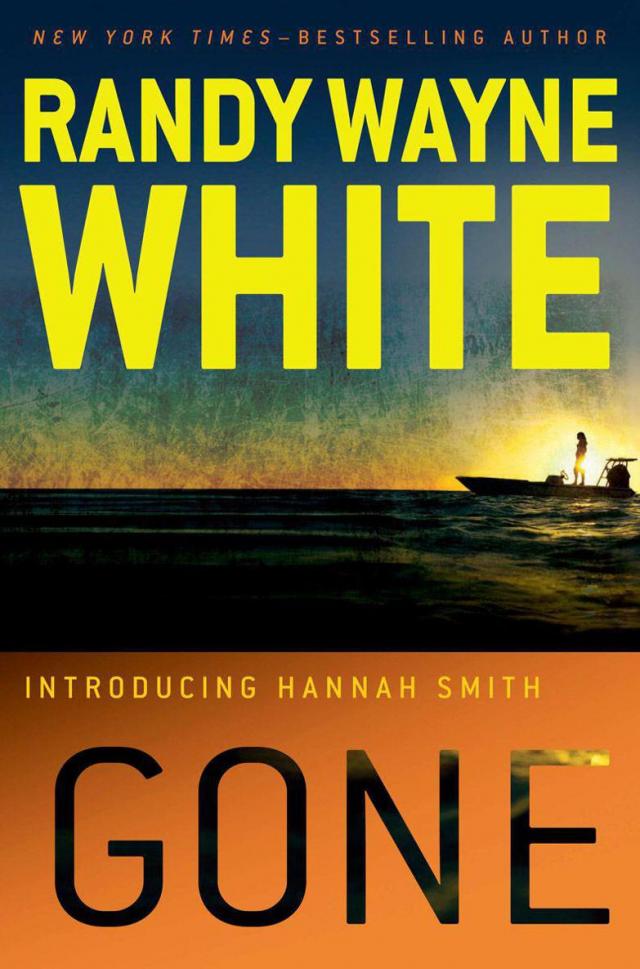
Gone, page 7
part #1 of Hannah Smith Series


“If we decide to trust each other, I will—but only if I get their permission first. I won’t say I’ve never broken a promise, but it’s not something that comes easy.”
I learned something new about Mrs. Whitney from the way she misunderstood me. “Comes easily or comes cheaply?” she asked, pretending not to care much either way. “You expect me to pay for the name of a girl you want me to help? Just for laughs, name a figure. A thousand? Five thousand?”
The woman would have paid that and more to find out what she wanted to know. I could read it in her eyes. That’s how desperate being with Ricky Meeks had made her, which for the first time, caused me to feel spooked and wonder what I was getting into. But I stayed calm, and told her, “You took what I said wrong. No point in discussing it.”
“Honest and trustworthy,” Mrs. Whitney shot back with a sneer. “I suppose you’re brave and reverent, too.”
I had to smile at that. Mrs. Whitney didn’t have any psychic powers, that was for sure, or she’d have seen I was not the virtuous woman she’d just described. “Dependable,” I responded. “That’s about all I can claim. So you might as well drop the subject of money or the girl’s name.”
When the woman was angry, her nostrils flared. They flared now, spouting cigarette smoke. “You’re a stubborn little bitch. Know that?”
“If it was your privacy I was protecting,” I replied, feeling my face redden, “maybe you’d see it differently. I know you’re mad. If it helps you feel better talking that way, I don’t mind—as long as there’s a chance of helping the girl we’re discussing.”
The woman leaned closer, and I realized she had spotted the faint scars that had made life miserable in high school. My abdomen went tense, but it didn’t last. I’ve gotten over that embarrassment—more or less. Instead of providing another target for her meanness, though, my dabble of scars—mostly hidden by the way I wear my hair—caused the woman to soften for some reason.
“Pass that here, would you?” Mrs. Whitney was stabbing an ashtray with her cigarette but also looking at the photograph of Ricky Meeks. There was a shakiness in her voice that told me she was done being mad and giving in to something else. Plain weary of being mean was a possibility. Or maybe she’d been reminded of scars she had carried into adulthood, as all people must.
She took a breath, reached for the photo, hesitated, then finally held the face of Ricky Meeks an arm’s length from her own. “You son of a bitch,” she whispered. What felt like a minute later she said, “You filthy animal.”
After that, I didn’t watch. The woman was battling her emotions so hard I got up and went to the kitchen out of respect for her privacy. In the cupboard, I found Tetley tea bags and a can of Campbell’s chicken noodle, which I heated in a pan without adding water. Strong soup would be good for someone in Mrs. Whitney’s condition. Aside from some canned milk and stale crackers, there wasn’t much else in the cupboards but stacks of tinned capers, cocktail onions, rolled anchovies, and other stuff no one uses unless they’re making a pizza or having a party.
On the counter, there were also three more little bottles of whiskey, part of a six-pack Nathan had managed to find. I knew it would be wrong of me to get the woman drunker in hopes she’d talk about Ricky Meeks. The last thing a fragile little thing like her needed was more alcohol. So I wrestled with my conscience until I found just the right lie to excuse my sneakiness, then carried the soup, a cup of milky tea, and the whiskey into the main room.
Mrs. Whitney was old enough to make her own decisions—to ease my guilt, that’s what I’d told myself. But the lie didn’t help when I saw the state she was in. The woman’s face was so pale and makeup-streaked from crying, I didn’t think I could feel any worse than I did when I put that tray on the table.
I was wrong. Without hesitating, the woman moved the cup and soup bowl out of her way and went straight for the whiskey as I knew she would.
“You asked if he’s dangerous,” she coughed, the first miniature bottle down her. “Yes. He’s dangerous. And what he does—the goddamn pervert, he’s a thief, too—he does it without breaking the law. He’s not smart, but he can smell weakness. It’s like an animal thing. And that’s a hell of a lot more dangerous than being smart.”
More concerned with the guilt I felt than with what she’d just told me, I said, “Mrs. Whitney, at least try the soup. It’s good and strong—”
“And stop calling me Mrs. Whitney!” the woman snapped, sounding more sober and in control. She was holding out the second bottle, wanting me to crack it open, the wounded-dog look in her eyes gone. “It makes me feel even older. My name’s Elka. And I’m not as old and washed-up as I might look.” She waved vaguely at the chair next to her, then reached for her cigarette case. “Have a seat.”
I did.
“There was a shrink I started seeing after Mickey took off ”—she turned her head away from me to exhale smoke, the first show of politeness since I’d arrived—“and this shrink kept preaching to me about forgiveness. Forgive the man who’d totally screwed up my life, forgive myself. Yatta-yatta-yatta. Know what I told her, our last session?”
I shook my head.
“I told her forgiveness is for women who don’t have the balls for revenge. I haven’t shown any balls for a while, but that shit’s about to change.” Mrs. Whitney glanced at the photo, which she’d crumpled, then had tried to smooth out so I wouldn’t know. “You’re sure Mickey’s with this girl you mentioned. Somebody’s niece?”
“The family thinks so.”
The woman smoked, disappearing inside her thoughts for a while. Finally, a bitter smile appeared on her face. “I guess I don’t have to ask if you can keep a secret, do I? . . . Uhh—”
“Hannah Smith,” I told her for the fourth time. Then, because it was the professional thing to do, I added, “We can sign a contract of confidentiality, if you want. I’ve got some forms on my boat. But first, eat some of that soup . . . Elka. Please.”
SIX
DARREN, THE FAMOUS PHOTOGRAPHER, WAS HOLDING open an old Life magazine he’d taken from a stack and was saying to Nathan, “You don’t see the resemblance? Tell me you don’t see a resemblance.”
Darren was smiling, having fun, eyes moving from the magazine to me, then to Nate, whose shaved head looked flushed like he’d worked out, gone for a swim, and maybe had a shower during the five hours I’d spent with Mrs. Whitney. We were in the photographer’s studio, floors of blond wood, high white walls that were silken with sunlight from windows spaced along a beamed ceiling. The room, furniture, pastel colors meshed so cleanly, it was hard not to be jealous of the man’s good taste. On the other hand, the thought that places such as Darren’s cost more than my mother, Loretta, made in her lifetime didn’t enter my head—but only because I’d reflected on that fact so many times while idling my boat along the back side of Captiva Island, or fishing with clients off the beach. On the west coast of Florida, it’s something you get used to.
“Hannah . . . Hannah, at least have a look.” Darren was feeling talkative after a few whiskeys. Not drunk, not disrespectful—the man was always so sweet and caring, it was sometimes hard to believe he was who he was. I knew he was working hard to make Nathan’s friend his friend, too, so I let him see me smile and showed some interest in what he said next.
“I’ve obsessed about shooting you ever since you refused to sit . . . two weeks ago? No, three, because I’d just gotten back from L.A. But that’s not the reason, dear. Ask Nate. Nate . . . tell her! I see you as a gawky American colt who’s turning into a swan but doesn’t realize it. You’re heart’s too . . . something. . . . Solid? Yes, too solid to know or even care. Said it from the start, didn’t I?” Smiling wider as Nathan nodded shyly, Darren held up the magazine as if it were a prize. “Then I find this!”
Before I knew what I was saying, I replied, “A colt’s a male horse, Darren. And shooting swans has nothing to do with taking pictures, in my experience. But I am flattered you think I look like a woman in an old magazine.”
Nate turned to me, his expression stricken, and said, “Hannah,” which I felt in my chest because I realized I’d been rude and I hadn’t intended to be rude. Truth was, I still felt numb from some of the things Mrs. Whitney had told me regarding Ricky Meeks. Most especially were the embarrassing acts Meeks had forced upon the woman and other bad things he’d manipulated her into doing. Never in my life had I heard such stories and I’m not a naïve person. Like everyone else, I spend more time on the Internet than I should, sometimes peeking at videos and reading about subjects I know I shouldn’t.
There was something else bothering me, too, which is probably why I’d snapped at the man without thinking. It was something nasty that Mrs. Whitney had said about Darren an hour or so after I’d made the mistake of mentioning his name to Nathan. The woman had been in one of her mean moods at the time. I wasn’t ready to accept the meanness of what she’d said about Darren—and Nathan’s stupidity—as truth, but I was feeling tense and on my guard more than usual.
I stared at my hands, which were folded on my knees, and said, “Darren, that didn’t come out right. I don’t know why but I’m still nervous around you. It’s not you, and please don’t fault Nate. It’s my problem. You’re always so kind to me, but then I end up opening my mouth and saying something stupid.”
“The camera will see that quality in her—that exact quality,” Darren said to Nate, which confused me but didn’t stump my friend for a moment.
“Hannah’s always had a gift for pissing off people,” Nate agreed yet sounded defensive. “Especially when it comes to putting men in their place. But I’ll always take her side, Darre. It’s the way it’s always been with us and that’s not going to change.”
Nathan’s warning tone startled me, but Darren appeared to like it. “Her honesty, that’s what I meant, you goose. Match the right camera, the right glass and light, and the lens doesn’t lie. A person’s soul is a robe worn on the outside. Like skin . . . or an aura.”
“The outside,” Nathan echoed, thinking it over while trying to hide his relief.
“A camera in the right hands, of course,” Darren added, reaching for ice tongs, then a bottle with a label that read Laphroaig, which was scotch whiskey. “The soul on the other side of the camera has to commit total energy to the moment. All of his . . . well, it’s a childlike quality. Spontaneous. An openhearted love of whatever the lens discovers. I don’t let myself explore why or how it all works, it just does. Photography—art, not Photoshop tripe—has more in common with sorcery than engineering. Spirituality . . . passion . . .”
The man paused, looking toward the hall gallery where photos of actors and rock stars were hung, individually lighted, one of the most famous, an AC/DC guitarist, shirtless, mouth open wide in the spotlight, his long hair dark with sweat. Then Darren said, “No! Sensuality—that’s the real key. Never underestimate the power of raw sensuality and sexuality. Those two elements, they fire every passion in us. Love, devotion, courage. And also all that’s evil and ugly and weak. Scratch the surface of either, and those two elements come pouring out like blood.”
Darren had clanked cubes into a rocks glass, poured it half full, now lifted the glass in salute. “The sun’s almost below the yardarm, mateys. Sure neither of you will join me?”
He and Nathan were on barstools, a lead-sheathed counter supporting an ice bucket, crystal ashtray, plus Nate’s elbow along with a quart of grape Gatorade, most of it gone. Opposite them was a restaurant-quality kitchen, stainless gas burners, a butcher’s block, pans and pots suspended above, polished and orderly as church bells. I’d been sitting off in a corner by myself on one of the sleekest Manhattan-looking chairs I’d ever seen, drinking a bottle of water and texting an update to Lawrence Seasons on what I had learned. I still regretted my stupid words to Darren, but my brain immediately locked onto what he had just said, aware that it might be important. Sex, passion, weakness, and evil. I didn’t understand his meaning—not in my head, anyway—but it did offer some hope that I might yet understand why Mrs. Whitney had behaved as she had with a man half her age who had no solid job or education. I knew I’d have to spend time on the water, or in my bed, to think it through, but the connection alone was enough to give me faith.
“I’d like to see that magazine,” I said, storing my cell phone and getting to my feet. “Sorry about my rudeness. I should be thanking you instead of interrupting your cocktail hour.”
Darren sat straighter, watching me cross the room, then said, “Sensuous,” as if the word had reappeared inside his head. As an aside to Nathan, he added, “Pure motion . . . physically at ease . . . no wasted effort. I can see why they called your great-aunt ‘Big Six.’”
It was meant as a compliment, of course, but his words reminded me of Arlis’s exaggerations, which that rough old man considered a smooth way of flirting. It also caused me to once again recall what Mrs. Whitney had said about a young, handsome boy like Nathan being a fool to trust a celebrated homosexual photographer.
I took the magazine, which was folded open. After several seconds, I pulled out the barstool that separated the two men, straddled it, then placed the magazine on the counter.
“A cowgirl?” I said, perplexed by what I saw, which might have sounded sharp, so I added in a rush, “She’s real pretty, of course. Long-legged, and I like her boots. She’s . . . well, handsome, I guess.”
“I’ll be damned,” Darren said. He was chuckling in a way that told me I’d noticed something he’d missed, which apparently pleased him. “Let me see that.”
Instead of giving me time to slide the magazine over, the photographer leaned his shoulder against mine so he could see better. Just as unexpectedly, Nathan, on my right, did the same thing. For an instant, I stiffened, a claustrophobic reaction . . . but then I took a breath and stopped trying to shrink myself. It was pleasant, I realized, to be sandwiched between two nice men. I could feel the warmth of their shoulders clear through to my ribs, something I’d seldom experienced, which was enjoyable in a mild way and made me feel more at ease.
“Actress Barbara Stanwyck, in costume, on the set of The Big Valley.” Nathan read the caption aloud as if he’d never seen the picture before. Which made no sense until Darren said, “My God, she’s a classic example of female masculinity. Of course . . . Barbara Stanwyck—perfect. This isn’t the image I wanted you to see, Hannah pet, but it has a wonderful duality that fits. How in hell did I miss it?”
Darren leaned in front of me to say to Nathan, “Didn’t I tell you? Serendipity—if your heart’s open, if it’s free of meanness, destiny takes us by the hand and leads us to wonderful places. We’ll compare the two shots in a minute, but”—he took the magazine, flipped it over, and squared it in front of me—“here’s the image I wanted you to see. It’s the image that told me I must get you in front of the lens.”
I said, “Her?”
Darren’s expression read Don’t be so surprised. Whatever success he had earned could have had something to do with the look He was giving me, a private signal that connected his eyes with mine. It offered reassurance and told me what happened next was safe no matter what I decided.
Then he explained the picture, saying, “This image was taken in nineteen forty-two by Otto Schmidt, a master of black-and-white. A true craftsman with the old large format Leica cameras. A near genius, of course, when it came to lighting, as you can see.”
Now, instead of looking at a handsome woman wearing jeans, boots, and a cowboy hat, I was looking at a woman the caption said was Marlissa Dorn, Hollywood Siren. The actress was standing, eyes tilted upward at the camera, hip canted against a concert piano, wearing a black gown, low-cut, and balancing a freshly lit cigarette between her fingers at ear level.
“Beautiful,” I said softly. “I’ve never seen any of her films, but the name’s familiar. And I love old movies. She reminds me of Rita Hayworth.”
Darren waited for Nathan to tell me that Marlissa Dorn’s family had once owned a vacation home on Sanibel Island before agreeing, “Rita Hayworth, another one. The camera loved them both. They had a sensuality that was visceral . . . subliminal, very, very private. But they couldn’t hide it from the lens. My God, they practically melted the lens. And a physical fluidness, perfectly at ease with their bodies.”
I felt my ears warm, recalling what Darren had said about me—physically at ease . . . no wasted effort. But it was silly to think I looked anything like this glamorous woman who’d been about my age eighty years ago.
Darren was on his feet. I watched him cross the room, slim and elegant in the way he moved, then my eyes returned to the magazine.
Nate said in a low voice, “He’s dying to have you sit for him.” Then, about Marlissa Dorn, “She has a smoky look. Sort of smolders and she’s not even trying. That’s what Darre likes about the shot.”
The woman was staring at the camera through a luminous frame of cigarette smoke. Her hair was combed full and glossy to her shoulders, head tilted in a way that had an attitude but was attractive, not superior-acting or off-putting. For an instant, Mrs. Whitney came into my mind and I found myself hoping that she, too, had once looked as glamorous and confident. A pleasant memory might help the poor woman finally get some sleep—that, plus the soup I’d reheated and forced her to eat before leaving.
“Thanks to Nate, I’ve been reading about your family,” Darren called from across the room. He was returning, carrying a newer version of the Florida history book that was still in the old briefcase stored on my boat. “I’ll be honest. I love the historical connection. It gives the project . . . fabric. Makes shooting you part of a larger canvas.”