Gone, page 6
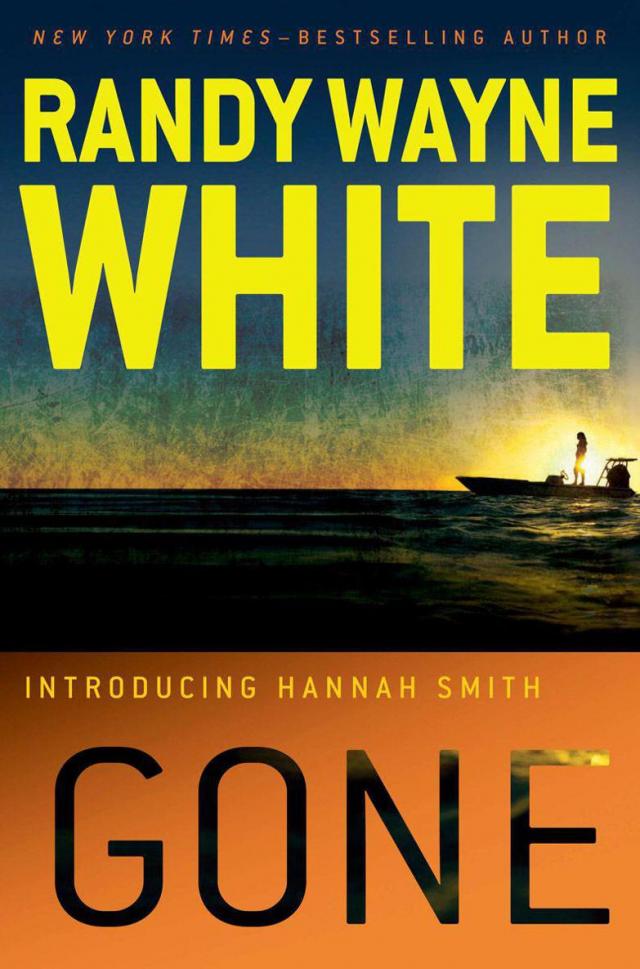
part #1 of Hannah Smith Series


“Ricky?” the woman said like she’d just tasted something bitter. “I can’t keep track of every minimum wage drifter we hire. But ‘Mickey’ sounds more familiar.” When she tapped her cigarette on an ashtray and added, “As in Mickey Mouse—that’s the only reason I remember,” I knew she’d had feelings for the man, and maybe still did.
I watched her flick the photo toward the middle of the table as if to create some distance. No . . . that wasn’t the reason. Mrs. Whitney was disappointed, I realized, which told me a part of her, at least, had hoped Meeks wanted to see her again. Her pride was hurt, and now the anger inside was starting to build. “Then I’m confused,” the woman said, her tone sharper. “You’re a fishing guide on the island?”
“I’m Hannah Smith,” I repeated for the third time. “I pick up some clients at South Seas. Sometimes Jensen’s Marina. Mostly, though, I work out of my house.”
“Then why the questions like some kind of cop?”
Before I could explain, the woman shushed me with a wave of her cigarette. “Let me guess. You’re carrying his photo because the guy knocked you up, then dumped you. Which fits from the little I remember about that bum. Or you lost a bar napkin with his phone number.” The woman blew smoke toward the ceiling. “God spare me the trailer park dramas of the island locals. It’s one of the blessings of money.”
I don’t have much experience with jealous women insulting me, but that’s what was happening now. Mrs. Whitney had refused to unlock the door until I’d held up Ricky Meeks’s photo for her to see. After that, she’d hurried us inside to find out the connection—or because she was ashamed someone would make the association. That’s why I wasn’t offended by the woman’s mean words. She was revealing more about her relationship with Meeks than she realized.
“Admit it,” Mrs. Whitney pressed. “You’ve got what we used to call a ‘wet crush’ on the man—figure out for yourself what it means. Now you’re trying to find him. Am I right?”
In my chest, I felt regret because I knew she was talking about herself, not me. So I tried to reassure her by saying, “I’ve never met him, ma’am,” then immediately regretted using ma’am. It’s something an older woman doesn’t like, especially if that woman has invested in a face-lift, breast implants, and injections to make her lips so full that she had to feel to confirm her cigarette was in place before taking another long, aggressive drag.
“Sorry, kitten, don’t believe you. Besides, I don’t get involved with my employees’ personal problems.”
I replied, “I don’t work for you, Mrs. Whitney,” but the woman talked over me, saying, “If I hadn’t been expecting my shopper, I’d have never let you two through the door. Where in the hell is that absurd little fool?” Suddenly, the woman got to her feet, pulled her white silk robe tight around her neck, and crossed the room to the front window, apparently hoping her groceries had arrived.
Silhouetted by the window, Mrs. Whitney’s coil of orange hair had a chemical tint. Sunlight pierced the sheer robe so I could see that she was naked beneath it, her skeletal legs too frail to support the unhappiness I sensed inside her, let alone her melon-sized implants.
Nathan looked at me and mouthed the words She’s drunk, which was something I knew from the whiskey stink of the room and the glass of melting ice on the table. Maybe drunk for days or weeks, judging from the woman’s gray skin and shaky hands.
That wasn’t the only evidence that Mrs. Whitney didn’t have someone to look after her. Not even a maid. There were empty glasses piled atop magazines, volcanic ashtrays everywhere, clothing strewn on floors, and what might have been a Chantelle bra, raspberry lace and glitter, draped over a velvet divan. Seeing the bra caused me to feel even sadder because it was a pretty thing that Mrs. Whitney had probably had fun buying back in happier days. Near the door was a gorgeous mahogany secretary with feet sheathed in ornate copper. A month’s worth of mail had been stacked there until a landslide had scattered envelopes onto logs of sodden newspapers below.
Something I expected to see, but didn’t, were dirty dishes. If the woman had been eating, there would have been dishes, or takeout boxes, scattered among the litter. And she wouldn’t have looked so sickly skinny. The realization replaced the sadness I was feeling with a chill. Why didn’t a woman who lived in a ten-million-dollar palace have employees looking after her? That’s when Mrs. Whitney hinted at the reason by flinging the curtains closed and calling across the room to us, “That lazy son of a bitch! And my attorney wonders why I fire every goddamn person I hire!”
Nathan and I looked at each other before I said, “The Island Store’s close enough, we can be back in five minutes if there’s something you need—” Just in time, I caught myself before calling her ma’am again, but the woman wasn’t listening anyway. She was concentrating on her balance as she returned to the table, legs so wobbly that she zigzagged until she was close enough to reach out and grab a chair.
“Can I get you something to drink?” I asked, worried because Mrs. Whitney appeared woozy, tilting the glass of melting ice to her lips.
“A drink?” she said. “That’s a laugh! There’s nothing to drink in the whole goddamn house. The idiots I hire, they want my money, sure. But they don’t want to do a damn thing to earn it. This little man who calls himself a ‘personal shopper,’ he’s just another example. On the phone yesterday, he promised he’d be here no later than two. Three times, I made him promise! He’s got a five-hundred-dollar order, groceries and liquor. That’s worth how much to some out-of-work fool? A fifty-buck gratuity, just for starters. So where the hell is he?”
I noticed Nathan check his wristwatch, same as me, even though we both knew it wasn’t even noon yet. The person doing her shopping wasn’t late. Truth was, Mrs. Whitney didn’t know what time it was. There wasn’t much we could do, though, but sit and listen as the woman took off on a talking jag, ranting about undependable workers, then switched to the maid she’d fired a few weeks back for stealing.
Despite his size and all those muscles, Nate is sensitive. Loud voices make him wince. Angry voices cause him to retreat inside his head, often rocking where he sits, hands cradling his knees, even when he’s not in a rocker. Nathan was rocking now, I noticed, but then he did something that showed his improved confidence. He got to his feet, saying, “Maybe the maid didn’t put things where they’re supposed to be, Mrs. Whitney. Mind if I take a look in your kitchen?”
The woman looked at him for the first time, her eyes struggling to focus. “I know you,” she said finally. “I’ve seen you before.”
“You usually drink Johnnie Walker Black, easy on the soda,” Nate replied. “But sometimes you’ll do a daiquiri, no sugar. Or Bloody Marys, if it’s early. How about I see what I can find?” My friend had a soft look on his face that told me he was worried about the woman, too.
“Good luck!” Mrs. Whitney laughed, sounding more cheerful, but it was scary the way she said it. Way too loud, with a warble of hysteria. As Nate disappeared into a hallway, she hollered, “I’ve been through every goddamn cupboard and cranny in this house. In fact”—she gripped the arms of her chair, ready to stand—“I’ll help you look.”
Because her balance was so poor, I was already on my feet and prepared when the chair went over backward. I threw my arms around the woman and lifted her clear, startled by the way loose skin moved over her bones and the birdlike lightness of her body. It was like catching something warm but barely alive in a plastic sack.
“Get your goddamn hands off me! What do you think you’re doing?”
If the woman was trying to wrestle free, she was so weak I didn’t notice. I held her by the shoulders until she seemed steady, then pulled the chair I’d been using under her. “Have a seat, Mrs. Whitney. Are you okay?”
“And what the hell is that supposed to mean?”
I tried to calm her, saying, “Sometimes, when I get a head cold, it settles in my ears, and I can barely cross the room without stumbling. Have you felt some congestion lately? There’s something going around, that’s what everyone says.”
“If you hadn’t grabbed me, I’d have been just fine, you dope!” the woman hollered, but the anger was draining out of her, along with her confidence. She sounded frail, exhausted. Embarrassed, too, because she added, “Lately, I have had a sort of cough, which I figured was because of the cigarettes. But I would have managed perfectly well without you crushing the wind out of me!” That was as close as she could come to apologizing, I figured.
“I’m sorry,” I said, looking toward what must have been the kitchen. I could hear Nate opening and closing doors, then the suction sound that an expensive refrigerator makes when the freezer is opened. “Is your shoulder hurting?” Mrs. Whitney was using her fingers to explore an area near her neck, then her right arm.
“You’re as strong as a damn man,” she snapped. “Maybe you are—I don’t see how anyone could tell for sure.” The woman glanced at me, hoping she’d hurt my feelings or made me mad. She’d done both, but I wasn’t going to show it, especially when she added, “Baggy denim shirt and shorts, my God—you look like a damn housepainter. Or some dyke who works at Goodwill. Have you ever heard of something called ‘a hairstylist’?”
Loretta’s damaged brain, rather than hardening me to insults, has taught me that mean words are the only way a person in pain has of striking out and warning others to keep their distance. Not that Loretta doesn’t sometimes make me so mad I want to hurl a cup across the room. And not that all people can use that excuse. I’ve met men and women who’ve got so much poison in them, it’ll seep into everyone around them if you give it the chance. But Mrs. Whitney had the cloudy, glittering eyes of a wounded dog that didn’t want to be touched. She had secluded herself inside this house and inside herself. Now she was warning me not to come any closer.
There was no knowing what events had dragged this woman so low, but Ricky Meeks had done at least some of the damage, I would have bet on it. From the way Mrs. Whitney looked, from the amount of trash that had piled up around her, she’d been sinking for months, which fit with the time line I was piecing together in my head. Meeks had worked for the woman in February, March, and part of April, too, from what Nathan had told me. According to the folder on Olivia Seasons, Meeks had moved his boat to Naples during the first week of May to work on the seawall, spending his nights at the dock behind Olivia’s house.
I couldn’t be absolutely sure the man had something to do with her poor condition, of course, unless Mrs. Whitney was willing to open up. Yet, I felt certain enough to risk taking the woman’s hand in mine and saying, “After I’ve said what I came to say, I’d welcome advice on how to dress better. Thing is, Mrs. Whitney”—the woman was struggling to free her hand, so I released it and slid the photo of Ricky Meeks in front of her—“this man ran off with the niece of somebody I know. That’s what they think, anyway. She’s about my age but not a strong girl. Her family’s got money, and it’s made her sort of trusting and naïve. What I need to know is, is this man dangerous? If he’s dangerous, if you think he’ll hurt the girl, the family needs to do something.”
That got the woman’s attention but also might have wilted what little spirit was left in her. “My God,” she said softly. She’d turned her head as if not trusting herself to make eye contact with Ricky Meeks, whose careful spit curl formed a hook, I noticed for the first time, above his small black eyes. “My God,” she said again, then added, “he’s doing it to someone else now.”
The temptation was to ask, Doing what? but I decided it was better not to push. The woman was hurting inside and it showed—which had to be even more embarrassing for someone like Mrs. Whitney because she was revealing it to a me, a stranger, who had nothing in common with her. That wasn’t true of her and Olivia Seasons, though.
“The girl’s father left her a lot of money when he died,” I continued. “To inherit the money, she has to sign a legal document. That’s why the family asked me to find her. I’m being paid, but that’s not the only reason I’m doing it. I don’t like rough men who hurt women. More than anything, the family’s worried about him.” I tapped a finger on the photo, thinking it might cause Mrs. Whitney to look.
She didn’t. The woman had her face in her hands, so still and quiet it took me a moment to realize she was crying. She was sobbing harder when, a minute later, Nathan reappeared, carrying three miniature-sized bottles of liquor he’d found somewhere, the kind they serve on airplanes. He was proud of himself, all smiles, but then figured out why I had my arm around Mrs. Whitney, letting her rest her head on my shoulder. He stood there for a moment, probably fighting the urge to sprint for the door, then shot me an accusing look that asked What the hell did you say to her?
I told him, “Nate, why don’t you walk over and visit with Darren for a while. I’ll be there soon enough.” Then, because he was flustered, I had to remind him, “Leave those little bottles. Mrs. Whitney would appreciate a nice cold drink, I think.”
FIVE
IT TOOK A WHILE FOR IT TO COME OUT, BUT WHAT RICKY Meeks had done to Mrs. Whitney was rape her over and over during the weeks he’d worked for her, although not in a legal sense. At least, the woman wouldn’t admit he’d forced her more than a little, at first, before she joined in and did things that still shamed her too much to talk about.
Not that I wanted details. Talking about such things has always made me uneasy, and feel sort of sneaky, even when the person is eager to share. What’s private in a person’s head isn’t like seeing them step out of a shower. It’s the sort of nakedness that can’t ever be covered once it has been revealed.
Within fifteen minutes of Nathan leaving, the woman had downed the three airplane whiskeys, and her tears had turned into spitting anger. Instead of making her more wobbly, the liquor had steadied her enough so that she got up and paced while she raged about Ricky Meeks.
“That sick white trash con artist! He’s only after her money, of course. Doesn’t the stupid little bitch realize that? He’s a predator. A two-timing predator—no more class than a wild dog.”
I was still sitting at the table but ready to move in case the woman lost her balance again. Meeks had robbed money from her in some way, that much was clear. And I’d guessed they’d had a sexual relationship long before she’d finally admitted it. But calling him a two-timing predator stuck in my head as even more important because it had a double meaning. It told me Mrs. Whitney hated Ricky Meeks for what he’d done to her, but she hated him more for taking up with another woman. That was as troubling as it was confusing. How could she still feel jealousy for someone who’d hurt her so badly? It was so far beyond my understanding that I picked up Meeks’s photograph, still listening to Mrs. Whitney, and gave it another close look, thinking maybe I’d missed something.
No . . . the man wasn’t handsome. It was the same surly-looking face I’d studied before. Round dark eyes, and a leering expression that had a dirtiness about it. The same gaunt cheeks of a man who worked too hard with his hands and muscles to accumulate fat, but an otherwise ordinary face. Not good-looking, not even the oddball attractiveness that some plain-looking men have. I couldn’t understand how someone who worked for hourly wages, and wasn’t handsome, could have buried a hook so deeply into Mrs. Whitney’s heart. But he had.
“What’s the family’s name?” The woman had her hands on the table, leaning toward me. She was asking about Olivia Seasons, I realized.
“Like a lot of people on the islands,” I replied, “they’re real private.”
“I don’t really care what their damn name is!” the woman said, getting madder. “I’m trying to find out if they’re actually wealthy or just have a lot of money. There’s a difference.”
The way Mrs. Whitney said it told me the difference had to do not only with snobbery but also something that ran deeper. “You’d recognize the name,” I replied. “I imagine you and your friends go to the same parties, if—” I stopped myself before saying if you still go to parties. Instead, I finished “—which might help you sympathize with the girl’s situation. Knowing you have more in common than just him.” I tapped the photograph again, but she still wouldn’t look at it.
“What would you know about the people I socialize with? Outsiders and real estate bums crash parties all the time on Captiva. Tell me her goddamn name or you can waltz your big ass out of here!” The woman was being mean again, but not in the same way. This was more like a test, with some jealousy thrown in. Mrs. Whitney was dying to know who Ricky Meeks was with, which gave me hope she’d open up if I could win her confidence.
I stayed calm, just as I did with Loretta when she’s being stubborn, and named fund-raising parties in Palm Beach and Sarasota I’d heard about from some of my fishing clients, including Lawrence Seasons. Then I took a chance and added, “They’re part of the same group that goes to house parties and fund-raisers in Naples. A wealthy section called Port Royal—you know the place?”
The woman didn’t say anything for a couple of seconds. “How could someone like you know about parties in Port Royal?”
Thanks to what I’d overheard on my boat, I added other convincing details. “The girl’s family attends the big Valentine’s fund-raiser every year. The Wine Fest, too—which is bigger than the polo thing in Palm Beach. And why they don’t bother with it anymore.”
Until that instant, Mrs. Whitney hadn’t looked at me, not really. I’d been a faceless female who might have been hired to trim bushes or clean floors but who, instead, had invaded her privacy with pestering questions and some bad memories, too. Now the woman was assessing me, concentrating in a way that seemed to sober her. “You understand more than I gave you credit for,” she said finally.
I looked the woman in the eye but didn’t offer a comment.
After a few more moments, she said, “Okay. So you might possibly know the difference between wealth and flashy money. You know people in our circle, anyway. But, bottom line, you’re not going to tell me the family’s name. Are you?”
I watched her flick the photo toward the middle of the table as if to create some distance. No . . . that wasn’t the reason. Mrs. Whitney was disappointed, I realized, which told me a part of her, at least, had hoped Meeks wanted to see her again. Her pride was hurt, and now the anger inside was starting to build. “Then I’m confused,” the woman said, her tone sharper. “You’re a fishing guide on the island?”
“I’m Hannah Smith,” I repeated for the third time. “I pick up some clients at South Seas. Sometimes Jensen’s Marina. Mostly, though, I work out of my house.”
“Then why the questions like some kind of cop?”
Before I could explain, the woman shushed me with a wave of her cigarette. “Let me guess. You’re carrying his photo because the guy knocked you up, then dumped you. Which fits from the little I remember about that bum. Or you lost a bar napkin with his phone number.” The woman blew smoke toward the ceiling. “God spare me the trailer park dramas of the island locals. It’s one of the blessings of money.”
I don’t have much experience with jealous women insulting me, but that’s what was happening now. Mrs. Whitney had refused to unlock the door until I’d held up Ricky Meeks’s photo for her to see. After that, she’d hurried us inside to find out the connection—or because she was ashamed someone would make the association. That’s why I wasn’t offended by the woman’s mean words. She was revealing more about her relationship with Meeks than she realized.
“Admit it,” Mrs. Whitney pressed. “You’ve got what we used to call a ‘wet crush’ on the man—figure out for yourself what it means. Now you’re trying to find him. Am I right?”
In my chest, I felt regret because I knew she was talking about herself, not me. So I tried to reassure her by saying, “I’ve never met him, ma’am,” then immediately regretted using ma’am. It’s something an older woman doesn’t like, especially if that woman has invested in a face-lift, breast implants, and injections to make her lips so full that she had to feel to confirm her cigarette was in place before taking another long, aggressive drag.
“Sorry, kitten, don’t believe you. Besides, I don’t get involved with my employees’ personal problems.”
I replied, “I don’t work for you, Mrs. Whitney,” but the woman talked over me, saying, “If I hadn’t been expecting my shopper, I’d have never let you two through the door. Where in the hell is that absurd little fool?” Suddenly, the woman got to her feet, pulled her white silk robe tight around her neck, and crossed the room to the front window, apparently hoping her groceries had arrived.
Silhouetted by the window, Mrs. Whitney’s coil of orange hair had a chemical tint. Sunlight pierced the sheer robe so I could see that she was naked beneath it, her skeletal legs too frail to support the unhappiness I sensed inside her, let alone her melon-sized implants.
Nathan looked at me and mouthed the words She’s drunk, which was something I knew from the whiskey stink of the room and the glass of melting ice on the table. Maybe drunk for days or weeks, judging from the woman’s gray skin and shaky hands.
That wasn’t the only evidence that Mrs. Whitney didn’t have someone to look after her. Not even a maid. There were empty glasses piled atop magazines, volcanic ashtrays everywhere, clothing strewn on floors, and what might have been a Chantelle bra, raspberry lace and glitter, draped over a velvet divan. Seeing the bra caused me to feel even sadder because it was a pretty thing that Mrs. Whitney had probably had fun buying back in happier days. Near the door was a gorgeous mahogany secretary with feet sheathed in ornate copper. A month’s worth of mail had been stacked there until a landslide had scattered envelopes onto logs of sodden newspapers below.
Something I expected to see, but didn’t, were dirty dishes. If the woman had been eating, there would have been dishes, or takeout boxes, scattered among the litter. And she wouldn’t have looked so sickly skinny. The realization replaced the sadness I was feeling with a chill. Why didn’t a woman who lived in a ten-million-dollar palace have employees looking after her? That’s when Mrs. Whitney hinted at the reason by flinging the curtains closed and calling across the room to us, “That lazy son of a bitch! And my attorney wonders why I fire every goddamn person I hire!”
Nathan and I looked at each other before I said, “The Island Store’s close enough, we can be back in five minutes if there’s something you need—” Just in time, I caught myself before calling her ma’am again, but the woman wasn’t listening anyway. She was concentrating on her balance as she returned to the table, legs so wobbly that she zigzagged until she was close enough to reach out and grab a chair.
“Can I get you something to drink?” I asked, worried because Mrs. Whitney appeared woozy, tilting the glass of melting ice to her lips.
“A drink?” she said. “That’s a laugh! There’s nothing to drink in the whole goddamn house. The idiots I hire, they want my money, sure. But they don’t want to do a damn thing to earn it. This little man who calls himself a ‘personal shopper,’ he’s just another example. On the phone yesterday, he promised he’d be here no later than two. Three times, I made him promise! He’s got a five-hundred-dollar order, groceries and liquor. That’s worth how much to some out-of-work fool? A fifty-buck gratuity, just for starters. So where the hell is he?”
I noticed Nathan check his wristwatch, same as me, even though we both knew it wasn’t even noon yet. The person doing her shopping wasn’t late. Truth was, Mrs. Whitney didn’t know what time it was. There wasn’t much we could do, though, but sit and listen as the woman took off on a talking jag, ranting about undependable workers, then switched to the maid she’d fired a few weeks back for stealing.
Despite his size and all those muscles, Nate is sensitive. Loud voices make him wince. Angry voices cause him to retreat inside his head, often rocking where he sits, hands cradling his knees, even when he’s not in a rocker. Nathan was rocking now, I noticed, but then he did something that showed his improved confidence. He got to his feet, saying, “Maybe the maid didn’t put things where they’re supposed to be, Mrs. Whitney. Mind if I take a look in your kitchen?”
The woman looked at him for the first time, her eyes struggling to focus. “I know you,” she said finally. “I’ve seen you before.”
“You usually drink Johnnie Walker Black, easy on the soda,” Nate replied. “But sometimes you’ll do a daiquiri, no sugar. Or Bloody Marys, if it’s early. How about I see what I can find?” My friend had a soft look on his face that told me he was worried about the woman, too.
“Good luck!” Mrs. Whitney laughed, sounding more cheerful, but it was scary the way she said it. Way too loud, with a warble of hysteria. As Nate disappeared into a hallway, she hollered, “I’ve been through every goddamn cupboard and cranny in this house. In fact”—she gripped the arms of her chair, ready to stand—“I’ll help you look.”
Because her balance was so poor, I was already on my feet and prepared when the chair went over backward. I threw my arms around the woman and lifted her clear, startled by the way loose skin moved over her bones and the birdlike lightness of her body. It was like catching something warm but barely alive in a plastic sack.
“Get your goddamn hands off me! What do you think you’re doing?”
If the woman was trying to wrestle free, she was so weak I didn’t notice. I held her by the shoulders until she seemed steady, then pulled the chair I’d been using under her. “Have a seat, Mrs. Whitney. Are you okay?”
“And what the hell is that supposed to mean?”
I tried to calm her, saying, “Sometimes, when I get a head cold, it settles in my ears, and I can barely cross the room without stumbling. Have you felt some congestion lately? There’s something going around, that’s what everyone says.”
“If you hadn’t grabbed me, I’d have been just fine, you dope!” the woman hollered, but the anger was draining out of her, along with her confidence. She sounded frail, exhausted. Embarrassed, too, because she added, “Lately, I have had a sort of cough, which I figured was because of the cigarettes. But I would have managed perfectly well without you crushing the wind out of me!” That was as close as she could come to apologizing, I figured.
“I’m sorry,” I said, looking toward what must have been the kitchen. I could hear Nate opening and closing doors, then the suction sound that an expensive refrigerator makes when the freezer is opened. “Is your shoulder hurting?” Mrs. Whitney was using her fingers to explore an area near her neck, then her right arm.
“You’re as strong as a damn man,” she snapped. “Maybe you are—I don’t see how anyone could tell for sure.” The woman glanced at me, hoping she’d hurt my feelings or made me mad. She’d done both, but I wasn’t going to show it, especially when she added, “Baggy denim shirt and shorts, my God—you look like a damn housepainter. Or some dyke who works at Goodwill. Have you ever heard of something called ‘a hairstylist’?”
Loretta’s damaged brain, rather than hardening me to insults, has taught me that mean words are the only way a person in pain has of striking out and warning others to keep their distance. Not that Loretta doesn’t sometimes make me so mad I want to hurl a cup across the room. And not that all people can use that excuse. I’ve met men and women who’ve got so much poison in them, it’ll seep into everyone around them if you give it the chance. But Mrs. Whitney had the cloudy, glittering eyes of a wounded dog that didn’t want to be touched. She had secluded herself inside this house and inside herself. Now she was warning me not to come any closer.
There was no knowing what events had dragged this woman so low, but Ricky Meeks had done at least some of the damage, I would have bet on it. From the way Mrs. Whitney looked, from the amount of trash that had piled up around her, she’d been sinking for months, which fit with the time line I was piecing together in my head. Meeks had worked for the woman in February, March, and part of April, too, from what Nathan had told me. According to the folder on Olivia Seasons, Meeks had moved his boat to Naples during the first week of May to work on the seawall, spending his nights at the dock behind Olivia’s house.
I couldn’t be absolutely sure the man had something to do with her poor condition, of course, unless Mrs. Whitney was willing to open up. Yet, I felt certain enough to risk taking the woman’s hand in mine and saying, “After I’ve said what I came to say, I’d welcome advice on how to dress better. Thing is, Mrs. Whitney”—the woman was struggling to free her hand, so I released it and slid the photo of Ricky Meeks in front of her—“this man ran off with the niece of somebody I know. That’s what they think, anyway. She’s about my age but not a strong girl. Her family’s got money, and it’s made her sort of trusting and naïve. What I need to know is, is this man dangerous? If he’s dangerous, if you think he’ll hurt the girl, the family needs to do something.”
That got the woman’s attention but also might have wilted what little spirit was left in her. “My God,” she said softly. She’d turned her head as if not trusting herself to make eye contact with Ricky Meeks, whose careful spit curl formed a hook, I noticed for the first time, above his small black eyes. “My God,” she said again, then added, “he’s doing it to someone else now.”
The temptation was to ask, Doing what? but I decided it was better not to push. The woman was hurting inside and it showed—which had to be even more embarrassing for someone like Mrs. Whitney because she was revealing it to a me, a stranger, who had nothing in common with her. That wasn’t true of her and Olivia Seasons, though.
“The girl’s father left her a lot of money when he died,” I continued. “To inherit the money, she has to sign a legal document. That’s why the family asked me to find her. I’m being paid, but that’s not the only reason I’m doing it. I don’t like rough men who hurt women. More than anything, the family’s worried about him.” I tapped a finger on the photo, thinking it might cause Mrs. Whitney to look.
She didn’t. The woman had her face in her hands, so still and quiet it took me a moment to realize she was crying. She was sobbing harder when, a minute later, Nathan reappeared, carrying three miniature-sized bottles of liquor he’d found somewhere, the kind they serve on airplanes. He was proud of himself, all smiles, but then figured out why I had my arm around Mrs. Whitney, letting her rest her head on my shoulder. He stood there for a moment, probably fighting the urge to sprint for the door, then shot me an accusing look that asked What the hell did you say to her?
I told him, “Nate, why don’t you walk over and visit with Darren for a while. I’ll be there soon enough.” Then, because he was flustered, I had to remind him, “Leave those little bottles. Mrs. Whitney would appreciate a nice cold drink, I think.”
FIVE
IT TOOK A WHILE FOR IT TO COME OUT, BUT WHAT RICKY Meeks had done to Mrs. Whitney was rape her over and over during the weeks he’d worked for her, although not in a legal sense. At least, the woman wouldn’t admit he’d forced her more than a little, at first, before she joined in and did things that still shamed her too much to talk about.
Not that I wanted details. Talking about such things has always made me uneasy, and feel sort of sneaky, even when the person is eager to share. What’s private in a person’s head isn’t like seeing them step out of a shower. It’s the sort of nakedness that can’t ever be covered once it has been revealed.
Within fifteen minutes of Nathan leaving, the woman had downed the three airplane whiskeys, and her tears had turned into spitting anger. Instead of making her more wobbly, the liquor had steadied her enough so that she got up and paced while she raged about Ricky Meeks.
“That sick white trash con artist! He’s only after her money, of course. Doesn’t the stupid little bitch realize that? He’s a predator. A two-timing predator—no more class than a wild dog.”
I was still sitting at the table but ready to move in case the woman lost her balance again. Meeks had robbed money from her in some way, that much was clear. And I’d guessed they’d had a sexual relationship long before she’d finally admitted it. But calling him a two-timing predator stuck in my head as even more important because it had a double meaning. It told me Mrs. Whitney hated Ricky Meeks for what he’d done to her, but she hated him more for taking up with another woman. That was as troubling as it was confusing. How could she still feel jealousy for someone who’d hurt her so badly? It was so far beyond my understanding that I picked up Meeks’s photograph, still listening to Mrs. Whitney, and gave it another close look, thinking maybe I’d missed something.
No . . . the man wasn’t handsome. It was the same surly-looking face I’d studied before. Round dark eyes, and a leering expression that had a dirtiness about it. The same gaunt cheeks of a man who worked too hard with his hands and muscles to accumulate fat, but an otherwise ordinary face. Not good-looking, not even the oddball attractiveness that some plain-looking men have. I couldn’t understand how someone who worked for hourly wages, and wasn’t handsome, could have buried a hook so deeply into Mrs. Whitney’s heart. But he had.
“What’s the family’s name?” The woman had her hands on the table, leaning toward me. She was asking about Olivia Seasons, I realized.
“Like a lot of people on the islands,” I replied, “they’re real private.”
“I don’t really care what their damn name is!” the woman said, getting madder. “I’m trying to find out if they’re actually wealthy or just have a lot of money. There’s a difference.”
The way Mrs. Whitney said it told me the difference had to do not only with snobbery but also something that ran deeper. “You’d recognize the name,” I replied. “I imagine you and your friends go to the same parties, if—” I stopped myself before saying if you still go to parties. Instead, I finished “—which might help you sympathize with the girl’s situation. Knowing you have more in common than just him.” I tapped the photograph again, but she still wouldn’t look at it.
“What would you know about the people I socialize with? Outsiders and real estate bums crash parties all the time on Captiva. Tell me her goddamn name or you can waltz your big ass out of here!” The woman was being mean again, but not in the same way. This was more like a test, with some jealousy thrown in. Mrs. Whitney was dying to know who Ricky Meeks was with, which gave me hope she’d open up if I could win her confidence.
I stayed calm, just as I did with Loretta when she’s being stubborn, and named fund-raising parties in Palm Beach and Sarasota I’d heard about from some of my fishing clients, including Lawrence Seasons. Then I took a chance and added, “They’re part of the same group that goes to house parties and fund-raisers in Naples. A wealthy section called Port Royal—you know the place?”
The woman didn’t say anything for a couple of seconds. “How could someone like you know about parties in Port Royal?”
Thanks to what I’d overheard on my boat, I added other convincing details. “The girl’s family attends the big Valentine’s fund-raiser every year. The Wine Fest, too—which is bigger than the polo thing in Palm Beach. And why they don’t bother with it anymore.”
Until that instant, Mrs. Whitney hadn’t looked at me, not really. I’d been a faceless female who might have been hired to trim bushes or clean floors but who, instead, had invaded her privacy with pestering questions and some bad memories, too. Now the woman was assessing me, concentrating in a way that seemed to sober her. “You understand more than I gave you credit for,” she said finally.
I looked the woman in the eye but didn’t offer a comment.
After a few more moments, she said, “Okay. So you might possibly know the difference between wealth and flashy money. You know people in our circle, anyway. But, bottom line, you’re not going to tell me the family’s name. Are you?”