Pot Stories for the Soul, page 7



After spending five months at the San Mateo County jail farm not far up the road from his home, Kesey—who’d agreed, ironically, as part of his guilty plea, to stay away from La Honda—told me he’d never cop a plea again, ever, to anything, no matter what the consequences were to anybody.
Actually, both Kesey and Page Browning pleaded guilty. Charges were dropped against the rest of us. But the narcs were not going to brook any arrest-resisting, even by a hapless Prankster whose only resistance consisted of falling in the tub when Willie Wong flew into him.
We started to think about our lawyers’ fees. Rohan and Robertson said they’d work for free, both knowing their reputations would soar among dopers and long-haired acidheads if they defended the country’s most prominent apostle of psychedelic drugs. But we still would need some money, and none of us, Kesey included, was bringing in any income at the moment.
One day a $7,000 royalty check for the Italian translation of Cuckoo’s Nest arrived in the mail. “I didn’t even know there was an Italian translation, Kesey admitted as he handed the check to Faye, who handled the money. That was shortly after the night that Kesey had drunk the last of the milk in the sparsely larded refrigerator. Faye, the outraged mother of three little kids now deprived of milk until more cash came our way, picked up a skillet and beaned her famous husband with it as we sat at the dinner table. (When he recovered, Kesey suggested that maybe it would be politic if we were more helpful to Faye, more polite and less demanding.)
Kesey suggested that one way to make money was to sell articles, stories, novels, or anything else with his name on it. He suggested that I call his agent, Sterling Lord, and see if he could make any deals.
“You can write it and put my name on it,” Kesey told me. “Write anything you want. We can probably make more money if they think I wrote it.”
I tried, but Sterling Lord wasn’t enthusiastic about making any quick deals for Kesey, and, frankly, the publishing business in those days was pretty stuffy. If Kesey was using drugs, he must be a burned-out head case, they figured.
Paul Krassner later told me he saw Kesey’s suggestion that I write and use his nom de plume as “very Zen. He had no ego. Kesey saw that the Pranksters could use his name as a tool” to raise money. Frankly, aside from my inability to agree that Kesey has no ego, I think it was merely a case of Kesey the Writer having decided he wasn’t going to write anymore. I remember the day our lawyer friend, Jim Wolpman, took him to meet a banker. Kesey wanted to borrow some money. As usual, he wore a bright shirt cut from an American flag and his light-colored jeans with Pentel-pen doodlings all over them.
“I love your novels, Mr. Kesey,” the banker told him. “What are you writing these days?”
“I’m writing on my pants,” the famous author replied.
Which, of course, reminds me of a story. One evening, taking a nap on the living room floor while the endless bus movie was showing—we had forty hours of film, forty miles of film, that Kesey and Mountain Girl were trying to fashion into a coherent, feature-length picture (at least that’s what they said they were doing in the backhouse next to Hagen’s infamous “screw shack”)—I awoke with my head under a little end table. I gazed up and saw that someone, probably someone who’d eaten a few Benzedrine tabs, had used Pentel pens in a variety of bright colors to completely cover the underside of the piece of furniture with doodles and drawings and designs. The artist had not signed his or her work, which was not visible unless you were lying beneath it, but had entitled it the Sistine Table.
By the way, I realize that it doesn’t sound all that outrageous these days to know that Kesey wore an American flag shirt down to the bank. But you gotta remember, in those days the flag was still . . . well, I guess you could say it was still sacred. When Kesey and the Pranksters started to wear flag shirts, or when Kesey in his bus-movie role as Swash Buckler (Ken Babbs was the Intrepid Traveler of the title) tied Old Glory around his head like a pirate’s bandanna, he was truly doing something extraordinary. No one had yet designed flag-patterned rugby shirts, let alone burned American flags to protest anything. I mean, when folks saw Kesey with the Stars and Stripes draped around his neck like a scarf, they didn’t know whether to salute or call the cops.
Kesey had a knack for coming up with things that someone else would quickly popularize and cash in on. It never occurred to him, nor to any of us, for instance, to make money by selling flag shirts. We never even suspected that anyone else would ever want to slap a Day-Glo paint job on their old buses! I remember during the Great Duck Storm, as we cruised, high as kites, along some Mendocino County highway one night, duck feathers from a torn comforter blowing so thickly into the dark that the car behind us had to turn its windshield wipers on, that I turned to Zonker and Hassler, who were sitting with me atop the bus, and laughingly asked, “Hey, what would we do if we suddenly saw another painted bus pass us going in the other direction?” It was such an absurd thought that we just giggled.
Modestly, I’ll claim credit here for inventing the peace sign. We didn’t pass any psychedelic buses in those days, but every once in a while we’d pass another vehicle with long-haired passengers with crazy looks in their eyes. I started flashing them the V sign, thinking of it as the old Winston Churchill “victory” symbol. It caught on. Pretty soon it was the peace sign. This is the truth; ask Zonker.
There soon followed—we’re back, here, to the La Honda raid and notorious drug bust—a half dozen or more court appearances as our arraignment and preliminary hearings got underway in the old courthouse down at the San Mateo County seat in Redwood City. Sometimes we’d spend the whole day in court, with lunch breaks at noon and marijuana breaks midmorning and midafternoon.
Oh, they weren’t called pot breaks. They were officially called ten-minute recesses. And we didn’t carry grass into court with us, as we did previously. We might have been goofy, but we weren’t stupid. Instead of holding the weed, we all chewed gum when we made our first appearance before the judge, then stuck it under the courtroom benches. While the Juicy Fruit wads were still gooey, we affixed joints to the undersides of our seats and were always able to reach down to get something to smoke whenever we went to lunch or on a recess. We figured they’d never search us when we left the courtroom.
Excerpted from a memo ir-in-progress, When I Was a Dynamiter.
Halloween 1970
LENNY LIPTON
Behind me lay the Sacramento Valley, the A&W Root Beer Drive-In in Redding, a hash joint in Weed, the ever-looming Mount Shasta, the Siskiyous, Ashland, and the long glide downward into Oregon. Before me, across the road, that Halloween moonlit night, I heard the sounds of a rock band coming from the big old house with the Jeffersonian columns. The house sat on a knob of land formed by a bend in the Mohawk River, just a few miles outside of the town of Marcola. They said it had been used in the Jimmy Stewart movie Shenandoah, and true or not, the story lent an air of glamour to the downtrodden manor.
I parked next to the pasture and apple trees where Chief and Apache daily grazed and, after fourteen hours on the road, emerged from my fire truck–red Volvo 544. The music grew louder as I walked across the cold hard lawn, opened the door under the columned porch, and feasted my eyes on a mob of laughing, singing, dancing, howling, hooting, and jumping fiends—what we used to call long-haired freaks—people with names like Sunshine, Nixy Knox, Belle Donna, Tangerine, Sky, One-Eyed Joe, Pink Cloud, Oxygen, and Gentle Waters. They wouldn’t be put off if you called them freaks. They’d like it because freaks were what they were—hippie freaks.
Zigzagging through the throng, I came upon Ken Kesey, Master of the Mystic Arts, who had learned the secret of clouding men’s minds from Dr. Strange et al, sitting at a round table doing five-and-dime magic tricks. He was fooling with decks of cards, little paddles, shining metal cups, and colored balls, amusing a dozen friends. Piled next to the tricks were what I assumed to be uppers and downers sprawled in a colorful heap. At first glance you couldn’t tell the pills from the magic apparatus, and as you will learn, it is this and the Master’s sleight of hand that kept him out of the joint.
I had only moments to drink in the scene when a hippie jumped into the room, raving: “The pigs! The pigs are coming! We’re surrounded by the pigs!” My first thought—an attempt at denial, I admit—was that this was a brother’s paranoid fit, but alas, within moments we got another such report from near-naked people who had been steaming in the nearby sweat lodge perched upon the banks of the Mohawk. Bummer! The police, we were told, had surrounded us and, sure enough, when I looked out a windowpane frosted with patterns of crystalline lace, I saw three police cars parked on the lawn like panthers ready to pounce. But the music, dancing, and magic tricks continued—the threat taken in stride, for these partying fools were psychedelic commandos: veterans of acid tests, bad acid, newspapers and television, Jerry Rubin speeches, Timothy Leary declaring victory again and again, police riots, teargas-sings, Jerry Lewis telethons, and their parents’ scorn.
In clumped a couple of properly costumed and armed cops; you couldn’t tell them from the real thing. One of them sauntered up to Kesey’s magic round table.
“What are you doing here, Officer Doogle?” asked Ken. Maybe “Doogle” was what Ken said, and maybe it wasn’t. If it wasn’t, that’s the only thing I’ve made up.
“We believe there are minors present in a place where alcohol is being consumed,” said Doogle, “and we want to look around.”
“Where is your warrant?” asked Ken, who, without so much as a moment of hesitation, continued on with his magic act. He told Doogle that this was police harassment, for this very Doogle was the same officer who had arrested Kesey a few months before for the crime of walking a dog without a license through the streets of Eugene. At that instant, Kesey proved that he was indeed a Master of the Mystic Arts; his was the greatest magic act I’ve witnessed, dwarfing the disappearance of a stage full of elephants, for right before Doogle’s eyes, Ken hid the dope. The argument between the two of them had so diverted Doogle that Ken’s manipulation of the pills looked like part of his magic act. He vanished the stash.
Other policemen entered the Marcola house and began to slowly scan each room—looking for crime. I went upstairs and found a scene of panic and chaos, for it was in these quarters that the serious offenders had been medicating themselves. Word of the raid had created a panic, and I saw one man leap out a second-story window into the night. Others, like my friend Terry, were frantically attempting to dispose of their dope. He had impulsively dumped the contents of his baggie into a toilet bowl in order to flush it into the void. Some of those who survived the glorious countercultural revolution learned a lesson: You can’t flush grass down a john.
As the police came up the stairs, Terry disappeared, leaving me gaping into a toilet bowl. I had a flash born of desperation, and I bent over the toilet making the raucous sounds of vomiting. How much better it would have been had I something to throw up, I thought, as I stared at the leaves and seeds floating inches from my face. No matter how I tickled my throat with my fingers, I could not barf and by this means conceal the contents floating on the waters below. I made all manner of retching sounds, but it was noise without substance. I sank to my knees to perfect my performance.
“Too much of a good thing,” said a compassionate cop as he watched me through the open bathroom door. He wasn’t getting paid enough to look into that toilet bowl.
After their search, the police decided that this was a proper Halloween party; they saw no crimes in progress. Don’t ask me to explain it—nothing is as nutty as the truth. They had had their little Halloween prank; they had come without saying hello, and they left without saying good-bye.
The magic had reached a peak when they were present. It was a more exciting party when they were there, but we didn’t miss them after they’d gone.
Thinking about that Halloween night, after almost thirty years have passed, makes me wonder about what’s happened to the playfulness, the foolishness—the magic in the world. Today, the long-haired freaks have short hair and the crew-cut police have let theirs grow. The hippies have gone straight; they’ve become lawyers, stockbrokers, and college professors. And the police, who, after all, are only following orders and still doing their thing—steadfast guardians, with fidelity transcending comprehension.
Mouse Power
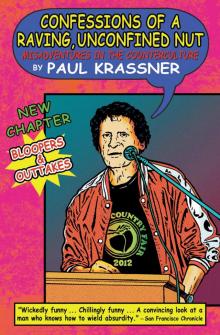
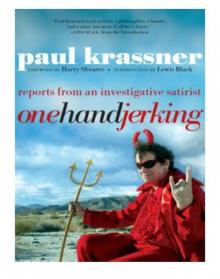
PAUL KRASSNER
I moved from New York to San Francisco in 1971, having accepted an invitation by Stewart Brand to coedit with Ken Kesey The Last Supplement to the Whole Earth Catalog. Hassler (Ron Bevirt), a veteran Prankster, served as our managing editor, chauffeur, photographer, and general buffer zone. A ritual developed. Each morning, Kesey and Hassler would come by the psychodrama commune where I was staying. We would have crunchy granola and ginseng tea for breakfast. Then, sharing a joint in an open-topped convertible, we would drive up winding roads sandwiched by forest, ending up at a large garage that was filled with production equipment.
Kesey and I would discuss ideas, pacing back and forth like a pair of caged foxes. Gourmet meals were cooked on a potbellied stove. Sometimes a local rock band came by and rehearsed with heavy amplification, drowning out the noise of our electric typewriters.
Kesey had been reading a book of African Yoruba stories. The moral of one parable was “he who shits in the road will meet flies on his return.” With that as a theme, we assigned R. Crumb to draw his version of The Last Supper for our cover of The Last Supplement.
One day, two black women from Jehovah’s Witnesses stopped by the garage, and within ten minutes Kesey convinced them that in Revelations where there’s talk of locusts, it was really a reference to helicopters.
Kesey threw the I Ching every day as a religious ritual. When his daughter Shannon was invited out on her first car date, he insisted that she throw the Ching in order to decide whether or not to accept.
Once he forgot to bring his family I Ching to the garage, and he seemed edgy, like a woman who had neglected to take her birth control pill, so I suggested that he pick three numbers, then I turned to that page in the unabridged dictionary, circled my index finger in the air, and it came down to the word bounce. So that was our reading, and we bounced back to work.
After a couple of months, we finished The Supplement and had a party. Somebody brought a tank of nitrous oxide to help celebrate. Kesey suggested that in cave-dwelling times all the air they breathed was like this.
“There are stick figures hovering above,” he said, “and they’re laughing at us.”
“And,” I added, “the trick is to beat them to the punch.”
Later on, in an interview for The Realist, I asked him, “What do you think is the meaning of a lyric like ‘One toke over the line, sweet Jesus’?”
It was obviously from a song about marijuana by Brewer & Shipley, with Jerry Garcia on steel guitar. Although banned on some radio stations, it was performed by a naïve couple on The Lawrence Welk Show, and Welk described it as a “modern spiritual.”
Kesey replied, “I think they are singing about that state when you’ve gone and got so high that you’re forced to operate mostly on faith.”
We hung around La Honda for a while. We were smoking hashish in a tunnel inside a cliff, which had been burrowed during World War II so that military spotters with binoculars could look toward the ocean’s horizon for incoming ships.
All we spotted was a meek little mouse right there in the tunnel. We blew smoke at the mouse until it could no longer tolerate our behavior. The mouse stood on its hind legs and roared at us: “Squeeeeeeek!!!” This display of mouse assertiveness startled us and we almost fell off the cliff. The headline would’ve read, “Dope-Crazed Pranksters in Suicide Pact.”
Goofy Macho
KEN KESEY
A couple of years back, a woman from East Germany came by the farm. She was an absolutely beautiful woman, an Olympic pentathlete, about six feet two inches. She was traveling across the country and was actually studying the ’60s. She’d been wined and dined the entire way. This was during the Gulf War—Desert Storm—and she’d attended all of these conventions and honorary dinners that were being given for East Germans and ex-Communists.
Because of the war, these functions had been heavily laden with military traffic—a lot of army people. Also a lot of bad roast beef. She confided to us that there seemed to be a lot of machismo evident at these affairs—that it reminded her of what she’d read about Germany in the 1930s.
Anyway, Ken Babbs and I were driving her around, showing her places around Oregon. I got out a joint, passed it, and immediately she said, “Oh, no! Oh, no! I don’t do the dope! I don’t do the dope!”
I said, “My God! You’re over here studying the ’60s and you haven’t smoked dope? That’s like being a downhill skier and hating snow. This is one of the things the ’60s ran on.”
She hesitated and said, “Oh, okay.”
She was competitive and started taking some good hits of this stuff. Gradually, you began to see this stern, grim, Germanic face of hers change. Everything dropped. You saw fear come into her eyes, and her mouth open and go wide.
After sitting awhile, her face began to return to shape. You could see her mouth pulling up into a smile. Her eyes were now squinty and merry. She looked over at Babbs and me and said, “All over America I have been. I have seen every kind of macho. But I did not know there was a goofy macho!”