Pot Stories for the Soul, page 1
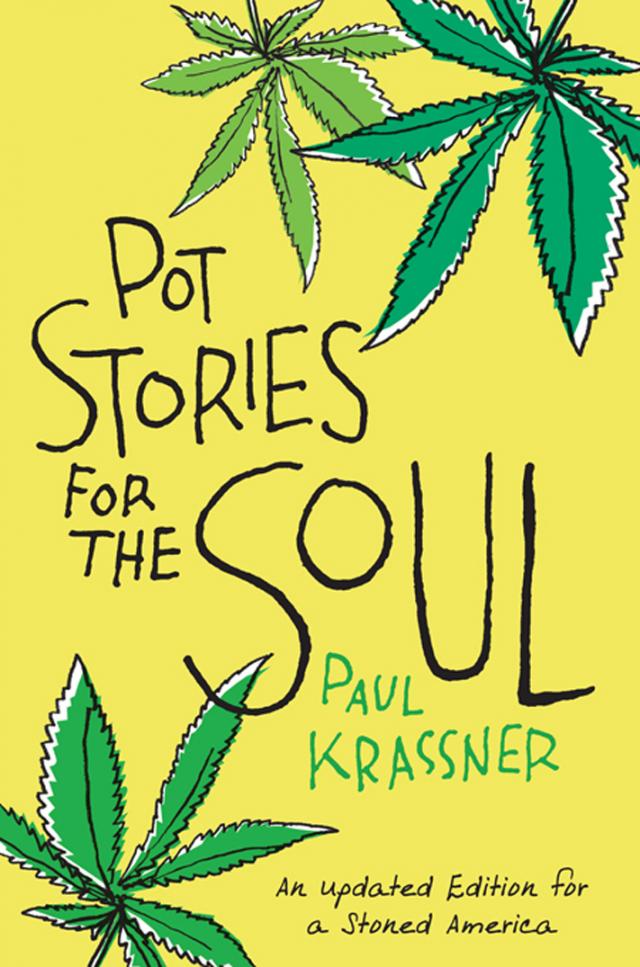


Table of Contents
Title Page
Dedication
Foreword
Introduction
One Toke over the Century: - Krassner’s New Stuff
Remembering Scott Kelman
Who Killed Peter McWilliams?
Checkmating with Pawns
The Ballad of Tommy Chong
Bong Hits 4 Jesus
The Great Hippie Debate
Lenny’s Last Laugh
A Letter to Barack Obama
Newt’s Noxious Nuttiness
The Kesey Papers
The Bust at Kesey’s Place
Halloween 1970
Mouse Power
Goofy Macho
Celebrities
I Was Allen Ginsberg’s Accountant
Kidnapping Jerry Rubin
Heath Ledger and the Tragedy of Marijuana Prohibition
Under the Counterculture
Turning on Newsweek
Ash Valley
Love and Haight
Blind Munchies
Marijuana Meatballs
The Sign
Chocoholics
Super Herb
The Brownie
Laughing Fits
Identified Flying Objects
Underground Paper
Sans Screen
DEVO and the Sex Pistols
Higher Education
Spacey and Spacier
False Alarm
Disappointed
Watermelon Blues
First Time
Secret Clearance
Jesus
Generations
Memory
Forgetting
Taking Inventory
Remembering
Radio Daze
Berkeley Boo
Flushing Toilets
Waiting for Cookies
Concerts
Knee High
Changed Attitude
Risk and Reward
Pranks
Smoking Bananas
Banana Tripping
Smoking Dog Poop
The Great Yippie Valentine’s Day Caper
Other Species
The Raccoon
The Duck
The Finches
Gerbil Power
Unfolding the Quantum Butterfly
Political Protest
Blessing in Disguise
For and Against
Students for a Democratic Society
Barry and the Burning Question
Police and Politicians Foil Proposition 215
Sentimental Journeys
The Undoing of Matilda
The Midwife
The Blind Mime
The Funeral
The Bostonians: A Pot Family Saga
Disneyland
Peer Pressure
Fickle Finger of Fate
The Disneyland Memorial Orgy
Amsterdam
Space Cake
Borderline Paranoia
My Cannabis Cup Runneth Over
Customs
Car Sale
Lobsters
Got One!
Pleasant Surprise!
Spanish Lie
Divine Intervention
Varieties of Paranoia
Lapse in Judgment
Hide and Seek
Vega
Bank Job
Stems and Seeds
Radical Luck
Foolish Question
Not Busted
These Untidy Guys
The Hole-in-the-Floor Gang
The Grateful Living
Nickel Bag
Dementia
Rare Moment
Paradigm Shift
Almost Busted
Romantic Interlude
State Line
The Favor
Busted
Fish Cops
Most Likely to Succeed
A Tale of Two Busts
Hash Police
Corrupting Minors
Serving Time
Escaping Reality
Lipton
Miscellaneous Joints
Good Vibes
Ms. Deal
Smoking Pot in the White House
Scrabbled
Miracle Cure
Speaking of Talking
Research Project
Digger
How Do You Spell Relief?
Good-bye, Reno, Good-bye
On the Border
Biker Story
Shooting Pot
Time Delay
Roaches
But Who’s Counting?
Problem Child
Actual Dialogue
The Hole
Moment of Truth
Choices
Brownie Baked
Light Show
Evangelism
About the Editor
Copyright Page
Other Books by Paul Krassner
How a Satirical Editor Became a Yippie
Conspirator in Ten Easy Years
Best of The Realist [Editor]
Tales of Tongue Fu
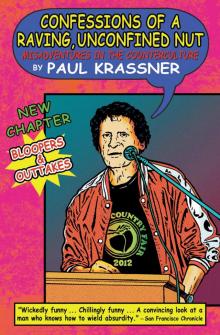
Confessions of a Raving, Unconfined Nut:
Misadventures in the Counterculture
The Winner of the Slow Bicycle Race:
The Satirical Writings of Paul Krassner
Impolite Interviews
Sex, Drugs & the Twinkie Murders:
40 Years of Countercultural Journalism
Murder at the Conspiracy Convention
and Other American Absurdities
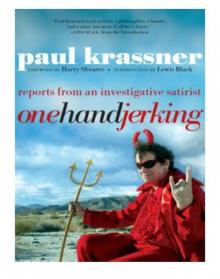
One Hand Jerking:
Reports From an Investigative Satirist
In Praise of Indecency:
Dispatches from the Valley of Porn
Who’s to Say What’s Obscene?
Politics, Culture, and Comedy in America Today
For Peter McWilliams, whose creative and compassionate
leadership in the medical marijuana movement
has continued to inspire and invigorate
“Marijuana is not a medicine. It is a drug that makes people think they feel better.”
—Art Croney, a lobbyist for the Committee on Moral Concerns
“I admit I experimented with drugs in college.
What I don’t say is the experiment was a success.”
—Steve Coppage, satisfied smoker
Foreword by Harlan Ellison
T’ANKS BUT NO T’OKES
Basically, fuck dope. No offense, dude, but fuck dope.
This has virtually nothing to do with the subject at hand, but as deep background, permit me this brief preamble: I ran away from home at age thirteen. I’d already been earning my living for three or four years prior to that, apart from mooching off my parents in Painesville, Ohio.
I mean, I was nine or ten, fer chrissakes, so when I say “I was earning my own living,” I mean I was paying for everything a kid of nine or ten in the early forties would need money for: ten cents for admission every Saturday afternoon to the Lake Theater; the latest issue of Big Shot Comics featuring Skyman and Tony Trent as The Face; an occasional Grosset & Dunlap hardcover of a Lone Ranger novel ($2 each) bylined by Fran Striker, who had created the radio show and the character, but actually ghostwritten by the unsung Gaylord DuBois; a new pair of U.S. Keds high-tops with the big red ball on the side; a Tom Mix “nuclear bombardment chamber” radio premium ring for ten cents and two Ralston Purina box tops; a bottle of Teel tooth drops; some Fleer’s Dubble Bubble . . . I earned the money for such staples by selling the Sunday edition of Cleveland’s The Plain Dealer every Saturday night at the corner of State and Main streets, by shining shoes at that same excellent location, by mowing lawns, raking leaves, shoveling snow, catching flies, cleaning garages and attics. Back in the days before the discovery of Cultural Guilt and the advent of the Victim Society, that was how us lower-middle-class white boys paid our way. It was a hardscrabble existence for Clark Bars.
And then I ran away. And began to earn my keep for real. No mommy bargaining that if I’d eat my peas and carrots, I could stay up an hour later to hear Big Town or The Hermit’s Cave. No father saying if I cleaned my room, I could come downtown after he closed the store on Saturday night and we’d have hot roast beef sandwiches and French fries at Jerry & Bert’s. It was La Strada, dude. I was on the road, sans bucks, sans mommy/daddy, sans even Kerouac—who wouldn’t be published yet for another decade. I worked on farms and in orchards, picking crops. I bluffed my way into truck-driving jobs on construction sites. I worked in a lumber camp, on tuna boats, as a door-to-door salesman, a short-order cook, a printer’s devil and slag-bucket carrier in a lithographing plant, a garbage collector. I worked in a carnival, on a road gang, in a quarry, standing by the side of the road selling bouquets of flowers. I lied to farmers’ wives and told them I could repair (or mangle) the busted washing machine (or stove or hot plate) out there rusting in the side yard in exchange for a meal. I rode the rods, I drank gypsy coffee out of a tin can with Princes of the Road under railroad trestles in ten different states, I had my ass saved a hundred times by men of many other colors, and I was locked up in the old Kansas City slam with a carny geek who had gone “wet-brain” so long ago that the scent of rancid sour mash came out of his pores when he sweated.
I saw what liquor and dope had to offer. I have been around drugs all my life. I came back with Chinese food one night to a sleazy railroad flat I was sharing with a beautiful girl and found her dead, naked, OD’d in the tub. The water was still warm. One nigh t, I actually heard Charlie Parker blow at a $1 admission rent-and-spaghetti party up on 101st and First Avenue in Harlem; and he went into the can, went Charlie “Bird” Parker, and he fixed, and he came out, and he blew . . . crap. Discordant shit. I heard the great legend Bird blow, only that once, a year or two before he died, and he sounded like shit. From the dope.
Here is the subject at hand: I have been on the street since I was thirteen. I have learned important stuff about staying alive. I have learned that sneaky bastards and kindhearted slobs come in all colors. I have learned that you’re never as smart as you think you are. I have learned that love is rare but cowardice is plentiful. I believe that anything not nailed down is mine—and anything I can pry loose ain’t nailed down.
All through the ’60s and ’70s, going to parties and just hanging, this one or that one would offer me a hit of this or a lid of that. Drop one of these, stick this in your instep, shove this spansule up your ass, honk a line of this, inhale a vape of this . . . I always said, “No thanks.”
I wasn’t afraid. Ask anyone who knows me. I don’t scare. Simply put, I didn’t want any part of that crap. When someone would thrust a doobie the size of a Macanudo cigar under my nose and intone the magic word “toke?” I’d reply with a sweet smile, “Not till I come down.” Theodore Sturgeon (if you don’t recognize the name, go look it up, you ignorant asshole) once wrote that he’d seen studies of people who allegedly produced psilocybin in the bloodstream. He opined that I was like that . . . always high. Otherwise, how do I explain all the weird stuff I’ve done in my life?
The subject at hand is Krassner asking me to write my “dope story” for his idiot book.
Here it is.
Fuck dope.
Oh, and . . . have a nice day.
Introduction
PAUL KRASSNER
Pot Stories for the Soul was first published by High Times Books in 1999. It won the Firecracker Alternative Book Award and also became a Quality Paperback Book Club selection. All rights have since been reverted back to me, and this is an expanded and updated edition of that collection.
The original concept was a trilogy of true dope tales—Pot Stories for the Soul, Acid Trips for the Soul, and Magic Mushrooms for the Soul—but attorneys for the Chicken Soup for the Soul publisher sent a letter to High Times Books demanding that it “cease and desist.”
Thus, the first sequel was retitled Acid Trips for the Mind, but the distributor insisted that it be changed to Psychedelic Trips for the Mind. The second sequel was retitled Magic Mushrooms for the Body, but I changed that to Magic Mushrooms and Other Highs: From Toad Slime to Ecstasy.
I sent a copy of the latter book to contributor/friend Todd McCormick, but the warden rejected it “because on pages 189–190, it describes the process of squeezing toads to obtain illicit substances, which could be detrimental to the security, good order, and discipline of the institution.”
This was pure theater of cruelty. Federal correctional facilities do not have a toad problem, and outside accomplices have not been catapulting loads of toads over barbed wire fences to provide the fuel for a prison riot.
But the moral of this story is, although theologians and scientists agree that the soul cannot be located, it can be copyrighted.
In order to counteract the negative propaganda about marijuana, I began collecting the material in Pot Stories for the Soul by contacting 250 friends and acquaintances, requesting their accounts of experiences with marijuana. Then I put announcements in The Realist, High Times, and Funny Times and on Roy of Hollywood’s midnight show on KPFK and Bob Fass’s midnight show on WBAI in New York.
The stories were chosen because they’re funny, whimsical, bizarre, poignant, informative, and, yeah, soulful—you got a problem with that? The styles may be different, but all reveal snippets of an essentially good-natured subculture. One correspondent wrote, “I’m sure that I have some funny dope stories, but I can’t remember any.” Another confessed, “I expanded my mind so many times I’ve got stretch marks on my brain.”
The priorities are insane. Cigarettes are legal—subsidized by the government, in fact—and kill more than 1,200 people a day in this country alone, whereas marijuana is illegal and the worst that can happen is the blind munchies might lead you to raid your neighbor’s refrigerator.
Voter support for the total legalization of marijuana has risen from 29 percent in 1999 to an all-time high of 50 percent today. That includes parents—tokers or not—ranging from those who want to protect their children from the perils of prohibition to those who are anticipating that time when the kids are off to college and they can fill their empty nests with the latest stash.
And yet, between 1965 and 2000, there were more than twelve million marijuana busts in America. In 2009, over half of all drug arrests in the United States were for marijuana. A FBI report concluded that police prosecuted 858,408 individuals for marijuana violations that year. Currently, almost half of all drug prosecutions nationwide are for simple possession.
As former High Times editor Peter Gorman told reporters at the magazine’s Tenth Annual Cannabis Cup in Amsterdam,While we would never dismiss or diminish the suffering of any group at the hands of another—and if we could stop their suffering somehow, I hope that we would have the courage to work towards that end—there are in fact several hundred million marijuana and hashish smokers worldwide being prosecuted, jailed, and sometimes put to death in more than one hundred separate countries simply for their use of cannabis. There is no other group, no religious organization, no single kind or color of people who are persecuted in such numbers in so many different places anywhere on the globe.
Which does not diminish the suffering of anyone. It is not a contest. Certainly the threat of being sentenced to a year in jail in the U.S. or France or England does not compare to the threat of marauders killing an entire village’s inhabitants simply for their having religious beliefs. But neither should your persecution go unnoticed. And it is precisely because there are so many of us being threatened, beaten, jailed, losing our property and denied our rights, so many of us who are suffering for our belief in this gentle and healing herb that we have become the single largest persecuted minority on the planet.
So, the next time you see antimarijuana propaganda from the Partnership for a Drug-Free America, just remember that it was founded and funded by legal drug pushers—the tobacco, alcohol, and pharmaceutical industries—that have a vested interest in keeping illegal drugs unpopular.
The Partnership received $150,000 each from Philip Morris (Marlboro cigarettes), Anheuser-Busch (Budweiser), and R.J. Reynolds (Lucky Strike and Camel cigarettes). Other contributors included Beam Inc. (Jim Beam), PepsiCo, and the Coca-Cola Company. Contributing pharmaceutical companies included Bristol-Myers Squibb, Dow Chemical Company, DuPont, Novartis, GlaxoSmithKline, Hoffmann-La Roche, Johnson & Johnson, Merck & Co., Pfizer, and Schering-Plough. Publishers Hachette Book Group (Time Warner), Dow Jones, and the Reader’s Digest Association also contributed funds.
As long as any government can arbitrarily decide which substances are legal and which are illegal, those victims of victimless crimes who remain behind bars for the possession of illegal substances are actually political prisoners. Significantly, unlike dangerous and addictive legal drugs, marijuana has long been sold solely on the basis of word-of-mouth. That’s the purest form of advertising, and it’s free. All together now, let us chant: “We don’t need no steenkin’ Joe Camel!”