The Killing Song, page 33


The woman took the bills and left.
“Nice tip,” Mel said.
“It’s all I had,” Louis said.
Mel took a drink of beer. “All right, Reggie, why don’t you tell us exactly what is going on?”
Reggie took a big drink of the gimlet. “Well, it’s like I told you on the phone. Four days ago, they found Mark’s body out in the fields, and then they just showed up at my door and told me I had to come into the police station to answer some questions.” He paused, shutting his eyes. “I had to go to that place and identify him. He … had no head. But he had this birthmark on his chest and—”
Mel interrupted him. “This Mark guy was a friend of yours?”
Reggie managed a nod.
“A good friend?” Mel asked.
Reggie picked up his glass and drained it. “Not really. I only knew him for a year, I guess.”
“So why were the police so interested in talking to you?” Louis asked.
Reggie took a moment to meet Louis’s eyes. “We were kind of in business together.”
“What kind of business?”
Reggie looked to Mel.
“You have to tell to us, Reggie,” Mel said.
Reggie blew out a long stream of cigarette smoke. “I’m a walker.”
“What, like a dog walker?” Louis asked.
“Dog? Oh, good Lord, no,” Reggie said. “A walker is … well, an escort of sorts.” Reggie saw the look on Louis’s face and held up a hand. “Not what you are thinking, I assure you. It’s rather hard to explain.”
Louis and Mel exchanged looks.
“Suppose you try,” Mel said. “You know, like we’re in fifth grade?”
Reggie looked to the dining room. “See that woman sitting by the fireplace? That blonde in the chartreuse Chanel suit?”
Louis and Mel swiveled to look. Louis focused on a woman in green with cotton-candy hair. Her face had the same taut look as Reggie’s, and had the lighting been kinder, she might have been mistaken for being in her fifties. But her neck and hands betrayed her as somewhere past seventy.
“That’s Rusty Newsome,” Reggie said. “I was supposed to escort her to the Heart Ball on Saturday. Her husband, Chick, never goes to anything, so I always take her.” He met Louis’s eyes. “That’s what I do. I take women to dinner or charity balls or the club. I pay attention to them if their husbands are too bored … or too dead.”
“You make a living at this?” Louis asked.
Reggie gave him a small smile. “There’s a lot of clubs in this town and a lot of widows in each club.”
“They pay you?” Louis asked.
Reggie tilted his chin up. “Sometimes they give me a little cash. Sometimes they give me little gifts. It’s not just about the money, you see. It’s about having a door into a life I could not really afford on my own.”
Mel took a long drink from his beer. “I always thought you were a hustler, Reggie.”
Reggie looked wounded. “Some might see it that way. But there are good hustlers, and there are bad hustlers. A bad hustler is always trying to get something out of someone. I am always trying to give these women something. I am the first to admit I have no real talents or ambition. But I am a wonderful listener, I know about wine and food, and I am very good at bridge. I know how to make a lonely woman feel happy.”
“Is sex part of this walker deal?” Louis asked.
Reggie’s eyes shot to him. “Never. The women I know are not interested in sex.”
Louis shook his head slowly. “Mr. Kent, I do a lot of work for wives whose husbands are cheating on them. Every time I find a guy’s been charging escorts to his Visa, he claims he just did it for the pleasure of the lady’s company.”
“This is different,” Reggie said, reddening. “What a walker offers is friendship. And sometimes a friendship is more intimate than a marriage. But it never, ever involves sex. We are not gigolos.”
He picked up his glass and downed the last of the gimlet. Louis was hoping he wouldn’t order another one.
“Your friend—what’s his name again?” Louis asked.
“Mark,” Reggie said softly. “Mark Durand.”
“You said he was a walker, too?” Louis asked.
Reggie nodded slowly. “He was just starting out as one, and I was sort of introducing him around, helping him get connected. He would have been a great walker.”
“But he turned up headless in a cow pasture,” Mel said.
Reggie nodded and looked at his empty glass with longing. Louis wondered if Mel had a credit card.
“How many times have the cops questioned you?” Louis asked.
“Three times,” Reggie said with a sigh. “It was in the Shiny Sheet. They even used my picture. Awful, just awful.”
“Why?” Louis asked.
“Why what?”
“Cops don’t question someone three times without good reason. Why do you think they’re after you?”
Reggie was silent.
“Talk to us, Reggie,” Mel said.
“I was with Mark the night before his body was found,” Reggie said. “We had a dinner at Testa’s and …” Another big sigh. “We had a fight. Everyone saw it.”
“About what?” Mel asked.
“What does it matter now?”
“It matters,” Mel said.
“Mark had been staying at my place, and he told me he wanted to get his own apartment,” Reggie said. “I told him he should stay with me for a while longer.”
“That’s it?”
Reggie nodded.
“You two weren’t—?”
Reggie stared at Mel. “Together? Oh no, no. Mark was quite a bit younger than me. No, there was nothing between us. We were just friends.”
Mel drained his beer, set the glass down, and leaned back in his chair, crossing his arms. “Don’t lie to us, Reggie.”
“I’m not. Like I said, it was just a business arrangement. I was trying to help him. But Mark insisted he was ready to go out on his own and I knew he wasn’t ready. This town will eat you alive, and I didn’t want that to happen to him.”
Mel was silent. Louis waited, watching the two men, wondering what the history was between them. Mel hadn’t told him much about Reggie Kent, just that he had known him back in Miami. He wondered how the hell Mel had ever hooked up with a piss-elegant guy like this.
Reggie leaned forward. “You’ve got to help me, Mel. Please. I don’t have anyone else to turn to.”
Louis was afraid the guy was going to cry.
“They’ve hung me out to dry,” Reggie said. “Even the police are against me.”
“They’re cops, Reggie, they’re supposed to be,” Mel said.
Reggie shook his head vigorously. “No, you don’t understand. The police are here to protect us. When that horrible detective from West Palm Beach came here to question me, Lieutenant Swann came with him. They are my friends.”
He picked up the pack of Gauloises, but when he pulled out a cigarette, his hand was shaking so badly he dropped it. Mel caught it before it rolled off the table. Mel looked at Louis, then back at Reggie. “So what do you want us to do?”
“Find out who killed Mark,” Reggie said.
“Just like that?” Mel said.
“I told you, Mel, I have money. I can pay you. And your friend of course.”
Louis was quiet. There was something about this guy he didn’t like. His desperation was genuine enough, but something was slightly off. He was sure the guy was lying about something. Or, at the very least, leaving something out of the story.
“Please, Mel,” Reggie said.
Mel held out the cigarette to Reggie. “Look, let us go have a little chat with your Lieutenant Swann and we’ll get back to you.”
Reggie looked to Louis, who nodded.
Reggie took the cigarette and grasped Mel’s hand. “Thank you, thank you.”
“Easy,” Mel said.
Reggie nodded and sat back in the chair, running a hand across his sweaty face. His wide eyes were darting over the crowded room now. He waved at someone and tried a smile but it faded quickly and he dropped his hand.
“I think I better go home,” he said softly. “There’s a nicely chilled bottle of Veuve Clicquot in my fridge. I think I shall go home and get shit-faced drunk.”
He picked up his cigarettes, rose, and held out his hand. Mel shook it. Reggie turned to Louis. “Forgive my manners. I’ve forgotten your name.”
“Louis Kincaid.”
Reggie smiled. “Thank you, Mr. Kincaid.”
Louis gave him a nod. Reggie took one last long look around the dining room and walked unsteadily back through the bar and was gone.
Louis turned to Mel, who smiled.
“Welcome to Bizarro World,” Mel said.
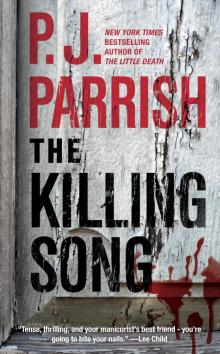
P. J. PARRISH delivers “CRIME FICTION AT ITS FINEST—
beautifully written, beautifully imagined, yet packed
with raw power, like an iron fist in a velvet glove.”
—LEE CHILD,# 1 New York Times
bestselling author of Worth Dying For
Read the New York Times and USA Today
bestselling Louis Kincaid series
“Wow! What a story. What well-defined
characters. And what a triumph for P. J. Parrish.”
—Sandra Brown
2009 Anthony Award nominee for Best Novel
2008 Anthony Award winner for Best Paperback Original
ISBN 978-1-4391-8936-8
Available from Pocket Star Books
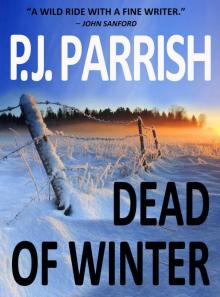
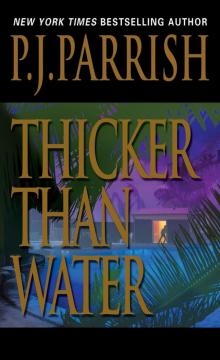
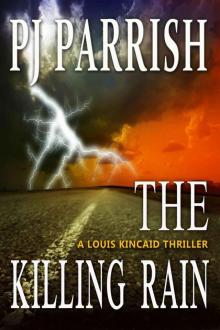
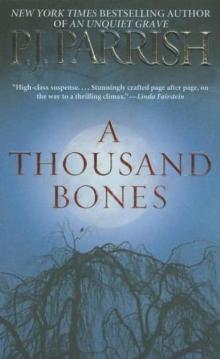
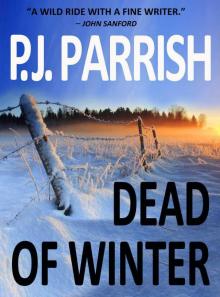
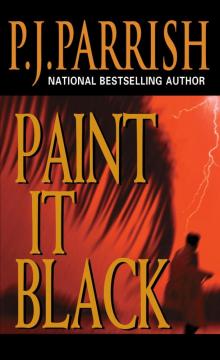
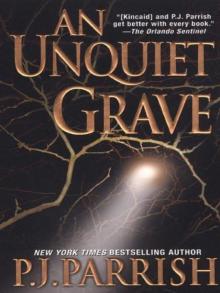
P. J. PARRISH is actually two sisters—Kristy Montee and Kelly Nichols—who pooled their talents and their lifelong love of writing to create the character of South Florida detective Louis Kincaid, featured in their New York Times and USA Today bestsellers The Little Death, South of Hell (nominated for a 2009 Anthony Award for Best Novel), A Thousand Bones, An Unquiet Grave (winner of the Shamus Award and the International Thriller Writers Award), A Killing Rain, Island of Bones, Thicker Than Water, Paint It Black, Dead of Winter, and Dark of the Moon.
They contributed to the collaborative audio serial novellas The Chopin Manuscript and The Copper Bracelet, a project spearheaded by Jeffery Deaver and the International Thriller Writers. The novellas have been published together in a paperback edition, Watchlist, available now.
The sisters were born and raised in Detroit, Michigan. Kristy graduated from Eastern Michigan University and worked as a journalist for twenty five years as a police reporter, editor, and dance critic. She now lives in Fort Lauderdale with her husband.
Kelly attended college at Northern Michigan University in the state’s remote upper peninsula. She worked in the gaming industry for twenty years as a blackjack dealer, bartender, and human resources specialist at a Native-American casino. She has two daughters, a son, and four grandchildren. She recently moved back to her beloved home state of Michigan, where she lives in a cabin in Petoskey.
For more information, visit www.pjparrish.com.
ISBN 978-1-4391-8936-8
P. J. Parrish, The Killing Song
Thank you for reading books on ReadFrom.Net
Share this book with friends
“Nice tip,” Mel said.
“It’s all I had,” Louis said.
Mel took a drink of beer. “All right, Reggie, why don’t you tell us exactly what is going on?”
Reggie took a big drink of the gimlet. “Well, it’s like I told you on the phone. Four days ago, they found Mark’s body out in the fields, and then they just showed up at my door and told me I had to come into the police station to answer some questions.” He paused, shutting his eyes. “I had to go to that place and identify him. He … had no head. But he had this birthmark on his chest and—”
Mel interrupted him. “This Mark guy was a friend of yours?”
Reggie managed a nod.
“A good friend?” Mel asked.
Reggie picked up his glass and drained it. “Not really. I only knew him for a year, I guess.”
“So why were the police so interested in talking to you?” Louis asked.
Reggie took a moment to meet Louis’s eyes. “We were kind of in business together.”
“What kind of business?”
Reggie looked to Mel.
“You have to tell to us, Reggie,” Mel said.
Reggie blew out a long stream of cigarette smoke. “I’m a walker.”
“What, like a dog walker?” Louis asked.
“Dog? Oh, good Lord, no,” Reggie said. “A walker is … well, an escort of sorts.” Reggie saw the look on Louis’s face and held up a hand. “Not what you are thinking, I assure you. It’s rather hard to explain.”
Louis and Mel exchanged looks.
“Suppose you try,” Mel said. “You know, like we’re in fifth grade?”
Reggie looked to the dining room. “See that woman sitting by the fireplace? That blonde in the chartreuse Chanel suit?”
Louis and Mel swiveled to look. Louis focused on a woman in green with cotton-candy hair. Her face had the same taut look as Reggie’s, and had the lighting been kinder, she might have been mistaken for being in her fifties. But her neck and hands betrayed her as somewhere past seventy.
“That’s Rusty Newsome,” Reggie said. “I was supposed to escort her to the Heart Ball on Saturday. Her husband, Chick, never goes to anything, so I always take her.” He met Louis’s eyes. “That’s what I do. I take women to dinner or charity balls or the club. I pay attention to them if their husbands are too bored … or too dead.”
“You make a living at this?” Louis asked.
Reggie gave him a small smile. “There’s a lot of clubs in this town and a lot of widows in each club.”
“They pay you?” Louis asked.
Reggie tilted his chin up. “Sometimes they give me a little cash. Sometimes they give me little gifts. It’s not just about the money, you see. It’s about having a door into a life I could not really afford on my own.”
Mel took a long drink from his beer. “I always thought you were a hustler, Reggie.”
Reggie looked wounded. “Some might see it that way. But there are good hustlers, and there are bad hustlers. A bad hustler is always trying to get something out of someone. I am always trying to give these women something. I am the first to admit I have no real talents or ambition. But I am a wonderful listener, I know about wine and food, and I am very good at bridge. I know how to make a lonely woman feel happy.”
“Is sex part of this walker deal?” Louis asked.
Reggie’s eyes shot to him. “Never. The women I know are not interested in sex.”
Louis shook his head slowly. “Mr. Kent, I do a lot of work for wives whose husbands are cheating on them. Every time I find a guy’s been charging escorts to his Visa, he claims he just did it for the pleasure of the lady’s company.”
“This is different,” Reggie said, reddening. “What a walker offers is friendship. And sometimes a friendship is more intimate than a marriage. But it never, ever involves sex. We are not gigolos.”
He picked up his glass and downed the last of the gimlet. Louis was hoping he wouldn’t order another one.
“Your friend—what’s his name again?” Louis asked.
“Mark,” Reggie said softly. “Mark Durand.”
“You said he was a walker, too?” Louis asked.
Reggie nodded slowly. “He was just starting out as one, and I was sort of introducing him around, helping him get connected. He would have been a great walker.”
“But he turned up headless in a cow pasture,” Mel said.
Reggie nodded and looked at his empty glass with longing. Louis wondered if Mel had a credit card.
“How many times have the cops questioned you?” Louis asked.
“Three times,” Reggie said with a sigh. “It was in the Shiny Sheet. They even used my picture. Awful, just awful.”
“Why?” Louis asked.
“Why what?”
“Cops don’t question someone three times without good reason. Why do you think they’re after you?”
Reggie was silent.
“Talk to us, Reggie,” Mel said.
“I was with Mark the night before his body was found,” Reggie said. “We had a dinner at Testa’s and …” Another big sigh. “We had a fight. Everyone saw it.”
“About what?” Mel asked.
“What does it matter now?”
“It matters,” Mel said.
“Mark had been staying at my place, and he told me he wanted to get his own apartment,” Reggie said. “I told him he should stay with me for a while longer.”
“That’s it?”
Reggie nodded.
“You two weren’t—?”
Reggie stared at Mel. “Together? Oh no, no. Mark was quite a bit younger than me. No, there was nothing between us. We were just friends.”
Mel drained his beer, set the glass down, and leaned back in his chair, crossing his arms. “Don’t lie to us, Reggie.”
“I’m not. Like I said, it was just a business arrangement. I was trying to help him. But Mark insisted he was ready to go out on his own and I knew he wasn’t ready. This town will eat you alive, and I didn’t want that to happen to him.”
Mel was silent. Louis waited, watching the two men, wondering what the history was between them. Mel hadn’t told him much about Reggie Kent, just that he had known him back in Miami. He wondered how the hell Mel had ever hooked up with a piss-elegant guy like this.
Reggie leaned forward. “You’ve got to help me, Mel. Please. I don’t have anyone else to turn to.”
Louis was afraid the guy was going to cry.
“They’ve hung me out to dry,” Reggie said. “Even the police are against me.”
“They’re cops, Reggie, they’re supposed to be,” Mel said.
Reggie shook his head vigorously. “No, you don’t understand. The police are here to protect us. When that horrible detective from West Palm Beach came here to question me, Lieutenant Swann came with him. They are my friends.”
He picked up the pack of Gauloises, but when he pulled out a cigarette, his hand was shaking so badly he dropped it. Mel caught it before it rolled off the table. Mel looked at Louis, then back at Reggie. “So what do you want us to do?”
“Find out who killed Mark,” Reggie said.
“Just like that?” Mel said.
“I told you, Mel, I have money. I can pay you. And your friend of course.”
Louis was quiet. There was something about this guy he didn’t like. His desperation was genuine enough, but something was slightly off. He was sure the guy was lying about something. Or, at the very least, leaving something out of the story.
“Please, Mel,” Reggie said.
Mel held out the cigarette to Reggie. “Look, let us go have a little chat with your Lieutenant Swann and we’ll get back to you.”
Reggie looked to Louis, who nodded.
Reggie took the cigarette and grasped Mel’s hand. “Thank you, thank you.”
“Easy,” Mel said.
Reggie nodded and sat back in the chair, running a hand across his sweaty face. His wide eyes were darting over the crowded room now. He waved at someone and tried a smile but it faded quickly and he dropped his hand.
“I think I better go home,” he said softly. “There’s a nicely chilled bottle of Veuve Clicquot in my fridge. I think I shall go home and get shit-faced drunk.”
He picked up his cigarettes, rose, and held out his hand. Mel shook it. Reggie turned to Louis. “Forgive my manners. I’ve forgotten your name.”
“Louis Kincaid.”
Reggie smiled. “Thank you, Mr. Kincaid.”
Louis gave him a nod. Reggie took one last long look around the dining room and walked unsteadily back through the bar and was gone.
Louis turned to Mel, who smiled.
“Welcome to Bizarro World,” Mel said.
P. J. PARRISH delivers “CRIME FICTION AT ITS FINEST—
beautifully written, beautifully imagined, yet packed
with raw power, like an iron fist in a velvet glove.”
—LEE CHILD,# 1 New York Times
bestselling author of Worth Dying For
Read the New York Times and USA Today
bestselling Louis Kincaid series
“Wow! What a story. What well-defined
characters. And what a triumph for P. J. Parrish.”
—Sandra Brown
2009 Anthony Award nominee for Best Novel
2008 Anthony Award winner for Best Paperback Original
ISBN 978-1-4391-8936-8
Available from Pocket Star Books
P. J. PARRISH is actually two sisters—Kristy Montee and Kelly Nichols—who pooled their talents and their lifelong love of writing to create the character of South Florida detective Louis Kincaid, featured in their New York Times and USA Today bestsellers The Little Death, South of Hell (nominated for a 2009 Anthony Award for Best Novel), A Thousand Bones, An Unquiet Grave (winner of the Shamus Award and the International Thriller Writers Award), A Killing Rain, Island of Bones, Thicker Than Water, Paint It Black, Dead of Winter, and Dark of the Moon.
They contributed to the collaborative audio serial novellas The Chopin Manuscript and The Copper Bracelet, a project spearheaded by Jeffery Deaver and the International Thriller Writers. The novellas have been published together in a paperback edition, Watchlist, available now.
The sisters were born and raised in Detroit, Michigan. Kristy graduated from Eastern Michigan University and worked as a journalist for twenty five years as a police reporter, editor, and dance critic. She now lives in Fort Lauderdale with her husband.
Kelly attended college at Northern Michigan University in the state’s remote upper peninsula. She worked in the gaming industry for twenty years as a blackjack dealer, bartender, and human resources specialist at a Native-American casino. She has two daughters, a son, and four grandchildren. She recently moved back to her beloved home state of Michigan, where she lives in a cabin in Petoskey.
For more information, visit www.pjparrish.com.
ISBN 978-1-4391-8936-8
P. J. Parrish, The Killing Song