Passage to Mutiny

Passage to Mutiny

Alexander Kent

Nonfiction / Crime / True Crime

October 1789, and war clouds thunder over Europe when Richard Bolitho steers the Tempest into the perilous waters of the Great South Sea. To protect vulnerable English shipping lanes from her seagoing enemies, he must face the hazards of fickle winds, pirates, and savage islanders.
Read online
  • 7
Everything We Don't Know

Everything We Don't Know

Aaron Gilbreath

Nonfiction / Memoir / Music

Heartfelt, earnest, and humorous, the essays in Everything We Don't Know examine the journey of growing up in contemporary America. Aaron Gilbreath contemplates the ocean-bound debris from Japan's Fukushima nuclear disaster, his nostalgia for the demolished buildings of his youth, quitting smoking, the etymology of the word "radical," and more. A deftly-crafted debut from a wise, bold voice.Aaron Gilbreath's essays have appeared in Harper's, the New York Times, Paris Review, Vice, Tin House, the Believer, Oxford American, and elsewhere.
Read online
  • 7
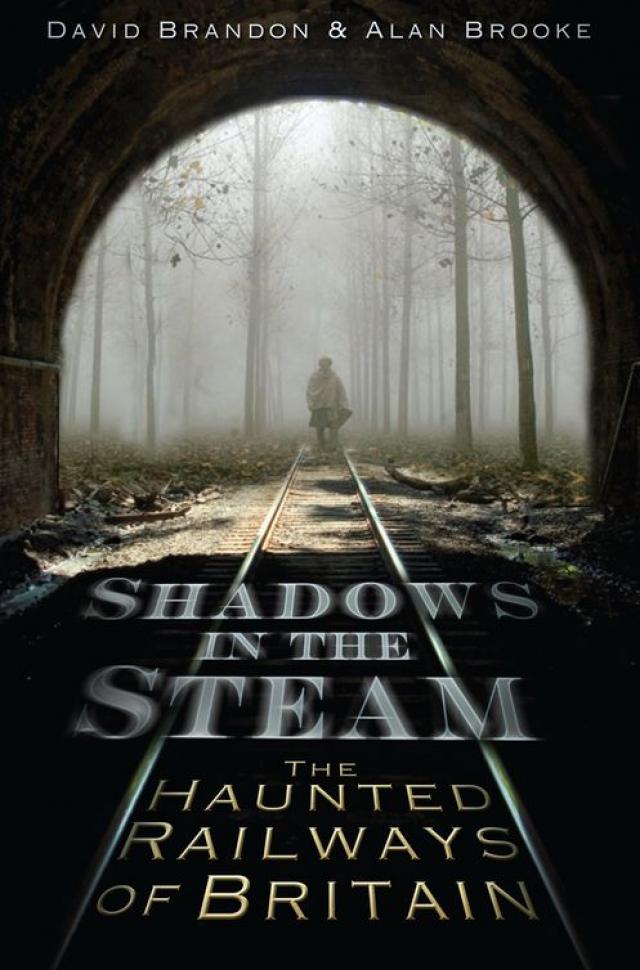
Shadows in the Steam

Shadows in the Steam

David Brandon

War / Military Fiction / Nonfiction

Offers a look at some of the strange and unexplained hauntings across Britain's railway network: signals and messages sent from empty boxes; trains that went into tunnels and never left; ghostly passengers and spectral crew; and, the wires whizzing to signal the arrival of trains on lines that have been closed for years.
Read online
  • 7
Call Me Burroughs

Call Me Burroughs

Barry Miles

Music / Biography / Nonfiction

Fifty years ago, Norman Mailer asserted, "William Burroughs is the only American novelist living today who may conceivably be possessed by genius." Few since have taken such literary risks, developed such individual political or spiritual ideas, or spanned such a wide range of media. Burroughs wrote novels, memoirs, technical manuals, and poetry. He painted, made collages, took thousands of photographs, produced hundreds of hours of experimental recordings, acted in movies, and recorded more CDs than most rock bands. Burroughs was the original cult figure of the Beat Movement, and with the publication of his novel Naked Lunch, which was originally banned for obscenity, he became a guru to the 60s youth counterculture. In CALL ME BURROUGHS, biographer and Beat historian Barry Miles presents the first full-length biography of Burroughs to be published in a quarter century-and the first one to chronicle the last decade of Burroughs's life and examine his...
Read online
  • 7
A Duckling Called Button

A Duckling Called Button

Helen Peters

Nonfiction / Pop Culture

The second title in a fantastic series of animal stories for younger readers by Waterstones Children's Book Prize-shortlisted author Helen Peters, with beautiful black-and-white illustrations by Ellie Snowdon. When a nesting duck is killed in a terrible accident, Jasmine and her best friend Tom rescue the eggs and try to hatch them in an incubator. It's a risky business but soon Button is running around, getting into scrapes. Until the day he gets into a scrape with no escape... Brilliant storytelling that will make you laugh and cry, this is Dick King-Smith for a new generation. Look out for Jasmine's other adventures! A Piglet Called TruffleA Sheepdog Called Sky
Read online
  • 7


The Captive

The Captive

Joanne Rock

Romance / Young Adult / Nonfiction

EDITORIAL REVIEW: Women should be sweet, mild mannered…docile. Unfortunately, Lady Gwendolyn, a rich Saxon widow, is none of those things. And Viking warrior Wulf Geirsson wants her desperately! One glimpse of the brazen beauty scrambling over the castle ramparts, and he knows he has to have her. Especially when she takes a tumble and lands at his feet. But Wulf quickly finds that taking Gwendolyn and keeping her are two different things. And once she decides to engage in a seductive assault of her own, he's the one captivated….
Read online
  • 7
The Magnate's Mail-Order Bride

The Magnate's Mail-Order Bride

Joanne Rock

Romance / Young Adult / Nonfiction

A mix-and-match mock engagement? Ballerina Sofia Koslov's career is on the line when she's accosted at the airport by a rich, reckless playboy who thinks she's his mail-order bride! But the playboy's levelheaded brother, Quinn McNeill, solves the media snafu with a switcheroo. He'll pretend to be her legitimate fiancé to protect her reputation—and to protect his family's business deals from her father's wrath. Sofia's one condition: they'll share the spotlight as a loving couple but won't share a bed. But soon Quinn's gentlemanly ways strike a chord, and Sofia's dying to renege on that condition and have a real fling... The Magnate's Mail-Order Bride is part of The McNeill Magnates series.
Read online
  • 7
Boomsday

Boomsday

Christopher Taylor Buckley

Nonfiction / Autobiography / Memoir

From The Washington Post Reviewed by Judy Budnitz Does government-sanctioned suicide offer the same potential for satire as, say, the consumption of children? Possibly. One need only look to Kurt Vonnegut's story "Welcome to the Monkey House," with its "Federal Ethical Suicide Parlors" staffed by Juno-esque hostesses in purple body stockings. Or the recent film "Children of Men," in which television commercials for a suicide drug mimic, to an unsettling degree, the sunsets-and-soothing-voices style of real pharmaceutical ads. Now, Christopher Buckley ventures into a not-too-distant future to engage the subject in his new novel, Boomsday. Here's the set-up: One generation is pitted against another in the shadow of a Social Security crisis. Our protagonist, Cassandra Devine, is a 29-year-old public relations maven by day, angry blogger by night. Incensed by the financial burden soon to be placed on her age bracket by baby boomers approaching retirement, she proposes on her blog that boomers be encouraged to commit suicide. Cassandra insists that her proposal is not meant to be taken literally; it is merely a "meta-issue" intended to spark discussion and a search for real solutions. But the idea is taken up by an attention-seeking senator, Randy Jepperson, and the political spinning begins. Soon Cassandra and her boss, Terry Tucker, are devising incentives for the plan (no estate tax, free Botox), an evangelical pro-life activist is grabbing the opposing position, the president is appointing a special commission to study the issue, the media is in a frenzy, and Cassandra is a hero. As a presidential election approaches, the political shenanigans escalate and the subplots multiply: There are nursing-home conspiracies, Russian prostitutes, Ivy League bribes, papal phone calls and more. Buckley orchestrates all these characters and complications with ease. He has a well-honed talent for quippy dialogue and an insider's familiarity with the way spin doctors manipulate language. It's queasily enjoyable to watch his characters concocting doublespeak to combat every turn of events. "Voluntary Transitioning" is Cassandra's euphemism for suicide; "Resource hogs" and "Wrinklies" are her labels for the soon-to-retire. The opposition dubs her "Joan of Dark." It's all extremely entertaining, if not exactly subtle. The president, Riley Peacham, is "haunted by the homophonic possibilities of his surname." Jokes are repeated and repeated; symbols stand up and identify themselves. Here's Cassandra on the original Cassandra: "Daughter of the king of Troy. She warned that the city would fall to the Greeks. They ignored her… Cassandra is sort of a metaphor for catastrophe prediction. This is me. It's what I do." By the time Cassandra asks Terry, "Did you ever read Jonathan Swift's 'A Modest Proposal'?" some readers may be crying, "O.K., O.K., I get it." Younger readers, meanwhile, may find themselves muttering, "He doesn't get it." The depiction of 20-somethings here often rings hollow, relying as it does on the most obvious signifiers: iPods, videogames, skateboards and an apathetic rallying cry of "whatever." But Buckley isn't singling out the younger generation. He's democratic in his derision: boomers, politicians, the media, the public relations business, the Christian right and the Catholic Church get equal treatment. Yet despite the abundance of targets and the considerable display of wit, the satire here is not angry enough – not Swiftian enough – to elicit shock or provoke reflection; it's simply funny. All the drama takes place in a bubble of elitism, open only to power players – software billionaires, politicians, lobbyists, religious leaders. The general population is kept discretely offstage. Even the two groups at the center of the debate are reduced to polling statistics. There are secondhand reports of them acting en masse: 20-somethings attacking retirement-community golf courses, boomers demanding tax deductions for Segways. But no individual faces emerge. Of course, broadness is a necessary aspect of satire, but here reductiveness drains any urgency from the proceedings. There's little sense that lives, or souls, are at stake. Even Cassandra, the nominal hero, fails to elicit much sympathy. Her motivations are more self-involved than idealistic: She's peeved that her father spent her college fund and kept her from going to Yale. And she's not entirely convincing as the leader and voice of her generation. Though her blog has won her millions of followers, we never see why she's so popular; we never see any samples of her blogging to understand why her writing inspires such devotion. What's even more curious is that, aside from her blog, she seems to have no contact with other people her own age. Her mentors, her lover and all of her associates are members of the "wrinklies" demographic. Though I was willing for the most part to sit back and enjoy the rollicking ride, one incident in particular strained my credulity to the breaking point: Cassandra advises Sen. Jepperson to use profanity in a televised debate as a way of wooing under-30 voters, and the tactic is a smashing success. If dropping an f-bomb were all it took to win over the young folks, Vice President Cheney would be a rock star by now.
Read online
  • 7
Martian Summer

Martian Summer

Andrew Kessler

Science / Nonfiction / Space

Get up close and personal with science as Andrew Kessler narrates his hilarious journey inside NASA's Phoenix Mars mission—a historic enterprise manned by a motley crew of rocket scientistsThe Phoenix Mars mission was the first man-made probe ever sent to the Martian arctic. Its purpose was to find out how climate change could turn a warm, wet planet (read: Earth) into a cold, barren desert (read: Mars). Along the way, Phoenix discovered a giant frozen ocean trapped beneath the north pole of Mars, exotic food for aliens, and liquid water, and laid the foundation for NASA's current exploration of Mars using the Curiosity rover.This is not science fiction. It's fact. And for the luckiest fanboy in fandom, it was the best vacation ever. Andrew Kessler spent the summer of 2008 in NASA's mission control with one hundred thirty of the world's best planetary scientists and engineers as they carried out this ambitious operation. He...
Read online
  • 7
183