The iCongressman, page 32
part #2 of The Michael Bennit Series Series


“You’re a liability now, Johnston. You’re out as Speaker, regardless how things play out next month. That’s only half your problem. The party wants someone to pin the blame on, and you’re the sacrificial lamb. So you’re going to resign your seat for health reasons before the next Congress starts.”
“I won’t.”
“You will. Otherwise, you’ll be in and out of hearings about your behavior more than A-Rod was. You’ll face a barrage of embarrassing questions you really don’t want to answer. As a friend, I don’t want to see that happen to you.”
“A friend? Is that what you’re still calling yourself? A friend?” I ask incredulously. He has some nerve. “Get out of my office.” He obliges, walking across the spacious office overlooking the National Mall that I have called mine for a long time now.
“You wouldn’t dare cross Reed. Not just to get me out of this office.”
“Do you really want to test us on that?” he responds, stopping at the door. He’s right. The Republican Party has shot itself in the foot over far less over the years. “For perhaps the last time, have a good day, Mister Speaker.”
-SEVENTY-THREE-
MICHAEL
There are strictly defined rules about where the media can go and what they can film on the Capitol grounds. Aside from the press briefing rooms in the Capitol and the various office buildings, there are countless areas that allow portable coverage for interviews. Since I don’t like the idea of being the typical politician that slithers over to the closest camera after a vote, we decide on a semi-impromptu gathering at the base of the House steps at the southeast corner of the building.
It is cold out, but not bitterly so, yet I hold out the hope that the temperature will help keep this brief. Even with my wool overcoat and countless days freezing during Ranger School and Mountain Warfare School while I was in the Army, I prefer being warmer than I am right now.
I stop a few steps from the bottom, just beyond the roped off area of the steps where only members are allowed to proceed. A gaggle of media are gathered at the bottom, microphones and cameras at the ready. The group is nowhere near the size of the hordes of media that followed our first campaign, highlighting just how little the average American understands what just happened here.
I have no opening statement, and sensing that, the press launches into the questioning. I am flanked by Blake and Chelsea to my left, Cisco to my right, and Viano a step behind me. The rest of my staff is a few steps higher and way off to the side, content to watch from outside the limelight.
“Congressman Bennit, you ran a social media campaign to try to sway opinions on this vote. Do you think that’s the future of politics?” Interesting first question, but one I’m happy to comment on.
“I hope not, because it failed miserably.”
“What do you mean?” the reporter asks after looking at his colleagues with a slightly confused look on his face.
“It didn’t work. Americans weren’t paying attention to this vote, especially once news of the fake anthrax attack spread. Nobody got caught up in the excitement of this vote outside of the Beltway. They simply were not invested in the outcome. If this lame duck session accomplished anything, it’s showcasing the limitations to the effectiveness of social media when it comes to how government legislates.”
“Why do you think that is?” a young female in the middle of the scrum follows up.
“Because it’s almost Christmas, and the people want to spend time with family, shop for gifts, and get on with their lives. Americans went to the polls to choose their representatives in November. They did their job, and now they want us to do ours. The public doesn’t understand what we voted on today, and honestly, I don’t think they really care. It is why we have a representative government: so they can remain indifferent about what happens here and focus on what matters in their lives.”
“So what does this victory mean?” one of the intrepid journalists up front asks. She looks like she’s been out here for a while and is in drastic need of a warm fire and a hot chocolate.
“Every piece of legislation that is passed justifies the Founding Fathers’ optimism that elected representatives can govern a free and diverse nation. Sometimes the same is true for legislation that gets defeated. Today, we defeated an assault on that optimistic vision. For too long Americans have questioned whether the people they elect are truly dedicated to serving their best interests. I hope we can once again restore our citizens’ trust and confidence in our system of government.”
More questions get shouted from the group. I wonder the same thing every other American does. If they just spoke one at a time, these conferences would go much faster, smoother, and a lot more questions would get answered. Instead, I wait until a clear question emerges.
“What makes you think the independents who got elected will be any better?” Good question.
“I don’t think that for sure. What I do know is they did not take large campaign donations. Big oil, big tobacco, big labor … none of them can lay a claim. The independents that ran along with me are beholden to nobody other than the constituents who elected them. They are not people with career political aspirations—just some of our best and brightest citizens who don’t want to just be a representative in Congress, but a distinguished one who works toward solutions to our problems. Over the past several decades, we have seen an exodus of legislative statesmen and women. I think the American people elected some new ones.”
“What would you say to your critics like the Tea Party and the ACLU who think your desire to compromise may damage the country?”
“God bless America for them being able to articulate their opinions, but I would challenge any claim they make that the extremism we have seen over the past couple of decades has made this country a better place.”
“And you think compromising will help achieve that goal?” a man with a tape recorder remarks sarcastically from my right.
“Except for on the rare occasion when there is enough dominant consensus on an issue where it isn’t needed.”
“When does that happen?” asks a pretty woman from the middle of the group, causing a few laughs amongst her peers.
“The resolution supporting Veteran’s Day is all I can think of,” I answer, eliciting some more laughs. “For the rest of the issues we face in this country, legislating will inevitably mean compromising. That’s what making policy in a democratic system is all about. No single person, faction, or interest can get everything it wants.”
“Congressman, are you categorically stating you will not be forming a third party?” a voice shouts from the back of the group.
“Yes.” I want to say something more clever, but I don’t want to it come across the wrong way.
“Is there any truth to the rumor this new caucus you will form with the other independents will challenge the president when it comes to setting the agenda for the country?” Not sure where he got that tidbit of information from.
“The administration is responsible for day-to-day management of a huge bureaucracy which has, by default, made it a dominant force in politics. The president has been empowered to become more involved in the activities of Congress, resulting in less laws and policies being initiated by this body.”
“You didn’t answer the question, sir,” the reporter presses.
“I know,” I say with a smile. “The founders lived in simpler times and never could have imagined the increasing complexity of American life. In some respects, it makes sense that the chief executive sets the direction in the country. But coequal branches of government no longer are. Over the past century, a succession of presidents has asserted the supremacy of executive power. I think we need to reinstate the balance the Framers envisioned.”
“So you’re saying that you and this new caucus are planning a more aggressive role for the House of Representatives?” I really don’t want to go down this path. It isn’t going to earn me any late Christmas cards from the power brokers in this town.
-SEVENTY-FOUR-
CHELSEA
“The Framers intended Congress to be the engine of American democracy,” the congressman says, responding to a question from CBS that he looks like he doesn’t want to answer. “This building should be a venue for working out the country’s most difficult problems, not Sixteen Hundred Pennsylvania Avenue.”
“Are you saying the president has no place setting the course for the country?”
“No, I’m not saying that at all. But the era of the president issuing executive orders to cover for Congress’s dysfunction must come to an end. All regulations should be tied to legislation approved by the House and Senate. For that to work, partisan brinkmanship must cease and the process of lawmaking in this country must be more efficient.”
“What do you think the Speaker of the House will say about that?”
“You’ll have to ask him when he gets elected.”
Under any other circumstances, Mister Bennit’s badinage with the press on this serious of an occasion would not be received warmly. Somehow, he pulls it off. The only other politician I have seen be this direct with the media without rankling them was Chris Christie in New Jersey.
It dawns on me that this will probably be the last press conference I ever attend. Well, at least for a very long time. It’s amazing how used to reporters and cameras I have gotten in the last couple of years.
I’m not sure if my decision is the right one. All the insecurity over the past year and a half has brought me to this point, and up until now it was the right thing to do. I wanted out, and now I got my wish. I can see what college is all about and why Xavier, Amanda, Emilee, and Brian enjoy it so much.
I don’t want to leave Vince and Vanessa, but I know they will be just fine. Vince may speak poetically about the trappings of college life, but I know there is no place he’d rather be. As for Vanessa, I get the feeling the only place she ever wants to be is by Vince’s side. Funny how I never noticed that until now. Maybe they are a couple and I don’t even know it.
Listening to the congressman answer questions, I realize just how far we’ve come. Had we called a press conference last spring, we would have been lucky if only Kylie showed up. Now I look out at a mass of humanity armed with cameras and microphones, recording every word for both posterity and immediate communication to the American people.
We started a movement that has begun to give the power back to the Americans on whose backs this nation runs. It’s a proud day, and probably my last and most substantive achievement in the time I spent here. I wonder how many more I would have had if I decided to stay.
But I need to start a new chapter in my life. For as sad as I am to leave the congressman, Vince, and Vanessa behind, I need to do this for me. Heck, maybe I will even start school with a new boyfriend if the guy standing next to me sticks around. Either way, it is going to be an exhilarating experience, and I can’t wait to get started.
A lone individual makes his way through the mass of journalists, probably trying to get a close-up of Mister Bennit as he addresses the country. There is a lot of pushing going on, and it reminds me of videos I’ve seen of 1990s mosh pits. He manages to break out in front, only a matter of six or eight feet from us before I notice he has no camera or microphone. I freeze when I realize what he does have.
I hear the first “pop” and see the congressman fall backward before it even registers what is happening. Journalists in the crowd react immediately and push to get away while some dedicated cameramen try to keep their lenses trained on the unfolding events around them. Everyone gathered around us on the stairs looks for any kind of cover they can find. There is none. A split second later, the man targets someone to my left and I hear another “pop, pop.”
Finally, I see the gun point in my direction, but am frozen in fear in disbelief. Is this really happening? This can’t be real. How could …
I am abruptly grabbed and forced down strongly by someone pushing my small frame violently toward the steps. Whoever grabbed me is now blocking my view, because I can’t see the gunman. I hear more “pops,” but have no idea who they’re aimed for. Things are happening too fast … who is grabbing me … I’m falling … I feel a warm ooze dripping down my face and neck.
I hit the stairs hard and feel a sharp pain register in my head, causing my vision to burst into bright stars before … nothing.
Acknowledgements
As always, my sincerest thanks go to the readers who have become invested in the journey of Michael Bennit. The iCandidate was years in the making, and I am proud to continue Michael Bennit’s journey in The iCongressman.
Now, a few personal shout outs. Michele, thank you for your considerable support and patience throughout the process of writing this novel. As with the last book, I simply could not have done it without your love and encouragement. I also would like to thank my parents, Ronald and Nancy, and my sister, Kristina, for everything they have done to help introduce Michael Bennit to the world. I appreciate all you’ve done!
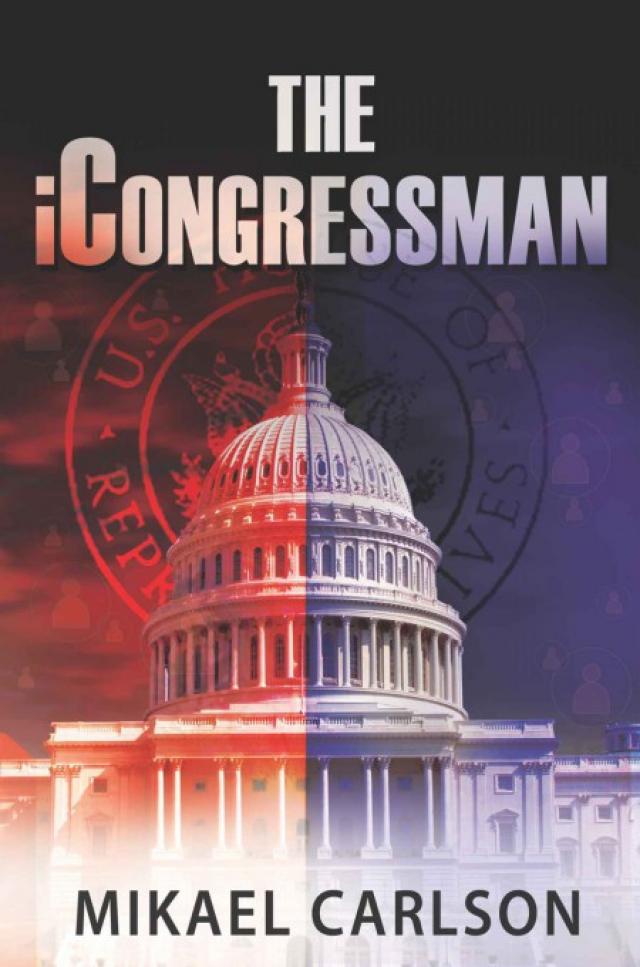
Special thanks go to the people who have been instrumental in making this book a reality. Caroline, my editor, her husband Gary, and BubbleCow did another amazing job helping me overcome some early shortcomings. Diane for the copyediting job on this book and for the revised edition of The iCandidate. Through your diligence we avoided many of the errors that plagued the first edition of my first book. Last, but certainly not least, Veselin Milacic did an amazing job with the cover design, far surpassing the lofty expectations for what I wanted it to look like.
A Note from the Author
Sequels are much harder to write than the first book of a series. Capturing the same magic is rarely done, and I have agonized over some of the directions this book went. Let me start with undoubtedly one of the most controversial parts of this book.
It was very difficult making the decision to not include Kylie in a first person narrative. She is a beloved character, and I love her as well. Unfortunately, the only way she fit into this one was to add a fifth first person account, and I didn’t want to do that.
Kylie was a huge part of Michael’s success in The iCandidate, but didn’t play as active a role in this part of the journey. Sometimes life just works that way. To include her would not have done the justice she deserves, so she was omitted from the first person perspective. Rest assured, Kylie will be back with a vengeance in the third book of the series.
The other controversial part will be the cliffhanger. I know many will think of it as a ploy to read the third book, but honestly, it was just the natural place to stop. The events of the last chapter were planned out even as I was writing the first book. As I told my copyeditor, to continue past that point would have prompted me to rename this iWar & Peace. I beg your forgiveness if you have to wait for the third book to come out to learn what happens that fateful day.
As much as I wanted to keep the entire staff together, it would have been too unbelievable if they all had skipped college. Even bringing them together for the campaign begged some indulgence from the reader. I tried to offset that by making their contributions unequal, which would be expected in real life.
Before I get angry e-mails questioning why college kids would go through this again, remember they became close through the first election, and I imply they were all best of friends after the second and up to their graduation from high school. They have a shared experience few could identify with, and that bond is a strong one.
Michael Bennit is Michael Bennit. He’s a fish out of water in Washington, and he knows it. He is also driven, has a deep love for his country, and wants to make a difference. It’s hard enough to do that in the capital when you are surrounded by friends and allies, so it’s no surprise he struggles without any.
Chelsea is facing struggles of her own. No doubt many people with question why she was ever made chief of staff. The simple explanation is that Michael believes in her, and as a teacher, just considers this an extension of the learning experience in The iCandidate. The same applies to Vince and Vanessa. Chelsea made the decision to leave, but who knows what will happen after the events of the last chapter.
Francisco Reyes sprung from a combination of my sophomore year roommate at Marist and a close colleague that I worked with several years ago. Much of the self-effacing humor is derived from that former coworker. He is a great family man, loving husband, and fantastic father, and it was fun bringing some of his personality out in this character. Cisco is an interesting guy, and this book should be considered only as an introduction to him. He will play a prominent role in the next two volumes.
Likewise, Terry Nugyen is based loosely on a soldier I have the honor to serve with and have engaged in numerous debates with on a myriad of issues. Nugyen is an enigma wrapped around a mystery, and not everything is as it seems with him. We will be seeing a lot more of him to come as well.
Marilyn Viano, Johnston Albright, Jack Reed, Harvey Stepanik and Gary Condrey, like most characters, are completely made up but resemble some of the politicians I have met throughout my life.
In life, we all run into sold acquaintances. The characters that made an appearance – Chalice, Robinson Howell, Charlene and others are a link to Michael’s past, but will also play a role in his future to come.
Michael’s old fiancée Jessica Slater is keeping her distance, but don’t be surprised if she shows up unexpectedly in the third book. Madison, Roger, and the former Congressman Winston Beaumont are currently doing hard time. However, like Jessica, there may be a point where they cross paths with Michael and Kylie again.
About the Author
Mikael Carlson is a screenwriter and acclaimed author of The iCandidate. This is his second novel.
A nineteen year veteran and current non-commissioned officer in the Rhode Island Army National Guard, he deployed twice in support of military operations during the Global War on Terror. Mikael has served in the field artillery, infantry, and in support of special operations units during his career on active duty at Fort Bragg and in the Army National Guard.
“I won’t.”
“You will. Otherwise, you’ll be in and out of hearings about your behavior more than A-Rod was. You’ll face a barrage of embarrassing questions you really don’t want to answer. As a friend, I don’t want to see that happen to you.”
“A friend? Is that what you’re still calling yourself? A friend?” I ask incredulously. He has some nerve. “Get out of my office.” He obliges, walking across the spacious office overlooking the National Mall that I have called mine for a long time now.
“You wouldn’t dare cross Reed. Not just to get me out of this office.”
“Do you really want to test us on that?” he responds, stopping at the door. He’s right. The Republican Party has shot itself in the foot over far less over the years. “For perhaps the last time, have a good day, Mister Speaker.”
-SEVENTY-THREE-
MICHAEL
There are strictly defined rules about where the media can go and what they can film on the Capitol grounds. Aside from the press briefing rooms in the Capitol and the various office buildings, there are countless areas that allow portable coverage for interviews. Since I don’t like the idea of being the typical politician that slithers over to the closest camera after a vote, we decide on a semi-impromptu gathering at the base of the House steps at the southeast corner of the building.
It is cold out, but not bitterly so, yet I hold out the hope that the temperature will help keep this brief. Even with my wool overcoat and countless days freezing during Ranger School and Mountain Warfare School while I was in the Army, I prefer being warmer than I am right now.
I stop a few steps from the bottom, just beyond the roped off area of the steps where only members are allowed to proceed. A gaggle of media are gathered at the bottom, microphones and cameras at the ready. The group is nowhere near the size of the hordes of media that followed our first campaign, highlighting just how little the average American understands what just happened here.
I have no opening statement, and sensing that, the press launches into the questioning. I am flanked by Blake and Chelsea to my left, Cisco to my right, and Viano a step behind me. The rest of my staff is a few steps higher and way off to the side, content to watch from outside the limelight.
“Congressman Bennit, you ran a social media campaign to try to sway opinions on this vote. Do you think that’s the future of politics?” Interesting first question, but one I’m happy to comment on.
“I hope not, because it failed miserably.”
“What do you mean?” the reporter asks after looking at his colleagues with a slightly confused look on his face.
“It didn’t work. Americans weren’t paying attention to this vote, especially once news of the fake anthrax attack spread. Nobody got caught up in the excitement of this vote outside of the Beltway. They simply were not invested in the outcome. If this lame duck session accomplished anything, it’s showcasing the limitations to the effectiveness of social media when it comes to how government legislates.”
“Why do you think that is?” a young female in the middle of the scrum follows up.
“Because it’s almost Christmas, and the people want to spend time with family, shop for gifts, and get on with their lives. Americans went to the polls to choose their representatives in November. They did their job, and now they want us to do ours. The public doesn’t understand what we voted on today, and honestly, I don’t think they really care. It is why we have a representative government: so they can remain indifferent about what happens here and focus on what matters in their lives.”
“So what does this victory mean?” one of the intrepid journalists up front asks. She looks like she’s been out here for a while and is in drastic need of a warm fire and a hot chocolate.
“Every piece of legislation that is passed justifies the Founding Fathers’ optimism that elected representatives can govern a free and diverse nation. Sometimes the same is true for legislation that gets defeated. Today, we defeated an assault on that optimistic vision. For too long Americans have questioned whether the people they elect are truly dedicated to serving their best interests. I hope we can once again restore our citizens’ trust and confidence in our system of government.”
More questions get shouted from the group. I wonder the same thing every other American does. If they just spoke one at a time, these conferences would go much faster, smoother, and a lot more questions would get answered. Instead, I wait until a clear question emerges.
“What makes you think the independents who got elected will be any better?” Good question.
“I don’t think that for sure. What I do know is they did not take large campaign donations. Big oil, big tobacco, big labor … none of them can lay a claim. The independents that ran along with me are beholden to nobody other than the constituents who elected them. They are not people with career political aspirations—just some of our best and brightest citizens who don’t want to just be a representative in Congress, but a distinguished one who works toward solutions to our problems. Over the past several decades, we have seen an exodus of legislative statesmen and women. I think the American people elected some new ones.”
“What would you say to your critics like the Tea Party and the ACLU who think your desire to compromise may damage the country?”
“God bless America for them being able to articulate their opinions, but I would challenge any claim they make that the extremism we have seen over the past couple of decades has made this country a better place.”
“And you think compromising will help achieve that goal?” a man with a tape recorder remarks sarcastically from my right.
“Except for on the rare occasion when there is enough dominant consensus on an issue where it isn’t needed.”
“When does that happen?” asks a pretty woman from the middle of the group, causing a few laughs amongst her peers.
“The resolution supporting Veteran’s Day is all I can think of,” I answer, eliciting some more laughs. “For the rest of the issues we face in this country, legislating will inevitably mean compromising. That’s what making policy in a democratic system is all about. No single person, faction, or interest can get everything it wants.”
“Congressman, are you categorically stating you will not be forming a third party?” a voice shouts from the back of the group.
“Yes.” I want to say something more clever, but I don’t want to it come across the wrong way.
“Is there any truth to the rumor this new caucus you will form with the other independents will challenge the president when it comes to setting the agenda for the country?” Not sure where he got that tidbit of information from.
“The administration is responsible for day-to-day management of a huge bureaucracy which has, by default, made it a dominant force in politics. The president has been empowered to become more involved in the activities of Congress, resulting in less laws and policies being initiated by this body.”
“You didn’t answer the question, sir,” the reporter presses.
“I know,” I say with a smile. “The founders lived in simpler times and never could have imagined the increasing complexity of American life. In some respects, it makes sense that the chief executive sets the direction in the country. But coequal branches of government no longer are. Over the past century, a succession of presidents has asserted the supremacy of executive power. I think we need to reinstate the balance the Framers envisioned.”
“So you’re saying that you and this new caucus are planning a more aggressive role for the House of Representatives?” I really don’t want to go down this path. It isn’t going to earn me any late Christmas cards from the power brokers in this town.
-SEVENTY-FOUR-
CHELSEA
“The Framers intended Congress to be the engine of American democracy,” the congressman says, responding to a question from CBS that he looks like he doesn’t want to answer. “This building should be a venue for working out the country’s most difficult problems, not Sixteen Hundred Pennsylvania Avenue.”
“Are you saying the president has no place setting the course for the country?”
“No, I’m not saying that at all. But the era of the president issuing executive orders to cover for Congress’s dysfunction must come to an end. All regulations should be tied to legislation approved by the House and Senate. For that to work, partisan brinkmanship must cease and the process of lawmaking in this country must be more efficient.”
“What do you think the Speaker of the House will say about that?”
“You’ll have to ask him when he gets elected.”
Under any other circumstances, Mister Bennit’s badinage with the press on this serious of an occasion would not be received warmly. Somehow, he pulls it off. The only other politician I have seen be this direct with the media without rankling them was Chris Christie in New Jersey.
It dawns on me that this will probably be the last press conference I ever attend. Well, at least for a very long time. It’s amazing how used to reporters and cameras I have gotten in the last couple of years.
I’m not sure if my decision is the right one. All the insecurity over the past year and a half has brought me to this point, and up until now it was the right thing to do. I wanted out, and now I got my wish. I can see what college is all about and why Xavier, Amanda, Emilee, and Brian enjoy it so much.
I don’t want to leave Vince and Vanessa, but I know they will be just fine. Vince may speak poetically about the trappings of college life, but I know there is no place he’d rather be. As for Vanessa, I get the feeling the only place she ever wants to be is by Vince’s side. Funny how I never noticed that until now. Maybe they are a couple and I don’t even know it.
Listening to the congressman answer questions, I realize just how far we’ve come. Had we called a press conference last spring, we would have been lucky if only Kylie showed up. Now I look out at a mass of humanity armed with cameras and microphones, recording every word for both posterity and immediate communication to the American people.
We started a movement that has begun to give the power back to the Americans on whose backs this nation runs. It’s a proud day, and probably my last and most substantive achievement in the time I spent here. I wonder how many more I would have had if I decided to stay.
But I need to start a new chapter in my life. For as sad as I am to leave the congressman, Vince, and Vanessa behind, I need to do this for me. Heck, maybe I will even start school with a new boyfriend if the guy standing next to me sticks around. Either way, it is going to be an exhilarating experience, and I can’t wait to get started.
A lone individual makes his way through the mass of journalists, probably trying to get a close-up of Mister Bennit as he addresses the country. There is a lot of pushing going on, and it reminds me of videos I’ve seen of 1990s mosh pits. He manages to break out in front, only a matter of six or eight feet from us before I notice he has no camera or microphone. I freeze when I realize what he does have.
I hear the first “pop” and see the congressman fall backward before it even registers what is happening. Journalists in the crowd react immediately and push to get away while some dedicated cameramen try to keep their lenses trained on the unfolding events around them. Everyone gathered around us on the stairs looks for any kind of cover they can find. There is none. A split second later, the man targets someone to my left and I hear another “pop, pop.”
Finally, I see the gun point in my direction, but am frozen in fear in disbelief. Is this really happening? This can’t be real. How could …
I am abruptly grabbed and forced down strongly by someone pushing my small frame violently toward the steps. Whoever grabbed me is now blocking my view, because I can’t see the gunman. I hear more “pops,” but have no idea who they’re aimed for. Things are happening too fast … who is grabbing me … I’m falling … I feel a warm ooze dripping down my face and neck.
I hit the stairs hard and feel a sharp pain register in my head, causing my vision to burst into bright stars before … nothing.
Acknowledgements
As always, my sincerest thanks go to the readers who have become invested in the journey of Michael Bennit. The iCandidate was years in the making, and I am proud to continue Michael Bennit’s journey in The iCongressman.
Now, a few personal shout outs. Michele, thank you for your considerable support and patience throughout the process of writing this novel. As with the last book, I simply could not have done it without your love and encouragement. I also would like to thank my parents, Ronald and Nancy, and my sister, Kristina, for everything they have done to help introduce Michael Bennit to the world. I appreciate all you’ve done!
Special thanks go to the people who have been instrumental in making this book a reality. Caroline, my editor, her husband Gary, and BubbleCow did another amazing job helping me overcome some early shortcomings. Diane for the copyediting job on this book and for the revised edition of The iCandidate. Through your diligence we avoided many of the errors that plagued the first edition of my first book. Last, but certainly not least, Veselin Milacic did an amazing job with the cover design, far surpassing the lofty expectations for what I wanted it to look like.
A Note from the Author
Sequels are much harder to write than the first book of a series. Capturing the same magic is rarely done, and I have agonized over some of the directions this book went. Let me start with undoubtedly one of the most controversial parts of this book.
It was very difficult making the decision to not include Kylie in a first person narrative. She is a beloved character, and I love her as well. Unfortunately, the only way she fit into this one was to add a fifth first person account, and I didn’t want to do that.
Kylie was a huge part of Michael’s success in The iCandidate, but didn’t play as active a role in this part of the journey. Sometimes life just works that way. To include her would not have done the justice she deserves, so she was omitted from the first person perspective. Rest assured, Kylie will be back with a vengeance in the third book of the series.
The other controversial part will be the cliffhanger. I know many will think of it as a ploy to read the third book, but honestly, it was just the natural place to stop. The events of the last chapter were planned out even as I was writing the first book. As I told my copyeditor, to continue past that point would have prompted me to rename this iWar & Peace. I beg your forgiveness if you have to wait for the third book to come out to learn what happens that fateful day.
As much as I wanted to keep the entire staff together, it would have been too unbelievable if they all had skipped college. Even bringing them together for the campaign begged some indulgence from the reader. I tried to offset that by making their contributions unequal, which would be expected in real life.
Before I get angry e-mails questioning why college kids would go through this again, remember they became close through the first election, and I imply they were all best of friends after the second and up to their graduation from high school. They have a shared experience few could identify with, and that bond is a strong one.
Michael Bennit is Michael Bennit. He’s a fish out of water in Washington, and he knows it. He is also driven, has a deep love for his country, and wants to make a difference. It’s hard enough to do that in the capital when you are surrounded by friends and allies, so it’s no surprise he struggles without any.
Chelsea is facing struggles of her own. No doubt many people with question why she was ever made chief of staff. The simple explanation is that Michael believes in her, and as a teacher, just considers this an extension of the learning experience in The iCandidate. The same applies to Vince and Vanessa. Chelsea made the decision to leave, but who knows what will happen after the events of the last chapter.
Francisco Reyes sprung from a combination of my sophomore year roommate at Marist and a close colleague that I worked with several years ago. Much of the self-effacing humor is derived from that former coworker. He is a great family man, loving husband, and fantastic father, and it was fun bringing some of his personality out in this character. Cisco is an interesting guy, and this book should be considered only as an introduction to him. He will play a prominent role in the next two volumes.
Likewise, Terry Nugyen is based loosely on a soldier I have the honor to serve with and have engaged in numerous debates with on a myriad of issues. Nugyen is an enigma wrapped around a mystery, and not everything is as it seems with him. We will be seeing a lot more of him to come as well.
Marilyn Viano, Johnston Albright, Jack Reed, Harvey Stepanik and Gary Condrey, like most characters, are completely made up but resemble some of the politicians I have met throughout my life.
In life, we all run into sold acquaintances. The characters that made an appearance – Chalice, Robinson Howell, Charlene and others are a link to Michael’s past, but will also play a role in his future to come.
Michael’s old fiancée Jessica Slater is keeping her distance, but don’t be surprised if she shows up unexpectedly in the third book. Madison, Roger, and the former Congressman Winston Beaumont are currently doing hard time. However, like Jessica, there may be a point where they cross paths with Michael and Kylie again.
About the Author
Mikael Carlson is a screenwriter and acclaimed author of The iCandidate. This is his second novel.
A nineteen year veteran and current non-commissioned officer in the Rhode Island Army National Guard, he deployed twice in support of military operations during the Global War on Terror. Mikael has served in the field artillery, infantry, and in support of special operations units during his career on active duty at Fort Bragg and in the Army National Guard.