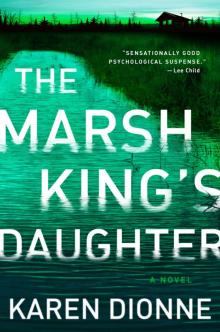
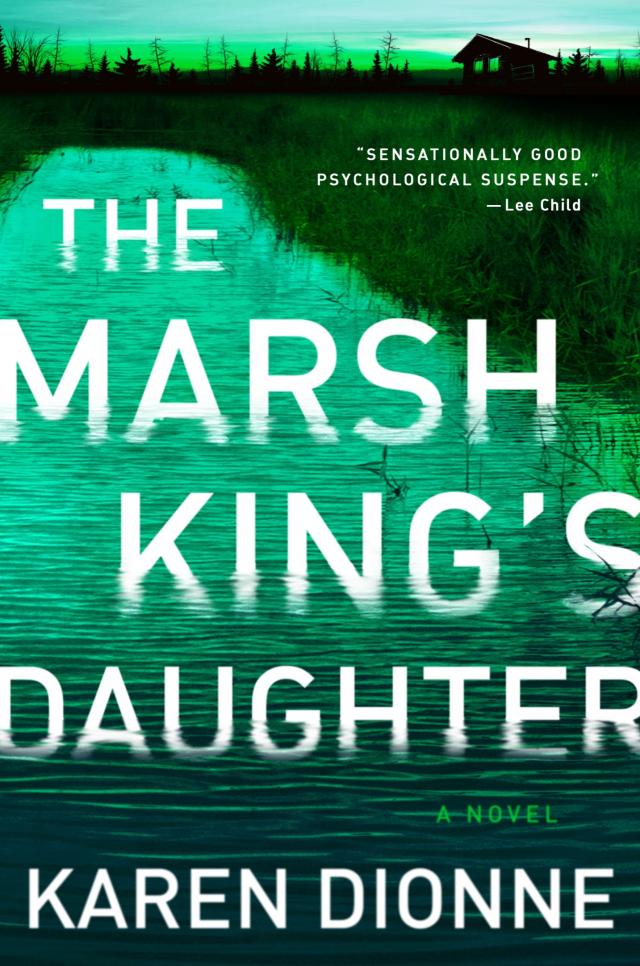
The Marsh King's Daughter, page 22


I shook my head. I didn’t like what my father was doing to The Hunter, but I also knew what he would do to me if I helped The Hunter get away. “I can’t. My father has the key. He carries it on his key ring all the time.”
“Then chop the ring out of the beam. Cut the beam with your father’s chain saw. There has to be something you can do. Please. You have to help me. I have a family.”
I shook my head again. The Hunter had no idea what he was asking. I couldn’t chop the ring loose even if I wanted to. The iron ring and the post it was fastened to were very strong. My father said the people who built the cabin made the ring and post this way so they could chain their bull inside the woodshed, and that back then, the woodshed had been filled with straw instead of wood. When I asked if this meant our woodshed used to be a bullshed or a strawshed, he laughed. And while I had watched my father use his chain saw many times, I’d never used it myself.
“Helena, your father is a bad man. He belongs in prison for what he did.”
“What did he do?”
The Hunter glanced toward the doorway and shivered like he was afraid my father would hear, which was ridiculous because there were big gaps in the slats, and if my father was hiding outside listening in, we would have seen him. He looked at me for a long time.
“When your mother was a girl,” he began at last, “somewhere around the same age as you, your father took her. He stole her from her family and brought her here, even though she didn’t want to come. He kidnapped her. Do you understand what kidnapping means?”
I nodded. The Yanomami often kidnapped girls and women from other tribes to be their wives.
“People looked everywhere for her. They’re still looking. Your mother wants to go back to her family. And your father belongs in prison because of what he did. Please. You’ve got to help me get away. If you do, I promise I’ll take you and your mother on the snowmobile with me when I go.”
I didn’t know what to say. I didn’t like that The Hunter said my father belonged in a prison, like Alcatraz or the Bastille or Devil’s Island or the Tower of London. I also didn’t understand why he seemed to think that kidnapping was wrong. How else was a man supposed to get a wife?
“Ask your mother if you don’t believe me,” he called as I got to my feet and started back to the cabin. “She’ll tell you I’m telling the truth.”
—
I FIXED MY MOTHER a cup of yarrow tea and carried it to her room. While she drank it I told her everything The Hunter had said. When I finished, she was quiet for so long, I thought she had gone to sleep. At last she nodded.
“It’s true. Your father kidnapped me when I was a girl. I was playing with my girlfriend in the stationmaster’s empty house by the railroad tracks when your father found us. He said he’d lost his dog and asked if we had seen a little brown cockapoo running around. When we told him we hadn’t, he asked if we would help him look for it. Only it was a trick. Your father led me to the river. He put me in his canoe and brought me to the cabin and chained me in the woodshed. When I cried, he beat me. When I begged him to let me go, he stopped giving me anything to eat. The more I fought, the worse it got, so after a while, I did whatever he told me. I didn’t know what else to do.”
She pulled up a corner of her blanket and wiped her eyes. “Your father is a bad man, Helena. He tried to drown me. He put you in the well. He broke John’s arm and mine. He kidnapped me.”
“But the Yanomami take women from other tribes as wives. I don’t understand why kidnapping is wrong.”
“How would you like it if someone came to our cabin and took you away without asking if you wanted to go with them? What if this meant that you could never hunt and fish or wander the marsh again? If someone did that to you, what would you do?”
“I would kill them,” I said without hesitation. And I understood.
—
WHEN MY FATHER CAME BACK from the marsh that afternoon, I made sure I was busy in the kitchen so I wouldn’t have to watch him beat and torture The Hunter. But I could still hear him scream and yell.
“He’s going to kill me,” The Hunter said much later when I brought his evening chicory. His face was so bruised and swollen, he could barely talk. “Take the snowmobile. Tomorrow, as soon as your father is gone. Take your mother. Send someone back for me.”
“I can’t. My father has the snowmobile key.”
“There’s an extra key in a compartment in the back. In a metal box, stuck to the top. The snowmobile isn’t hard to drive. I’ll teach you. Please. Get help. Before it’s too late.”
“Okay,” I said, not because The Hunter wanted me to do this, or because I believed my father was a bad man who belonged in prison like my mother and The Hunter said, but because The Hunter was going to die if I didn’t.
I sat down cross-legged in the sawdust and listened carefully as he told me everything I needed to know. It took a long time. The Hunter was in a lot of pain. I think my father broke his jaw.
—
THE NEXT TWO DAYS followed a pattern. I cooked breakfast for myself and my father. Spent the rest of the day hauling water and keeping the fire going and cooking and cleaning while my father went out into the marsh. Pretended everything was as it should be. That my mother and The Hunter weren’t dying, that my father was not a bad man. I tried to concentrate on the good things I remembered from when I was growing up, like the way my father gave me the boards and nails I needed to build my duck pen, even though he must have known that wild ducks can’t be kept in captivity the same as chickens; how he called me Helga the Fearless as I’d asked him to after I’d read the article about the Vikings; the way he carried me on his shoulders when I was little as we roamed the marsh.
On the third morning, Cousteau and Calypso called a powwow. My mother was in her bedroom. The Hunter was in the woodshed. Rambo was in the utility shed. My father was in the marsh. The three of us were sitting Indian-style in the living room on my bearskin rug.
“You have to leave,” Cousteau said.
“Now,” Calypso added. “Before your father comes back.”
I wasn’t so sure. If I left without my father’s permission, I could never return.
“What about my mother?” Thinking about her broken arm and how I had to help her sit up to eat and drink. “She can’t ride the snowmobile. She won’t be able to hold on.”
“Your mother can sit in front of you,” Calypso said. “You can reach around and hold her up while you steer.”
“And The Hunter?”
Cousteau and Calypso shook their heads.
“He’s too weak to sit behind you,” Cousteau said.
“His arm is broken,” Calypso added.
“I don’t want to leave him. You know what my father will do if he comes back and The Hunter is here while my mother and I are gone.”
“The Hunter wants you to leave,” Calypso said. “He said so himself. If he didn’t want you to go, he wouldn’t have told you how to drive the snowmobile.”
“And Rambo?”
“Rambo can run behind. But you have to go. Now. Today. Before your father comes back.”
I bit my lip. I didn’t understand why it was so hard to make up my mind. I knew my mother and The Hunter couldn’t live much longer. I’d seen enough animals die to know the signs. If my mother and I didn’t leave the marsh today, most likely, she never would.
Cousteau and Calypso said they knew a story that would help me decide. They said that when I was very little, my mother told this story to me. The story was called a fairy tale. This meant that even though the story wasn’t real, it still had a lesson, like my father’s Indian legends. They said my mother loved fairy tales when she was a girl. She had a book of stories written by a man called Hans Christian Andersen, and another by two men who called themselves the Brothers Grimm. They said my mother told these fairy tales to me when I was a baby. Her favorite was called “The Marsh King’s Daughter” because it reminded her of herself.
The story was about a beautiful Egyptian princess and a terrible ogre called The Marsh King and their daughter, who was named Helga, who was me. When Helga was a baby, a stork found her sleeping on a lily pad and carried her away to the Viking’s castle because the Viking’s wife had no children and she had always wanted a baby. The Viking’s wife loved little Helga, though during the day, she was a wild and difficult child. Helga loved her foster father and she loved the Viking life. She could shoot an arrow and ride a horse and was as skilled with her knife as any man.
“Like me.”
“Like you.”
During the day, Helga was beautiful like her mother, but she had a wicked, wild nature like her real father. But at night, she was sweet and gentle like her mother, though her body took on the form of a hideous frog.
“I don’t think frogs are hideous,” I said.
“That’s not the point,” Cousteau said. “Just listen.”
They told me how The Marsh King’s daughter struggled with her dual nature; how sometimes she wanted to do what was right, and other times she did not.
“But how does she know which is her true nature?” I asked. “How does she know if her heart is good or bad?”
“Her heart is good,” Calypso said with conviction. “She proves this when she rescues the priest her father captured.”
“How does she do this?”
“Just listen.” Calypso closed her eyes.
This meant she was going to tell a long story. My father did the same thing. He said that closing his eyes helped him remember the words because then he could see the story in his mind.
“One day the Viking came home from a long journey with a prisoner, a Christian priest,” Calypso began. “He put the priest in the dungeon so the priest could be sacrificed to the Viking gods the next day in the forest. That night, the shriveled frog sat in the corner alone. Deep silence reigned all around. At intervals, a half-stifled sigh was heard from its innermost soul: the soul of Helga. It seemed in pain, as if a new life were arising in her heart.
“She took a step forward and listened, then stepped forward again and seized with her clumsy hands the heavy bar which was laid across the door. Gently, and with much trouble, she removed the iron bolt from the closed cellar door and slipped in to the prisoner. He was slumbering. She touched him with her cold, moist hand, and as he awoke and caught sight of the hideous form, he shuddered as if he beheld a wicked apparition. She drew her knife, cut through the bonds which confined his hands and feet, and beckoned to him to follow her.”
The story sounded familiar. They told me I used to know this story. If I did, I’d forgotten.
“You really don’t remember?” Calypso asked.
I shook my head. I didn’t understand why they remembered my mother’s story and I did not.
“The shriveled frog led him through a long gallery concealed by hanging drapery to the stables and then pointed to a horse. He mounted upon it, and she sprang up also before him and held tightly by the animal’s mane. They rode forth from the thick forest, crossed the heath, and again entered a pathless wood. The prisoner forgot her hideous form, knowing that the mercy of God worked through the spirits of darkness. He prayed and sang holy songs, which made her tremble. She raised herself up and wanted to stop and jump off the horse, but the Christian priest held her tightly with all his strength and then sang a pious song, as if this could loosen the wicked charm that had changed her into the semblance of a frog.”
Calypso was right. I had heard this story before. Memories I didn’t know I possessed swirled like pond ripples at the edges of my consciousness and came into focus. My mother singing to me when I was a baby, whispering to me, cradling me in her arms. Kissing me. Hugging me. Telling me stories.
“Let me tell the next part,” Cousteau said. “The next part is my favorite.”
Calypso nodded.
I liked how Cousteau and Calypso never disagreed.
“The horse galloped on more wildly than before,” Cousteau began, waving his arms with great enthusiasm to indicate how the horse had run. His eyes sparkled and danced. His eyes were brown like mine, though his hair was yellow like my mother’s, while Calypso’s hair was brown and her eyes were blue.
“The sky painted itself red, the first sunbeam pierced through the clouds, and in the clear flood of sunlight the frog became changed. It was Helga again, young and beautiful, but with a wicked demoniac spirit. The priest held now a beautiful young woman in his arms, and he was horrified at the sight.
“He stopped the horse and sprang from its back. He imagined that some new sorcery was at work. But Helga also leaped from the horse and stood on the ground. The child’s short garment reached only to her knee. She snatched the sharp knife from her girdle and rushed like lightning at the astonished priest.
“‘Let me get at thee!’ she cried. ‘Let me get at thee, that I may plunge this knife into thy body. Thou art pale as ashes, thou beardless slave.’ She pressed in upon him. They struggled with each other in heavy combat, but it was as if an invisible power had been given to the Christian in the struggle.
“He held her fast, and the old oak under which they stood seemed to help him, for the loosened roots on the ground became entangled in the maiden’s feet and held them fast. Then he spoke to her in gentle words of the deed of love she had performed for him during the night, when she had come to him in the form of an ugly frog to loosen his bonds and to lead him forth to life and light; and he told her that she was bound in closer fetters than he had been, and that she could recover also life and light by his means. She dropped her arms and glanced at him with pale cheeks and looks of amazement.”
I was amazed as well. This story was nothing like the ones my father told.
“Helga and the priest rode forth from the thick forest, crossed the heath, and again entered a pathless wood,” Cousteau continued. “Here, toward evening, they met with robbers. ‘Where hast thou stolen that beauteous maiden?’ cried the robbers, seizing the horse by the bridle and dragging the two riders from its back. The priest had nothing to defend himself with but the knife he had taken from Helga, and with this he struck out right and left. One of the robbers raised his ax against him, but the young priest sprang on one side and avoided the blow, which fell with great force on the horse’s neck so that the blood gushed forth and the animal sunk to the ground.
“Then Helga seemed suddenly to awake from her long, deep reverie; she threw herself hastily upon the dying animal.
“The priest placed himself before her to defend and shelter her, but one of the robbers swung his iron ax against the Christian’s head with such force that it was dashed to pieces. Blood and brains were scattered about, and he fell dead upon the ground.
“Then the robbers seized beautiful Helga by her white arms and slender waist, but at that moment the sun went down, and as its last ray disappeared, she was changed into the form of a frog. A greenish white mouth spread half over her face; her arms became thin and slimy while broad hands with webbed fingers spread themselves out like fans. The robbers in terror let her go, and she stood among them, a hideous monster.”
“Frogs aren’t—”
Calypso put a finger to her lips.
“The full moon had already risen,” Cousteau continued, “and was shining in all her radiant splendor over the Earth, when from the thicket, in the form of a frog, crept poor Helga. She stood still by the corpse of the Christian priest and the carcass of the dead horse. She looked at them with eyes that seemed to weep, and from the frog’s head came forth a croaking sound, as when a child bursts into tears.”
“So you see, her evil nature is strong,” Calypso said, “but her good nature is stronger. This is what the story teaches. Will you let your good nature win? Will you take your mother away?”
I nodded. My legs were stiff from sitting. We stood up and stretched and went into the kitchen to collect my mother’s coat from the hook by the door, along with her boots, hat, and mittens.
“Are we leaving?” my mother asked as we laid out her winter gear on her bed.
“We are,” I told her. Calypso put her arm behind my mother’s shoulders and helped her sit up. Cousteau swung her legs over the side of the bed. I knelt on the floor and put her boots on her feet, then worked her good arm into her coat sleeve and zipped the coat shut over the sling.
“Can you stand up?”
“I’ll try.” She put her right hand on the bed and pushed. Nothing happened. I wrapped her arm around my neck and put my other arm around her waist and pulled her to her feet. She wobbled, but stayed standing.
“We need to hurry,” I said.
My father wouldn’t be back for several hours if he didn’t shoot a deer today. He would come back much sooner if he did.
I helped my mother to the kitchen. She was so weak, I didn’t know how we were going to get her on the snowmobile, though I didn’t tell her that.
“I’m sorry, Helena,” she said between gasps. Her face was white. “I have to sit down. Just for a minute.”
I wanted to tell her that she could rest after she got on the snowmobile, that my father could be on his way home even now, that every minute we delayed might make all the difference, but I didn’t want to scare her. I pulled out a chair. “Stay here. I’ll be right back.” As if she was going anywhere without us.
Cousteau, Calypso, and I stood on the porch and looked out over the yard. There was no sign of my father.
“Do you understand?” Cousteau asked as we descended the porch steps and crossed the yard to the woodshed. “Do you know what you have to do? The priest sacrificed himself so that Helga could be saved.”
“You have to save yourself and your mother,” Calypso said. “This is what The Hunter would tell you if he could.”