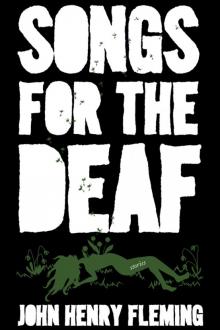
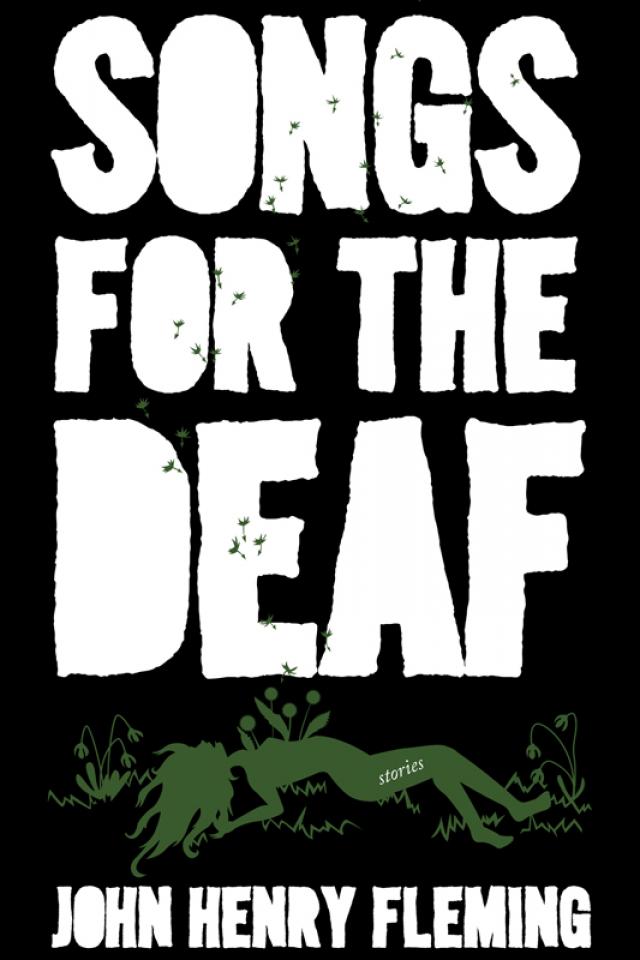
Songs for the Deaf, page 11


At last he reached out and grabbed the cold, wet edge of the steel door and drew it open slowly, dramatically, his light at the ready for all the world to see. The grunts and gasps grew louder and clearer, and then—because he, like all the world, could no longer stand the suspense—he yanked open the door and shined his light inside at the quivering white buttocks and splayed legs of human copulation. The light and the camera panned up until the man craned his neck around and met the lens through thick, horn-rimmed glasses, and the woman leaned up on her elbows and shouted, “Don’t worry, Professor, our love’s no secret anymore!” The man ripped off his glasses, flung them into an open food bin, then resumed his thrusting.
The animals, the world wanted to think. But the world could not quite shape a thought out of the white noise of its fascination, and it could not turn its eyes away.
9
I have impressed even myself, the general thought. He had let the confusion of the rioting villagers work to his advantage, sweeping the alien’s soft body into his arms and dashing out the door with the panicked diners—“Excuse me! Excuse me! My wife needs a doctor!”—pushing through the genteel throngs to his baby-blue Mercury and depositing the docile alien onto the soft vinyl. He tore down the hill and took the back road that led to the base. The crescent moon hung sleepily above the mountains, and he opened his vent to let in the cool desert air. He took a deep breath, then looked over at the alien beside him, seatbelt fastened, quirky features softened by starlight and the glow of the dash. He couldn’t tell for sure if the alien was looking at him, didn’t know for sure that aliens “looked” at anything.
“Must get lonely for you so far from home,” he said, immediately regretting the stupidity of talking to an alien, but feeling thoroughly intoxicated by the success of Operation Hawkswoop.
In the silence, he planned his next step: he would take the alien to his private M-1 Abrams and guard it personally until he could make radio contact with the right people, the scientists on his own team, ones who could keep their mouths shut and their hands above the table, ones whose dedication to the military took precedence over their dedication to science or to other such perversions.
“You’ll be safe with me,” he said again, smiling now at his embarrassing adolescent vanity. He smoothed one of his graying sideburns, then laughed aloud.
“You must think me a fool,” he said, shaking his head, blushing, “but I’m not always this way . . .”
10
The alien smiled at the general’s words and especially the general’s thoughts, though the general could not see the smile, hidden as it was in the alien’s clasped palms.
We’re much the same, thought the alien. We live for love and die for lust.
In the distance, a flaming saucer arced romantically across the desert sky toward a fateful union with the earth. Inside, its alien pilot stared blankly at the viewscreen, transfixed by the primitive copulation it showed, the strange abandonment of two naked humans as they pulled food bins off the shelves of a walk-in freezer and soiled themselves in a strange primordial recipe. Yes, thought the pilot, oblivious to flames and impending doom. Yes.
Coward
When he was six, his father held a knife to his throat and threatened to kill him if he ever touched his LPs again. Later, in the war, he captured a VC and held a knife to the man’s throat in the same way his father had held a knife to his. “I’ll kill you,” he told the man. “If you ever so much as...” and he couldn’t think of what to say next. But realizing the man spoke no English he said it anyway: “I’ll kill you if you ever mess with my records.” He laughed until his jaw ached. Then he released the man, kicked him in the groin, and ran back to camp, where he sat on his cot and took the knife to the toes of his left foot, stretching them out and sawing them off one through five. His CO called him a coward and assured him a dishonorable discharge. On the plane home, he kept turning over in his mind the word coward. He’d lost the sense of its meaning.
Back before the war, during his one year in college, he’d DJed for the college radio station on the night shift. He geared his show toward late-night lovers and developed a following for the risque tunes he played, becoming known on campus as the Pantydropper. A local minister overheard this and decided one night to drive through campus and listen to the college radio station. The minister’s ears burned with righteous indignation, and the next day he mounted a campaign to shut down the college station unless it cleaned up its act. The station’s faculty advisor promptly removed him, and while a few students complained about the decision in the campus newspaper, they did it mainly in jest: “Report: Panties Up All Over Campus.”
Later, when he quit school, the campus protesting came in earnest over the war, and he felt ashamed—not for failing to stand up for himself at the station but for having indulged in adolescent mischief while people his age were dying overseas. He did what he thought was honorable: he joined the army.
When he was nine, his father finally left home for good. For a year after that, he and his mother lived in fear that his father might return home one night, as he had before, drunk and angry, waving a gun or a knife. Then one day a policeman came to the door and reported that his father had killed himself just two miles away at the riverfront. The policeman handed over the contents of his father’s pockets—a photograph and a note—which, as far as anyone could tell, were the only belongings he had. The photograph was the family portrait they’d had done at the Montgomery Ward, his mother and father standing together and smiling, his father’s thick fingers curled over his son’s shoulder blade. The note was not addressed to his son by name but its target was clear anyway. In the split second before his mother crumpled it up, he read the deliberate letters written by an unsteady hand: Don’t be weak your whole life. He never let on that he’d seen it.
The dishonorable discharge kept him from landing a job. The better employers were wary of Vietnam vets. They’d heard some were drug users, others killers. They wanted to see his discharge papers for reassurance. Eventually he quit applying and for a while tried to involve himself with the antiwar movement. He worked at KPFA in Berkeley in exchange for food and lived with two free-love lesbians in a room above College Street. They invited him to watch. “But if you ever so much as touch either one of us, you’re back on the street,” said the taller one. He couldn’t help himself with the shorter one. She let him.
After, feeling tender toward her, he let on that he’d fought overseas. Only now, being with her, did he truly feel he was on his way home, he said. Later, she felt guilty and told her partner everything.
Perhaps he shouldn’t have revealed his deformed foot; perhaps he should have kept his socks on. The partner spit at him and kicked him out, and someone at the radio station must have heard because they let him go without an explanation.
He decided he was always trying to make up for his earlier failures. Time to make a clean start. He cut his hair and drove east. He wrote his mother for money and used it to enroll in college, just as he said he would. He hadn’t seen his mother in years, but they still kept in touch from time to time by mail. Her letters always sounded stiff because she didn’t use contractions; he translated them in his head to the voice he remembered. She asked him questions and said little about herself except to end each letter, “I am fine, and I know you will be, too. Your loving mother, Doris.” Though he knew it was coming, every time he reached this last line he felt like crying anyway. It was something she used to say to him when his father acted up. Sometimes she’d say it with a bruised face and tears streaking her cheeks. “I’m fine,” she said, “and I know you will be, too.”
Maybe he would be. He was taking business classes, having what he thought of as “normal” conversations with people he’d never imagined talking to before—people with family money and traditional values. As far as they knew, he was one of them. He didn’t let on that he’d been in the war; he said only that he’d worked in his father’s business for a time, then decided to cut out on his own, and most were impressed by that. He didn’t mind being a faker and a liar if that’s what it took to fit in.
He’d had some practice in the army, after all. He’d had to fake his own bravery, for one. And lie about the things he’d do or the things he’d done. He wasn’t alone; the only ones not faking were the Certifiably Insane. The CI had been there too long; they’d forgotten it was all a lie. When the CI killed a Viet Cong, they meant it. All he could do when the time came was to borrow a line from his dad and then laugh about it.
To survive in business, he just had to keep from laughing, he thought.
The night his father held a knife to his throat, a laugh might have killed him. Yet he’d almost laughed anyway. He didn’t know what LPs were. They were all over the floor at his knees, and he knew them only as records. What was an LP? In his dad’s thick, gin-soaked voice, it came out as “help-please”: “I’ll kill you if you ever touch my help-please again.”
It didn’t make sense. On rare occasions, his dad came home not angry but silly—so silly he seemed to think it was a contest to out-do his small son—and maybe this was one of those times. But no, he knew better. There was a knife at his throat, and the knife meant business even if his dad didn’t. If his throat convulsed, the blade would dig in.
He wanted to laugh. He wanted to swallow. He couldn’t do either, not even when his father swatted his head aside like a basketball so he fell onto the records and cracked one.
He kept himself together and got his degree. When his mother came to the graduation ceremony, they hugged and cried. They hadn’t seen each other in eight years. At fifty-five, she looked like a scared bobbing head swept in a strong current. She lived alone and had her routines.
“War injury,” he told her when she asked about his limp, and that was enough to keep her from asking again.
When he marched, and brought his diploma back to her as a gift, she told him how proud she was.
“I knew you’d be fine,” she said, and it didn’t matter to him that she was probably lying, because even if her thin thread of hope had fallen slack at times, he’d drawn it tight around his diploma now like a ribbon.
“You’re right,” he said. “You always were.”
He had a job waiting for him at a media company that was busy buying up radio stations around the country. He’d work for a marketing team—the company was big into teams, and he was to call his boss his “team leader.”
The team leader was firm but chummy, an ex-marine who shook his hand hard and gripped his shoulder as he showed him around the first day. This made him more nervous. When his team was called out into the aisle to meet the new guy, the leader told a bawdy joke, something to break the ice, a little story about a Vietnam vet in bed with Jane Fonda.
Everyone around him laughed, and when he swallowed and opened his mouth, just to try it, he found he could laugh, too, just as long and loud as the others.
Wind and Rain
First let me tell you about the rain, Louis.
Last night it started to rain when I walked home from the hospital. I didn’t even notice it for a while because it was thin and slow. Then the mist thickened and began to roll over me. A few drops ran down my cheek. By the time I came out of the liquor store, the rain was full and steady and the whole world looked shut down and closed up.
When it rains like that I think about the cop and what the cop said in his report. He said maybe it was the rain that made him believe he saw a gun in there. You remember what was in there? I do. When I went and claimed your car from the police, the first thing I did was search through the glove compartment. There was an owner’s manual for the wrong model—for a Monte Carlo instead of Grand Prix. There were a few notes from Lila. I read them, hope you don’t mind. Baby, Meet you here at 3, Love, Baby. None worth keeping; you probably just put them there to put them somewhere. There were a couple of paper clips in there. A broken pencil. A mileage log from the previous owner. Gum. Tic-tacs. A plastic bag with cookie crumbs. Your driver’s license.
How could he mistake any of that for a gun? Can the rain change things that way?
Last night I sat on my bed and watched the rain. At the liquor store I’d gotten beer and Old Crow. I poured some of the Old Crow into my flask to take to work today. Then I took a big swig and felt it warm me. Mom doesn’t like me drinking in the house, but she works cleaning offices now, doesn’t get back until two a.m. I leaned back against the wall and looked at the rain. It was hard and steady, just the kind of rain the cop was looking through. I tried to test my eyes, to see things the way that cop did. I looked across the street and I could see the big cracks in Mr. Cullen’s driveway, the water streaming through those cracks and over the lumpy places where he’d tried to repair them. I could see the car under the carport and could tell it was a Dodge Diplomat even though I couldn’t make out the badge on the trunk. I could tell it was in pretty good shape for a car that old. I could see the striped awning over Cullen’s living room window. There are eighteen stripes, and the water ran off each one. I could see through the living room, too, where the curtains weren’t pulled together. Cullen was in his chair, watching TV. I couldn’t tell what show, but there was lots of action and quick scene changes. An adventure show, maybe, or a kung fu movie. Next to Cullen was a lamp on a table, and on the table was something I couldn’t see so well. I thought maybe it was an ashtray. I stared at it for a minute and tried to imagine it was a gun. I squinted my eyes a little. I focused on different parts of it and tried to reshape it in my mind. It was no gun. Even if I could make it look like one, I knew Cullen would not have a gun there. And anyone who knows you knows that you would not keep a gun in your car.
I don’t ever imagine things in the rain. It’s under the bright lights here that I sometimes have problems. Sometimes when I’m here I think I see things that later I know I didn’t. I think I see your fingers move. I think I see your eyes start to open, or your lips start to say something. I’ll see it out of the corner of my eye and then I’ll put down my magazine and move my face right up next to your plastic mask and I’ll try to see it again. And sometimes I think I do. Then I’m not sure. I remind myself that the doctors say there’s no way.
There’s all that junk I put inside me, Louis. The beer and the Old Crow. That kind of rain can cloud up your eyes from the inside.
Maybe the cop really thought he saw something and that’s why he fired his gun. Later, when he got back to work after his suspension, he should’ve known he was wrong. But maybe he’d already stopped thinking about it.
It was raining, and I saw everything clearly. I still do. And I think you do, too. Your eyes aren’t open, but you’re not dead, so you must see something. Do you still see the rain that night, streaking the windshield and dulling the glow of the streetlights? Maybe you’re still looking into the glove compartment, watching your hand grab the license, your frozen picture coming into view. I hope that’s all you see. I hope you don’t see that cop out of the corner of your eye, raising the gun toward your head. I hope you don’t see the flash.
I told you once you ought to keep your real license in your wallet. What if a cop comes up on the street? But you said a cop can’t ask you for your license if you’re not in a car. You kept the fake license in your wallet just so you could go to bars with me, your big brother. And then you put the real license in your glove compartment. It’s still there. I see it.
I see the cop following us after we leave the bar. I’m looking over the seat and I’m seeing his lights right behind you. It’s raining pretty hard and maybe you should be driving slower, but that cop shouldn’t be on your tail like that. He’s trying to scare you, Louis. I see that now. I see the cop’s headlights, and I see his grille, the grille of a Caprice Classic. I see the big, wide hood. The wipers going. You know what else? I see his face, too. Maybe there was a little light coming from his radio or something. But there it is. His big wire-rims. His pocked cheeks. I see him twenty years ago, too, a high school kid who doesn’t fit in. Too much acne. Never got used to the way his own voice sounded after it changed. I see him reaching up to give a little siren blast. He likes the siren a lot better than his voice, though he’s never gotten used to that, either.
I see you walking back to him in the rain. He shines his spotlight on you. You lean over trying to hear him in the rain, and your shirt clings to your skin. The water drips off your hair, your nose, your chin. You reach for your back pocket. Then you remember.
What’s up? I ask when you climb back in the car.
I forgot my damn license.
I told you.
The cop has followed you back. He’s shining his flashlight around inside. On your eyes, on me, on the back seat, then back to your eyes.
You lose something? you ask him.
That was a dumb thing to say, Louis. I know you can see all right, but you aren’t thinking clearly.
The cop has on a hooded slicker. The rain is loud as it bounces off his hood. There are a few drops of rain on his glasses. Maybe those drops are right in front of his eyes. There are drops on the face of his flashlight, too, and maybe that changes the way things look to him. It’s raining harder, now. Everything is splashing and making noise. The street and the roof of the car and the cop’s slicker and the cop’s flashlight. Like a machine grinding to a stop. In this kind of rain, most people sit in their houses and wait for it to end. They don’t think anything that happens out in the rain can make any difference. They wait it out. Then they start their lives again. Maybe the cop thinks that, too. Nothing that happens now is going to count. When the rain stops and the water flows down into the street drains, anything that happens out here is going to flow with it.