Avery's Mission, page 16


This was true. Galileo’s orb had presented itself, no doubt punctually, in the general direction of Pontassieve, and a dim radiance would presently be available for pedestrianism. In any case, we had been dismissed. We made our farewells, and watched the lady go.
‘She is a very odd, extraordinary, striking woman,’ Luigi said. ‘She is not like Avery – except perhaps in looks, a little.’ He frowned. ‘It is possibly the English ruling-class manner?’
‘Nothing of the kind. I’d describe the woman as sui generis.’
‘At least she has a way of disposing of things. It is not my thought, Mr Bannerman, that Mr Brenton will stand up against her very well.’
‘Nor mine.’
‘And as for myself – well, we have seen. There is to be nothing vulgar. I am simply to be’—and Luigi made one of his prelusive pauses—’I am simply to be swept quietly under the stuoino, the little mat. One can say that?’
I nodded silently. One could.
IV
Throughout the following morning there was no sign of Mrs Brenton. Like most people at the Serena, she had presumably breakfasted in her room; and if she had sallied out thereafter I had been unaware of it. I had my own breakfast on the terrace – even although the Laurentian, or at least the cupola of the Cappella dei Principi of San Lorenzo, was beckoning to me reproachfully from the plain below. I had decided against walking up to the Buontalenti uninvited, but I was reluctant to go off duty (as I expressed it to myself) altogether. So I sat watching Luca raking up a meagre hay beneath the olive trees, and from time to time I dipped, not very pertinaciously, into Mommsen’s Romisches Staatsrecht. At one o’clock Gino brought me out an omelette and some fruit and wine. At two o’clock, Avery appeared.
He had come round the corner of the villa in a hurry, and I was aware of him abruptly reducing speed when I came in view. At the Buontalenti, I knew at once, the morning had not been eventless. It was abruptly, too, that he flung himself into a chair and declined my offer of coffee.
‘My mother’s here,’ he said.
‘Oh, yes – I know. She’s staying at the Serena, and I’ve met her. So has Luigi. Hasn’t he told you?’
‘Luigi has gone funny, rather. He has turned close. He’s not’—Avery produced a slightly wry smile—’quite the bambino he was. We’ve just finished lunch. I thought I’d come down.’ Avery glanced at the remains of my own lunch, which included half a dozen olive stones on a plate. Oddly, he tipped these on to the stone table, and with the flick of a finger sent one of them across the terrace and surprisingly far into the garden. ‘I don’t think,’ he said, ‘that the whole thing is proving a good idea, at all.’
‘The family reunion?’
‘Yes – the idea of that. Do you?’
‘No, not really, Avery.’ I uttered this surprisingly promptly, considering that what I ought perhaps to have said was, ‘It’s not for me to say.’
‘You see, I don’t think my father has the necessary feelings.’ Avery produced this equally promptly, and with his intermittent and always slightly surprising command of precise speech. And then, instantly and staggeringly, he went far beyond this – and by means of his second incursion during my whole experience of him into figurative language. ‘It would be like dragging a man screaming to the scaffold, if you ask me.’ A second olive stone was sent viciously in the direction of the industrious Luca. ‘The question is, whether it’s just my mother, or if there’s really something else.’
‘What do you mean by that: whether it’s just your mother?’ My heart had sunk, but there was nothing for it except to go on.
‘Whether she has simply got a wrong idea. Whether it’s just that: their being, I mean, two completely incompatible persons. Or whether there’s something else.’
‘Such as?’
‘Well, there being another woman – really very much another woman – after all. Anyway, it’s undignified.’
I was silent. This last remark had been a kind of judgement upon Avery’s mother, and it had cost him something to bring it out. Within a space of two or three hours, I supposed, he had been constrained to admit a vision of her in a new light. What had to be called, decently, her appetitive aspect had been more fully revealed to him. This was not, I felt, to the credit of Fernanda’s finesse. She had tripped up, conceivably, upon a sudden discovery that she had under-estimated the situation. But now another thought came to me.
‘Is Mrs Mountpatrick up there?’ I asked.
‘Not at the moment, but she’s coming this afternoon. I’ve been told to keep a look out for her, as a matter of fact. But I don’t think I need bother – not all that. You won’t know, since you’ve been in Rome. But she has been making pretty free with the place. Do you know, I think she may be rather struck on somebody?’
‘On your father?’ There was folly in my coming out with this. But it didn’t hold Avery up – and for the first time at this interview he produced what was almost a merry smile.
‘Lord, no! Hasn’t the poor man enough on his plate?’ Avery paused on this, as if aware of how much it testified to his enlarged sense of the matter. ‘Luigi,’ he said.
‘My dear Avery, they detest each other.’
‘Well, I know they scrap. But I think it’s something I’ve read about. Bernard Shaw – I think it’s Bernard Shaw – calls it the duel of sex.’
‘If you want that, you’d better read Racine, not Shaw.’ I was unable to repress in myself this melancholy pedagogic irrelevance. ‘And it seems to me that the antagonism between Luigi and Mrs Mountpatrick has quite a different basis.’ It had occurred to me that I could perhaps safely explore Avery’s mind a little. ‘Mrs Mountpatrick feels that your father’s relationship with Luigi has become an unfortunate one.’
‘Oh, yes – I know. That damned corpus. My father knows he relies enormously on Luigi to shove it ahead. But he conceals from himself just how enormously. I expect Mrs Mountpatrick feels there might be a disaster if Luigi walked out.’ Avery paused upon this definitive revelation of present innocence. ‘Perhaps she even feels a bit guilty about it. Because if he did, mightn’t it be in order to walk out with her?’
‘Avery, you’re indulging an idée fixe. Why should Luigi find anything attractive in a middle-aged—’
‘Well, there was that married woman, wasn’t there? The one Luigi seduced. So it may be his sort of thing. And he did stare at her, rather, at that lunch. I know I’m not much of an authority on sex.’ Avery interjected this apologetically. ‘Still, it seems quite likely to me. And there’s another thing. She may have money. Her husband was an American, and all Americans have pots of it.’
‘She hasn’t.’ I was much struck, and not a little appalled, by this further revelation. If Avery’s mind remained naive in one direction, it had made a rapid advance towards cynicism in another.
‘He may still think she has. Of course I know this seems a pretty rotten way to think about the bambino. But Italians are so different. I’ve come to see that. And, sir, it’s all so damned bewildering. Oh, hell!’
I knew this to be (except perhaps among his contemporaries and intimates) Avery’s strongest imprecation. It was almost like a cry for help.
‘Avery, you don’t think, do you, that anything of this is in your father’s head?’
‘Oh, probably not. But he does seem to cling to Luigi. I don’t think I’d be any substitute at all. And yet he’s drawing back from him too. There’s come to be something frightfully awkward between them. And I feel it’s because of something Luigi knows about and my father doesn’t – or doesn’t allow himself to. Or not quite.’
‘It might conceivably be the other way round.’ I was reflecting, perhaps irrelevantly, on the puzzling nature of what we call intelligence. It was not the first occasion upon which I had felt Avery Brenton’s simple mind to hover on the verge of high lucidity. ‘Your father may know something Luigi doesn’t – and it may be in the nature of an embarrassment, a barrier. Perversely so. What if Luigi—’ I came to a dead stop. I might have been hearing (like Matthew Arnold in the poem) a God’s tremendous voice telling me to be counselled and retire. In fact it was simply my returning sense that they must – the Brentons, Luigi, even the Mountpatrick woman – resolve their own confusions. ‘But we’re beating the air,’ I ended feebly.
‘Sir, come and have a look.’
Even as I stared at him, Avery had jumped impulsively to his feet.
‘A look, Avery?’
‘It’s the crunch. This afternoon. I know it is. And you understand these things. Come back with me.’
V
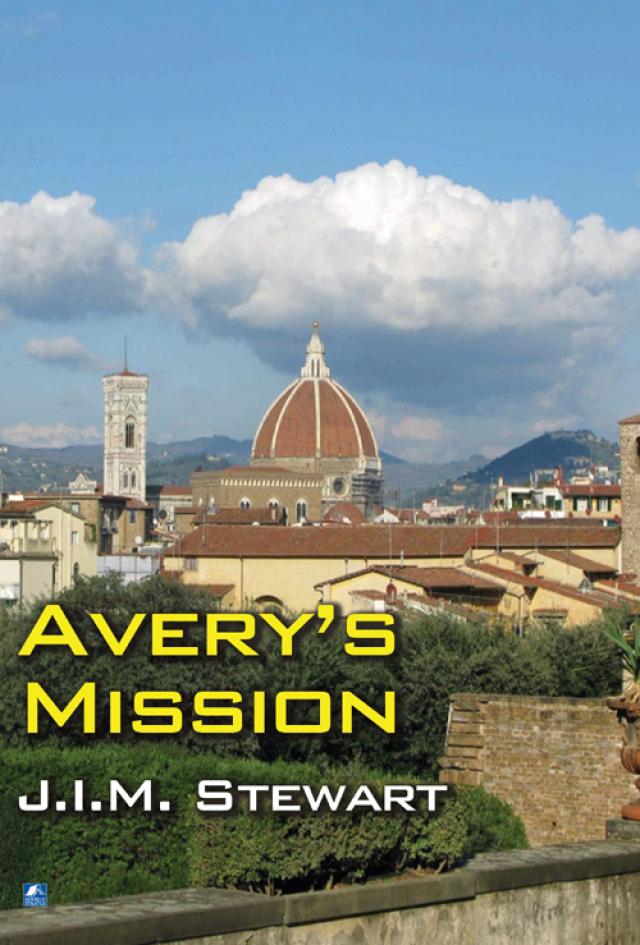
We walked up the hill together. The haze of noon had vanished, and in an intense clarity the city seemed to lie almost beneath one’s hand; one might have thought to put finger and thumb to the stone ribs of Brunelleschi’s dome and set Florence spinning like a glittering roulette-wheel upon its green table. On the other side of the road the strip-tease girls still patiently postured within their blotched frames. I wondered whether the impulse that had put Avery in brief possession of Ossessione Erotica had led him to investigate the dismal spectator-sport on offer nightly within. Luigi, I felt, would have been in a position to make some superior recommendation.
This idle thought caused me to wonder just what it was that Avery supposed me to ‘understand’. I didn’t attribute much understanding to myself – or anything more, in relation to our present problem, than what might be called a working hypothesis. And this I hoped was now going to be put to a test and verified pretty well without word spoken by me. But, if necessary, I would act. I would march Jethro Brenton off to some secluded corner of his garden and endeavour at a single stroke to straighten things out. I was tired, I told myself, of the spectacle of these people wandering in a maze of their own devising.
It was upon Jethro that we first came. He was prowling – wandering, indeed – upon the perimeter of his domain, close by the small secessionist territory marked by the barbed-wire entanglement of the gardener. Chi entra furtivo muore tosto. He might have been described as a shade furtivo himself. Short of positive banishment, he had certainly retreated from the Villa Buontalenti as far as he could.
‘Have you seen anything of Alison?’ he asked at once.
‘No, sir. I don’t think she has turned up yet.’
I might have judged it notable that Mrs Mountpatrick had thus so spontaneously become ‘Alison’ again had I not been more struck by Jethro’s continuing to be ‘sir’. But I understood Avery’s difficulty. ‘My father’ is easy. But ‘Father’ as a vocative for some reason comes a shade awkwardly to an English boy’s tongue. On the other hand ‘Daddy’ or the like carries assumptions which Avery, so far, was unable honestly to get round to.
‘And I don’t know what has become of Luigi either. I thought he might show your mother things.’ Jethro turned to me. ‘My dear Bannerman, I’m exceedingly glad you’ve dropped in.’
It was ludicrously patent that the man was casting round among his resources; even grabbing at rail or rigging, one might say, under threat of the advancing squall. And yet it wasn’t at all likely that Fernanda had been raging or was going to rage. It was her technique to move in rapidly indeed, but with calm. Perhaps Jethro preserved an image of her in his mind as the still eye of the hurricane. And he impressed me now as rather like one of those bobbin-shaped structures – cooling-towers or whatever they may be – which go up round modern power-stations: shapely, almost noble in certain lights, but the vacuity of which renders them liable to crumple before a breeze – to the just indignation of ourselves who have been made to pay for them.
I didn’t think that Avery was now in much doubt about his father’s interior engineering. And similarly too with his mother; it was as if the vast dome of light that is an Italian sky hadn’t been good for her wrinkles. He wasn’t going to have much left after this business had clarified itself. Only – and suddenly I saw this as a whole new troubled vista – he might take it all more for responsibility than disillusionment. What if he were to immolate himself in some stupid way on the altar of this family mess? I thought suddenly and mournfully that I might be left blaming the ethos of Anglebury.
And now we were walking down to the house: Jethro between Anglebury’s late headmaster and late pupil, and thus to a slight effect of being under escort.
‘Fernanda hasn’t changed,’ Jethro said to me, and scarcely on a note of satisfaction. ‘But I have a feeling’—he almost brightened—’that she finds I have. I gather you had a talk with her last night. Did she say anything which might suggest that?’
‘My dear Brenton, she hadn’t seen you then.’
‘But of course not.’ Jethro passed a mannered hand over his eyes, but I judged his confusion to be genuine. ‘Things happen so quickly! Avery, has she said anything about me to you?’
‘No, nothing at all. She hasn’t said much to me about anything, so far.’ Avery hesitated. ‘Not even about why she has arrived in such a hurry. It wasn’t a bit her plan.’
‘Her plan?’ It scarcely seemed that Jethro could really find this word bewildering. ‘There must have been some sudden reason for her following you?’
‘Perhaps she thought I wasn’t doing too well.’
There was a silence – into which, surprisingly, I heard myself intrude.
‘Mrs Brenton,’ I said, ‘had a telegram from Mrs Mountpatrick.’
‘From Alison!’ There was agitation in Jethro’s voice, and I found myself not sorry to remark the fact. My unpremeditated interjection had told me I was myself all for the crunch. I’d keep mum if there was a risk of darkening council, but speak up if there was a chance of giving things an onward nudge. But now Jethro was recovering himself.
‘Women are really incomprehensible,’ he said. ‘And they do get in the way of one’s work. Even Mme de Criquetot, for example. She has Pacino di Bonaguida at her finger-tips – Bannerman, I remember telling you that – but nevertheless the dear Comtesse will spend half a day gossiping about nothing at all.’
‘I don’t think you’ll find my mother doing that.’ Avery came out with this with a grimness of tone which surprised me. He had allowed his father’s drift into a small fatuity to irk him – or rather, perhaps, to humiliate him. But he rejected this instantly and loyally. ‘Your work mustn’t be interrupted,’ he said. ‘I do see that as the important thing.’
‘It’s important to me, such as it is.’ Jethro put into this a humility I didn’t care for. At the same time he glanced at Avery wonderingly – almost as if at a stranger in whom some remote possibility might inhere. I cared for this even less. Jethro Brenton, I knew, would never see Avery Brenton in other than an instrumental light.
‘Here comes Luigi,’ Avery said suddenly.
Luigi had appeared at the end of the drive, framed between the reaching cypresses and with the faded pink façade of the Villa Buontalenti behind him. He held something in his hand, and seemed to be looking for us.
‘So it is.’ Jethro’s pace, which had been lagging, lagged further. ‘Avery, there is one important thing. To get clear, that is. Your mother has thoughts that do her honour. I greatly respect her. She’s a notable woman. But work – well, that she just doesn’t understand. A scholar’s dedication. It would always be an enemy to her. So her ideas are impracticable – absolutely.’
Across Jethro Brenton’s finely trimmed beard Avery’s glance met mine. We were both silent – awkwardly acknowledging, I fear, the simulacrum of strength and resolution that had been presented to us. And now Luigi had come up and halted, holding out what he was carrying.
‘It’s for you, Avery,’ he said curtly. ‘A telegram.’
‘Thank you.’ This time, Avery’s colour had really left him, and in his pallor, I glimpsed him, for the first and last time, as physically his father’s son. He took the telegram and thrust it into a pocket without a glance.
We rounded the villa while I was digesting the meaning of this, and I expected that we should proceed indoors by way of the loggia. Mrs Brenton, after all, was presumably unattended within, and she had scarcely been long enough an inmate to be left unceremoniously to her own devices. Jethro however put on a spurt – a spurt, it might have been called, disguised as a stroll – which had the consequence of committing us to a full turn round the garden. I supposed that the simplest impulse of procrastination was the occasion of this. However distressing in certain of its aspects the unfolding situation was, it had its one point of mere high absurdity in Jethro Brenton’s terror of his former wife. Whether anything that could be termed fascination went along with this there had been little chance to decide. Even a superficial observer, unconcerned to determine what might or might not be his sexual constitution, would soon have put him down as the kind of middle-aged man who is readily alarmed by women – the more so, perhaps, as himself carrying inescapably round with him something that didn’t at all alarm them. He hadn’t cared for Mrs Mountpatrick’s turning up (like Fernanda, more or less out of a past), and he had been keenly aware of her hostility to Luigi. But once Fernanda entered the ring – it was as simple as that – Mrs Mountpatrick had, potentially at least, assumed the character of one of those substantial barriers on the ring’s periphery which in a crisis may be dodged behind. Or so I read Jethro’s anxiety for Mrs Mountpatrick’s presence now.
The path we were following admitted of only two walking abreast, and it seemed natural that Jethro and I should make a pair. But for some moments we had nothing to say to each other; and I was aware that, behind us, Avery and Luigi had nothing to say to each other either. It had always seemed to me that Luigi might grow bored with Avery more rapidly than Avery with Luigi: this was a probability inherent in their several mental ranges and tempos. It didn’t mean that Romulus and Remus need positively fall out. But I began to feel that Luigi was indeed armouring himself within a very general reserve, and that Avery was right in declaring his Italian friend to have become not the bambino he was.