Avery's Mission, page 10


‘You were Avery’s direttore?’ he asked.
‘Yes, of course. His headmaster.’
‘But he tells you his jokes?’
‘Well, he wouldn’t positively not tell them.’
‘And anything else?’
‘I’d suppose so. Indeed, I’d hope so – if he wasn’t too tedious or boring about it.’
‘He says he even showed you his book with the feelthy pictures.’ Luigi didn’t forget his pause on this.
‘His book—?’ For a moment this had me baffled, and then I remembered Avery’s luckless Ossessione Erotica. ‘Oh, that! It was a rotten buy. He was quite bad-tempered about it.’
‘Luigi wanted to borrow it,’ Avery said on his blithest note. ‘I had to explain I gave it away to the good poor.’
There was a pause in which it was almost as if we had taken Luigi out of his depth. The relationship between Avery and myself perplexed and somehow disturbed him. I thought it time to change the subject.
‘I hoped to find your father,’ I said to Avery, ‘and to apologise for having been unable to answer an invitation. Is he at home?’
‘I’m afraid he’s gone down to Florence. But he should be back quite soon, so it will be nice if you can stay and wait for him. As a matter of fact, I’ve got quite a lot to be tedious and boring about.’
‘And may I have my turn later?’ It was instantly that Luigi took his friend’s hint. ‘At present I have some new prints to sort – I should some time very much like to show you our system, Mr Bannerman – so may I ask you to excuse me?’
‘That’s the bambino’s way of saying he’s clearing out,’ Avery said. ‘As a matter of fact, he works fearfully hard. He might be swotting for an exam.’
‘I am indeed in the rat race.’ Luigi said this only perhaps to air the phrase. ‘A rivederla, signore.’ And with this salutation – a shade more formal than he had offered me as we parted in the Carmine – Luigi left Avery and his former direttore to themselves.
‘Let’s go into the garden,’ Avery said. ‘It’s a bit dusty, but not too bad.’
II
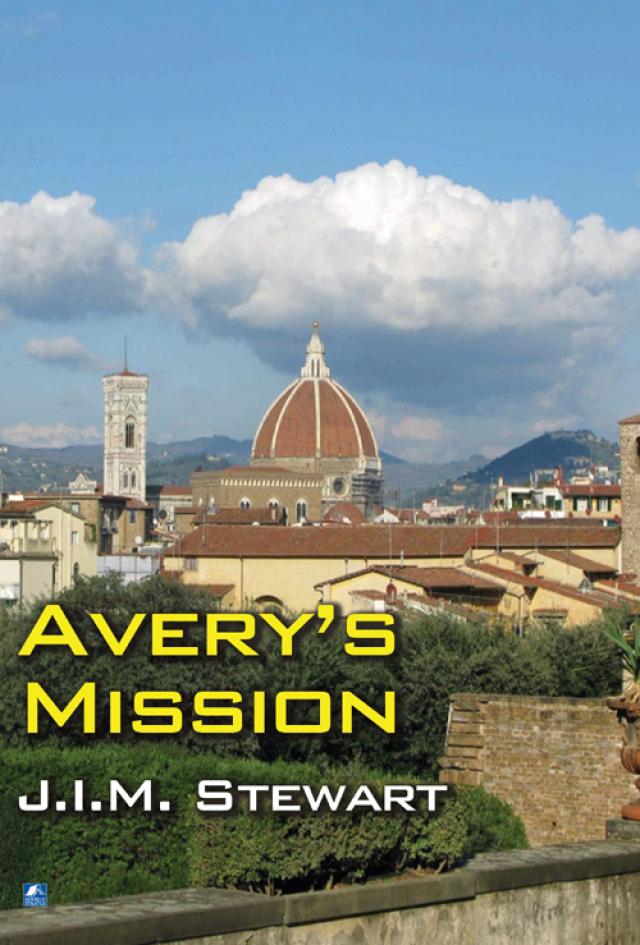
It was now noon, and the day seemed to have slid back to high summer. Even here at our respectable elevation it was hot. Below us in the distance, when we had reached the garden’s end, Brunelleschi’s dome wavered on its drum like a part-inflated balloon, or a soap-bubble trembling on a pipe. The haze made ancient and enduring things insubstantial, evanescent, slenderly attached to earth, as if Florence were indeed a city of flowers, and one over which a scorching air blew. Avery regarded the scene for a moment and his lips parted, so that I supposed he was about to offer some comment on it.
‘I still haven’t heard.’
‘From your mother?’
‘Oh, yes, I’ve had a letter. I was meaning from Oxford.’
‘Ah! I see.’ If I was surprised, it must have been because Avery had only minutes before seemed so contentedly absorbed into his new surroundings. Now I realised that it was still an exile who was looking down on Dante’s city. ‘It continues early days,’ I said, ‘when it’s some kind of waiting-list that’s in question.’
‘I suppose so.’ He was looking at me with much more of an air of confession than when he had handed me that absurd erotic magazine. I had an impulse to lecture him on the folly of overestimating conventional courses and prizes. But it would have been impertinent, and I held my peace – whereupon he spoke again himself. ‘As for the present job, it doesn’t get less vague. And I don’t want to fail another test.’
‘Ought you to look at it in that way, Avery?’ As I asked this I cursed in my own mind the obscure purposes of Fernanda Brenton. ‘In any case, you’ve made not a bad start. You seem to get along well with your father’s young man.’
‘Oh, Luigi’s terribly nice – even though he’s so clever. He’d be an awfully good chap to have in a study. But it’s odd, don’t you think?’
‘Odd?’ This mystifies me.
‘Being here like this with my father, and mucking away on the corpus, and all that. He’s only my age, you know. But he seems to have done a couple of years at it.’
‘They’re often intellectually precocious, Italians.’ I supposed Avery to be wholesomely in awe of a contemporary of his own who was actually holding down a job. ‘Did he have some training for it before he took it on?’
‘I don’t know. I don’t know at all. Somehow I haven’t really learnt very much about him. I mean about his parents, and what school he was at. The ordinary things of that sort.’
‘And have you offered him your own curriculum vitae?’
‘Sir?’ I saw that this pedantry of mine had grounded Avery for a moment, and that this had abashed him. But then he picked it up. ‘Well, not in what you’d call detail. I don’t think he knew much beforehand. For instance, I think he knew about my mother’s existence – vaguely, perhaps – but not about mine. I think he tumbled in the Brancacci Chapel to who, or what, I must be.’
‘Probably your father felt no occasion to talk to him about family affairs. I take it Luigi lives here – but it’s a professional relationship, after all.’
‘Yes.’ Avery paused. ‘Do you know? I get the impression that Luigi is this corpus thing. The drive behind it, I mean. And the way he has all those photographs filed is pretty staggering.’
‘It’s a matter of photographs?’
‘Thousands and thousands of them – and most of them of quite small bits of paintings. But the real thing is that he has a particular sort of memory for them. Some little squiggle – the way a painter has done something – turns up. And he can go straight to a similar squiggle in the files.’
‘He certainly sounds invaluable.’
‘I’m terribly afraid it would awfully bore me. The question is, does it bore him?’
We had turned and were walking back through the garden. To cover the length of it didn’t take all that time, since art had gone long ago to the creating of its apparent dimensions. I liked the Villa Buontalenti, but must not give the impression that there was anything grand about it. Only modest means would be required to a reasonable effect of keeping the place up. But the empty stone basin by which we had now happened to pause hinted a rather forlorn note, nevertheless. I turned from it to glance curiously at Avery. There was, I told myself, nothing obtuse about the intellectually unassuming youth.
‘The question’s that?’ I said. ‘It mayn’t, really and truly, be Luigi’s thing?’
‘Sometimes he’s funny about it in a funny way.’
‘Is he funny about your father?’
‘Oh, no! He’s very’—Avery hunted for what he wanted to say—’well-bred.’
‘I happen to have heard, as a matter of fact, that your father’s research has been picking up impetus lately. Perhaps that’s the whiz-kid at work.’
‘Yes.’ Avery’s tone failed to suggest much approval of my attempt upon a modern idiom. ‘Do you know why Luigi puts up with an ignorant oaf like me, and lets me call him the bambino, and so on? It’s just because he’s awfully keen on England.’
‘That was the first thing I gathered about him. And it’s not as an art historian. He sees it as a country in which big things happen in a practical way.’ I paused on this, aware of how we had been distancing somebody with whom, only half an hour before, Avery appeared to have established a bosom friendship. ‘After I’ve entertained your father – if he will allow me to – you and Luigi must come down and dine with me at the Serena. I believe I could rustle up a couple of girls, if you cared for it. Virtuous, but allowed to accept unchaperoned an invitation from a respectable and elderly Englishman. Is Luigi a ladies’ man?’
‘I don’t know at all.’ Avery had plainly found this term a baffling archaism – just as he had found ‘whiz-kid’ a neologism unseemly on my lips. ‘But that would be very nice,’ he added, without much conviction. I made a mental note that it would be a bachelor occasion.
‘You say you’ve heard from your mother?’
‘I had a letter a couple of days ago. She wants me to suggest to my father, quite casually, that he might perhaps pay a short visit to England some time.’
‘I see. A policy of gradualism.’
Needless to say, I hadn’t uttered these words before I regretted them. They reflected much more my sense of Mrs Brenton’s policies than what ought to have been my regard for Avery’s feelings. But if his ruddy complexion heightened, he took my crudity in good part.
‘I can see there’s something rather comical in it,’ he said. ‘My being a kind of scout, that is, putting out feelers as to how my father may be feeling. I’m even a kind of go-between, like the man in Shakespeare’s play. But, this time, it’s a juvenile Pandarus scurrying between a Troilus and Cressida who aren’t—well, quite young at all.’ Avery didn’t pause to register my surprise at this unusual literary flight, which I considered much to the credit of Anglebury’s English-master. ‘But it’s sensible, isn’t it, really? That we should come together as a family, that is. My parents and myself.’
‘In a general way,’ I said cautiously, ‘it’s no doubt the desirable thing.’
‘Yes.’ Avery seemed to gather my note of reserve. ‘Only, I don’t see how it’s to be started. I don’t see it getting off the ground as a practical proposition.’ He looked at me a shade helplessly. ‘My father is being extremely decent to me. But he’s rather reserved, really. And it’s as if there’s something I can’t quite get at in him. Perhaps it’s early days yet, as you say it is with those Oxford dons.’
‘Of course it is.’ I turned and walked on towards the house. ‘You just mustn’t let your mother be impatient.’
‘No.’ For some way Avery paced beside me in silence, finding satisfaction in kicking a pebble in front of him on the flagged path. ‘Do you know?’ he said. ‘I think I envy Luigi. No family problems. In fact, no family, so far as I can see. On his own, and with a job. A high-powered job with a high-powered name. Iconographical analysis. And you just get on with it. Bliss!’ He took a final kick at his pebble. ‘No!’ he said. ‘I don’t believe all that at all. Isn’t it extraordinarily difficult sometimes not to tell the most enormous lies about oneself?’
‘Or the most idiotically small ones, for that matter.’
‘Listen.’ Avery had come to a halt, and was looking at me. ‘I’ll tell you one truthful thing. I’m coming to think of my mother as a complication.’ He had cast a kind of baffled emphasis on the word. ‘Is that a bit pitiful, would you say?’
‘Not in the least. What you are telling me is that a father, split new, so to speak, and just unpacked from the straw, is a full-time job in himself. Quite as full time as iconographical thingummy.’
‘That’s it.’ Avery was relieved at being understood. ‘If anything’s to come of it – our really knowing each other – it must be let grow, without side-issues getting in the way.’
‘Yes.’ If I was struck by the profoundly unconscious ruthlessness of this, I wasn’t left without a sense of its being indicative of quite a lot. It would be easy to indict Avery as a youth of conventional mind, and to represent his current enterprise as promoted by a mere sense that it is proper to have two parents, if not indeed also a nanny, a pony, and a dog. But if conformity was to some extent a motive with him – and he had said things that squarely planted it as such – he was yet presenting himself increasingly to me as under some more radical impulsion. That this lay deep didn’t necessarily mean that it was all that strong, and I hardly supposed that the action developing itself before me was going presently to reverberate in an elemental way. Still, here was young Telemachus – the figure had come to me before – more concerned with his own quest than with getting things straight for Penelope in Ithaca. ‘I think,’ I said, ‘that if I’d recovered a parent in your circumstances my impressions would have been thoroughly confused for a time. What would you say is your chief impression of your father to date – apart from that of his being rather reserved?’
‘That he must be very attractive to women.’
‘Really?’ I don’t know why Avery’s advancing this surprised me, unless it was my having received the same appraisal from Mrs Mountpatrick. ‘Have you already seen him in much female society?’
‘Oh, no—hardly at all. There has been one woman come to lunch. She was called the Marquise d’Amfreville, and she did seem a bit gone on him, I must say. I’d never met a marquise before. I don’t think my father has a large number of friends, and I get the impression that quite a lot of those he does have are foreigners. Not Italians, that is, but other kinds.’ Avery had stopped on the final steps up to the loggia before the house. ‘Of course, he’s attractive in a general way, I think, just as Luigi is. Luigi’s had a mistress.’
‘That’s something he’s told you?’ I wasn’t clear that Avery had any business to make me this inconsequent and not particularly interesting disclosure.
‘Oh, yes. He’s told me all sorts of thing – but not really about himself. He’s elusive. But he did tell me that.’
‘Do you think he’s told your father?’
‘He hasn’t said, but I’d suppose not. He’s not, somehow, relaxed with him. And you and I puzzled him. I think he believes in being rather close with older people. Perhaps that’s just Italian. But you’d never guess, would you?’
‘About your precious friend’s mistress? Of course not – because I shouldn’t put in time conjecturing. Perhaps mistress is rather a grand word for it.’
‘Well, it was a married woman. I thought that a bit much. But Luigi says it’s the trouble-free thing. That’s extremely continental, I suppose.’
There was a moment’s silence, for I had nothing more to say about this. Avery’s sudden incursion into the amatory field puzzled me. Frankness in talk between old and young is based upon certain unspoken rules, and these Avery had violated – as he would not of course have been doing had he felt impelled to tell me about some change in sexual status he had himself undergone. I had to conclude not merely that the whole subject of the vita sexualis was much on his mind (as it ought to be in a youth lately pitched out of a monastic English public school and cut off from his mother’s apron-strings) but that it was presenting itself to his intuitions, although perhaps scarcely to his conscious mind, in some disturbing form. But now he seemed to become aware that he had been talking, or rambling, out of turn.
‘Listen!’ he said. ‘That’s a car on the drive. It will be my father. I’m so glad you’ll catch him, after all.’
III
Luigi came out of the house as we reached it, and I imagined he was proposing politely to meet his employer. But his first words to Avery dispelled this idea.
‘Another visitor! It never rains but it snows.’
‘Pours. But isn’t it my father?’
‘You should know the sound of a car – even an Italian car, Avery. This is a strange one. We investigate.’ Luigi was making a slightly ironical fuss, as if it amused him to set an accent on the fact that visitors did not besiege Jethro Brenton’s gates. ‘But here is Luca. Luca, chi e?’
Luca, who had appeared from round the tower, was an old man as gnarled as an olive tree. He carried a rake over his shoulder – less for utility, I felt, than with the air of a stage-character making it clear that he is the gardener. He was not presumably the disaffected person in the lodge, alert to slaughter furtive intruders on the spot, but one of those who had come from the Abruzzi to till a strange Tuscan soil. He now halted, and expressively shrugged his shoulders – rake and all.
‘Una signora sconosciuta,’ he said. ‘Inglese, senza dubio.’ And he shuffled on his unhurrying way.
That this had not been beyond Avery as an Italian scholar was apparent in the glance he exchanged with me: a glance one component of which was alarm. We had been visited by the same conjecture. Dissatisfied with the reports of her ambassador, Mrs Fernanda Brenton had arrived. If the same thought was in Luigi’s mind, he gave no sign of it.
‘Avery,’ he murmured, ‘this is for you.’ He turned to me – and made one of his pauses, as it were, in advance. ‘For Avery is the young squire? One says that?’
‘No, Luigi, I don’t think one does. But Avery must receive his father’s visitor. You and I will stand by in his support.’
This nonsense had taken us round the house, and almost into the arms of the caller, who had got out of a bright red Fiat cinquecento now standing some way back on the drive. She came to a halt before us, and I saw that it was Mrs Mountpatrick.
‘Good morning, Charles.’ Mrs Mountpatrick gave me a brisk nod, and then glanced from one young man to the other. ‘And which,’ she demanded, ‘is Jethro Brenton’s boy?’
The question produced a moment’s failure of response. It had been designed perhaps as challenging, or as merely cheerful, but its unceremoniousness had the effect of rating the two young men as children still. I have no doubt that both were sufficiently aware of this to feel their dignity affronted. But that the question was also unnecessary I couldn’t feel certain. Avery in an English crowd would never have suggested himself as other than English, nor Luigi in an Italian crowd as other than Italian. But in Italy one does come upon Nordic types, and in England upon Mediterranean ones. And as Avery seemed to me to bear no more resemblance to his father than Luigi did, it was possible that Mrs Mountpatrick, a woman of cosmopolitan experience, was simply making sure of not committing a blunder. In any case, it was for me to speak, since neither of the young men showed any disposition to do so.
‘This is Avery,’ I said. ‘Avery, let me introduce you to an old friend of mine, Mrs Mountpatrick, who also knows your—’ I found myself hesitating, apparently through an inability to choose between ‘father’ and ‘mother’. ‘Who knows your parents,’ I said. ‘And this is Signor Fagandini, Mr Brenton’s secretary.’
‘How do you do?’ Mrs Mountpatrick shook hands with Avery and myself. ‘I haven’t seen your father for a long time,’ she said. ‘But when I heard you were staying with him I decided I must meet you. Is he at home?’ She listened appraisingly to Avery’s reply, and to his assurance that his father was expected back in no time at all. ‘Then that’s just right,’ she said. ‘I can transact my main business first – which is getting to know you – and top off by coming a little up to date with your father when he turns up. Signor Fagandini I feel I scarcely need to get to know.’ She turned and looked at Luigi. ‘I have heard of him.’