

Wreckage: An Addictive Psychological Thriller Packed with Twists, page 7


Beth comes running in from another room with a squeal and a lit-up smile and practically leaps into my arms for a hug. “Finn! Oh my God! I can’t believe you made it out here in this weather!”
Her enthusiasm throws me. Maybe absence does make the heart grow fonder.
“Kelsey, Dylan, come say hi to Uncle Finn.”
I’m not really the kids’ uncle, we just say that, but I am Kelsey’s godfather. Kelsey prances into the kitchen, smiling through braces, a fourteen-year-old foal who’s all leg and almost a foot taller than the last time I saw her. We do the lean-in hug. Dylan, who must be twelve now, backs out of a room down the hall, doing a robot shuffle and holding an Xbox controller. He robo-waves at me.
“Uncle Finn’s had a long trip,” announces Miles. “I’m going to show him his room, let him rest for a while, and we’ll see him at dinner.”
Oh, okay, nice to have my schedule worked out. I’m terrified my presence will endanger Miles and his family, but Miles believes everything is fine and “We all just need to chill.” And so, I have allowed his version of reality, as usual, to trump mine.
He escorts me to a preposterously inviting guest bedroom in the rear of the first floor, landward side. It has a hideaway TV, motorized curtains, and a full attached bathroom with heated floor and whirlpool bath. There are more pillows in here than in Martha Stewart’s fever dreams.
“Why don’t you take a warm shower,” says Miles, “then maybe nap for a few hours or whatever will help you chill. Later on, we’ll have a glass of wine with Beth before dinner and catch up. After dinner, you and I will find someplace where we can... talk.”
Miles has a way of making suggestions that are actually edicts. “I might do that,” I say, just to assert some autonomy—an old dance of ours—“or I might take a walk into the village.”
“Why don’t you just make yourself comfortable here?”
“Are there bars on the windows I should know about?”
“Yes,” he shoots back in a Peter Lorre voice, rubbing his hands together, “you are our very special guest, heh-heh. All we ask is that you never look in the basement, heh-heh.” He laughs and starts to head off but then turns to me with an earnest expression. “Finn, I need to put this out there, so there’s no... dishonesty between us. Your sister Angie called me five or six months ago, when you were in the hospital after that...” He doesn’t need to say it: pill overdose. The first one. “I didn’t call you because I wasn’t sure you’d want me to know. The point is, I’m aware you’ve had some... issues of late. And I just want to tell you, there’s no judgment from me. You’re safe and loved here and... that’s all. We’ll talk later.”
He leaves, closing the door before I can reply. Another Miles habit. I love the man, but sometimes I want to jump up and down on his face with hard shoes.
I flop onto the bed. It’s stupidly comfortable, as I knew it would be. I’m sure the mattress cost more than my used car. Damn. So, Miles and Angie chatted after my first fling with pills and booze. That certainly puts a fresh spin on things.
The situation at hand suddenly becomes Poland-Spring-clear to me. Miles doesn’t believe a word I’ve told him. Not about the bad men in my home, not about being followed on the ferry, not about the danger I’m in here on Musqasset. He thinks I’m three scallops short of a fisherman’s platter. He believes my recent brush with death was exactly what it appeared to be on the surface—another suicide attempt—and that I made up the bad-guy story, either because I’m embarrassed to admit the truth or because I’m flat-out barmy.
I need to convince Miles I’m telling the truth. Because if he doesn’t believe me about the danger I’m in, he won’t believe his family’s in danger. And I can’t stay in this house.
Luckily, I do have that digital recording from the boat.
Or do I? I check the app on my aging phone again, confident I simply overlooked the location of the recording in my earlier anxiety. But there’s only one place the file could be stored: under “Recordings.” And that whole screen is blank.
.....
During dinner, I try to deflect the conversational focus from myself. First, Beth talks about some New Age-y webinar she’s involved with called The Power of Words. It sounds a bit cultish and full of daffy metaphysics to me, but she seems to take it seriously. And then I manage to get Miles talking about himself, never an arduous task. As he tells me about his recent career exploits that led to his winning a seat in the Maine state senate, I begin to feel steadily queasier.
Why? Well, first a bit of background:
When Miles was fresh out of law school, Beth’s dad, a big Northeast real estate developer with his finger in many pies, pulled some strings to get Miles into the top-echelon law firm where Miles is now a partner. Miles chose to specialize in real estate and environmental law. Over the years, he did the legal work for several projects Beth’s dad was involved in—a PGA golf course, a resort hotel, a riverfront shopping complex. Helped him get around some pesky environmental speed bumps. I’ve often chided Miles for being Beth’s dad’s lackey and for betraying all the values he stood for in college.
But in the years since he last saw me, Miles explains over dinner, he has started working his way back onto the green side of the fence. A few years ago, over his partners’ objections, he decided to represent the Penobscot Indians, on a pro bono basis, in a case involving a new power plant on the Penobscot River. “Long story short, our litigators prevailed in court. The story got some positive press. Made the firm look like a company with a conscience.”
“Since then,” adds Beth, “he’s taken the lead on a couple of other big pro bono cases. He saved an area near the Appalachian Trail from development. He also got the laws changed around noise pollution in Maine’s state parks.”
“It’s a win/win/win,” as Miles describes it. “The firm gets some positive press, the environment gets some protection, and I get my face in the papers as the Champion of Worthy Causes.” Meanwhile, Miles explains, he continues to work behind the scenes for his high-end developer clients. Gotta pay the bills, after all.
The publicity he got from the pro bono wins allowed him to samba into the seat for Maine state Senate District 29. And he now has his eyes on bigger prizes. He leans over the table, lowering his voice to conspiratorial level. “There’s a situation shaping up, knock on wood, that could—could—land me in Washington.”
“Holy crap,” I say, duly awed. It makes sense, though. With his movie-star looks, graying temples, and easy charm, the political possibilities are endless.
“Maybe we should wait till we know more about that before saying anything else,” Beth chastises him with a smile.
The whole time Miles has been talking, my belly has been turning to lead, and not from the pasta. What’s making me queasy? Well, I already knew Miles was enjoying a lucrative law career and making strides in the political arena, but hearing this latest development—and seeing his family’s faces light up as he alludes to it—has brought my dilemma into bold relief.
What am I to do with the terrible facts I learned last night?
After we clear the dinner dishes, Beth pours Miles and me a brandy and says, “You two probably want some alone time. I’ve got some journaling to catch up on for The Power of Words. But maybe we can all do something fun tomorrow.” We say our goodnights, and Beth departs.
I had hoped Miles and I could go somewhere outside the house to talk, but rain is whipping the windows like strands of wet seaweed. We’re not going anywhere.
I’m hoping Trooper Dan has gone to ground as well.
Miles suggests a move to the study—yes, he has a “study,” which he refers to without a shred of self-consciousness. And so, we stand up and do something I never thought I’d be able to say I did in my lifetime: repair to the study for a brandy.
10
Miles parks his brandy on the oak mini-bar and says, “I think I’m going to have something else instead.” He stoops and reaches under the counter, and I know with alarming certainty what his hand will be holding when he rises.
He does not disappoint. Glenmalloch single malt.
Fate? Karma? Cosmic joke?
He sets the bottle down on the mini-bar, where it proclaims itself like a telegram from beyond the grave.
“How ‘bout you?” he asks.
“Think I’ll stick with the brandy.”
Gazing at the Glenmalloch bottle, my head begins to swim, and I feel as if I’m standing on the ledge of a skyscraper. But then I realize the bottle is offering me a precious opening.
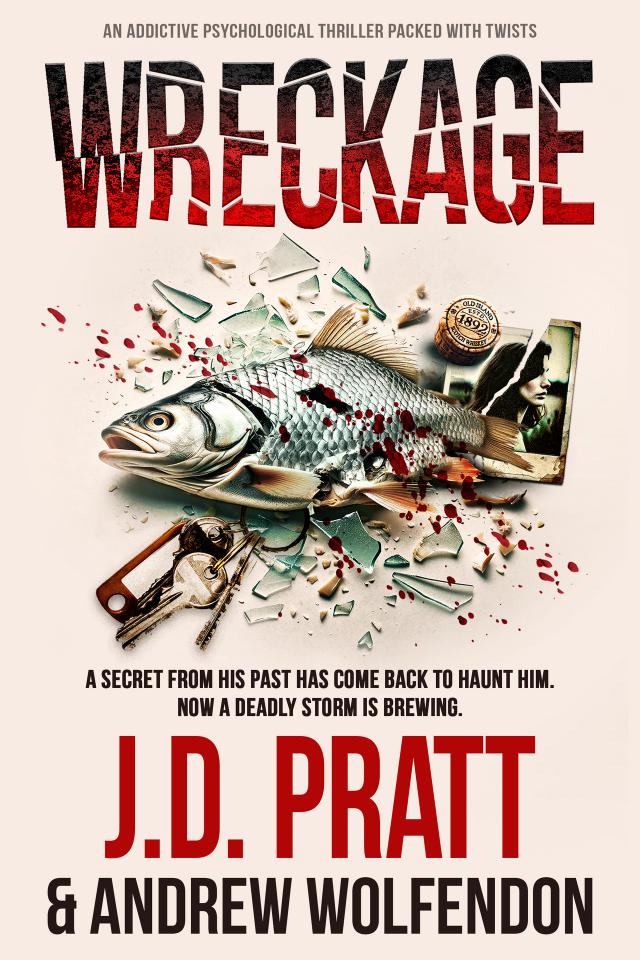
I pick it up and blow a laugh out my nose, pretending the embossed black-and-gold label has just now jarred a memory loose. “Do you remember our college graduation night?”
“Oh God,” says Miles, shaking his head. “Parts of it. Without a doubt the drunkest I have ever been in my life. An epic cringe-fest, from start to finish.”
“Do you remember the Glenmalloch?”
“Duh. You gave me that beautiful bottle as a gift. It was even better than this twelve-year stuff, right? Came in a special bottle. It must have cost you a fortune. And I, like an ass, proceeded to swig it like it was PBR. Got completely trashed.”
“I think you had stuff you wanted... needed to get off your chest. Do you remember how we got home that night?”
“I know we left without Beth. I caught endless grief for that. I have these strange memories of being out in the woods somewhere, thrashing on the ground. So drunk. I remember you standing there patiently, trying to get me back in the car. I woke up on my sofa the next afternoon with one shoe on and... a hospital wristband. What the hell was that all about?”
I have a question of my own to ask first. “Do you remember the cop? On Carlisle Road?”
“Oh God, I’m not sure. You and I got pulled over a few times in those days.”
“Yes, we did.” I pause heavily—he knows why. “But on that night, we saw a cop at a speed trap on Carlisle Road. Remember? We thought he was going to follow us, so we had to get rid of the bottle.”
“No! No! Tell me we did not toss a bottle of sixteen-year-old Glenmalloch on the side of the road. Please, I’m begging you, Finn.”
I shrug a what-can-I-say.
He groans through clenched teeth. “I always hoped you kept that bottle and drank the rest of it yourself. Maybe had a nice goodbye toast with Jeannie. I certainly proved myself unworthy of it.” He looks me in the eye and shakes his head in disbelief.
Gazing into Miles’s eyes, I am positive he’s recalling that night for the first time in eighteen years. This reaffirms what I already knew: Miles has zero memory of throwing that bottle and zero knowledge of what happened in the aftermath. I was sure about it already, but I still had to ask. Why my certainty? Because Miles passed out so coldly that night, I had to take him to the ER, where he was treated for alcohol poisoning. So yeah, he was about as conscious as a bowling trophy by the time the cop’s blue lights came on. And even if he somehow managed to awaken trace cellular memories of what went down on Carlisle Road that night, Miles is quite literally the last person on Earth who’d want to awaken that long-sleeping dog and start the police asking new questions about it. He has nothing to gain, everything to lose. He was not the source of the private knowledge in that suicide note.
So, who was? And where does that leave me?
My only path forward with Miles becomes clear. I plop myself into a brushed-leather armchair, clap my hands to my thighs, and fix him with a gaze. “I need to be straight with you, bro.”
“Okay,” he says, intrigued by my shift in tone. “Fire away.” He sits in the armchair facing mine.
“I think you invited me out here under false pretenses.”
He probes my eyes to see if I’m messing with him. “What do you mean?”
“I didn’t know you had talked to Angie back in March.”
“I’m sorry, Finn.” He works to hold my gaze. “But that changes things... how?”
“Oh, come on, Miles. It changes everything. For starters, you know I swallowed some booze and pills and got hospitalized once before. I’m sure you heard Angie’s amateur diagnosis of me, too. But see, I didn’t know you knew that stuff when we spoke last night. So, crazy me, when I was telling you about that shitstorm in my parents’ kitchen, I thought I was talking to a friend who was believing every word I—”
“Finn, I do believe—”
“Shh, Miles. ...A friend who was believing, literally, every word I was saying and wanted to help me because—”
“I do want to help you.”
“But you want to help me in the my-poor-friend’s-out-of-his-gourd way. And I thought you wanted to help me in the my-friend’s-in-danger-and-we’re-going-to-get-to-the-bottom-of-it way.”
“I want to help you in whatever way you need or want help.”
“I appreciate that, Miles, but tell me honestly: when I was describing my run-in with those thugs, did you believe that really happened or did you think it was just a psychological breakdown and another suicide attempt?”
Imagine the face of a hooked trout. That’s what I’m looking at now.
“What does... ‘really’ even mean?” he stammers. “What we call reality is just a series of neurological events. If you believe what happened was real, then it was real. To you.”
“Let’s skip the adventures in neuro-epistemology tonight. I just want to know what game we’re playing, you and I, as friends. Do you believe me, factually, or not?”
“Finn...” The man is squirming as if an electric eel has crawled up his boxer-briefs.
“You can say it; I already know the answer. I just need to hear it from your mouth.”
“Okay—do I have doubts about a trio of psychopathic hit men trying to make you commit suicide for no apparent reason? And that they’ve followed you here to Musqasset? Finn, I mean, jeez. Step back and look at this objectively. You just got out of a psych hospital yesterday, for crying out loud. I’m sorry, man. This is killing me to say...”
“It’s okay, Miles. It’s okay.” It’s time to let the trout off the hook. “For what it’s worth, I think you may be right. …And I think your instincts were spot-on too. Inviting me out to the island—getting me away from everything—was the right call. In just the few hours I’ve had to myself this afternoon, I’ve already started having my own doubts about what happened. The shrink told me hallucinations and delusions are a common effect of the chemical combo I took. So, I’m starting to think it’s possible I concocted the whole thing in my mind, as a way of—”
“I hear you,” says Miles. “No judgment here, just friendship.”
“Here’s what I propose,” I say. “Let’s stick to the ‘treatment plan.’ I’ll stay here as we agreed, get as much R and R as I can. Probably spend a lot of time alone, if that’s okay. In a couple of days, when this storm has blown over, so to speak, we’ll... reassess.”
Miles’s relief is palpable. “I think that’s a brilliant idea.”
He stands and takes my brandy away, as if suddenly realizing that giving me booze might not have been the greatest idea since the inclined plane. He offers to make me a cup of herbal tea and bring it to my room. I accept, agreeing that an early bedtime is a capital idea, old chap.
.....
I sit in the guest bedroom, sipping my warm tea and watching the rain lash the window. I dread going out in the storm, which I’ll need to do before long.
You see, that stuff I told Miles about believing myself to be delusional was grade-A cow manure. Over the course of the evening, I have come to see a couple of things with 20/20 vision. One, Miles believes I’ve had a nervous breakdown. Period. Therefore, he is not going to take precautions against the danger I’m in. Therefore, he and his family remain at risk.
And two, the only way to make him believe me would be to tell him everything. Show him the suicide note. Show him the Boston Globe article. Tell him what he did on that long-ago night. And I can’t do that. I can’t derail this man’s life and career.
Not now. Probably not ever.
No, it seems I will need to bear that burden alone and pay whatever price it exacts. And that is probably as it should be. My guilt, after all, is far greater than Miles’s. Isn’t it? Miles has no idea what he did; I’m the one who made a conscious decision to keep a secret on that terrible night. I’m the one who fled the scene.
Best for Miles and his family if I remain a delusional nutjob in their eyes.
And so here is my plan. I will wait until the house has been asleep for an hour or so. Then I will borrow a flashlight, a gallon of water, a blanket, and a few Clif Bars. I’ll sneak out of the house, taking my belongings with me, and find a shelter on the island where I can hide out until the storm is over. I don’t care if it’s a tool shed or a moldy old boathouse. Once the ferry is running, I will board it. And the moment it docks in New Harbor, I will seek police protection, even if that means telling them the tawdry tale of the scotch bottle and taking the full blame for it.
By the way, no, there is no police department on Musqasset. We share one part-time peace officer with Monhegan, and he’s stuck on the other island till the storm passes. We have no jail or protective custody facilities either.
.....
My chin bobs off my chest, and I pull in a ragged snore. I must have dozed off—my tea has gone cold, and rain is no longer pelting the window. The wind is still howling, but the windowpane has dried a bit.
Was it a sound that jarred me from sleep? I freeze and listen.
Seconds pass, and I hear it again. A pebble tick on the window glass. Really?
No way. No one has seen me on the island, except Dennis. And he doesn’t know where I’m staying.
That suggests only one possibility. My bowels tighten.
Seconds pass. Another tick.
I look out through the glass, but a rhododendron bush blocks most of the view, and the darkness beyond it is inky.
I throw on my jacket and sock-foot my way through the sleeping house. I pull a butcher knife from a rack in the kitchen and locate my shoes in the mudroom. Grabbing one of the flashlights hanging near the door, I step out into the gusting wind.


