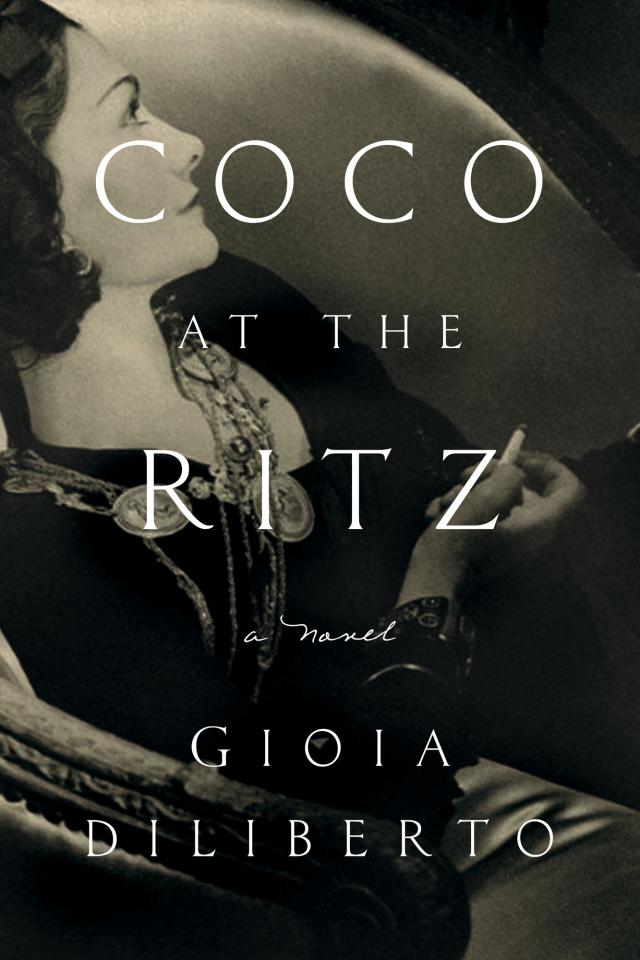
Coco at the Ritz, page 2


Coco removed a cigarette from the case and placed it in the corner of her mouth. She looked at the Interrogator, and he stared back at her, making no move to light it. As she fumbled in her handbag for a lighter, the Interrogator said, “Von Dincklage is German. That didn’t bother you?”
Coco lit her cigarette and blew a jet of smoke toward the Interrogator. “Do you expect me to look at a man’s passport before I agree to be his lover?”
The Interrogator closed his eyes for a moment to avoid the smoke. “Tell me where von Dincklage is, madam.”
“Mademoiselle.”
The Interrogator looked Coco up and down, as if he was examining an ancient artifact or an old car, checking for scratches and dents. “Mademoiselle?”
“I am La Grande Mademoiselle. Talk to anyone in fashion, they’ll tell you.”
“We’re not here to talk about fashion. I want you to tell me how I can find your Spatz.”
“I have no idea.”
“Did you ever see von Dincklage in uniform?”
“Never! He wore bespoke suits from a London tailor and shirts from Charvet.”
“He’s a Nazi, and he’s a peacock.” The Interrogator uttered a short laugh.
“He wasn’t a Nazi; he just wanted them to think he was. He was only trying to get by, to get through the war like everyone else.”
“Exactly how did he get by?”
“I don’t know what he did when he wasn’t with me. He was an embassy attaché when I first met him, but don’t ask me what an embassy attaché does.”
“Promotes Nazi ideology.”
“You think we sat around discussing that?”
“What did you discuss?”
“What we were going to have for dinner. What most people discuss.”
The Interrogator squeezed out a brief, insincere smile. It was the smile, Coco thought, of someone who rarely made use of that expression. She demanded, “Why have I been arrested?”
“For traitorous collaboration with the enemy.”
“I love my country,” Coco said in a soft voice. “I’m not guilty.”
“That’s what we’re here to discuss.” The Interrogator rapped the table with his fingers. “You were either with the Nazis or against them.”
Coco gave him a pointed look. “I’m afraid, young man, things weren’t so black and white.”
ONE Four Years Earlier
Coco arrived in Paris on a warm Wednesday in July, six weeks after the Germans occupied the city. Though early evening, it was eerily dark. Paris now operated on German time, which meant pushing the clock forward an hour. The streets were empty and silent, the only sound the hobnailed boots of Nazi soldiers strolling the boulevards.
At the Ritz, a giant red flag with a black swastika hung over the massive double doors. Coco’s driver dropped her off at the entrance with her suitcase and sped away in his rusted-out Cadillac. She watched him careen onto rue Saint-Honoré, narrowly missing a big black Mercedes. Through the Mercedes’ back window, Coco glimpsed a bloodied man between two helmeted soldiers. In the distance, a rifle shot rang out, followed by the strew of a machine gun. Was someone being executed? Coco shuddered.
Since she didn’t have an ausweis, a German permit, the armed Nazi at the Ritz door refused her entrance. Charlie Ritz, the hotel owner, however, saw her and let her into the lobby. “I’ve been traveling for two days, and I’m exhausted,” she told him, as she started for the stairs.
“You can’t go up there. It’s reserved for Germans,” said Charlie.
“Nonsense. All my things are there!”
“Stop! Don’t go any further!”
Coco brushed past Charlie and handed her suitcase to a porter. “Bring that to my suite,” she ordered.
“I’m warning you, Mademoiselle. Your suite is unavailable.” Charlie’s voice boomed. Everyone stared. The lobby teemed with uniformed Germans, and Coco recognized what Charlie was up to: hoping to impress the Nazis with what a big, strong man he was, pushing around little Coco.
The assistant manager appeared and spoke to Charlie. The sink in Himmler’s suite was clogged, and the Nazi commander was demanding new quarters. Charlie scurried off to handle the emergency, and Coco climbed the grand, winding staircase. Were the French really barred from the upper floors of the Ritz? She should have called ahead, given the staff a chance to get things ready for her. She’d returned too hastily.
But her nephew André Palasse had been taken prisoner by the Germans while fighting for the French on the Maginot Line, the concrete fortress on the border of France and Germany. Coco had promised André’s wife, Catharina, that she’d appeal to the enemy now in control to have the young soldier released. She couldn’t do that from André’s home in Lembeye, where she’d fled in June, as soon as the first Nazi bombs hit Paris. Coco had bought the large stone house as a vacation home for her nephew and his family, whose main residence was Lyon, where André worked as director of Chanel Silk Establishments. Coco enjoyed taking walks through the woods behind the house with her two school-age great-nieces, but there was little else to do. Mostly, she’d been bored out of her mind. Still, she was determined to stick it out, at least until the bombing stopped. Then one night, while relaxing in the salon with André’s family and listening to a Mozart symphony, the tinny voice of World War I hero Maréchal Pétain interrupted the music. “With a heavy heart I tell you today what is necessary to do to stop the fighting,” intoned the scratchy voice through the mesh speaker. France had surrendered to Germany. Pétain would become head of a new government at Vichy allied with the Nazis. The nation would henceforth be divided in two: the zone occupied by the Germans, which comprised roughly two-thirds of France, including Paris, and an unoccupied zone that began around Orléans and stretched south to the Spanish border. The German military would command all French forces.
A few days later, Catharina learned that her husband had been taken prisoner. André was like a son to Coco—people gossiped that he was her son, by her very first lover, Étienne Balsan, a wealthy aristocrat she’d met while mending trousers in a tailoring shop in Moulins. Immediately, Coco packed for Paris. She and her driver, Marceau, took off in his ancient Cadillac. When they’d fled the city in June, he thought they’d be too conspicuous in Coco’s Rolls-Royce, so she’d left the luxurious car behind in the garage.
“Be careful. It’s a war zone in Paris!” Catharina had cried, as she kissed Coco good-bye.
“I’m not afraid of the Germans. What can they do to me?” Coco had said, as she hugged her nieces, then settled in the car for the long journey home.
* * *
Coco had no idea to whom she’d appeal about having André released. But she’d always been good at steamrolling through every obstacle, no matter how big or insurmountable. She’d think about it after she’d unpacked and taken a bath.
At the door to her suite, she halted abruptly. Radio music drifted from inside. Then a female announcer came on speaking perfect French: This is Berlin calling. Berlin calling all French wives, mothers, sisters, and sweethearts. Mesdames et mamselles, when Berlin calls, it pays to listen! Il faut que vous faites attention! Most of you listening are alone without your men, your men whom you will never see again, or who at best will come home crippled, useless for the rest of their lives. For whom? For de Gaulle, for Roosevelt, for Churchill and their Jewish cohort.”
Coco pounded on the door. A man’s voice shouted over the radio, “Entrez!”
At the desk near the window sat a handsome blond man with light blue eyes and a full, girlish mouth that contradicted the virile set of his jaw. He was dressed in a bespoke brown suit, a gray silk tie, and a creamy white shirt. Gold triangles edged in onyx flashed from his spotless cuffs. His thick hair, cut short and parted on the side, was a few shades lighter than his tanned skin.
Coco recognized him immediately: Spatz von Dincklage. She’d met him in the early thirties when he arrived in Paris as an embassy attaché, and she often spotted him while on the town at parties, restaurants, gallery shows, and theater openings. She remembered one evening at the Night in Versailles Ball hosted by Count Étienne de Beaumont, the avant-garde art patron. Spatz and his wife, Catsy, had won the waltz contest, though the competition—heavy with old dowagers and their drunken husbands—wasn’t terribly stiff. Coco had noted von Dincklage’s extreme good looks. Later, she heard that Spatz had left Paris under some kind of cloud. She hadn’t seen him in years.
A heavy odor of stale cigar hung in the air. In the middle of the room sat a card table laden with overflowing ashtrays, dirty glasses, and empty bottles of wine. More empty wine and liquor bottles lay scattered on the floor.
Spatz turned off the radio. “So, the famous Coco Chanel has returned,” he said, smiling and flashing two boyish dimples. Coco felt heat rising in her face, the way it broadcast her attraction to him. She wondered what sports he played. Golf? Tennis? Athletic men were usually good in bed. “Are you living here?” she asked, adjusting her wrinkled clothes. She felt dirty and disheveled, embarrassed to be so badly groomed.
Spatz shook his head. “No, no. Just keeping an eye on it for you. Making sure the maids don’t steal anything.”
Coco eyed the card table Spatz must have brought in and the empty liquor bottles on the floor with a furrowed brow. “Your friends were helping you.”
“Sorry about the mess. We had a card game earlier.”
“It smells like a cigar factory.”
“My friends love their Cuban cigars.”
“Where do you get Cuban cigars…” Realizing she was talking to a well-connected German who had no problem getting whatever he wanted in occupied Paris, Coco abruptly changed the subject. “This is my apartment, and those are my trunks in the hall.” She took a cigarette from the case in her purse and, holding it between her index and third fingers, gestured with it toward Spatz. “From my last pack.”
He took a lighter from a pocket in his jacket and moved close to Coco to light her cigarette. “I can get you anything you need.”
Coco began to sweat, and she wondered if he could smell her. “This will get rid of that awful cigar odor,” she said, as she took a bottle of Chanel No. 5 from her purse. She removed the stopper and placed the bottle on the coffee table. “There are crates of perfume across the street in my boutique. You can have as many bottles as you want—for your wife.”
“We’re divorced, for several years now,” said Spatz.
“For your petite amie, then.”
“At the moment, there’s no one special in my life.”
Coco found that hard to believe. Spatz was so attractive, his manners so impeccable. She sat on the sofa and crossed her legs, tucking her right foot behind the opposite ankle. She looked at Spatz with a soft expression. “What are you doing in Paris?”
“My work.”
“And what exactly is your work?” Coco ran her hands over her hair, tucking it into place. Spatz settled next to her and stretched his arm across the sofa’s high back, almost touching her.
“I have an office on rue Raspail.” He hesitated a moment. “I oversee textile production.”
“For whom?”
“Mostly for the army.”
“Which army?”
“Which army do you prefer?”
“I hate the military.”
“I much prefer civilian life myself, but here we are.” Spatz rose and went to the bar cart, where he poured each of them a glass of red wine. “À la guerre, comme à la guerre,” he said, handing a glass to Coco. “I’ll see about getting this place cleaned up and your trunks moved in and unpacked. In the meantime, you can have a bath, and afterward, I’ll take you to dinner downstairs. The Ritz food is as good as it’s always been.”
“À la guerre, comme à la guerre,” Coco said, raising her glass.
TWO
God, why did I agree to have dinner with him? In the bathroom, she undressed and filled the tub. It appeared no one had used it in her absence. The bathmat lay where she’d left it draped over the porcelain edge. The bar of soap was dry in the little china soap dish, and a new jar of blue bath salts sat unopened on the marble sink next to a bottle of Chanel No. 5. She sprayed a mist of perfume into the air and inhaled the scent, annoyed with herself. She had behaved like a silly schoolgirl, blushing and flirting. That was what men like Spatz von Dincklage expected. He was used to women falling all over themselves just to catch his eye. And he played into it, encouraging them with warm smiles and intense looks.
She felt a thrum of desire imagining Spatz in her bed. If I want him, I can have him, she thought. But he’s counting on that. I won’t be another of his easy conquests.
After her bath, Coco donned a pair of white silk pajamas with black piping that still hung on a hook behind the door where she’d left them weeks earlier. She lay on the sofa in her salon, lit a cigarette, and flipped through a magazine. An hour passed. At eight, Coco heard footsteps in the hall, then a knock on the door. Spatz had come to escort her to dinner. She waited. Another knock and another. Then the footsteps moved away until there was no sound but the rise and fall of her own breath.
After an hour flipping through magazines, Coco went to the bedroom and turned down the quilt on her bed. She felt sleep coming, deep and heavy. But as soon as she started to drift off, worry over her nephew and her own future pushed her weariness away. She and Catharina had each received a letter from André with the terrible news that he’d contracted tuberculosis. He wasn’t being treated, and his condition worsened day by day. She feared he wouldn’t survive long in German custody.
Coco wished she had her work to distract her. It had been a mistake to close the House of Chanel the previous year, but there was no question of reopening now under the Germans. Paris wasn’t Paris as long as they were in control. The idea of Nazi-run couture was laughable. Suddenly Coco was wide-awake. She pulled her suitcase from under the bed and found the little vial of morphine and the syringe wrapped in a silk scarf. Sitting in the armchair by the window, she pulled her right pajama leg over her knee and injected herself in the thigh. She closed her eyes as the drug washed through her veins. She thought back to her first opening in the middle of the first Great War. It was a grand affair—tout le Paris had turned out. Coco had watched it all from behind a screen. From there she could see everything: the buyers, clients, editors, and models. The applause at the end had been deafening. Coco took a bow, but she didn’t let herself celebrate the triumph. As soon as you started congratulating yourself, you were dead. Even as the women in the audience were sighing with pleasure, she thought only of the next day’s work. Now, there was nothing.
Sitting in the dark as the morphine began to take effect, Coco thought calmly. She had overcome the grimmest of childhoods to become France’s most accomplished and famous couturière. Still, like any ordinary woman, she needed to be loved. She had to have a man at her side. She thought over her long string of lovers: the polo-playing lightweight Étienne Balsan; the foppish invert Dimitri Romanov (they never actually slept together); fun-loving Bendor, the Duke of Westminster, the richest man in the world; bookish illustrator Paul Iribe; Igor Stravinsky (she never understood his music, but his intensity had been irresistible); and the love of her life, the dashing Englishman, Boy Capel, her soul mate, taken from her too soon in a car crash. None of these men would commit to her completely, mostly because she couldn’t give herself fully to them.
Her heart was empty and that was not a good thing, especially now in the midst of war.
* * *
The next morning, Coco awoke groggy from the morphine and furious with herself for not keeping her date with Spatz. She’d been embarrassed by her attraction to him, and she’d let that get in the way of what would have no doubt been a pleasant evening. Maybe he was just being friendly, and now he would think her rude. She was her own worst enemy.
As she washed her face and brushed her teeth, she found herself scheming of ways to see him again. She assumed he was staying at the Ritz, so she didn’t think she’d have too much trouble running into him if she planted herself in the lobby or the restaurant.
Instead of calling downstairs to have her coffee and croissant brought up to her suite, she decided to take breakfast in the restaurant dining room. She hoped to run into Spatz.
Coco donned a clean set of underwear and stockings—her last pair. From her suitcase, she removed the elaborate gold dresser set that had been a present from the Duke of Westminster in the middle of their affair and that she’d taken with her in June when she fled Paris. Now she set the gilt-trimmed bottles, jars, brushes, combs, and hand mirror on her dressing table. She sat on the tufted beige stool and leaned toward the triple mirror to scrutinize her face. It seemed every day a fresh line appeared on her forehead, a new brown spot on her cheek. Her dark eyes still sparkled with intelligence and charm, she thought, despite the deepening crow’s-feet at the corners. She’d always been attractive, with a small, wiry body, olive skin, and thick dark hair. Her confidence and sense of style had fooled everyone that she was beautiful.
She still knew how to fake it. The trick now was to cover her aging skin with the right foundation. In the twenties her chemists had discovered a formula that looked natural and dewy and wouldn’t settle in the crevices of an older woman’s face. She applied a light layer of the makeup with a sponge, then, a dusting of powder. Her eyebrows were still gloriously full and dark. She needed only to pluck them a bit on the edges. Next, she coated her eyelashes in several layers of mascara and applied red lipstick.
When her face was done, she dressed in a white silk blouse, a taupe jersey skirt, and a cardigan jacket. She roped three strands of pearls around her neck, secured a white enameled cuff emblazoned with a jeweled cross on her wrist, and clipped rhinestone earrings to her fleshy lobes. After spraying herself with a light mist of Chanel No. 5, she was ready.