Habitat, page 5
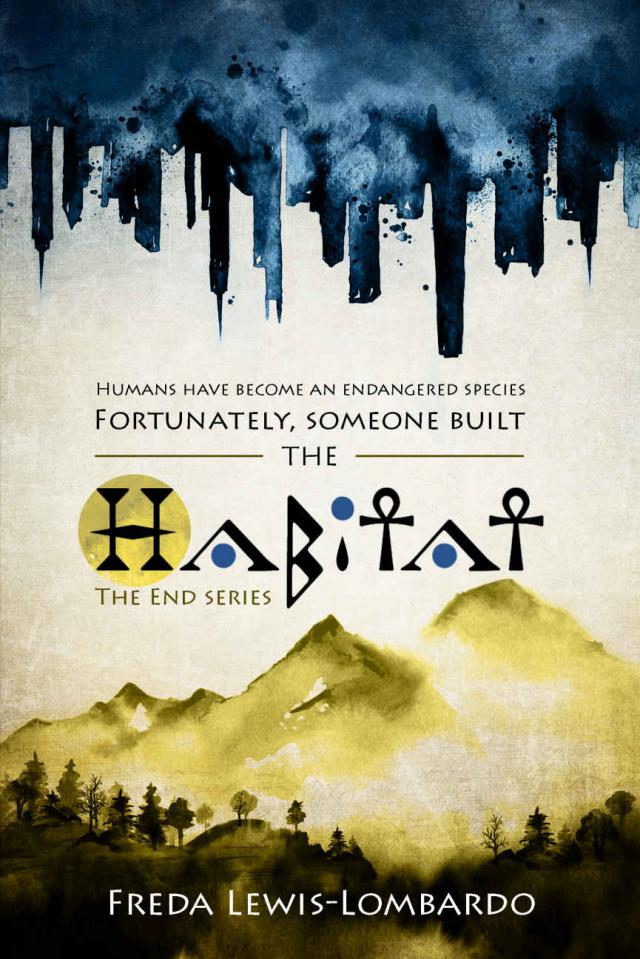
part #1 of The End Series


“Why are you moving his belongings? Won’t he come back?”
“I don’t have those answers, I’m following orders, but don’t worry. The hospital will take care of him.”
I rarely visited my Dad at work. He was always busy, and interruptions prevented him from finishing on time, but I needed to check on Mr. Hap.
I arrived at the hospital entrance and walked past the visitors’ desk. My friend, Wynn, was volunteering there. She waved and gave me the you-don’t-need-to-sign-in-look. I took the elevator to the third floor, where Dad was most likely working.
As the doors of the elevator opened, I ran into my father.
“Hey, you. What are you doing here? I was on my way home early tonight, for a change.” He stepped into the elevator, and the doors closed. I stepped forward and stopped them with an upraised hand.
“Dad, we need to talk,” I said.
“Junior, are you sick?” He clutched my elbow and looked me over from head to toe for an ailment or injury that brought me to the hospital. He had a worried parent-look on his face that made me love him.
“No, Dad. I’m fine. I need to talk to you. Can we go to your office?”
He let go of me and paused. “I would rather not be late for dinner. Your mother gets vexed when we aren’t on time.”
I wanted to say something impolite, but those words weren’t permitted in public—or in our home. So instead, I said, “Okay, we’ll tell her you had an emergency and had to work over your normal time.”
“Ellis, honey, I understand your mother can be demanding, but lying is wrong. She wants our life to be structured for our well-being. Lies are born out of fear.”
“You think so, Dad? I’d rather lie to her than get chewed out because the cauliflower-rhubarb-dirt casserole has gotten a little cold. Believe me, Dad, it won’t taste any better hot. What makes more sense? Lying to keep the peace or having a household war because we were five minutes late?” I took a breath. I was getting loud and angry with him because of my concern for Mr. Hap. “Look, I’m sorry. That’s a subject for another time. Please…it will be quick, I promise.”
He paused again. He was wondering how long these five minutes might take and if those five minutes would send Mom into meltdown mode, with or without a lie. I put my hand on his shoulder and gave it a squeeze accompanied by a smile. If I could wave a magic wand to make Mom more patient and less—whatever the word was for her, I’d do it. In a perfect world, people didn’t fear dinner might be on the table for a whole thirty seconds before eating.
“Okay, Ell,” he said with a furrowed brow.
We walked into his office. I sat behind his desk the way I always had since I was a child. Years ago, he let me pretend to be the doctor, and he pretended to be the patient. He loved to tell the story of when I was four. I sat in his chair with a clipboard and a pencil. He told me his symptoms, and I took his stethoscope to listen to his chest and back. I placed my hand on his head to check for fever and made him open his mouth to say “ah.” After the exam, I gave him little white mints from his candy dish and said they were medicine. My diagnoses varied. Sometimes it was “sweet tummy” caused by eating too many sweets. Sometimes, he had “veggie-itus” caused by pretending to eat his vegetables when he actually slid them into his napkin. The funniest diagnosis was “the snots” caused by jumping into mud puddles. He roared with laughter at that diagnosis, so I sang, “Daddy has the snots, Daddy has the snots,”—much to the displeasure of my mother.
“Dad, where is Mr. Hap? I rode past his house, and officials were cleaning it out. They said he was here. What happened?”
“Oh, Junior. I’m sorry you found out about Mr. Parsons in that way. I was telling you tonight. You were correct; he was suffering from a memory issue. He is undergoing tests to see if something is causing his brain to malfunction.”
“You mean a tumor?” I asked.
“That’s one possible cause, but I can’t be sure until the tests are completed.”
“If he’s only having tests, why are they moving his things from his house?”
“I’m not aware of his belongings being moved. I’ll check that out tomorrow, but I don’t want you to worry. He needs care.”
“The moving man used those same words. I want to see him, Dad.”
“You can’t.”
“Why?” I asked impatiently and, to my horror, with the voice of my mother.
“Ellis, Mr. Parsons isn’t himself at the moment. He’s having issues which prevent visiting.”
“A minute.”
“I’m sorry. If I could guarantee your safety, I’d allow it, but he is in quarantine until diagnosed. It is possible he might have something contagious. We can’t risk anyone having contact with him.”
“This makes no sense. He was fine last week…almost. I understand you want to be careful, but I’m sure he is scared and confused. I want him to see a friend.”
“No, Ellis.” My father seldom spoke in a harsh manner. He turned from me and picked up his briefcase placed in the chair earlier.
“What’s on your neck? What happened to you? Are you okay?” I reached to touch a bandage on his neck.
“No, don’t touch it,” he said, jerking away from me.
“Mr. Hap did this?” I asked.
He paused. His hesitation was confirmation my old friend had done something. “His physical condition is stable, but he is confused. He fought us when we put him to bed. Such aggression is typical of patients with his symptoms, but I can’t diagnose him without the test results. I didn’t want you to learn how drastically his health deteriorated because I believed you might try to assume responsibility for this,” he said, pointing to his neck. “I’ll not risk your safety by allowing you to visit him while he’s still aggressive. Please try to understand. Mr. Parsons was fortunate you recognized his condition otherwise, he might have hurt himself or someone else.”
“I don’t feel better about it, Dad.”
“I’m sorry, Junior. He won’t get well without treatment. Now, you and I need to get home before your mother starts throwing things and we both need bandages. Let’s enjoy a nice dinner. I promise to tell you when it’s safe to visit your pal.”
I allowed him to lead me to the elevators. Along the way, I watched the staff around me, and they watched us with stares that made me question the details of Mr. Hap’s condition. My dad thought we were on our way home to battle with my angry mother and a crap casserole, but I sensed the real battle lay ahead of us and would begin somewhere within this hospital.
CHAPTER 6
Mirrored glasses placed in key locations will monitor humans. Designing the Habitat to feel realistic for the test subjects while enabling research teams unobtrusive observation will be the challenge. Underground will serve as the center of operations for the large support staff maintaining the Habitat research facility and will provide many services needed for human survival. The observation galleries will act as the backstage of the Habitat and not be accessible nor made known to the humans. This design will function as an enclosure without appearing restrictive. Humans will be oblivious to being watched, studied, and contained.
—Reece Briggs, Architect,
Classified Doomsday Project Horizon
August 2016
FIELD TRIP
THE ENTIRE GROUP was excited. Our enthusiasm for visiting the Habitat was contagious. Even Professor Frost was lighthearted. We arrived early to school for the first day of travel. With human makeovers completed and mandatory documents identifying us with new names, we boarded the bus. Glairn’s not-so-secret admirer, Meziem, now named George Washington, tried to convince the professor being the first president of America posed no risk since there existed little chance of a human encounter. After our no-nonsense teacher renamed George Washington to Jim Sanders, we left. Most everyone changed his or her appearance to some degree. Glairn now had blue eyes. I chose the same. Did our choosing alike confirm we were compatible?
Our school campus was three hundred miles from the center of the Habitat. We first traveled to the Habitat Transit Line Station. At the station, three methods of rail travel were available. Our group would transfer from our bus to a passenger pod designed to take many travelers at one time. Some workers inside the Habitat used vehicle pods to transport their cars. The third type was a storage pod used to carry large quantities of equipment and supplies to the Habitat. This method of transportation allowed us to travel the additional 150 miles underground at a speed of over two hundred miles per hour. At the end of each day, we would return in the same manner and be taken to our hotel outside of the Habitat not far from the Transit Station.
Humans believed the government built this town in case of an apocalyptic event. If a human escaped the above ground enclosure of Horizon, 150 miles of rugged, mountainous terrain surrounded by barren desert-like land lay between the town and the outer wall. Even if they survived that trek undetected, a thirty-foot wall was the next obstacle to their freedom. Because no exit gates existed, a human would have to scale the impenetrable walls made of smooth stone with no grooves. No living creature could touch this wall without severe injury because it conducted an electrical current via a mineral from our planet layered beneath its foundation. A similar wall surrounded the outer perimeter of Horizon. The humans thought it protected them from dangers outside the town. The design for the Habitat was perfect.
Soon, we were on our way, and students discussed the what-if scenarios of meeting humans. Others slept, while a few memorized their fake character profiles last minute in case a what-if became a reality. Frankly, most of us were hoping for an accidental encounter. Few Atum had met or interacted with humans. Many citizens demanded the Habitat become a reality series created for entertainment. Humans, in general, were a source of curiosity for our people.
I was looking over my notes when Glairn moved into the seat beside me. Why didn’t I sleep? She wanted to discuss the coupling results. I wasn’t ready to have that conversation, and the reason for it was my fault. No matter the other choices, I couldn’t see myself happy with her for the rest of my life. I understood the tests we took were scientific, but I wasn’t convinced an algorithm could know my heart. My father told me true love wasn’t determined by science and testing. True feelings within the heart couldn’t be measured, and love shouldn’t be based on chemicals or brain waves. I wanted to find the one person designed for no one else but me. Glairn wasn’t it, and I was positive I could never make her happy. I faked exhaustion saying I needed a nap before arriving at the Habitat Interior Station. She grabbed her bag and left, making as much noise as possible, without concern for disturbing anyone else. Her spoiled and selfish ways could be someone else’s joy but not mine.
I closed my eyes to fake sleep and imagined what adventure might lie in wait for me behind the walls of the Habitat. I had an inexplicable sensation as if I were being pulled by one of those Earth magnets causing me to cling instantly to something inside that town.
I wondered how many accidental meetings had occurred. The law of averages suggested at least one mishap. Our trip coordinators told us this was impossible if we followed the rules. Fortunately, rules often got broken when I was around.
“Ellis, remember why we are here,” said Ana.
I shot her a glance with wide eyes and nodded my head. Last night, after dinner, we discussed the mysterious way Mr. Hap left his home. I told her the conversation we had and how his sweet stories had changed. I also told her what happened at the hospital with my father. During our conversation, she said something that gave me chills. ‘It sounds as if someone is trying to erase not only Mr. Hap’s memories but erase him as well.’ Why should anyone want to erase people? Didn’t the war cause enough loss? Release therapy shouldn’t rewrite feelings. Something, however, changed Mr. Hap’s stories. Ana was adamant that information inside the Archives could solve this mysterious behavior. Her logical mind was perfect for solving mysteries. Ana was Sherlock Holmes, ready to uncover the truth, and I was Watson, supporter, and protector. She loved a mission.
“Hello, girls. Ana, you aren’t scheduled for duty today,” said Mrs. Croft, stepping away to get her clipboard.
As she walked back to the desk, Ana said, “No, we’re here to get prepared for our Jane Austen book club in the fall.”
“Oh, I love her work,” she said, shuffling papers with no real purpose than to look busy. “You can find what you need; I have so much work to do. Besides, you are familiar with everything, so I’ll let you two get going. Have fun.”
As we walked away, Ana gestured for me to glance back toward the jovial Mrs. Croft. She pushed away papers and pulled what appeared to be an old magazine from under the counter after looking for anyone nearby.
“What is she doing?” I asked.
“It’s called People Magazine. They were entertainment documents from the antiquities’ department. They have pictures and stories describing the lives of celebrities from long ago. She isn’t supposed to have them out of the case. She’s in love with an actor named George Clooney.”
I snuck another peek at the woman who was nibbling on cookies and engrossed in whichever story gave her such delight.
“Ellis, let’s stay alert,” she said, as if we might be spies. “There aren’t many people here today; it’s slowest during this time, so Mrs. Croft risks reading her magazines. We don’t we want anyone to see us, so we will go to the second floor and browse in the fiction department for books.”
“Why can’t anyone see us looking for books?” I asked. She didn’t respond. We made our way up the staircase. Everywhere stood heaving bookshelves with volumes as old as three hundred years. Ana said how lucky we were government officials included a book collection in the bunker for a purpose such as this.
I spent a few minutes looking at different books. The halls were quiet and spooky with no others walking around, and I started to say this to Ana until she motioned for me to follow her.
“Where?” I asked.
“You’re the lookout. Stand at the door,” she said.
“What? I’m sorry, I’m the what? Ana, this section is restricted. We can’t—it’s off-limits to us.”
This part of the Archives was only accessible with a particular identification badge that also acted as a key card. Ana handed me a stack of books she gathered. I watched as she pulled one of those badges from her pocket with the name Louisa Croft printed in bold letters across it.
“Ana!” I whisper-shouted, “When did you get her badge?”
“Slick, huh?” She smiled. “I was hoping she’d be preoccupied with a magazine. Let’s hope our luck continues.”
“Wait, what do you mean?”
With a mischievous smile, Ana said, “I read once desperate times call for desperate measures. I can’t imagine a circumstance more desperate than a massive government cover-up forcing us to choose between being sent away or forgetting the details of our lives. Can you?”
I stared dumbfounded. “Who are you, and what have you done to Ana?” This was my fault. By telling her the story of Mr. Hap, I poured fuel onto the fiery rage she had been struggling with for the last few months and unknowingly provided a direction for all of that anger. We needed a lie, if we were caught.
Ana swiped the card. A heavy metallic clunk sounded. The door’s lock had been turned. I’m sure I heard her release a massive exhale. “Thank goodness.”
“What? You weren’t sure it would work?” I was amazed she took such a crazy chance.
“Nope,” she said bluntly, “I didn’t know if she had clearance.” She pushed, and the door flew open.
The books I carried as a ruse hurled into the air, and I hit the floor with an enormous thud.
“Ja mau…I…I am so sorry,” he began as he bent over to pick up books. He stopped abruptly and gave me his hand to help me stand. “I…I didn’t see you. Are you…harmed, I…I mean hurt, are you hurt?”
I looked up at his face, my muscles went weak, and I slumped back to the floor. He dropped the books and used both hands to help me. No doubt, my face turned red, “I’m sorry, I…am fine,” so eloquent, “are you all right?”
“Yes,” he said with a laugh. “You’re sure you aren’t hurt?” he asked again.
I realized I was staring, mouth open, looking ridiculous. What was my lie? I forgot my lie. Since my trance had taken away my ability to speak beyond two-syllable words, this man leaned closer as if to examine me for a concussion-like state and put his hand under my elbow to lead me to a nearby chair. Without words, I followed his lead and sat.
“Ellis,” said Ana.
Her voice brought me back to reality. A flush of heat from the top of my head tore through my body down to my toes.
“Can I get help for you, Ellis?” he asked.
His voice was so calming I wanted to close my eyes and melt into it. His words poured over me like a pitcher of warm bath water. He said my name. The sound was…velvety. Ellissss. I realized I had, for an unknown amount of time, been staring with a blank expression in a daydream state. Was it one minute? Was it five minutes?
“I’m…not hurt.” Great, now one-syllable words. I paused again in this slow-motion moment. “I had the breath knocked out of me,” I said finally.
“Thank you for your help,” Ana said to him. “Ellis, we will be late.” She pulled at my arm showing we had to leave.
“Late?” I said stupidly. I stood. “Oh, late, yes, late for the…thing. Right, well, I…thank you again and sorry…again…” Snap out of it. Think…think.
“Bram,” he said. “My friends call me Bram.” I wasn’t asking his name; I was trying to think of words to say.
“Bram,” I repeated. I am an idiot. Ana pulled me toward downstairs.
“Wait,” he said. Oh no, this is it, we are in trouble. As he walked closer, he smiled, and I waited for my chest to explode. “I love her.”
“What…I’m sorry, what?”
“Jane Austen,” he handed me one of the books I carried in my arms when we collided. “She was a great writer. My mother made sure I read her books.”