

Jackal, page 2
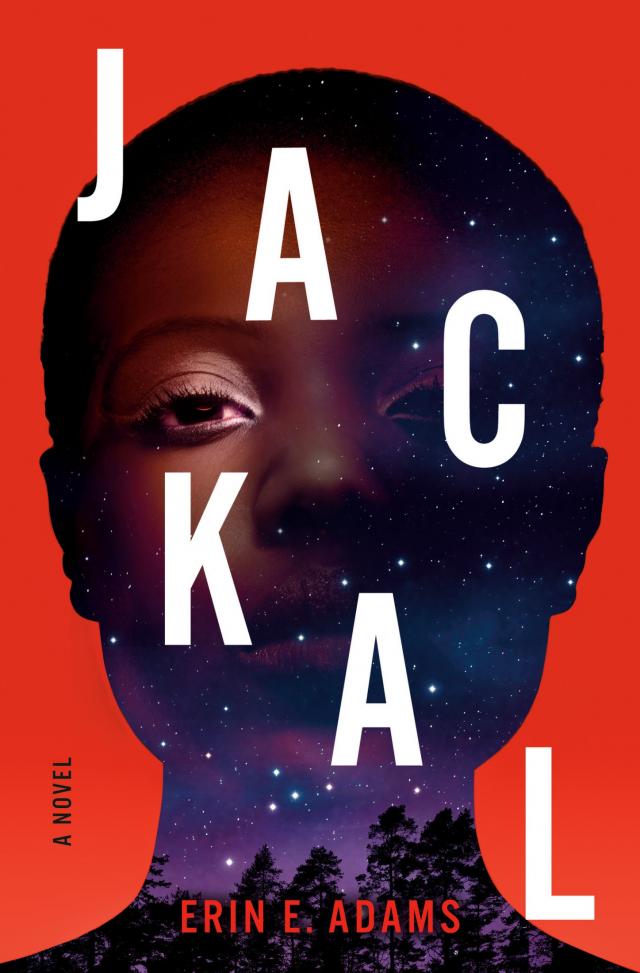


“How does it feel to be home?” Mel asks.
“My home is dead.” The phone is warm on my ear by the time this unprompted observation spills out of me.
“Liz,” she replies. “Stop being so damn dramatic. It’s one weekend.”
“Fine.”
Let it be known, I buried this place. When I look at a map of the United States, my eyes drift over all 309 miles of a state that isn’t quite the heartland or the coast. As I stand in this Appalachian intercostal of America, I find myself in a liminal expanse. A cruel riddle.
“Can I get a weekend for my wedding?”
I see the conductor waving at me. This is it. Last chance, Liz.
I knew Melissa Parker was a good person when she shielded me from spitballs in the cafeteria in middle school. I’d stumbled into some quintessential ’90s bullying. My sin? Being the only Black kid who wasn’t “Black.” One of three in my entire school, I was the one who didn’t fit in. I didn’t sound like them or listen to rap or have any rhythm. To my white classmates, these were compulsory to the definition, leaving me at the mercy of this shameful smattering of stereotypes. Cue the spitballs. The other Black kids were no help. I don’t blame them; they were swimming for their own social lives and I was tainted water. Branded an Oreo, through and through. Whiteness influenced my speech, mannerisms, and pop-culture preferences. Mel and I hadn’t said more than a few words to each other before then, but when she saw my matching lunch of a soft pretzel and fries, she knew we were meant to be. That’s what she says. We both know it was because she herself was a white girl who didn’t fit in. She wasn’t rich, her blond wasn’t from a box, and she wasn’t interested in power over kindness.
“You get exactly forty-eight hours,” I say before yelling to the conductor, “Wait!” A quick hoist of my bag, a sprint down the aisle, and I’m off the train. It lets out directly onto the tracks. “My God, this place is remote,” I say to Mel.
“That’s just the station.”
The train pulls away. The landscape mounts. The flat coast is a distant memory now. Eastern hemlock trees crowd in, bringing darkness with their density despite the dwindling daylight. I’m in the wild. Breathe. I name the things around me:
Phone.
Gravel.
Trees.
“Garrett just sent me a picture of the view at the venue. It’s stunning,” Mel says. I can hear the tinny sound of her mixing something in her kitchen. Baking. Probably her cake. Mel got the idea to get married in January. She only seriously started planning two months ago. This ceremony is the definition of haphazard, last-minute, and thrown together with a hope and a prayer.
“Glad you finally decided on a place the day before the ceremony,” I tease. “Where is it?”
“We’re using Nick’s place?” The upward inflection is there to make sure I’m okay. I’m not the biggest fan of her brother, Nick.
“Like, his house?”
“His land,” she clarifies. “It’s…picturesque?”
Saliva pushes past the wine on my tongue. I don’t reply. I’m not gonna say it until she does.
“It’s…the woods. We’re in the woods, okay?” This double insistence tells me all I need to know. “Elizabeth Rocher. Please tell me you’re gonna be cool.”
“Wh—what do you mean?” I almost fool myself with the validity of that question.
“I don’t know—we were going to grab the ballroom at the Holiday Inn, but they’re closed for the weekend because a pipe burst. We were gonna do it in the yard, but Nick offered. It’s beautiful, Liz. Just beautiful—”
“I understand, but I—”
“Please don’t tell me you’re gonna run?” Her voice gets tight with emotion.
I choke back my laugh. Too late.
“I didn’t mean that,” Mel backtracks.
“Yes, you did.” Mel is the only reason I survived Johnstown. I know what this wedding means to her. “You are so lucky—” I start.
“Thank you!”
“So lucky,” I repeat as I walk toward the station.
Because everything here is on a hill, the station itself is a ways from the tracks, down two flights of suspiciously steep steps. I stop at the top.
Before I confess something to Mel that she already knows, I look over my shoulder, checking that I’m alone. “It’s, umm…it’s just me. Okay?”
“I know.” Mel brightens her voice, instantly adjusting to the pain in mine. “I don’t want that asshole here. I want you.” After a beat she adds, “I need you here. Believe me.” As much as she can read me, I can read her. Something’s wrong.
“What’s up—”
Snap!
A loud sound cuts through the air. It’s something distinctly natural, like the breaking of a massive branch or a tree. I whirl around, nearly dropping my phone.
“Liz, you still there?”
I scan the train tracks. In the corridor between mountains, I see forest on either side. The sound doesn’t return. It must have been a branch on the tracks. Or my imagination. It wouldn’t be the first time my mind has birthed something out of fear. Or boredom.
“Yeah. I’m—I’m here, Mel.”
“All right. I’ll see you tomorrow.”
I hang up. We don’t need to say hello and we’ve never said goodbye. This conversation is an extension of the one started in middle school when we’d tie up the internet connection talking about boys and the depth of our feelings. No matter what, we can pick back up without ever missing a beat.
I descend the steps to the station. There is a kiosk at one end and bathrooms at the other. Straight ahead of me is a set of doors leading to the street. A few passengers go through them to meet their rides. The conductor climbs the stairs behind me and locks the exit to the tracks. Now there’s only one way out. A bottleneck.
Sweat pools in the kitchen of my hair. I push my nails under the back of my wig and dig through my short, thick curls. My fingers find the hollow where my skull joins my spine. I massage it. The bruise that was once there is gone, but the tightness and tenderness remain. Instead of giving me any release, my muscles tense and wetness trickles down the back of my neck. I give my scalp one last good scratch and fix my wig.
I sit on the metal bench near the door of the station and call a cab. If I could stand being in an enclosed space with my mother for more than five minutes, I would have had her pick me up. Another reason I’ve spent so many years away. I need protection from every aspect of “home.”
I’m here for Mel’s wedding and to answer a question:
If I can’t trust myself, then who?
One thing any breakup does is make you doubt every part of yourself. A bad breakup? A nasty one? The first few weeks I mismatched my shoes. The second month I skipped meals because I couldn’t tell when I was hungry. After almost fumbling a major account, I had to do something. I was planning to cancel on Mel. But Mel, this wedding, and this town are the only certainties I have left in my life. The last person I trusted was Mel. The last right choice I made, beyond any doubt, was leaving this town. I’m here to confirm that. This weekend is going to be uncomfortable. Awkward. Painful. And it should be. I can’t wait. Because once I remember how to trust myself, I will start to mend.
Waiting for the car, using the pad of my thumb, I search the underside of my left wrist. There, I find a thick, shiny melanin relic of my childhood trauma in the woods. The scar blanches under the pressure of my fingers. It was roughly made and badly healed. I search it for the uncomfortable spot where the nerves go awry. Depending on the day, it’s either too sensitive or strikingly numb. I prefer numb.
I look out. On the wall across from me is a massive topographic map of Johnstown. Another bottleneck. Built in the bottom of a valley, layers of mountains jut out at the edges and everything spirals open from the Conemaugh River at its center. When I first saw this map in fourth grade, I said, Whose idea was it to build a town in a ditch? I can already hear my therapist wanting me to unpack that statement. What has this town ever done to me?
It’s a wonder it didn’t flood immediately. It did eventually. Three times. When we visited the Flood Museum in elementary school—because it was a disaster, of course there’s a museum—I don’t remember who, but someone (not me) asked: Where are all the Black people? My teacher, Mrs. Kohler, replied, Look at the pictures, sweetie. They weren’t here yet. Like every small-town citizen in America, my teacher believed Black people were an alien anomaly in white suburban perfection. She never questioned where the photographer focused their lens or the history of this town. I should have. I didn’t stay long enough to start.
The sun dips in the sky, sending the first traces of orange rays through the station window. For a sunset, it’s bright and rich. I can’t help but trail my fingers in the amber of it. If there’s one thing you don’t get in the city, it’s this: unblemished nature. I push the door to the street open and step outside.
The light but distinct smell of stagnant water hits my nose. Water and something else. Something rotten. The scent isn’t coming from the river. It’s seeping off the buildings and into the air. No matter how long ago the floodwaters receded, in some places, the smell of river water and decay never left.
This station must be older than I thought. I turn back and look up at the walls. There, at least fourteen feet above my head, sits a plain brass bar. Some buildings have the muddy lines, others have these ominous indicators. Either way, they mark where the waters reached in 1889, 1936, and 1977. The 1889 tragedy is the only one known by name. It was so devastating people here simply call it “the flood.” Water got up to sixty feet in some places, more than four times the height of the bar above me. Thinking of water that deep reminds me I don’t know how to swim. Kind of, but not really. I know how to not-drown, does that count?
I don’t need my grade school history unit to know that this town was once a true industrial center. I can tell by the brick buildings. They’re sturdy even in their decay. The business of removing things from the earth didn’t work out in the long run. Still, this town persisted. New, flimsy-looking developments are piecemealed between abandoned properties. While the new buildings are bright white with modernity, the weight of this place won’t be lost so easily. Just like the people here, it will take much more to wash it away.
Where the town stops, the mountains and the woods begin. Wild, enveloping, and vast, the forest is thick enough to inspire campfire stories of monsters and mayhem. I’d forgotten how much wild there is. Trees surround the town and carry on into the distance as far as I can see. Looking out, my heart beats uncomfortably in my chest.
Something makes the small of my back prickle. Attention. Someone’s watching me. I turn around and see that the station is empty. I look over to the parking lot. Immediately, I find a pair of eyes burrowing into me. I push back with my stare. People in this town smile and nod and say hello. I don’t. I meet the gaze with an unspoken challenge. What the fuck are you looking at? That usually works. Not this time.
The eyes staring at me belong to a woman. Nondescript in her Blackness and her clothing. Jeans. Short salt-and-pepper hair. A worn gray T-shirt. No jacket. No bags. She’s in the middle of the parking lot, perched on the base of a streetlamp, with seemingly no destination in mind. She isn’t even turned toward the town. Her body faces the trees, but she’s looking at me. Strangely comfortable, like I’ve had the audacity to wander into her living room. Her eyes are bright and hollow at the same time. Like a drowning person, her stare can’t help but pull me in. This woman needs something and I am not about to give it to her. As I turn away, I see her stand and start making a beeline toward me.
“Ma’am?” Her voice is loud and harsh. She picks up her pace and holds a flyer out in front of her. What was once white and crisp is now folded and yellowed. Someone clearly threw this one away and she fished it out of the trash.
I turn away. “No, thank you.”
“Just a minute of your time. I need your help—” She launches into some pitch. I try to tune her out, but her eyes draw me in. I don’t listen to her words, but she has my focus now. I’m judging her before I realize it. I make a catalogue of her appearance: Her clothes are dirty, she is unkempt, there’s dirt under her uneven nails, her shoes are worn. It felt like I walked into her living room, because I did. She lives outside this station. The shame that wells up in me is unavoidable. I know I’m supposed to think kindly about homelessness. I know what I should say and what I should do. Smile. Listen. But all I want to do is scream at this woman to get away from me. It’s not her fault. It’s this place. This is what it can do to a person. A city can do the same, but in a city I won’t be mistaken for this woman. I’ve been mistaken for nannies, retail employees, any Black woman other than myself. Here, the make of my bag, the quality of my clothes, the timbre of my voice, the style of my hair, none of that matters. My skin speaks first, and it is too close to this woman’s for comfort.
“No, thank you,” I say in a huff to end our one-sided conversation.
She cuts her eyes at me. “Well, aren’t you bitter?”
Looks like I’m not the only one judging. “Excuse me?”
“Nothing good comes from being hateful and hollow.”
“I don’t—I’m not…” I start, but stop myself. Do I hate this woman? I don’t want to, but I can’t deny the feeling.
She steps closer to me, and I stay still. “But if you’re angry?” She raises an eyebrow. “That’s useful.” She offers the flyer again.
I frown back at her. “I’m not angry.” The paper flutters between us. It’s something homemade and sad. I grab it.
A car horn honks. It’s my cab. Thank God.
“Coming!” I wave. I fold the flyer in my hand and scan for a trash can. Of course, there aren’t any. I shove it into the narrow back pocket of my pants. My suitcase rumbles over the pavement as I race toward the car. Before I get in, I glance back at the woman and see her hunched figure retreating across the parking lot. Like before, her focus is on the trees, not the town.
I get in the car. The driver loads my bag in the back. He pulls away and we head up into the hills. My hands fidget, looking for a task. I check my phone. No service. No access to work. No access to me. I look out my window and breathe and name:
Purse.
Phone.
Wrist.
Tree.
Tree.
Tree.
TWO
I stand in the doorway to my childhood home. Before I ring the bell, I smile the way my mother likes, with my top teeth only. She’ll think that I’ve maintained her investment in my braces and still wear my retainer. I don’t. My bottom teeth are far from the crowded mess they once were, but they aren’t perfect. That’s the problem.
Knock knock.
My mother opens the door. I brace for questions, tears, delight. Without saying a word, my mother reaches out and grabs the wig off my head.
“Why did you cut all of your hair off? You look like a boy.”
Here we go. “I needed a change,” I say as I drag my bag up the front steps and into the mudroom. My mother frowns as I strain to lift my suitcase, but she doesn’t make a move to help. I wouldn’t let her anyway.
“Why is your bag so heavy?”
“It’s a wedding. I had to bring…stuff.” My bridesmaid’s dress, sweats for the day of, and an outfit for the train ride home. Supplies. I meant it. Forty-eight hours. No more, no less.
I roll my bag into the kitchen and attempt to sit on one of the stools before she can comment about the size of my hips, but she stops me.
“Do not sit yet. Let me get a good look at you.” Like any well-educated Haitian, my mother pronounces every letter of her English. She paid dearly to learn those words, and she’s going to make sure you hear all of them.
She looks at me.
She saw me six months ago. Christmas. Right before things got bad. She has seen me since I’ve left town, just not in this house.
She frowns.
My mother, Marie, is a perfectionist. This made her an excellent doctor but a hard person to live with. Everyone in front of her is a patient who needs to be fixed. If I didn’t fit the textbook definition of success, I was a failure: An A-minus was no better than an F, a size four was a slippery slope toward morbid obesity, and single after thirty meant I was doomed to die alone. I will say this: Being over thirty and being away for so long, I’m starting to figure her out. I know she holds me to these standards because someone did the same for her. Society and the root of my last name, my father.
My mother found a Black man with a French last name, Rocher. Only he had no real connection to the country or its colonies. He held her to impossible standards because, as a Black female physician, the woman was a walking miracle. She subverted expectations and defied inherent bias just by existing. Constantly moving the finish line, he used her need for perfection to guarantee she’d never attain it. My father told me to be independent, smart, and self-sufficient because he loved me. But when it came to the woman he married, the idea of her earning more than him grated away at his core until he left. Step by step, he faded into the background of our lives. In the end, he resented my mother. Nothing kills a relationship faster than that. I know that now.


