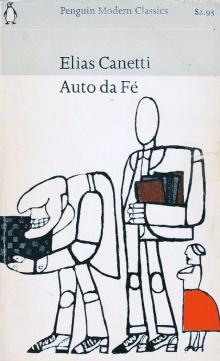
The Torch in my Ear, page 33


I would run back and forth in this state of mind for a while, dashing faster and faster along the same route. In the end, I would sit down in some tavern, wherever I happened to find myself. My notebook and pencil were at hand. I began to record; whatever had happened in my movements was turned into written words.
How is one to describe this state of incessant recording? First, there was no coherence. There were thousands of things. An articulation, something that could be called the beginning of an order, started with a division into figures. The activity, to which I mainly devoted myself, was an angry attempt to ignore myself, namely by metamorphosis. I sketched characters who had their own way of seeing, who could no longer cast about promiscuously, but could only feel and think along certain channels. Some of these figures recurred frequently, while others vanished rather early. I was reluctant to give them names; they weren’t like individuals one knew: each was invented in terms of his main preoccupation, the very thing that kept driving and driving him, away from the others. Each was to have a completely personal view of things, the dominant feature of his world, not to be likened to anything else. It was important that everything was kept in terms of that view. The rigor with which everything else was excluded from each figure’s world may have been the most important aspect. It was a strand that I pulled out of the tangle. I wanted the strand to be pure and unforgettable. It had to lodge in people’s minds like a Don Quixote. The strand should think and say things that no one else could have thought or said. It should express some aspect of the world so thoroughly that the world would be poorer without that strand, poorer, but also more mendacious.
One of these characters was the Man of Truth, who savored to the full the fortune and misfortune of truth. However, each of them was concerned with a specific kind of truth: the truth of self-harmony. A few of these figures, not many, sank away, and eight survived, fascinating me for a year, keeping me in motion. Each character was marked with a capital letter, the initial letter of his preoccupation or dominant feature. W was for Wahrheitsmensch [Man of Truth], whom I have already mentioned. Ph was the Phantast: he wanted to get away from the earth, off into outer space; his mind was devoted to finding a way; his intense lust for discovery was permeated with a dislike for everything to be seen around him here. His desire for new and incredible things was nourished by his disgust with earthly things. There was R, the Religious Fanatic, and S, the Sammler [Collector]. There was the Verschwender [Spendthrift] and the Tod-Feind [Enemy of Death]. There was Sch, the Schauspieler [Actor], who could live only in rapid metamorphoses, and B, the Büchermensch [Book Man].
As soon as such initial letters were jotted down on one side at the top of the page, I felt narrowed down and I furiously zoomed off in this single direction. The endless mass of things filling me was sorted out, broken down. I was after (I have already used this word) crystals, which I wanted to detach from this wild chaos. I had overcome none, absolutely none, of the things that had been filling me with horror and dreadful forebodings since Berlin. What could the outcome be if not dreadful conflagration? I felt how pitiless life was: everything racing by, nothing really dealing with anything else. It was obvious not only that no one understood anyone else, but also that no one wanted to understand anyone else.
I tried to help myself by forming strands, a few individual features, which I tied to human beings; this brought the beginning of perspicuity into the mass of experiences. I wrote now about one character, now about another, with no discernible rule, depending on whatever urge came over me; sometimes, I even worked on two different strands on the same day, but rigidly observed their borders, which were never crossed.
The linearity of the figures, each one’s limitation to himself, the impetus driving them in one single direction—live one-man rockets—their incessant reactions to a changing environment, the language they used, each in his unmistakable way—intelligible, but unlike anyone else’s language—so that they consisted purely of a border and, within this border, of daring, surprising thoughts expressed in that very language. Nothing general I can say about them can give you a conclusive idea of them. An entire year was filled with sketches of these eight, it was the richest, the most unbridled year of my life. I felt as if I were struggling with a Comédie Humaine; and since the characters were intensified to an utmost extreme and closed off against one another, I called it a Human Comedy of Madmen.
When I wrote at home (I didn’t write only in taverns), I had Steinhof before my eyes, the pavilions of lunatics. I thought of these inmates and linked them to my characters. The wall around Steinhof became the wall of my project. I fixed on the pavilion that I saw most clearly, and I imagined a ward in which my characters would ultimately be together. None of them was meant to die in the end. During the year of this sketching, I developed more and more respect for the people who had moved so far away from others as to be considered insane, and I didn’t have the heart to kill a single one of my characters. None had evolved far enough for me to foresee his end. But I did exclude their dying in the end, and I saw them together in the pavilion ward, which I had saved for them. Their experiences, which I viewed as precious and unique, were to be preserved there. The ending I had in mind was that they would talk to one another. In their individual isolation, they would find sentences for one another, and these peculiar sentences would have a tremendous meaning. It struck me as demeaning them to think of their recovering. None of them was to find his way back to the triviality of everyday life. Any adjustment to us would be tantamount to diminishing them; they were too precious for this because of their unique experiences. On the other hand, their reactions to one another struck me as sublimely, inexhaustibly valuable. If the speakers of these individual languages had anything to say to one another, anything meaningful for them, then there was still hope for us ordinary people, who lacked the dignity of madness.
That was the utopian aspect of my enterprise, and even though I had the town of Steinhof before me in the flesh, as it were, this utopian aspect stayed utterly remote in time. The figures were only just emerging, and their lives were so manifold that anything was possible, any twist of destiny. However, I excluded an irrevocable end, and it was as if I had given the figure most urgent for me, the Enemy of Death, a power over the lives of the others. Whatever was to become of them, they would remain alive. I would look over into their pavilion from my window; now one figure, now another, would turn up at his barred window and signal to me.
The Taming
I frequented a small coffeehouse below in Hacking, right by the bridge across the Vienna River; the place stayed open very late. Once, deep into the night, I noticed a young man. He was sitting with a group of people who didn’t really seem to fit in with him. He was tall and radiant, with very light blue eyes. He enjoyed drinking and talking. Something violent was happening at his table, with sudden vituperative outbursts that didn’t affect him. I recognized him from a picture. It was Albert Seel, a writer published by a Berlin house; he had been a prisoner of war in Russia and written a book about it. I hadn’t read the book; only the title had stuck in my mind. It contained the word Siberia. I was at the adjacent table and I unabashedly asked him from table to table whether he was Albert Seel, which he affirmed, still radiant and yet somewhat embarrassed. He invited me to join him and introduced me to his friends. I recall the names Mandi and Poldi; I’ve forgotten the rest. I introduced myself as a student, although I no longer was one, and a translator, eliciting howls of laughter from Seel’s buddies.
They observed me in a way in which I had never been observed before, as though they had great plans for me and were testing me to see whether I was the right man for their project. They were no intellectuals; their language was primitive, coarse, and vehement, and they justified themselves with every sentence as though I had criticized them. I didn’t know them at all; I didn’t have the foggiest notion who they were. The fact that they were with an author who was anything but famous inspired my confidence; ever since returning to Vienna several months earlier, I had not encountered any authors. I neither distrusted nor feared them, yet I noticed that they were unsure of themselves with me, and I was amazed at how greatly they valued physical strength. Seel did full justice to the wine in front of him and soon stopped reacting to my attempts at literary conversation.
“There’s a time and a place for everything,” he said, whisking my questions aside like annoying flies. “When I’m with my friends, I like to talk.” But perhaps it was a kind of tact on his part to avoid any literary dialogue, which his friends would have been incapable of following. Soon, I contented myself with listening to the others, who, I realized, were preoccupied with “heroic feats,” but I couldn’t ferret out exactly what they meant. Particularly Poldi, the biggest and strongest of all, liked to show how he had struck down someone or other with his tremendous hand. No one could hold his own against him. Mandi, the shortest one, had an apelike face, he looked incredibly agile and nimble, and he very graphically told about how he had recently managed to provoke the dogs of a villa. I didn’t know why he had to provoke these dogs and I was listening as innocently as a baby, when Poldi suddenly punched me in the chest with his paw and asked whether I knew the villa that they wanted to get into—it was, as it turned out, the home of the countess, the “goddamn mare” from the dairy. I thought I’d have some fun and went along with their conversation as though they were actually planning a burglary. I told them they had picked the wrong house. The “count and his family” had nothing worth stealing. I got a second, even more powerful punch in the chest, and Poldi said with ominous scorn: Just what had gotten into me? They wouldn’t break into the home of such people: why, everyone in Hacking knew them. They weren’t that stupid! Mandi loved to talk through his hat!
I realized my joke had gone awry, but not understanding the reason for Poldi’s annoyance, I kept quiet. The conversation went on, louder and louder, more and more vehement. This table, at which no more than five or six people besides myself were sitting, was the most animated table in the tavern. Normally, the place was quiet and lonesome: a few old pensioners, some couples, but no large group. This time, however, the place seemed unusually quiet, as if no one dared to make noise competing with our table. Herr Bieber, the proprietor, was behind the counter: I had a good view of him from my chair, and he seemed irritated. He usually had something to do and was always bustling around; but today, he held himself erect and kept staring at me. I even had the impression that he was discreetly winking at me, but I wasn’t sure.
The racket at our table grew more and more ominous. Poldi and Mandi began to argue and traded insults, ones that struck me as particularly filthy, even for these surroundings. Seel, as unswervingly radiant as ever, tried to mediate, pointing to me, as if their fight could leave me with a poor opinion of the group. But the result was that the two buried the hatchet and kept glaring hatefully at me. Seel said it was time to go home, the place was closing. But his friends did not get up. I did, however, and this was probably what he was aiming at. He was trying to shield me against his buddies, who were getting rougher and angrier. So I said goodnight. Something of my amazement at this utterly new kind of people must have been translated into my warm goodbye; for Poldi said: “We’re always here.” Mandi, who seemed a lot more cunning, added: “Come aroun’, we kin always use a student!”
I went over to the counter to pay my bill, and Herr Bieber received me with a low, sepulchral voice. I had never heard him speak so somberly, much less whisper. “For God’s sake, Herr Doktor, you better be careful with those guys, they’re tough customers. Don’t sit with them!” Afraid that they might suspect him of warning me, he grinned conspicuously, while whispering.
I went along with his secrecy and whispered: “Why, that man’s a writer, I know a book of his.”
Herr Bieber was flabbergasted. “He’s no writer,” he said. “He always comes here with those guys; he helps them.” There was something shivery about his words; he was really scared for me, but also for himself. The next day, when I was alone in the tavern and could speak in detail with him, he told me that my new acquaintances were a notorious gang of burglars. Each of them had served many prison terms. Mandi, who could climb like a cat, had just been released from jail; he had served time together with Poldi, but then they had been separated. They were all from the surrounding area. Herr Bieber would have liked to keep them out of his tavern, but that was too risky. When I asked him what they could do to me, since I wasn’t a house and they couldn’t steal anything from me but books, he gawked at me as if I were crazy: “Don’t you understand, Herr Doktor, they want to pick your brain, they want to find out what they can burglarize in other places. You didn’t tell them anything, did you?”
“But I don’t even know what they can burglarize in other places. I don’t know anyone around here.”
“Yes, but you live up where the villas are, on Hagenberggasse. Just watch out. Next time, one of them is gonna walk you all the way home and question you about every house. Who lives here? And who lives there? Don’t say anything, Herr Doktor, for God’s sake. Don’t say anything. Otherwise, it’ll be your fault if anything happens!”
I still didn’t really believe him. And a few evenings later, when I returned to the tavern, I sat down with an acquaintance of mine, an elderly painter, and pretended not to see the “gang,” who were sitting pretty far away, in the other corner. This time, they had come without Seel. Mandi wasn’t there either; I noticed only Poldi when he raised his hand and pointed to something. But something must have happened. No noise could be heard; things were quiet, and I felt that Herr Bieber had been wrong with his Cassandra cries: no one paid any attention to me, I wasn’t greeted or called over to the “gang’s” table. When Herr Bieber brought me my coffee, he said: “Today, you’re not staying till closing time, Herr Doktor. Today, you’re leaving early.” He sounded as if he knew that I had some special plans for the night. His supervision was irksome; but to have my peace and quiet, I did leave soon.
I had only taken a few steps when I felt that tremendous hand on my shoulder. “We’re going the same way,” said Poldi. He had followed me quickly.
“Do you live up there, too?”
“No, but I have to go the same way.”
No further explanation was forthcoming, and I didn’t care for the prospect of walking with him up the dark and narrow footpath, which was the only road to Hagenberggasse. But I let nothing on; I only asked: “Seel wasn’t around today? And Mandi wasn’t, either?”
What had I done! A gigantic cannonade burst forth. Poldi railed and ranted against Mandi, and a torrent of stories about this “eageristic” person (he meant “egotistic”) poured over me. Poldi never wanted to lay eyes on him again. He had never been able to stand Mandi; he’d prefer Seel any day, even though you never knew what he was all about. Just what kind of a book was it that Seel had written?
It was about being a prisoner of war, I said, about the people he had known when he was a POW in Siberia.
“Siberia?” was the derisive response, and Poldi slammed me on the back. “He’s never been to Siberia. He’s been locked up, all right. But not in Siberia.”
“Yes, he was, a while back, when he was very young.”
“When he was a little boy, you mean?”
In short, he refused to accept that Seel had been locked up as a POW and not as a criminal. Poldi explained that Seel always lied. None of them ever believed a word he said; he always kept making up things. However, he had never told them that he had written a book himself. He had made sure not to tell them, said Poldi, because they would have found new lies of his. What did I think of a man who always had to lie? He, Poldi, was incapable of lying. He always told the truth.
Mindful of Herr Bieber’s prediction, I expected Poldi to question me about the villas as we approached them; but he was so preoccupied with Seel’s lies and his own love of truth that he asked me nothing at all. This was lucky for me: I had nothing to say, even had I wanted to, about the villa owners he was interested in. I didn’t even know the names of most of them, and if, by hook or crook, something plausible had occurred to me, it would have struck him as absurd or like one of Seel’s lies.
We had reached Erzbischofgasse; his protestations of veracity had paused for an instant. I took advantage of the lull and pointed to the right: “Do you know Marek at 70 Erzbischofgasse, over there? He lies in a wagon and his mother pushes him around.”
Poldi didn’t know Marek, which surprised me, for young Marek in his wagon could be seen everywhere; if his mother didn’t take him for a stroll, he would lie in the sun outside his house. Whether alone or not, he was always on his back. He couldn’t walk, he couldn’t move his arms or legs. His head lay up at an angle, and an open book lay on a pillow next to his head. Once, as I passed by, I had seen him stick out his tongue and use it to turn a page of his book. I didn’t believe it, though I saw it clearly. He had a long, sharp, strikingly red tongue. I passed by a second time, as if by chance, and so slowly that he would have had time to memorize an entire page. And indeed, when I was very close, I saw his tongue shoot out and turn the page.
I had noticed the young man two or three years earlier, after my arrival on Hagenberggasse: his mother was wheeling him by. I had politely nodded to both and mumbled “Good morning,” but never received an answer from him. I assumed it was as difficult for him to speak as it was for him to move, and so I was reluctant to try conversing with him. He had a long, dark face, a lot of hair, and large, brown eyes, which he always focused on anyone who came toward him, and you felt his eyes on you long after you’d gone on. Sometimes, he lay in the sun without reading, his eyes closed. It was very lovely to see them opening at a noise. He seemed particularly sensitive to footsteps; for even if he was fast asleep, you couldn’t go by without his eyes opening. You might try to walk softly so as not to wake him up; but he always heard the steps on the gravel, and he always made sure to gaze at the passerby.