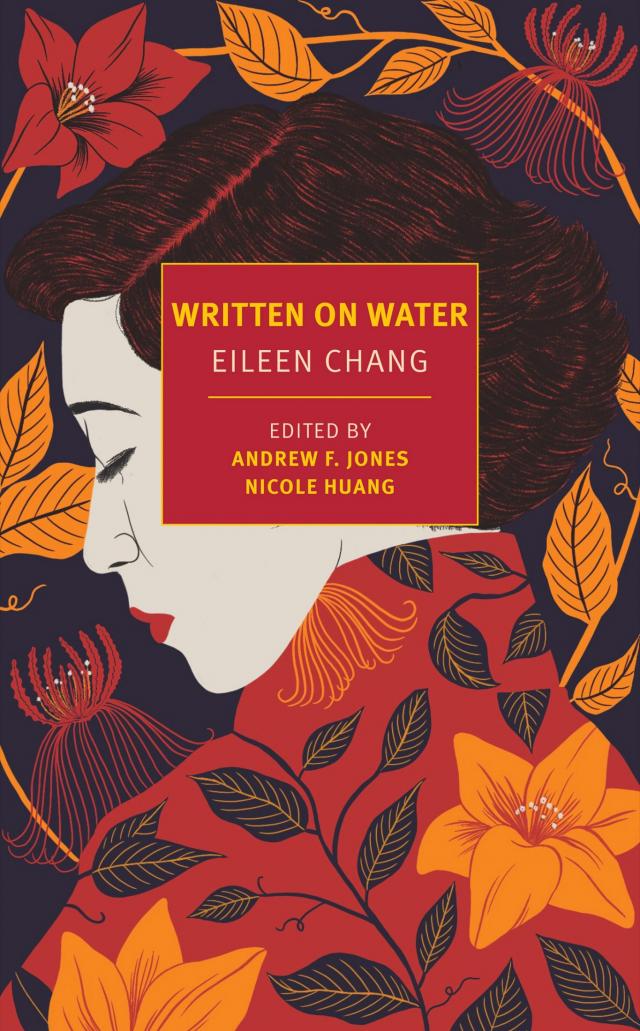
Written on Water, page 10


“Your woman will build castles in the air. And if they do not actually exist, you will catch the blame!”
“It’s even harder to make a woman to say ‘I was wrong’ than to compel a man to say a tongue twister in public.”
“If you doubt your wife, she will cheat on you. If you don’t suspect your wife of cheating, she will suspect you.”
These are wisecracks, as is every statement that claims that all women are this way or that. The price of such so-called wisdom is a cheapening of the truth, for how could it be possible to sum up all women in a single phrase? And yet, women are relatively easy to sum up. Although people the world over vary in terms of their customs, habits, occupations, and environments, the majority of women are still looking after their homes and tending to their children. There is only this single, traditional mode of living, and although variations exist, they exist only within limits. This is why generalizations to the effect that women are this way or that are somewhat more reliable than those that state that men are this way or that.
I remember that at our amateur debate society at school, as soon as the question of men and women came up, everyone promptly forgot what the original topic was supposed to have been and focused intently on this single point, speaking out of turn, interrupting one another, and filling the room with raucous laughter and angry expostulations. One young woman, in tones reminiscent of the reformist New Party of the late nineteenth century, went on at some length about the desperately unfair treatment women suffer at the hands of men, about how men bully women: women, these soft and fragile creatures, endowed with an overflowing abundance of emotions, emotions that are only exploited by men in order to restrict them, to force them to submit to being mere playthings; women, whose unfavorable position in the struggle for existence is solely due to a lack of equality; and so on.1 These are the perennial arguments women rely on in these polemical battles between the sexes. At the time, I couldn’t resist challenging her. It wasn’t that I wanted to play the devil’s advocate but simply that I was sick of that sort of stuff. In the 1930s Ling-lung (Petite magazine), so beloved of co-eds, ran articles on the beauty secrets of the stars right alongside advice on how freshly beautified young ladies could resist the unwanted attentions of young men, since all men “harbor evil intentions,” falling in love is a dangerous undertaking, and marriage—“the tombstone of love”—even more dangerous still.
We are all familiar with women mouthing these kinds of platitudes, and we have heard more than our fair share of complaints from men as well, who claim that women have committed unpardonable sins, crimes too numerous to mention. If not for the fact that they remain necessary for the survival of the nation, they ought to be done away with entirely.
Each camp sings its own tune, and it may be that, at least superficially, they both have truth on their side. Women are in fact petty, coy, dissembling, narrow-minded, and skilled in the arts of flattery and flirtation. (Even though proper ladies have nothing but contempt for women of easy virtue, given the opportunity to play the strumpet for a while, every one of them would jump at the chance.) Intelligent women will doubtless accept the justice of these charges, while deftly turning the tables by laying the blame for these deficiencies squarely on men. Ever since prehistoric times, women have been subjected to the naked fist of patriarchal domination because of their lack of physical strength. Several thousand years of languishing under masculine control gave rise to the “wifely way” as a means of adapting to the environment in which they found themselves. The deep-seated inferiority of women was created by the hand of man, so what on earth are men complaining about?
If the weakness of women was engendered by their environment, how is it that in modern times women who have received the very same college education as their male counterparts remain just as oversensitive and needlessly querulous as their grandmothers? Of course, habits formed over the course of thousands of years cannot be eradicated in a day. All in due time . . .
And yet asking men to shoulder all the blame doesn’t seem to be a completely satisfactory solution. Not only that, it smacks of irresponsibility. Irresponsibility, of course, is yet another adjective men have long accustomed themselves to using to describe women. The author of Cats says: “An eminent professor once provided me with a dozen reasons why I should never take a woman too seriously. I found this somewhat troubling, because women always take themselves extremely seriously and hate to be seen as docile and irresponsible little creatures. If this professor believed that they were not to be taken seriously but they themselves refused to be docile and irresponsible little creatures, then what was I to do? They want people to take them seriously, certainly, but when they have made a serious mistake, they hope that you will shrug it off by saying, ‘She’s just an irresponsible little creature.’”
The reason women were made to submit, becoming slaves of a patriarchal system, was their lack of physical strength. And yet men themselves are no stronger than jackals, wolves, tigers, or leopards. How is it that the male of the species, pitted against the birds and the beasts, managed to survive in the evolutionary struggle? The argument is clearly flawed, and shifting the blame on men simply will not account for such questions.
The celebrated novelist Aldous Huxley, in his novel Point Counter Point, writes, “The sort of person you are determines the way you will be treated.” Point Counter Point is about a young woman named Marguerite who is truly a glutton for punishment. She is a woman who seems to have been born to elicit other people’s pity. Her husband is a kind and docile man at heart, but even he ends up having an affair with a social butterfly. Marguerite is finally driven to sorrow, despair, and lamentation.
Certainly, society’s motion forward is an unimaginably vast process, bigger than the efforts of any one individual, so big that even the self-styled vanguard is caught up by its motion without understanding the whys or wherefores. And yet, at a certain level, there must in fact be an active role for the individual to play in the process. Take a look at the state of the world today, for instance. Mankind has progressed step by step, only to arrive at an intensely competitive, highly mechanized and commercial civilization, a civilization in which warfare becomes an unavoidable necessity. Even those—especially those—who run toward the fray shouting, “Don’t fight! We can’t fight!” will inevitably and unwittingly be roped in along with everyone else. There’s no way out, and yet one could hardly argue that humanity bears no responsibility for its own impasse.
Some people say that, in their tenure as masters of the world, men have made a muddle of things. It would be better, runs this line of argument, if they would simply come clean and cede their position to women. Yet it seems that this particular prescription may have been written a little too hastily. It makes little difference if you have a strong empress like Wu Zetian or a powerful emperor like Taizong of the Tang dynasty, so long as the system remains a monarchy. Whether the emperor is a man or a woman is of no account; what matters is that with a good emperor all under heaven is at peace. The problem with monarchy is that a good emperor is hard to find. In a democratic system, on the other hand, the problem is that most women are even less able to govern themselves capably than men. Our international disputes already bear a conspicuous resemblance to the catfights of amahs. One shudders to imagine what would happen if the genuine article were allowed into the arena.
The absurd notion that if women were allowed to rule the land, they would bring peace to all under heaven—an idea that resonates nicely with the old adage about bringing the Buddhist sage into the play because there aren’t any actors left onstage—does in fact have some basis in science. There are those who predict that if the current world war damages our civilization to such a degree that it is unable to recover, the new culture that will arise in its place will belong to the blacks. The white and yellow races have already made their contributions to society; only the blacks have remained innocent and unspoiled, with their energies fully intact, which is why, I’m afraid, the leading role will be theirs for the taking in the great era that is yet to come. This is not merely an alarmist sentiment. Advanced civilization, with its highly developed means of training and repression, doubtless takes its toll on our primitive vitality. Women have often been dismissed as savages or primitives. Mankind has tamed and subordinated the birds and beasts but has somehow been unable to tame women. For several thousands of years, women have always remained outside the compass of civilization. How are we to be certain that they haven’t been conserving their primitive vitality in patient preparation for their next big step forward?
One great advantage for a society in which women were at the helm would be that women are much more sensible when choosing their mates. This is not, of course, an erudite branch of scholarship, but it does have direct bearing on the future prospects of humankind. Men select their wives solely based on looks. Features and figure are undeniably important in eugenics. When women select a mate, they no doubt pay attention to looks, but not nearly so exclusively as men. They also take other qualities into account such as wisdom, health, demeanor, ability to provide for a family, and so on. Physical appearance is a secondary concern. There are those who say that the crux of the problem with modern society is that men don’t know how to select their wives properly, which is why, in turn, their children are not brought up properly and their shortcomings are passed down to the next generation. It may be something of an overstatement, but I am willing to argue that if all marital unions were selected by women, we could create a nation of supermen.
The term “superman” derives from the work of Nietzsche and is frequently invoked. Even before Nietzsche, however, there are suggestions of a similar ideal in classical allegory. Strangely enough, the superman always appears in our mind’s eye as a man. Why should this be? In all likelihood, because the civilization of the superman has made progress beyond our own, and our own civilization is the civilization of men. There’s another level here: the superman is the culmination of an ideal, while we can actually locate superior women in reality. No matter what stage of cultural development we reach, a woman always remains a woman. Men strive toward one sort of advance or another, while women remain the same: basic, fundamental, emblematic of the cycle of the seasons, of the earth, of birth, growth, sickness, and death, of eating and reproducing. Women bind the soaring, errant souls of mankind to the solid trunk of reality.
We can find perfect women in the here and now. Perfect men are few and far between, since we have very little idea of what constitutes perfection in a man. Those in search of wealth and power have their own notions, as do those who wish to withdraw from the world in the manner of the Daoist philosophers Lao-zi and Zhuang-zi or those who are adherents of the National Socialist Party. And it seems that each of these types has its flaws. That is the problem with our overdrawn expectations of what it means to be a perfect man.
Women’s lives take place in a more restricted territory, which is why a perfect woman can be more perfect than a perfect man. At the same time, a bad woman can be even more thoroughly despicable than a bad man. This is the truth of the matter. There are businessmen who pay absolutely no attention to professional ethics but whose family lives are beyond reproach. On the other side of the coin, there are men with an utter lack of conscience in their dealings with women who are models of probity when it comes to their occupations. An evil woman, however, is evil through and through.
The superman is male, but divinity has something female about it, because a superman and a god are not the same thing. The superman is an aggressive creature whose very being implies a reason for being, a goal. The divine, on the other hand, signifies all-encompassing compassion, limitless sorrow, perfect understanding, serenity. Along with the vast majority of people commonly referred to as intellectuals, I would like to believe in religion but find myself completely unable to do so. Were there to come a day when I became a believer, I would place my faith in an entity like the Mother Earth in Eugene O’Neill’s play The Great God Brown.2
The Great God Brown is the most deeply affecting play I know. I have read it over and over again, and even after my third or fourth reading, it can still bring me to tears and leave me with an aching and sorrowful heart. O’Neill uses impressionist techniques to portray Mother Earth as a prostitute: “She is a strong, calm, sensual, blonde girl of twenty or so, her complexion fresh and healthy, her figure full-breasted and wide-hipped, her movements slow and solidly languorous like an animal’s, her large eyes dreamy with the reflected stirring of profound instincts. She chews gum like a sacred cow forgetting time with an eternal end.”
The way she speaks is coarse and warm and frank: “I’m so damn sorry for the lot of you, every damn mother’s son-of-a-gun of you, that I’d like to run out naked into the street and love the whole mob to death like I was bringing you all a new brand of dope that’d make you forget everything that ever was for good! (then, with a twisted smile) But they wouldn’t see me, any more than they see each other. And they keep right on moving along and dying without my help anyway.” Someone dies and is buried in the earth. Mother Earth comforts the dying man: “After you’re asleep I’ll tuck you in.”
To be in the world, one must always wear a mask of deceit, but she removes the mask for a dying man: “You can’t take this to bed with you. You’ve got to go asleep alone.”
And here I quote a section of dialogue:
BROWN: (snuggling against her—gratefully) The earth is warm.
MOTHER EARTH: (soothingly, looking before her like an idol) Ssshh! Go to sleep, Billy.
BROWN: Yes, Mother. . . . And when I wake up . . .
MOTHER EARTH: The sun will be rising again.
BROWN: To judge the living and the dead! (frightenedly) I don’t want justice. I want love.
MOTHER EARTH: There is only love.
BROWN: Thank you. Mother . . .
After someone dies, she says to herself: “What’s the good of bearing children? What’s the use of giving birth to death?” She also says: “Always spring comes again bearing life! Always again! Always, always forever again!—Spring again!—life again!—summer and fall and peace again!—(with agonized sorrow)—but always, always, love and conception and birth and pain again—spring bearing the eternal chalice of life again!—(then with agonized exultance)—bearing the glorious, blazing crown of life again! (She stands like an idol of Earth, her eyes staring out over the world).”
This, finally, is a real goddess. By comparison, the Goddess of the Luo River who “flutters like a startled swan / spins like a roaming dragon” is just another beauty from a costume drama, the Guanyin so revered by the common crowd is just an antiquated beauty with bare feet, those magnificent Greek statues of towering nudes are merely female athletes, and the Madonna with her golden tresses is nothing more than a pretty wet nurse at whose teats the masses have been suckling for more than a millennium.3
To continue in this vein would be to run the risk of falling into a whirlpool of theological debates, which tend to be just as fierce as arguments about men and women, only much duller. Perhaps I ought to come to some conclusions before it is too late.
Even though women have a thousand sorts of shortcomings, they still possess the makings of Mother Earth. Lovable women are genuinely lovable. To a certain degree, lovable qualities and a graceful bearing can be manufactured by artificial means, and this is in fact the goal of every system of education in every land that desires a yield of good and virtuous girls. Even when this original intention is distorted beyond recognition, as invariably happens, producing wives and daughters more akin to those described in Cats, we must remain sympathetic to the original ideal.
A woman may win favor in any number of different ways. Those who are interested solely in a woman’s body forgo many of the most precious pleasures in life.
Winning favor by means of a beautiful body is the oldest profession in the world and indeed the most common job description for women, because every woman who marries for economic reasons is included in this category. And there’s really no need for recrimination. Those who have beautiful bodies please with their bodies, and those with beautiful thoughts please with their thoughts; it makes very little difference in the end.
Birds of a Feather.
(1) Nastiness;
(2) shallowness;
(3) stupidity;
(4) pretension.
Master/Husband and Servant/Wife.
BY THE LIGHT OF THE SILVER LANTERN
There is a Shaoxing-style opera called By the Light of the Red Lantern.1 I can’t understand the lyrics, and I was never able to form any sort of idea of what the play is about, but I’m so mad for its charming and unpretentious title that I am going to adapt it here for my own use. “By the Light of the Silver Lantern” ought to suggest that I am going to borrow a mercury-vapor lamp to illuminate the everyday customs and feelings that surround us. Although the beams projected by the silver lantern often stray rather far from reality, they may well prompt us to reflect upon ourselves.
The two films I am going to discuss, The Struggle for Spring and The Song of Meiniang, are perhaps already out of date. In fact, they have already come and gone at the third-run theaters, but in the interior and in low-class entertainment centers in this city, they’re still shown again and again. The people who make up these audiences may be unfamiliar to us, but the films they enjoy deserve comment.
This essay cannot be considered a film review, because what I am looking at here is not the movies, but Chinese people in the movies.
Both these films touch on the question of womanly virtue. The scope of womanly virtue can be quite broad, but most people understand it to mean the question of how to be a good wife and, in particular, how to remain cheerfully monogamous with a polygamous husband. In The Song of Meiniang, the husband is an amorous man who frequents a house of ill repute that employs respectable married women. The favorite nightmare of such men is that they will encounter their own wives or daughters there, suddenly recognizing them as they approach with mincing steps. A shattering encounter of this sort is clearly rife with dramatic possibilities. And that is why our writers have drawn on such scenes for almost thirty years in their so-called social novels. This, however, is the first onscreen appearance of such a scenario. Meiniang is tricked into working at the brothel, and when her husband stumbles upon her there, he slaps her across the face. Before she is able to say a word in her defense, he disowns her.