Inheritance Tracks, page 5


‘I had quite an interesting day today,’ he began. This was the signal that there was something that could be shared in front of the domestic hearth.
Margaret Sloan took up her own cup and saucer and sat down beside him. ‘Go on.’
‘Nothing may come of it, of course.’
‘That happens,’ she said, loyal police wife that she was.
‘I was with Simon Puckle, the solicitor.’
She sipped her coffee. ‘Tell me more.’
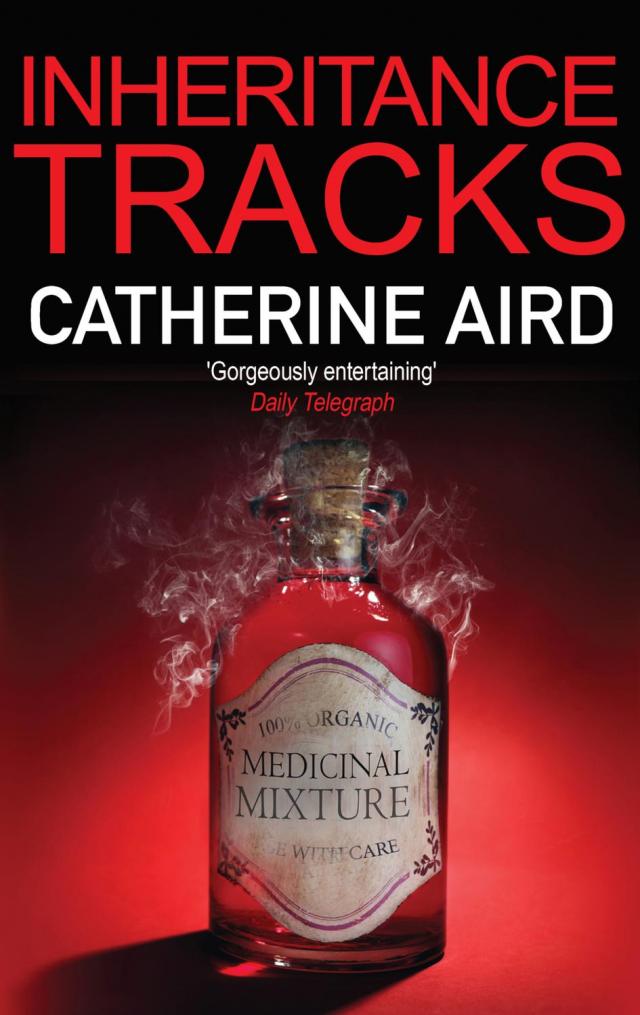
‘Apparently, there was this very rich old boy who’d made a mint of money out of some quack medicine a long time ago.’
‘A cure-all,’ nodded Margaret Sloan. ‘Very popular, they were, with the credulous in those days.’
‘Loads of credulous people about, then and now,’ said Sloan feelingly. He had had to deal with plenty of victims of scams in his own day, too. More abashed than injured, most of them. ‘Anyway, this man, name of Algernon Mayton, didn’t have any sons to inherit the business or his fortune …’
‘Poor man,’ said Margaret Sloan, her gaze drifting subconsciously towards the undeniably masculine toy fort in the corner of the sitting room. It was well past the bedtime of its owner.
‘Poor man in more ways than one, apparently,’ said her husband. ‘You see, he only had daughters, three of them …’
‘Even so, he was a lucky man …’ she said, raising her eyebrows in enquiry.
‘Ah, but in those days – his day, that is – the daughters’ husbands automatically got their hands on all of whatever the daughters inherited.’
Margaret Sloan stiffened. ‘That’s not right,’ she said militantly. ‘You meant they didn’t have any say at all in what happened to what they inherited?’
‘None. Not then. Or so Simon Puckle told me.’ He wriggled his toes against the fender. ‘So their father – Algernon Mayton – didn’t leave his daughters more than they needed in their lifetimes.’
‘Hoping that they themselves had sons, I suppose?’
‘Yes, I’m sure, but I’m afraid that they didn’t.’ Sloan set his cup down. ‘And it gets even more complicated. One of his granddaughters only had a girl, called Horatia, but the other had a girl and a boy, Clementina and Arthur.’
She frowned. ‘They would have been his great-grandchildren, I suppose?’
‘That’s right.’
‘Let me guess. He didn’t leave them his money either?’
‘Dead right, he didn’t. And it must have been mounting up by then.’
Margaret Sloan said, ‘He was keeping the money in the family with a vengeance, wasn’t he?’ She reached out a hand for his cup. ‘More coffee?’
‘Thank you.’
‘And putting off the day in his mind,’ she said reflectively, ‘when a woman wouldn’t be married for her money but just for herself.’
‘So, hoping for the best,’ said Sloan, nodding, ‘he left his fortune tied up in trust for the grandchildren of the said Horatia, Clementina and Arthur and their issue.’
She wrinkled her nose. ‘Could he do that?’
‘According to Simon Puckle there was a precedent. A Sir William Rowley apparently did just that in the eighteenth century.’
‘And a precedent makes it right, does it?’ she asked ironically, having her own views on the ways of the law.
‘I know precedents aren’t quite the same things as Holy Writ for lawyers, but pretty nearly.’ Sloan yawned. ‘In the event, old Mayton needn’t have bothered.’
‘They had sons?’
‘No. The first Married Women’s Property Act was passed in 1870 and that changed things. It gave a woman full control of her own property, and high time, too.’
‘Oh, I know all about that,’ said Margaret Sloan unexpectedly. ‘Soames Forsyte was very upset about those new laws when they came in.’
‘Who?’
‘Soames Forsyte. Timothy Forsyte might have been the most cautious man in England, but his brother Soames really minded about money. It meant a lot – too much, actually – to him. And those Acts of Parliament meant he couldn’t get his hands on his wife’s money.’
Seeing his blank expression, she went on, ‘Don’t you remember, Chris? You gave me the boxed set of The Forsyte Saga one Christmas.’ She scooped up his coffee cup and said with some complacency, ruffling his hair as she passed him, ‘So seeing that I wasn’t married for my money, dear, it must have been for something else, mustn’t it?’
It was even later that evening when the Accident and Emergency Department at the Berebury District General Hospital got really busy. Sister Samantha Peters had straightened her tunic, stowed her handbag in her locker, checked her watch and, like the rest of the night shift, reported for duty at eight o’clock as usual. Her opposite number, coming off the day shift, had performed the handover.
‘Not a great day, Samantha,’ she said to her, stifling a yawn. ‘The cardiac infarct in Bay One isn’t doing at all well. He’ll need an eye keeping on him – his family are on their way. The motorcyclist in Bay Two is waiting to go to theatre and there’s an old lady with a fractured neck of femur needing an orthopaedic bed. See if you can talk the ward into taking her off our hands soonest. We need the cubicle.’
‘Will do,’ promised Samantha Peters.
The other nurse sighed. ‘We’ve started to get the alchies in early tonight.’
‘It’s raining,’ said Samantha simply.
‘That explains it,’ she nodded, not having had time on her own shift to look out of the window herself. ‘They’re making a row and disturbing everyone else as usual. Oh, and we’ve had an attempted suicide.’ She gave a thin smile. ‘We’ve washed out her stomach and now she wishes that she hadn’t done it or hadn’t been saved. Either one or the other would have done, she says.’
But the flow of patients didn’t really swell until more drunks and other casualties were brought in after midnight.
Battered, bruised and in some cases quite belligerent, they represented both a nuisance and a nightmare to the staff. The nuisance was in clearing up their vomit, stitching their wounds and preventing them doing violence to staff and other patients alike. That, as young Dr Dilys Chomel, the duty doctor, was wont to say, was the easy bit. So, she insisted, was dealing with the heart attack, the injured motorist, the fractured hip and even with the overdose.
The difficult part, she was also wont to say, was making quite sure that the slurred speech, unfocussed eyes and unsteady gait presented by some of those in the Accident and Emergency Department represented an overindulgence in alcohol or drugs not a subdural haemorrhage following a fall or a blow to the head. A missed head injury – often fatal – would be a serious blot on the medical career of the young African woman doctor’s career and well she knew it.
By the time Dr Chomel got round to seeing the drunks and the other casualties in the department, Samantha Peters had persuaded most of them to lie on the floor on crash mats before they fell down and, in the case of two of them, to stop them fighting. Swiftly relieving one of the pair of the wine bottle with which he was trying to hit his neighbour, Samantha said firmly, ‘That will do, Mr Smith, if that’s what you’re called.’
‘He stole my drink,’ hiccupped the man, dancing about like a whirling Dervish, his arms and legs all over the place. ‘I’m going to kill him.’
‘No, you’re not,’ she said briskly.
The man’s face screwed up into crying mode, tears starting to well out from rheumy, bloodshot eyes. ‘He took my drink away.’
‘No, he didn’t. I did. We don’t allow alcohol in the department.’
The man, struggling to keep on his feet, declared with great dignity, ‘Then I’m going somewhere where they do.’
‘Not until we’ve stitched that cut on your head, you aren’t,’ she said. ‘And the one on your friend’s face,’ she added, turning to the next man. ‘He’s got quite a nasty laceration on his forehead, thanks to you.’
‘He’s no friend of mine,’ said Mr Smith, trying to give the man beside him a kick and very nearly falling over in the attempt. ‘I’ve never seen him in my life before.’
‘So why did you hit him?’ she asked.
‘Because he was there,’ said the drunken man ineluctably.
‘Like Everest, I suppose.’
‘I feel sick,’ announced his friend, to whom the allusion had meant nothing either.
‘There’s an emesis bowl beside you.’
He wasn’t sick. A minute later he had collapsed onto the crash mat and was deeply asleep, breathing noisily.
Samantha Peters turned to the next patient, a man perched on a chair, one foot sticking forward a little, a blood-soaked pad on his forehead. ‘And why are you here, Mr … er,’ she glanced down at a list and frowned. ‘Mr Pickford? You?’ she said.
‘Martin, please.’ He grinned. ‘After all, we are related.’
‘Much too distantly to count,’ she said. ‘Besides, with you in the state you’re in. I wouldn’t want to broadcast the fact.’
‘I’ve injured my eye, that’s all, Samantha. Some fellow’s elbow got in the way of it. It’s all the blood that makes it look worse than it is.’
‘I’m Sister Peters when I’m on the ward and don’t you forget it.’
‘Sorry, Sister,’ he said, hanging his head with every sign of penitence.
‘And what about that limp?’
‘I got that at my first away match. The other team were animals.’
‘You men are all the same.’
‘And I’m not drunk, by the way.’
‘Oh, yes?’
‘Strictly speaking, someone else injured my eye. Not me. Their scrum half, I think it was, but I couldn’t be sure, not having had much sight in it afterwards.’
‘Are you talking about being the victim of an assault?’ she said primly.
He grinned up at her. ‘Only in a manner of speaking.’
‘If you have been, we’ll have to record it properly.’
‘The ref’s already done that on the field. My eye didn’t hurt at first, but it does now. Like hell, actually, so I thought I’d better come in otherwise I wouldn’t get any sleep tonight.’
‘The effect of alcohol beginning to wear off, I suppose,’ she said, markedly unsympathetic.
‘I’m not drunk,’ he repeated.
‘At this rate,’ she said dispassionately, waving a file in front of him, ‘looking at your record here, you’ll be dead long before you collect any of the Mayton money. Accident prone isn’t in it.’
‘That’s rugby for you. Besides, money isn’t everything.’ He winced as he touched the bandage over his eye. ‘Or so I’ve always been told.’
‘And rugby is, I suppose?’
‘I’ve got to be well enough for our next trial match, Samantha, so do what you can for me,’ he pleaded. ‘I’m up for the county team and I don’t want to miss any games.’
‘Sister Peters, if you don’t mind.’ She gave him a considering look. ‘And while money may not be everything, young man, I can tell you it helps.’
‘Don’t care.’
‘Neither do I,’ she said in a sudden burst of anger. ‘All the more for the rest of us, if you ask me, should anything happen to you. Now, we’d better get you cleaned up. And then I’ll ask Dr Chomel to take a look at your eye.’
CHAPTER SIX
‘What do you mean, Sloan, the solicitors say they can’t find a man?’ Back at the police station in Berebury first thing the next morning, Superintendent Leeyes sounded sceptical. ‘People can’t just disappear these days.’
‘According to what Simon Puckle told us, sir, this man has,’ said Sloan. ‘The solicitors have tried all the usual ways of finding someone – by advertising and so forth – and put a firm of professional enquiry agents on to it with no joy either, except that they discovered that he was made bankrupt quite some time ago.’
‘Ah.’ Bankruptcy ranked high in the superintendent’s personal Newgate calendar. He said, ‘He would have been allowed to keep his car. He could have gone anywhere, then.’
‘He didn’t have one,’ said Sloan. ‘We checked with the vehicle registration people. Not under his own name, anyway.’
‘And the tools of his trade. He could keep them after bankruptcy.’
‘He ran a business,’ said Sloan. He couldn’t think offhand what those tools would have been. The Midas touch, a lack of scruple and a willingness to do his rivals down were all that came immediately to mind. Then perhaps he, a policeman, might be prejudiced as he usually only met the criminal ones.
‘Mind you, Sloan, even if he does come into this Mayton money, his creditors will have a prior claim on it. The preferential ones – the ones that have the first go at it – I imagine will be the Inland Revenue. Crown debt always takes precedence. I understand it’s different in the United States.’
‘Quite so, sir,’ said Sloan, murmuring under his breath, ‘No Crown.’
‘So,’ carried on Leeyes, ‘presumably after that there was nowhere for him to go but downhill.’
‘Well, he was a bit old to start again, sir.’
‘Start again was what all those monks turned out by Henry VIII had to do after he shut all the monasteries down,’ said the superintendent, whose recondite areas of knowledge were a source of constant wonder at the police station. ‘The ones who couldn’t or wouldn’t go away were known as sturdy beggars.’
‘Really, sir?’
‘And you’re actually telling me that even though there’s a mountain of money waiting for this missing person when he’s found, you still can’t put your hand on him?’ He sounded sceptical.
‘So I am given to understand, sir.’ He coughed. ‘Of course, they don’t know quite how much yet. The recipients, I mean.’
‘I should hope not, otherwise they’d be breaking Simon Puckle’s door down.’
‘Quite so, sir.’ He paused and then said, ‘And it would appear that the other four present in his office when they were told about the legacy hadn’t known anything about the inheritance at all until then, either. Or anything about the other people who were there come to that, except Clive Culshaw, who obviously knew about his brother but didn’t mention the fact.’
‘A bit odd, that,’ said Leeyes.
‘Yes, indeed,’ agreed Sloan. ‘And those two who weren’t there presumably didn’t know anything beforehand either.’
‘Two?’
‘The brother was late.’
Superintendent Leeyes ignored this and unerringly put his finger on what mattered. ‘You say one of those who was there at that meeting was Mrs Susan Port, the deceased.’
‘So I understand, sir.’ Sloan looked at his watch. ‘I’m sorry, sir, I must go. We’re due at the hospital for her post-mortem any minute now.’
‘Which, I take, is what’s got Simon Puckle worried?’
‘He is the sole administrator of the Mayton Trust,’ said Sloan with apparent inconsequence. ‘And he tells me that none of the estate can be distributed until all of the beneficiaries are found. It’s this man called Daniel Elland who’s missing and causing the hold-up in the settlement.’
‘Do we know him?’ asked Leeyes.
‘The Police National Computer doesn’t,’ said Sloan cogently.
‘So, he’s not in prison either.’
‘First thing we checked, sir.’
‘He could have died.’
‘They’ve searched the death registers.’
‘And he could have changed his name – there’s no law against that – or just be living under an alias.’
‘Yes, sir. Either. Or both.’
‘First catch your hare, of course,’ said Leeyes.
‘Sorry, sir, I don’t quite …’
‘You catch your hare,’ said Leeyes elliptically, ‘before you start to make hare pie.’
‘Really, sir?’
The superintendent asked, ‘How old is this Daniel Elland supposed to be?’
‘Sixtyish, sir, by now. Nothing’s been heard from him since he was divorced ten years ago. We got his old address from the solicitors, but he was chucked out by his wife at the time. Seems she took him for half of everything.’
The Married Women’s Property Acts passed through Detective Inspector Sloan’s mind as he pondered on the rights and wrongs of this. He thought of Soames Forsyte, too – it didn’t sound as if the equal division of the marital assets after a divorce would have suited him either. He would have to check on that with his wife, this evening. Perhaps the law could only get some things half right. ‘She’s still there, sir, in their old home,’ he said. ‘Elland’s wife, I mean. She’s married again, though.’
‘Sounds to me as if she’s sitting pretty,’ grunted Leeyes. ‘Some women are good at housekeeping. I mean at keeping houses after a divorce,’ he explained as if Sloan hadn’t understood him.
‘She swears she hasn’t heard from him since the divorce and made it quite clear to us that she didn’t want to either.’
‘And where, pray, does this big money come from? They didn’t have lotteries and sweepstakes then, surely?’ Leeyes paused. ‘Though now I come to think of it, there was once a racket called the Numbers’ Game. You took big money from lots of little punters, gave a very small modicum of it back to the lucky winners and kept the rest.’
‘The fortune came from something phony but very successful called Mayton’s Marvellous Mixture, sir.’ They had had big wagers, though, in the old days, thought Sloan, with the fate of an entire estate determined by the turn of a playing card. Men had fought duels for high financial stakes too then, as well as their honour. They must have needed the excitement if there didn’t happen to be a war on at the time; today’s equivalent of extreme sports, perhaps. Or boy-racing. Or even old-boy-racing, a real thorn in Traffic Division’s flesh – men only now able to afford the sports car of their adolescent dreams but beyond handling its fancy acceleration.
‘I knew it would be phony if it was that big,’ said the superintendent cynically. ‘Honest money doesn’t grow on trees.’