Inheritance Tracks, page 4
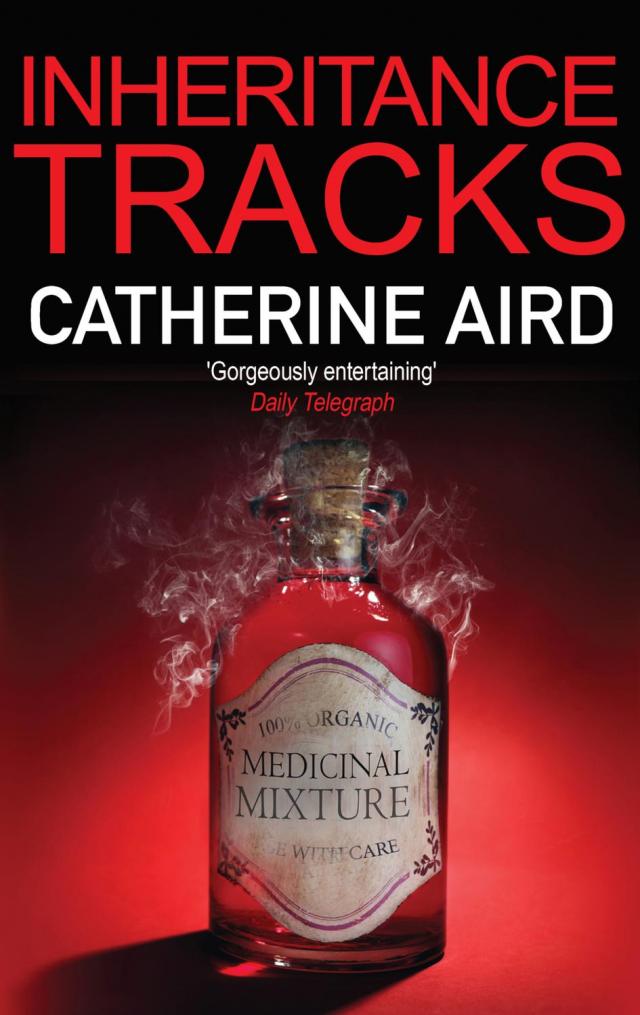


‘Yes, indeed, Inspector. In those days you could make any spurious claims you liked for the properties of what you sold in the way of patent medicines.’ He paused. ‘In fact, I’m not sure that Mayton’s Marvellous Mixture had even been patented.’
‘It was profitable, though, I take it?’
‘Immensely. To which inheritance,’ the solicitor continued, ‘has to be added the interest on the capital over many years … very many years – compound interest, naturally.’
‘So there have been no disbursements,’ deduced Detective Inspector Sloan. The important difference between compound and simple interest was still a dim memory from his schooldays. So was something his mother used to quote from Charles Dickens about it. Some character in Bleak House used to call compound interest ‘the old pagan’s god’, and if there was anyone who knew about money, it was Charles Dickens.
‘None, Inspector. That was on the express instructions of the testator,’ said Simon Puckle, ‘except, naturally, the firm’s fees for establishing the trust and for its administration of the estate over very many years.’
‘Naturally,’ said Sloan in a tone that he trusted was entirely devoid of irony.
‘Naturally,’ echoed Crosby quietly, with quite a different emphasis.
The solicitor expanded on the trust. ‘There were, of course, good reasons why Algernon Mayton left his estate to his great-great-great-grandchildren rather than to his more immediate heirs. Good reasons.’
‘Gone to the dogs, had they?’ suggested Crosby, his interest engaged at last. ‘His heirs, I mean.’
‘Not as far as I know,’ began Puckle.
‘Taken to the bottle, then?’ Crosby persisted. ‘Or the gee-gees?’
‘I understand that they were as sober as was usual at the time,’ said Puckle a little stiffly. ‘And not, as far I know, gamblers.’
‘So why, then?’ asked Sloan, firmly wresting the line of questioning from Crosby.
‘There were greater risks in those days to an estate than now,’ temporised the solicitor, skating lightly over the depredations of the twentieth-century’s inheritance tax. ‘Even though it was a long while before Lloyd George came to power.’
‘In spite of that, cutting the immediate descendants off without a shilling does seem a bit hard,’ said Sloan.
‘Not without a shilling,’ said the solicitor. ‘They were adequately provided for.’
‘Risks of what, then?’ intruded Crosby insouciantly.
‘Risks from his daughters’ future husbands,’ said Puckle elliptically. ‘Old Algernon Mayton died in 1868. If he had left his money to his three daughters at that time, any men they married could spend their wives’ inheritance from their father exactly how they wished.’
There was a pause while Detective Constable Crosby absorbed the enormity of this state of affairs. ‘And without their say-so?’
Simon Puckle nodded. ‘I’m afraid that was the case.’
‘That’s not fair,’ said Crosby indignantly.
‘Life isn’t,’ murmured the solicitor.
Detective Inspector Sloan, old enough to have learnt this too, nodded in agreement.
‘Until, that is, the passing of the Married Women’s Property Acts in 1870, 1882 and 1893,’ resumed Puckle. ‘But, of course, the testator was dead by then.’ He gave a little smile. ‘As Shakespeare nearly put it so well: “He should have died hereafter”.’
‘And Algernon Mayton had a lot to leave, you said,’ concluded Sloan, sticking to the point.
‘Indeed, a great deal,’ said the solicitor, ‘and he didn’t want his future sons-in-law making hay with it.’
‘So,’ asked Sloan, policeman that he was, ‘who exactly benefits from Mrs Port’s death now?’
‘As to that, Inspector, I couldn’t say. It will depend on her own testamentary depositions but I can tell you that her personal estate will get nothing from the Mayton Trust now that she has died. As she had no living descendants, her rights in it are extinguished by her death before its distribution. Under the terms of the trust these automatically revert to the remaining survivors …’
‘Thought of everything, old Algernon, didn’t he?’ said Crosby, who was getting restive.
‘In that sense, of course, the five of them do benefit marginally from her death,’ continued Simon Puckle. ‘That would be by the division of an extra sixth share of the Mayton Trust among them.’
‘And who knew this?’ asked Detective Inspector Sloan, himself cutting to a chase that had hardly begun. There would be those who could quantify the division of a sixth of something among five people but he wasn’t one of them.
‘Only three of the legatees for certain – two men and a woman. They all heard Mrs Port announce to everyone that she had no siblings or descendants. Another man arrived later and thus didn’t hear it said and there is also one man we haven’t been able to trace so far. Therefore I am not in a position to know if either of those other two knew that. Mrs Port mentioned it before Tom Culshaw arrived at the meeting – he had been held up on his way to Berebury that morning – and before the trouble began.’
CHAPTER FOUR
‘Trouble?’ echoed Superintendent Leeyes back at the police station, rising at the word like a trout to a mayfly. ‘Tell me, what sort of trouble, Sloan? And be quick about it. I’m in a hurry.’
‘Apparently the fifth person to arrive at Puckle’s office that day was the brother of a man already there and they were at daggers drawn. I understand that the two brothers had gone to law over the ownership of the family firm – a big bakery. You may have heard of them, sir. They make Culshaw’s cakes.’
‘Everyone’s heard of Culshaw’s cakes,’ grunted Leeyes. ‘They eat them all the time.’
‘Very true,’ agreed Sloan. ‘Well, it seems that Clive Culshaw won the case and his brother, Tom – his elder brother – got chucked out of the firm on his ear.’
‘And no doubt resented it.’ Superintendent Leeyes giving it as his considered opinion that there was a lot to be said for primogeniture.
‘Sir?’
‘Everything going to the eldest son of the eldest son without question,’ said Superintendent Leeyes. ‘Saves a lot of argument about who owns what. It keeps it all in the family, too, and in one place.’
‘I’m sure, sir,’ said Sloan, hoping that the superintendent wouldn’t say this to Woman Police Sergeant Perkins, who held strong views on any male – eldest or not – taking all.
‘And I assume that this Tom Culshaw still isn’t happy?’ divined Leeyes without too much difficulty.
‘Far from it, sir. According to Simon Puckle, at the time of the meeting they – Clive and Tom Culshaw – made it pretty clear that they hated each other’s guts.’
‘How does this affect this big inheritance that the solicitor is telling us about?’
‘That I couldn’t say, sir.’ One thing that could be said for Superintendent Leeyes was his capacity for sticking to the trail. Especially if it was a money one.
‘And what has all this got to do with that dead woman out at Bishop’s Marbourne that Simon Puckle is going on about?’
Sloan said that remained to be seen as it was too soon to say and that he and Crosby would be attending the post-mortem on Susan Port the next morning and would report back.
‘Do that,’ said Leeyes, reaching for his hat. ‘And if the pathologist doesn’t find anything to worry about then we can all stop worrying too. That can include that solicitor fellow, Puckle. Now I’ve got to go to another meeting of the town’s Rough Sleeper Forum and I’m late already.’
‘I’m sure there are more of them about in doorways these days than there used to be,’ said Sloan, thankful that those who slept on the streets weren’t his problem.
‘Probably because we’re too soft on them in Berebury,’ said Leeyes, clamping his hat firmly on his head. ‘And the Vagrancy Act’s no good these days. It’s not any use even trying to prosecute them for anything less than aggravated begging, and as they don’t have any money, the fine doesn’t hurt them.’
Sloan decided against saying that the law was an ass. They both knew that. After all, they were policemen.
‘The mayor thinks they give the town a bad image and now the council wants it cleared of them.’ Leeyes sniffed. ‘That’s naturally without saying where we should put them instead and under what statute. That forum of the council’s doesn’t even know the difference between rough sleepers, begging and street drinking.’
‘No, sir,’ said Sloan, anxious to get on, too.
‘And to cap it all we’ve had a complaint from that do-gooder who runs Latchless – you know, that charity for the homeless down by the Postern Gate here in Berebury.’
‘We do know him, sir,’ sighed Sloan. ‘Only too well – he’s always speaking up for them at the station. Name of John Holness. His heart’s in the right place, I’m not so sure about his head.’
‘It seems that the Berebury supermarket in the high street was getting so fed up with those layabouts sleeping rough every night in that covered delivery lobby of theirs at the back of the shop that they’ve fitted some sonic device there that keeps the homeless awake all night.’
Sloan nodded. ‘I understand from the wildlife people, sir, that they use something like that to keep minke whales safely away from offshore turbine workers.’
‘It makes ’em feel pretty ill, too, I can tell you, man and beast,’ said the superintendent with some satisfaction. He wasn’t into animal welfare, either. ‘Dizzy for starters. Gives them headaches, too. And some of them have been insisting they’ve got some hearing loss. It’s meant to keep them feeling so out of sorts that they won’t use that shelter of the supermarket’s there overnight.’
‘Which is presumably what the store wants,’ concluded Sloan without difficulty.
‘And now that man Holness from Latchless wants to know if what the supermarket’s done is legal.’
‘Offences against the person?’ suggested Sloan off the top of his head.
‘That’s for the courts to decide,’ said Leeyes airily. ‘Not for us. We’re policemen, not politicians. And as for getting them to accept advice on alcohol dependency and employment opportunities …’
‘Not usually welcome,’ agreed Sloan.
‘Just wasting your breath,’ said the superintendent, making for the door, ‘if you ask me.’
The word ‘trouble’ had never once crossed Tom Culshaw’s lips when he told his wife about his visit to Simon Puckle’s office.
On the contrary.
‘It was beautiful,’ he crowed joyously, rubbing his hands together. ‘Absolutely beautiful. You should have been there, darling.’
‘Not if I had to look at your brother, I shouldn’t,’ said Sophie Culshaw spiritedly. ‘I never want to set eyes on that man ever again.’
Her husband wasn’t listening. ‘You should have seen Clive’s face when I walked through the door and he realised that I was part of the action, too,’ he chortled, ‘although I would have thought he could have worked it out for himself. You see, there was a bit of a hold-up on the road this side of Calleford …’
She sighed. ‘Tom, I told you that you wouldn’t be there in time.’
‘And so I got there a bit late, didn’t I. Besides I had to drop off that old carburettor for the classic car on the way. It works a treat now.’ Tom and Sophie Culshaw ran a little boutique business called Gordian Knots Cut. Their oft-repeated credo – and advertising – was that every problem had a solution. ‘And the solicitor had started without me.’ He grinned again. ‘I bet Clive thought he was going to get away with all the money this time, too.’
‘Not again,’ she groaned. ‘Tom, we can’t possibly go through all that again.’
‘No, no, it’s not like that, darling. Not at all. I promise you. It was all about this old boy, Algernon Mayton, who seems to have left shedloads of dosh to his extended family. In fact,’ went on Tom cheerfully, ‘it’s even better than that.’
Sophie looked at him expectantly. ‘Tell me.’
‘Because I got there a bit late, I took Clive by surprise. By then they’d all got down to the nitty-gritty of an old trust this ancestor of ours had set up.’
‘I’ve never heard of him.’
‘Me neither. Seems as if he was a bit of a charlatan.’
‘So that’s where your brother gets it from, is it?’ she said acidly.
‘This money …’
‘What money, exactly?’ asked his wife. She found that when her husband’s feet did happen to touch the ground it was akin to anchoring a hot air balloon to keep them there.
‘What this Algernon left behind when he died. It’s got to be divided between six of us.’
‘How much?’ Sophie prided herself on having her own feet on the ground. One of the pair of them had to.
‘The solicitor fellow wouldn’t say. You know what they’re like, darling.’
‘Only too well, and there’s one thing I will say, Tom, and that is no matter what happens, we’re not going to law over this.’
‘Not this time and never again, darling, I promise you.’ He essayed a smile. ‘At least this time we won’t have to try to claim primogeniture.’
‘Much good that did us last time.’
‘Don’t remind me.’
‘And what about the last will and testament of this ancestor of yours? Is it as watertight as your mother’s will was?’
He frowned. ‘The thing is that it’s not a will at all but a trust deed, which it seems is a bit different. At least, that’s what this Simon Puckle said.’ He sat down beside her and put his arm round her. ‘Wait until you hear this, though, Sophie. You see this legacy comes down through Dad …’
‘But your father died years ago.’ She sighed again. ‘That was the whole trouble.’
‘I know, but according to the terms of this old Mayton Trust, it’s descendants of Dad’s generation that collect the dibs and so Clive and I only get half each of what everyone else there gets.’ He grinned again. ‘You should have seen Clive’s face when he realised that he was only going get half of what he’d thought he would because of me. And half of what everyone else is getting, too. It was lovely.’
‘It means you only get half, too, though,’ she pointed out. ‘Although I agree half a loaf is better than no bread.’
‘It’s miles better than the nothing I got last time,’ he said.
‘True.’ She stretched languorously on the sofa. ‘And half of what, do you think? We could do with some new carpets.’
‘The solicitor wouldn’t say. Not until a missing man is found.’
She was unsurprised. ‘Solicitors are always cagey. You should know that by now, if anyone does.’ She pummelled a cushion into a more comfortable position. ‘What missing man, anyway?’
‘Someone called Daniel Elland.’ Tom Culshaw wrinkled his nose. ‘I’ve never heard of him but then I didn’t know any of the others there either, even though we were told we were all related one way and another to each other there and to the missing man.’
‘Except Clive,’ she said. ‘You knew you were related to your dear younger brother all right, worse luck.’
‘Except Clive,’ he agreed. ‘And I get my half whether he likes it not.’
‘He won’t like it,’ she said, ‘but, my love, it still means that you only get half, too.’
‘But without any aggro this time. The solicitor said we could all have our share of the dibs as soon as this fellow Elland is found and our bona fides are established. After that it should be plain sailing.’
‘I’m sure I hope so,’ sighed Sophie Culshaw, ‘but I’ll only believe it when I see it.’
Her husband refused to be deflated. ‘This time we’ll be all right, you’ll see.’
‘Time will tell,’ she said. ‘At least the money comes through your father and so your mother hadn’t had anything to do with it.’
He looked downcast as he always did when his mother’s name was mentioned. ‘That’s something to be thankful for, anyway,’ he muttered.
‘And did you tell this Simon Puckle that your mother cut us out of her will and left the business and everything else to Clive?’
‘Except for a hundred pounds,’ he pointed out.
‘That was just a legal device to show it was quite deliberate and that she hadn’t forgotten us.’
‘A bit less of the “us”, please. It wasn’t anything to do with you, darling. You know that. Mother died before we got married. It was all to do with me,’ he said miserably. ‘She never loved me. Ever. That was the whole trouble. And I’ve never known why.’
CHAPTER FIVE
Christopher Dennis Sloan, devoted husband and father, always tried to make a point of not still being a policeman, let alone a detective inspector, as soon as he crossed the threshold of his own home. Unlike many men, he usually went even further in consciously refraining from bringing his work home with him, although he was the first to admit that switching his mind into off-duty mode could sometimes be difficult. Instead, he symbolically tried to shed the burdens of office when after supper he took his shoes off and rested his stockinged feet on the fender in front of the fire.
Usually as soon as he did so, a cup of coffee would appear at his elbow.
So it was this evening.
As he took it from his wife, Margaret, he knew where his duty lay. If he was able to talk about his particular day at the office, so to speak, this was always the moment for it. That she would understand if he couldn’t went without saying.
Some of his work, of course, was highly confidential, the Official Secrets Act as ever looming in the background, some of it too gruesome to be described to anyone other than a fellow officer, and some just routine work in progress and rather dull. Even so, he felt that sometimes domestic harmony should be preserved by supplying the odd titbit of gossip. And every now and then something cropped up that he did feel could be talked about without breaking confidences or upsetting his wife’s sensibilities by introducing murder and mayhem into the home.