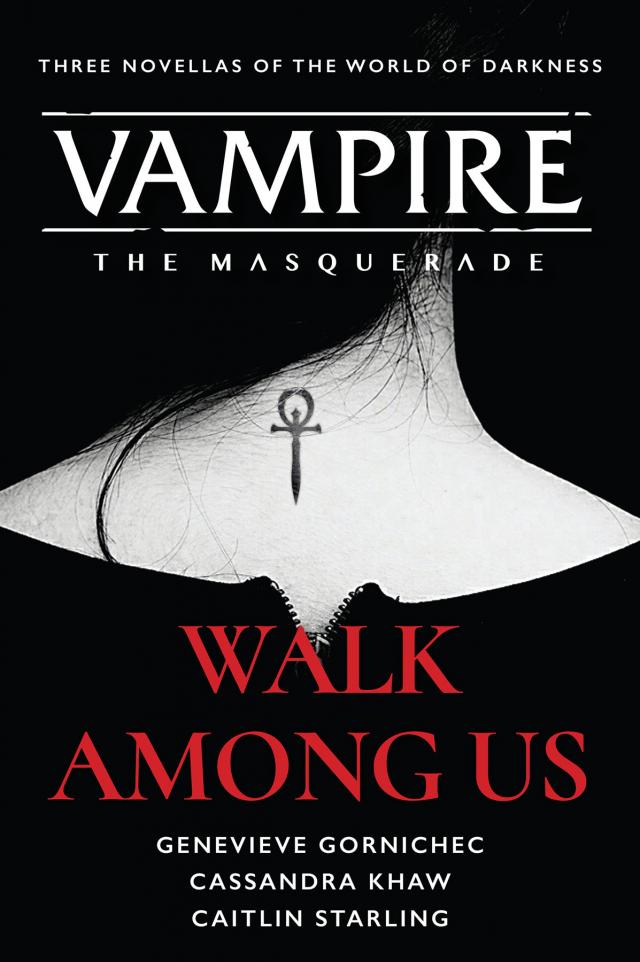
Walk Among Us, page 1


Contents
Cover
Title Page
A Sheep Among Wolves Chapter One
Chapter Two
Chapter Three
Chapter Four
Chapter Five
Chapter Six
Chapter Seven
Chapter Eight
Chapter Nine
Fine Print Man
Monster
Meat
The Land of Milk and Honey November Night Manager
Ecovillage
The Interview
Hawthorn House
Soup
Vegan
Messy
The Applicant
December New Employee
Domestic Dispute
Management
Contract Negotiation
Sylvia
Tiller of the Ground
Deal-breaker
Animal Husbandry
January Culling
The Tower
PR
Catch and Release
Implementation
Slaughter
New Love
Confession
February Robin’s Return
Afterbirth
Masquerade
Assignment
Romance
Tragedy
Processing
Failure to Deliver
Memory Fog
Harvest
Livestock Management
Acknowledgments
About the Authors
Copyright
About the Publisher
A Sheep Among Wolves
Genevieve Gornichec
Chapter One
Clea caught sight of the flyer that changed her life on a bitter Sunday night in November. The words made her stop dead in her tracks and stare, and made her shuffle across the fresh dusting of snow on the sidewalk leading up to the empty building until her breath was so close to the window that it fogged the glass.
“Honestly—I’m really worried about you, hon,” her mom was saying on the phone, which Clea pressed against her ear with bare, shivering hands. “Are you still not making any friends? It’s almost Thanksgiving. . . .”
“I’ve made friends,” Clea said mechanically, her eyes not leaving the flyer. Her other hand hung limply at her side, clutching the greasy paper bag that held the late-night burrito she’d bought for dinner as a break from campus food.
“Uh-huh,” her mother said, unconvinced. “How about your roommate? Did you talk to your RA about getting transferred to another dorm?”
“No . . .”
“Ugh, Cornelia. Do you want me to call the school and—?”
“No, Mom,” Clea said with disgust. She finally shook herself and turned away from the flyer, pressing herself against the window to take refuge from the snow under the building’s small awning. “This isn’t a school, it’s a university. And even if I wanted you to call, like I’m some kind of baby, I—I wouldn’t even know who you’d call in the first place.”
“Residence Life. I have their number right here.”
“Mom.”
“All I have to do is call and—”
“Mom, I said no.”
“Well, fine then. You know, I’m not going to be around forever, so if you don’t advocate for yourself, one day no one will—”
“I’ve gotta go, Mom. I’m at the library studying for an exam.”
“But I hear cars in the background—”
“Goodbye,” Clea snapped and ended the call. She stared at her phone for a moment or two before heaving a sigh and sending a follow-up text to her mother: Sorry, I swear I’m fine. I love you.
A moment later a check mark and the word Seen appeared under her message, but no response came.
She stuffed her phone back in the pocket of her coat and started to walk home—except she saw the flyer again out of the corner of her eye, the words stark red against a gray background.
Do you feel invisible? it asked. And then below: Are you far from home? Do you need someone to talk to? Come to the Community Space, Monday night at 8:30 p.m. on November 3, for hot cocoa, doughnuts, board games, and more!
Clea examined the flyer more closely. It was printed in the proper colors but didn’t have a club name or the university’s logo anywhere, which was quite strange for Ohio State. But the event took place in this very building, which looked abandoned and was across the street from campus—maybe Res Life had rented out the space? Then again, it could be any number of clubs behind the flyer; everyone knew that the best way to get college students to show up was by offering free food.
She looked over both shoulders—something about being alone in a big city made her feel like she was always being watched—before ripping the flyer down and cramming it into the pocket of her parka. Then she took off down the street, still clutching the bag containing her now-cold burrito.
Clea arrived back at her dorm soaking wet, the snow having turned to sleet halfway through her walk home. She waited for the elevator with three other people, and when it arrived on the ground floor, she stuffed herself as far into the corner as she could during the thirty-second trip. The others were glued to their phones and didn’t seem to pay her any mind, but she was wet and felt like a drowned rat, so she tried to stay as far away from them as possible.
It wasn’t just her bedraggled state that made her want to fade away. She imagined her fellow students were judging her as the elevator dinged on floor three; the rest of them were traveling to the upper levels of the six-floor dorm. Though she knew logically that they probably could not care less which floor she was going to, she imagined them judging her for not taking the stairs.
Her face flamed at the imagined insults—fresh from her own head—as she stepped out of the elevator, stealing a glance over her shoulder. The other students were still staring down at their phones, paying no attention to her whatsoever.
Clea wasn’t sure which one was worse: being mocked behind her back or going so unnoticed that it was like she didn’t even exist.
The elevator doors closed behind her, and she made her way down the hall toward her dorm room. I’ll have to microwave the burrito, she thought sadly, the paper bag at her side completely soaked.
She could hear giggles and loud thumping music, which was not unusual for a freshman dorm, especially on a Friday night—but as she made it farther down the hall, she realized that it was coming from her own room. She’d known her roommate and friends were going out that night—just like every other—but Clea was sure they’d be gone by now, off to stumble down High Street to coerce upperclassmen into buying them drinks before being invited to any number of house parties.
Her heart sank and her hands began to shake as she hovered outside the door, listening to the laughter. She fumbled to get her phone out of her pocket and check the time. Eleven thirty—maybe I could just go downstairs and eat in the lounge, and by the time I get back, they’ll be gone. Maybe—
But then the door swung open and her roommate Hannah’s freckled face appeared, and she let out a shriek of surprise when she saw Clea on the other side of the door.
“Oh my God, you scared the shit out of me,” Hannah said, clutching her chest so dramatically that Clea knew she had already been drinking. Hannah’s face was plastered with makeup, her red hair in perfect waves, and she wore a short black dress with a lace overlay and stiletto boots. The rest of her entourage was dressed similarly and seemed to have been about to head out the door.
Clea pictured the lot of them tottering down the street in their heels, clutching their massive cell phones, shivering without their coats. It was the number one way to spot a freshman girl.
Two more minutes, Clea thought in dismay, as the scent of booze and hairspray wafted out of the room. If I would’ve just waited two more minutes . . .
Over her shoulder, Hannah’s friend Delaney twisted her face into a sneer. “What were you doing just standing there, Cleopatra?”
“I—I—,” Clea began, floundering. As if on cue, the soggy paper bag broke and her burrito fell to the floor with a very sad plop, causing salsa and sour cream to burst through the foil and splatter the geometric-patterned commercial carpeting at her feet. The girls erupted into raucous giggles.
“Ugh, c’mon, guys,” Delaney said, ducking past Hannah and pushing past Clea, stepping over the burrito with disgust. The rest of the girls filed out after her, giving Clea smiles of fake sympathy before they got farther down the hall and whispered among themselves, snickering and stealing glances over their shoulders at her.
Yeah, Clea thought, this is worse than not being noticed.
Hannah was last, and she hesitated in the doorway. Clea cast her eyes down and moved aside, motioning for her to go; her roommate was a decent person when it was just the two of them, but she could never seem to bring herself to be kind to Clea in front of her friends. It was as if she were risking her social standing merely by association.
Clea’s face flushed again. There was a time when she’d thought college would be different than high school, that a place as big as the Ohio State University wouldn’t have cliques and drama and mean, mean girls.
It hadn’t taken her very long to realize she’d been wrong.
“Sorry,” Hannah mumbled without looking at her and then followed her friends.
Clea watched them pile into the elevator, and she could hear their giggles turn into flat-out laughter as soon as the doors closed. Unlike her imagined slights from the students in the elevator earlier, Clea was certain
Clea bent to pick up her burrito. It hadn’t touched the floor despite losing some of its contents, so she dumped it on her desk, grabbed a napkin, scooped up the escaped condiments from the hallway floor, and threw them away.
Once the door had closed behind her, Clea breathed a sigh of relief at the empty room and shrugged off her backpack and parka and plopped down at her desk. Then she cracked open a Mountain Dew from the mini-fridge—How can your roommate drink that crap? she heard Delaney say in her head—and reached for the remote control to Hannah’s flat-screen television. It was too quiet in here; she needed background noise.
She ate her cold burrito—unable to risk encountering anyone in the lounge to heat it up—and watched the last thing Hannah had on, not really absorbing anything. When the burrito was gone, she felt worse than before, and her stomach protested. She tossed the greasy foil wrapper into the garbage and put her pop can in the recycling bin behind the door and avoided looking in the giant mirror mounted there. Her thin, mousy hair was still wet from the sleet, and the frumpy, oversized hoodie and jeans she’d been wearing for several days suddenly felt dirtier than before. She felt gross, and even grosser because she knew it was her own fault.
Passing her desk again, she stole a brief look at her art box, full to bursting with Prismacolor markers and pencils, ink pens, and kneaded erasers. It sat there atop a new empty sketchbook her mother had given her for graduation.
I wish, I wish, Clea thought, but every time she tried to create something, she couldn’t bring herself to do it. Every time she tried, she failed, so she just stopped trying.
Clea turned away and flicked on her bedside lamp. She changed into the oversized T-shirt and sweatpants she wore as pajamas and brushed her stringy hair, willing it to dry before she went to sleep—she should shower, but it was too much effort at this point, and the thought of people looking at her freaked her out enough to avoid the communal bathroom until absolutely necessary—and settled down in her bed.
Since she slept a lot during the day and at odd hours, she kept a bag of earplugs in her nightstand drawer in case the noise from outside disrupted her, as it frequently did. Oddly, she found it was too quiet in the dorm tonight, as if everyone had gone out without her.
That was when she remembered the flyer.
Why had it caught her attention? It was the same as all the other flyers around campus, advertising all the programs and meetings and initiatives sponsored by the university. It was a whole thing, as if they knew that a majority of college students were struggling with their mental health. Clea figured that the university’s flyers must work for some people, but she hadn’t been able to bring herself to seek help from the school, even though the resources were certainly there.
She missed her therapist back home. It had been hard enough for her to open up to someone the first time, to get it off her chest how worthless and lonely and excluded she felt, and talking about it only increased the shame that came with being a perfectly logical person who struggled with mental illness. Yes, she knew she should get up and do things and make friends, but she couldn’t and she didn’t know why; yes, she knew it was pointless to worry about the things she worried about, like people talking about her behind her back and judging her wherever she went, but she couldn’t make herself stop no matter how hard she tried. And it only got worse the longer she was here, in college, surrounded by thousands of students who seemed far more functional than she was.
So the thought of having to start from scratch and explain her shame to an entirely new therapist was terrifying. As long as the one back home kept prescribing her meds and seeing her on school breaks, that was just fine with Clea. It was enough to get her by in the meantime—or so she’d hoped when she’d first started college. Except it seemed like she needed help now more than ever.
But she’d ignored the beckoning of the university’s numerous crisp, clean flyers begging her to look after her mental health. So why had this dingy off-campus flyer appealed so much to her instead?
Clea got up and crossed the room to her desk, where she’d put her damp parka on the back of the chair, and she reached into the pocket to extract the crumpled paper. Smoothed it out on her desk. Let the words draw her in, as they’d done earlier that night.
Do you feel invisible? it asked. She read the words over and over again until they seemed more accusatory than concerned. Do you feel invisible? Do you feel—?
Finally, Clea crumpled up the piece of paper again and stuffed it under her pillow.
She knew what she was doing tomorrow night.
Chapter Two
Monday dawned cold and dreary, and since Clea had been too distracted the night before to set an alarm, she slept through her morning classes and spent the rest of the day chewing over whether she was going to go through with it, whether she was actually going to get involved and go do something instead of hiding out at the library eating junk food and watching Netflix on her laptop until she was sure Hannah and her friends had already gone out, or wandering aimlessly about campus in the wee hours of the morning when she couldn’t sleep.
Walking alone during those times didn’t bring her the peace she expected it to. She was always on alert, never fully calm even when she was clutching her pepper spray. It was a small comfort in case something happened to her and she couldn’t make it to an emergency post in time to slam the button and summon the campus police. The posts littered campus like friendly sentinels, positioned such that you could always see one if you were standing at another—helpful if you feared you were being followed, so you could punch the buttons as you walked to indicate your path.
But they were still just small pools of light in the darkness, and their presence didn’t stop Clea from constantly looking over her shoulder as she meandered between classroom buildings and dorms, across the Oval and down to Mirror Lake, and back again.
The night was bitter cold, but she eventually found herself sitting on a bench on the campus side of High Street, across from the Community Space. She twisted the crumpled-up flyer in her hands and took deep breaths. The building looked as abandoned as it had the night she’d ripped the flyer from the darkened window. She hadn’t even tried the door—maybe it was locked.
Maybe I ripped down the only flyer, Clea thought, keeping her head down to avoid eye contact with passersby while low-key monitoring other people who tried to enter the building. So far, there was no one.
I haven’t seen any other flyers around campus. She put in her earbuds and took out her phone and tried to look busy so strangers might be deterred from bothering her, as she watched the door out of the corner of her eye. Maybe I’ll show up and there will be nobody else there and I’ll look like an idiot. It’s safer just to go home, then, isn’t it?
She put her phone aside; took another deep, shaking breath; and untwisted the flyer, smoothing it out in her lap.
Do you feel invisible? it asked her.
Clea sighed, thinking about her interaction with Hannah and her friends last night. I’ve tried to be invisible to spare myself the pain that comes from being noticed, but is that really what I want for my life?
Do I need someone to talk to?
It was dark outside, and Clea was cold. So she steeled herself, scrambled across the busy street as fast as she could, and walked over to the door, her fingers hovering just over the handle.
The building was still dark inside, so dark that she couldn’t see in. Clearly, no one was there; this was all a mistake. Suddenly, she was glad she’d grabbed the flyer, as proof that she hadn’t hallucinated this whole thing from a secret need for companionship.
She dropped her hand and sighed. Stupid, stupid, stupid. I’m just going to go home.
But when she whirled around to leave, she crashed into someone who had been coming up behind her, slamming her nose into his chest.
“Whoa,” he said, stepping back.
“Oh my God, I’m so sorry,” Clea muttered, stepping aside, her hand covering her nose. Her eyes flickered to the person’s face, and then down, then back up to do a double take. She couldn’t help but stare.