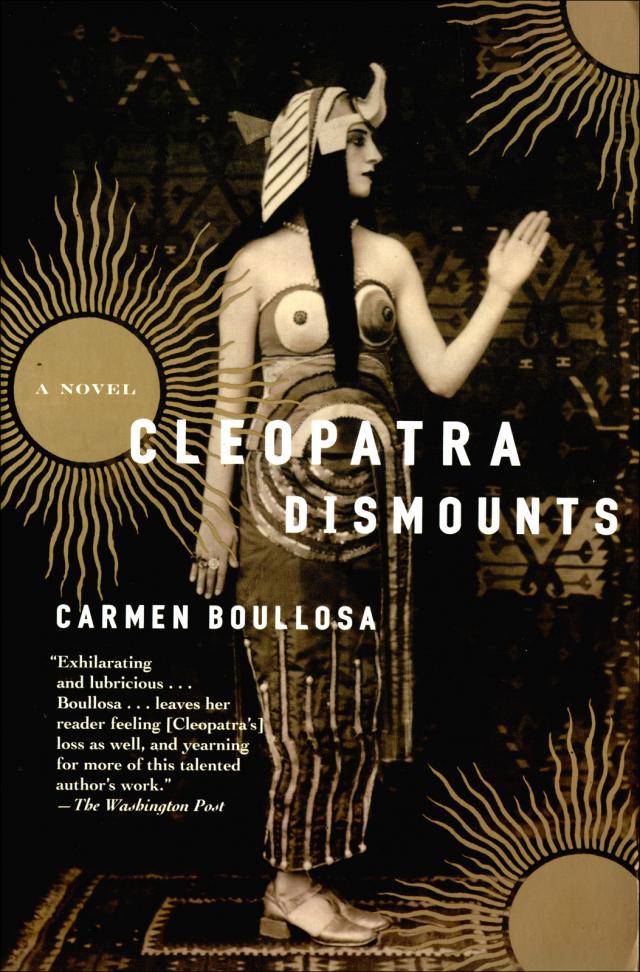
Cleopatra Dismounts, page 21


“Josephus, how many men do we have at our disposal? Can we take on Cassius?”
“Cleopatra, Pelusium is already in the hands of Achilles. Right now, it’d be pure suicide.”
“We could raise an army here, get the fleet to join us, and attack by sea.”
“We don’t have time, Cleopatra. We’d leave everything wide open for Ptolemy.”
“Yes, you’re right, Josephus. So let get things plain. One, we can’t attack Cassius, because we don’t have enough soldiers. Two, we don’t have time on our side, so we can’t think of raising an army. Three, it’s risky but Cleopatra ought to see Caesar, because we need him as an ally. If Ptolemy gets him to take his side against us, we’re done for. Four, Ptolemy’s men are waiting for the queen to show so they can kill her.”
“Right, Demetrius. So . . .”
“Josephus, my opinion is exactly the opposite of yours. Alexandria will be Caesar’s enemy. Ptolemy won’t be able to keep it calm. Time is on our side. We take our time recruiting an army, then we march against Ptolemy, and we get Caesar on our side.”
“I disagree. If we wait, Caesar gets chummy with Ptolemy. Why wouldn’t he? We delay in getting there and Caesar will help him against us.”
“Could be but . . . I’m not a man of war and we’re dealing here with a war. How do we get Cleopatra to Caesar without Ptolemy’s men killing her? We can’t endanger the queen.”
“Cleopatra, a suggestion,” put in Apollodorus. “Remember how we used to play at making you invisible? That’s what we have to do now. You’ve got to get you to Caesar without any risk of Ptolemy’s men intercepting you.”
“But all entrances to the city are blocked off. They’re scared of you showing up there. They know they’ve got to stop you seeing Caesar,” said Josephus bluntly.
Guided by the methodical intelligence of Demetrius, we agreed on the following: With the army already under arms in Ascalon, we would advance toward Pelusium and engage Achilles. Meanwhile, those forces we had in place against Cassius would move against him, in the hope of dividing his superior forces. We would embark on a merchant ship in Barca and head to Alexandria as fast as possible. We would bribe the port officials to let us anchor in the Kings’ Harbor.
In the meantime, the levy would continue, to provide us with the necessary reinforcements. Josephus would stay in Cyrene.
The rest of the plan we would figure out en route to Alexandria. Now the important thing was not to waste time. As the poet says, “Time runs ahead and has no hair on the nape of its neck to hold it back.” We had to be installed on that merchant ship that same day and be ready to sail at dawn. If we hurried, there would be no time for anyone to sneak a message to Ptolemy about our plans.
Josephus rushed off to Barca to arrange for our trip.
I bade good-bye to the hospitable Carneades III, without divulging my plans to him. He put his army at my service and showed every sign of joy at the news that Josephus would be staying to recruit troops locally for the army of Cleopatra.
I sent Apollodorus and Charmian ahead to finish off the preparations at the port and then I galloped off to say good-bye to the Amazons. Half a dozen men from my personal guard accompanied me. The wise Demetrius also came along as he was dying to meet Amazons.
I had no plans to neglect my alliance with the Amazons. I wanted to ask them to embark on our warships. Instead of experienced veterans, I wanted Amazons there. I knew they would be itching to attack Alexandria with the advance guard and I’d have to be very persuasive to keep them in the rear. But I was not going to change my mind. What atrocities would they not get up to in my beloved Alexandria, planned by artists and inhabited by gods, these women possessed by martial frenzy? I was trusting that there’d be no need for them to do any actual fighting, if I could meet Caesar successfully and avert a battle between my army and Ptolemy’s infantry. But I would not be proposing my own idea but that of Cyrus, as documented by Xenophon. As Hippolyta honored Cyrus, I knew that she would recognize and respect his views.
Drawing near, I left my companions and went forward alone to warn the Amazons that men would be entering their camp. I was rehearsing my arguments about their place in my forces, determined to avoid offending them or leaving them feeling slighted, when suddenly, I heard curses and heart-breaking lamentations.
“I loved it so much!” one was saying.
“That’s what women must feel when they lose a child,” said another.
There followed more upsetting cries and I rose on my stirrups to see what the problem was.
They were gathered by the Temple of Demeter, some on horseback, others on foot, all of them naked. Their hands, faces, and breasts were covered in blood. They had sacrificed a horse, and as if in answer to my questions, they broke into a hymn:
The sun we worship and to him we bring
This horse. To heaven’s swiftest power
We offer now the swiftest of our things.
To heaven’s most beloved power we send
The most beloved of the things we own,
On which we never war, our earthly sun,
This horse . . .
What I saw in Hippolyta’s hands appalled me; in her left hand was a knife, in the right the enormous purple penis of the horse. She was howling at having castrated the creature. The head with its blond mane lay on the ground, the body was dismembered. Behind me, another Amazon was leaning over the dismembered parts and interpreting the intestines. Hundreds of other Amazons, seated on horseback, were all menstruating; blood covered the horses’ backs and their own thighs. I retraced my steps. Out of the corner of my eye I glimpsed another horse, a fine animal, rearing and kicking against its reins. Its back was bathed in blood as were the legs of the rider. But a river of blood was pouring down the animal’s legs. It too had been castrated in readiness for sacrifice.
There was no sign of the dogs. They had all fled the abhorrent scene.
I felt sorry for my double, the pearl. She had no place in this society. As if in response to my thoughts, I saw her in the distance, slinking away toward the wooded riverbank. In her arms she carried an enormous bouquet of yellow flowers; her loosened hair drifted behind her as she fled. For a moment I considered racing toward her, calling her, snatching her up onto my horse, and rescuing her from this fearful world. Then I remembered it had been her decision to leave me and I returned to my retinue, without saying a word about what I’d seen. Not one word about the horse, nor of its penis, nor of the Amazons’ bodies stained with its blood, nor of the plunging of the second castrated horse. What I did say was, “We’re going back. They are in no condition to receive us. We’re going straight back to Cyrene. I’m sorry, Demetrius, but there’s no alternative.”
Demetrius read my distraught expression and raised no objection. We retraced our steps and met with our men on the crossroads to Barca. I was deeply upset. I could not rid my mind of the sight of those women, both bleeding themselves and, as if that were not enough, splattered with animal blood.
I couldn’t eat a thing for the rest of the day.
We made good time to Barca. By the time night had fallen, we were on board the merchant vessel. At all costs we wanted to forestall any rumor of the true identity of the good ship “Cyrene.”
I could hardly catch a wink of sleep but before I did finally drop off, I had changed my opinion radically about the Amazons. I would not take them to Alexandria with me or even let them come in the rearguard. They would not form part of my army. Anywhere. They would not be counted among my allies. I found them repulsive. To take them with me would be to guarantee the destruction of all I held dear. They represented barbarism, disorder, the absence of self-control, death to urban life and respect for law, and they would ensure my downfall. I wanted to build an empire; they wanted to ban fire in the oven, to fracture all forms of social order, set up gods to control the city markets, and install altars in city squares, in the gymnasiums, perfumeries, exchanges, arenas, meeting places, pharmacies, barbershops, and of course in all the temples so they could practice their rites there.
The world for them was the fragmented chaos I had dreamed of before Charmian woke me. They despised everything I wanted to uphold and maintain in an orderly Alexandria. The only way to keep them as allies was to discover some land where mankind had never set foot and send them there.
This passed through my mind, as I eventually drifted off to sleep, but I was resolute in my decision, even before expressing it in words.
As we sailed, we worked on getting me in to see Caesar. Immediately after reaching Alexandria, Apollodorus and I passed a small launch, the type merchants used to furnish the palaces of Bruckheion with recently unloaded merchandise. Apollodorus would take me to my palace wrapped in a carpet that supposedly we were delivering to Caesar as a present. The palace servants recognized Apollodorus and they informed Caesar’s staff that the gift was undoubtedly from me. Curious, he agreed to see the gift and hear the personal message that came with it.
Once in the presence of Caesar, it was my job to convince him of the value of an alliance with me.
The palace servants were loyal to me. But in case of any problems, this was the ideal place to rescue me from. We knew the palace inside out. Those who lived there worshiped me, but we also brought with the merchandise enough soldiers to carry out a rescue mission.
To use the words of Apollodorus, we were playing at making me invisible. Hidden inside the carpet, I escaped the vigilance of Ptolemy.
It was while on board the ship, I had learned that Josephus and the good-looking Severus had bathed the pearl Cleopatra in wine. They did not share Charmian’s reverence for her. “We couldn’t run the risk of having your double running around,” Josephus would explain to me. “Severus’s idea was to bring her as gifts from you a variety of showy presents, beautiful objects of gold, clothes, foodstuffs, along with a bath of aromatic waters. He passed it off as a special preparation from the queen to fend off fatigue and increase beauty.” Then four pygmies from the court of King Carneades had bathed her, right in front of Severus. The bathwater contained a considerable quantity of wine hidden in the spices and perfumes.
“When we were planning it,” Josephus told me in a whisper, “Severus told me that once there was nothing but the dissolved pearl in the bathtub, he would drink the bathtub empty, right down to the final drop. His dream was that he’d tell to his sons, and his sons would tell their sons, and their sons would tell their sons that one night Severus got drunk drinking a replica of the beautiful Cleopatra.”
You all know how my plan to see Caesar worked out. I followed it exactly and I arrived in Caesar’s presence on the shoulders of my loyal Apollodorus. Caesar was quite smitten with his good looks and Apollodorus used them to predispose Caesar in my favor before unwrapping the present. Then I seduced him and made him love me. It was the only way to secure him as an ally. “If the goddess thought of it,” I said to myself, “so that Dido would not be tempted to betray her son, what’s wrong with me trying it too?”
But now that I recall for the last time my stay with the Amazons and my return aboard a merchant ship to Alexandria, I realize that on that trip I made a decision to relinquish my status as a goddess, as Isis on earth, in order to lower myself to the level of a colt, my hooves beating the plain to the rhythm of my gallop, in the pointless race that lovers run in bed. I dismounted from the splendid horse the gods had bestowed on me, to turn myself into part of an animal. It was on board the merchant ship where I opted to switch my two goddess legs for the four legs of a lowly beast. Now I wouldn’t take a step by myself. Always I had to have a lover. I became addicted to needing a partner in life; I lived in enslavement, self-abasement, and hysterical self-deception, as I became part of the animal with two backs and four legs that travels along moaning, without achievements, without getting anywhere in the world. Without progress, expending immense effort, but forever circling round the same old point, excavating its grave in the process. Good-bye to the face of the sun that strides toward the kingdom of light and sanity! Now eyes will see only another pair of eyes, like the lowest of the beasts, believing to find in them a divine insight into the reality of things!
I forgot the time I galloped on a bull. As I enjoyed my ride, as I pleasured myself on its body in my journey over the sea, I blinded myself. I failed to see Proteus, the monster who inhabits the island of Pharos, take the shape of a terrifying lizard with the mane of a dragon, curled up on its own tail. I saw nothing when he transformed into an agile tiger with a mottled coat. I didn’t even see him wave good-bye to me. I was blind to such a marvel as this! The pity of it!
What happened to me was what happened to my mirror image. Didn’t I too dissolve? Didn’t I swig down my own throat the dream of what I was going to be? Didn’t I end up like Acusilaus in the jaws of vicious Sirens? Or like the pearl Cleopatra in the mouth of the good-looking Severus? Didn’t I do that to myself, when I inveigled Caesar into an alliance, in order to get back what rightfully belonged to me? To be what I am, I opted to see myself through the eyes of a man. I drank my self. But do you think I gobbled and guzzled my self without help? Apollodorus, Apollodorus, my loyal friend, my accomplice—forgive my honesty—it was you who urged me toward this act of self-devouring! While our boat was retracing the steps of the bull across the seas, thanks to you, I was undoing all the fine work that the gods had delicately planned, their scheme to endow me with a glorious place in history.
On the boat, prodded by Apollodorus, I went around destroying, ripping apart the designs of the gods. I don’t know why this did not release gale-force winds or tidal waves. I turned my back on the gods; they turned theirs on me. I need to understand the consequences of my actions, but just as the Sirens’ song blinded the male slaves, the complicity of Apollodorus, who had acted as my friend for all those years—don’t fault my absence of sentimentality here—blinded me to understanding. Now I could never be Isis, now I would not be the one to unite two continents with a garland of flowers. I would not defend the territories of the gods. The gods who one day revealed their power in every flower, every ravine, every wave, are soon to fall silent. The trees of Elysium will lose their leaves. Their branches will display no harmony; they will form a chaotic tangle. Nature will lose its power to act, forfeit what the earth produces, the living soul of things, the breath of the World. Mankind will yearn to replace this truncated soul but will not be able to observe its own drives with joy and satisfaction. Dionysus will have to gather his belongings from the royal hall and drag them to the squalid passages of a hideout.
The gods knew that I would pay the price alone. I would lead Caesar to his death. They warned him of it, when they forced him to swim in the waters off Alexandria to save his life, in the rebellion of Ptolemy against my throne. Once he was dead, I would lead Antony, as he would lead me, into the jaws of defeat. I would destroy my design, I would end my life without having lived it. I would bring death upon Egypt. And the gods, I would drive them with me toward oblivion and deceit, to remain outside daily life, to be lost as inconsequential oddities on the verge of being forgotten.
I will achieve my final destruction by dismounting abruptly from my self, by yielding to the quadruple rhythm of that gallop that makes the heart of love resonate, two lives in one, Mark Antony and Cleopatra interlocking their destinies. I, too, hearkened to the song of the Sirens. The Amazons, natural enemies of love, did not come to protect me. My destiny was far worse than those of Acusilaus, Penthesilea, Thalestris, and Orthea. Antony dragged me toward defeat, and now the little man who claims to be my conqueror will gobble me up and murder my Apollodorus, Charmian, my faithful maidservants, and my three children born of Roman fathers, Caesarion, the legitimate heir of Julius Caesar and my twins by Antony.
I say all this, bathed in the blood of my Antony. I speak out in a loud voice to a world that in a few hours will perish with me. The Romans will not pardon me, but their chains are not for me. I will not grace their triumph; I will stain it by my absence. I hitched my star, the dream I received from heaven, first to that of Caesar and then to Antony’s, Romans both. I planned to have them as allies, though their people were my enemies and would one day bring to an end the kingdom of the gods on earth, destroying me and mine. Without the governing gods, we are are nothing.
The Romans hated my accomplices, a hate in part undeserved, for they always remained loyal to Rome and if they accepted my company, it was because they were convinced it would lead to the extension of the Empire. Let it be stated clearly: neither Caesar nor Mark Antony were unfaithful to Rome. Neither of them was an imbecile; the dream of uniting two continents would have been the guarantee of an eternity of sense, but a different future awaits them now, with Asia and Lybia abandoned, isolated on their peninsula and in the petty territory of Europe, convinced of being the center of the world. But the world is much more than you, Rome! It had another luster, it dreamed better dreams, it beat to the rhythm of the souls of various gods who were something more than statues and paintings! You assassinated Julius Caesar, for he dreamed of something bigger than your pettiness. You killed Mark Antony for the same reason, and with those two deaths you were committing long-term suicide. Your future was with me, but you chose to hate me, idiots!
From now on, men and women will be different from those I knew. Romans will dominate, reason will be in control, a cruel sort of reason, stained in men’s blood. A blood different from Mark Antony’s. Though he took me down roads that were not mine, he knew the tone of voice in which men used to speak to the gods and he saw their faces.
Diomedes the Informer
Those were the last words of Cleopatra and they are close to being mine as well. Diomedes can now pass through the gates of death with a clear conscience. Traitor and informer once, now I have truly been your voice, my queen. That was how you spoke before you were murdered by the Roman vipers who had so much fear of you. That poison did not come from a basket loaded with figs but from an order trembling with fear, a coward’s order, for it hid the hand that cast the stone.