Bigfoot, Yeti, and the Last Neanderthal, page 16
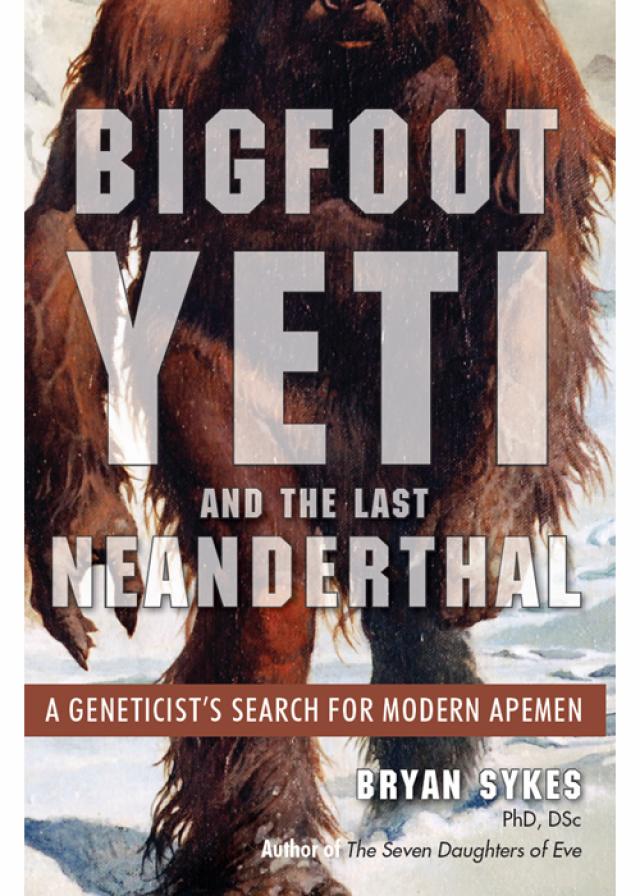


As with the Milinkovitch mehti paper, I emailed the principal author, Dr David Coltman from the University of Alberta, to ask whether the article was genuine. My enquiry produced more of the back story and Dr Coltman told me how he had become involved:
My attention was attracted because the regional biologist from the Yukon, Philip Merchant, stated that the hair closely resembled bison. I also happened to know Philip quite well and he is a very competent and diligent professional. But the question about whether the hair was really bison or not remained, so I called Philip and asked him to send it me and we would DNA test it so we could bring something definitive back to the press, but really for a bit of fun, but also because I saw this as a good opportunity to do some good outreach about science and wildlife genetics.
When the sample arrived, Dr Coltman successfully extracted and sequenced the mDNA, in fact the same control region that we have already encountered, and detected a clear match with bison. The story made headline news with a campus press conference, interviews on CNN and coverage by all the major TV networks. Soon afterwards he was having dinner with the editor of the influential Trends in Ecology and Evolution and she persuaded him to write a short article. Rather like Prof. Milinkovitch's paper on the Matthiessen mehti, Dr Coltman could not resist a titillating final paragraph:
There are several possible explanations for these results. First, as suggested from molecular analysis of hair from a suspected Yeti (referring here to the Milinkovitch paper), the sasquatch might be a highly elusive ungulate that exhibits surprising morphological convergence with primates. Alternately, the hair might have originated from a real bison and be unrelated to the sasquatch. Parsimony would favor the second interpretation, in which case, the identity and taxonomy of this enigmatic and elusive creature remains a mystery.
Like all the best yeti and sasquatch tales, it ends with an element of uncertainty. Normally this ambiguity is genuine – indeed the extent of the uncertainty is usually played down. In this case, though, there was very good DNA proof that the hair came from a bison. Had there not been this lingering element of mystery, I doubt the press would have been as interested as they were.
There was one other thing that Dr Coltman told me. The witnesses from Teslin were certainly well aware what a bison looks like, even from behind when only its two hind legs would be visible. They had recently shot one, their freezer was full of bison steaks and the pelt was hanging up in their cabin. Was the temptation to start a sasquatch rumour too great? If so, then it worked. Not many CNN news crews travel to the town of Teslin, Yukon during the course of a normal year.
The one exception to these rather casual liaisons between science and cryptozoology is the Sasquatch Genome Project run by Dr Melba Ketchum. Dr Ketchum is a qualified veterinarian who operates a DNA testing company in Timpson, Texas. The Sasquatch Genome Project website reports that the project has been under way for several years. Over the last couple there have been periodical releases of the project's progress, though nothing was formally published.
These releases were always eagerly anticipated by the cryptozoology community and when I met up with Bigfoot enthusiasts on my first tour of the US in early 2012, Dr Ketchum and the Sasquatch Genome Project was the one topic that dominated all others. Wherever I went, everyone I met wanted to know what I thought about it. I could only reply that until the research was published and I could have a good look at the data there was very little that I could say. That rarely put a stop to enquiries and was immediately followed by, ‘Well yes, but what do you think anyway?’ I did however admit that it is highly unusual for a professional scientist to release preliminary information about the outcome of a project intended for publication, except in confidence and for a good reason. Good quality science journals are reluctant to publish anything that is already in the public domain, and additionally, if there are intellectual property issues, disclosure will invalidate any patent application. So the early release of the Sasquatch Genome Project conclusions was highly unusual.
For example, the following explosive press release appeared in November 2012:
FOR IMMEDIATE RELEASE ‘BIGFOOT’ DNA
SEQUENCED IN UPCOMING GENETICS STUDY
Five-Year Genome Study Yields Evidence of Homo
sapiens/Unknown Hominin Hybrid Species in
North America
DALLAS, Nov. 24 – A team of scientists can verify that their 5-year long DNA study, currently under peer-review, confirms the existence of a novel hominin hybrid species, commonly called ‘Bigfoot’ or ‘Sasquatch,’ living in North America. Researchers' extensive DNA sequencing suggests that the legendary Sasquatch is a human relative that arose approximately 15,000 years ago as a hybrid cross of modern Homo sapiens with an unknown primate species.
The study was conducted by a team of experts in genetics, forensics, imaging and pathology, led by Dr Melba S. Ketchum of Nacogdoches, TX. In response to recent interest in the study, Dr Ketchum can confirm that her team has sequenced 3 complete Sasquatch nuclear genomes and determined the species is a human hybrid:
‘Our study has sequenced 20 whole mitochondrial genomes and utilized next generation sequencing to obtain 3 whole nuclear genomes from purported Sasquatch samples. The genome sequencing shows that Sasquatch mtDNA (mitochondrial DNA) is identical to modern Homo sapiens, but Sasquatch nuDNA (nuclear DNA) is a novel, unknown hominin related to Homo sapiens and other primate species. Our data indicate that the North American Sasquatch is a hybrid species, the result of males of an unknown hominin species crossing with female Homo sapiens.
‘Hominins are members of the taxonomic grouping Hominini, which includes all members of the genus Homo. Genetic testing has already ruled out Homo neanderthalensis and the Denisova hominin as contributors to Sasquatch mtDNA or nuDNA. The male progenitor that contributed the unknown sequence to this hybrid is unique as its DNA is more distantly removed from humans than other recently discovered hominins like the Denisovan individual,’ explains Ketchum in the press release.
‘Sasquatch nuclear DNA is incredibly novel and not at all what we had expected. While it has human nuclear DNA within its genome, there are also distinctly non-human, non-archaic hominin, and non-ape sequences. We describe it as a mosaic of human and novel non-human sequence. Further study is needed and is ongoing to better characterize and understand Sasquatch nuclear DNA.’
Ketchum is a veterinarian whose professional experience includes 27 years of research in genetics, including forensics. Early in her career she also practiced veterinary medicine, and she has previously been published as a participant in mapping the equine genome. She began testing the DNA of purported Sasquatch hair samples 5 years ago.
Ketchum calls on public officials and law enforcement to immediately recognise the Sasquatch as an indigenous people:
‘Genetically, the Sasquatch are a human hybrid with unambiguously modern human maternal ancestry. Government at all levels must recognise them as an indigenous people and immediately protect their human and Constitutional rights against those who would see in their physical and cultural differences a “license” to hunt, trap, or kill them.’
Full details of the study will be presented in the near future when the study manuscript publishes.
If, as is suggested by the last line, the study was about to be published then any journal would be furious with this premature release of the content and would probably pull the article. Journals are naturally keen to make the most of the publicity generated by original articles, especially one as spectacular as this one promised to be.
In February 2013, the promised article was published, but not in a peer-reviewed scientific journal. It appeared in a new web-based publication called ‘De Novo’ and was the only article in the first and so far only volume.
I have been asked on numerous occasions to comment on Dr Ketchum's work, so I decided the best way to do it was to write as if I had myself been asked to review the ‘De Novo’ manuscript for a scientific journal. This is something I have done on very many occasions and I soon found myself able to go into full reviewer mode. The following paragraphs are extracts from my review of the manuscript:
To the Editor.
Thank you for asking me to review this manuscript. I must first declare a conflict of interest in that results from my own laboratory completely disagree with those set out in this MS.
The manuscript describes a series of DNA tests performed on various tissue samples attributed to the North American sasquatch, a large, bipedal and perhaps mythical creature reported to be living in America, especially in the Pacific Northwest.
The main, and dramatic, conclusion is spelled out in the abstract: namely that ‘the data indicates (sic) that the Sasquatch has human mitochondrial DNA but possesses nuclear DNA that is a structural mosaic consisting of human and novel non-human DNA.’
Table 1 lists brief details of the 111 samples donated to the project. Three are saliva samples from either a food trap (#22,23) or a game camera (#27), one is mucus found on tree bark (#98), three are samples of tree bark (#47, 48, 49), three are dried blood samples (#25, 28, 107,110) and one is a toenail (#26). The other samples are hair, one with tissue attached (#18). This is a large sample and the authors are to be congratulated for assembling so much material.
There is a brief summary of the microscopic and electron microscopic evaluation of the hair samples which claims that most of the hairs can not be attributed to any known species held in their ‘reference collection’. This sweeping claim disregards the great difficulty in identifying the species origin of hair from microscopic appearance in most taxa, especially if the sample consists of one or a few hairs.
The authors state that the only hairs that were taken through to DNA analysis were those having visibly attached follicles. I am surprised so many of the donated samples passed this test as most were shed hairs that normally do not retain intact follicles.
The next stage was the extraction of DNA and sequencing of two regions of mitochondrial DNA, namely cytochrome b and hypervariable region I (HVS 1) of the control region. All 111 samples gave results at both cytochrome b and HVS 1 segments, which is an astonishing achievement. All samples revealed a human cytochrome b sequence and one of a range of different human sequences at HVS 1.
From these results and some unclear nuclear DNA data the authors conclude that the sasquatch is a hybrid between human females, which, in the authors' opinion, accounts for the presence of maternally inherited human mitochondrial DNA, and males of another unidentified species.
The real problem with this paper is that the authors have interpreted all the DNA results as supporting the hybrid genome hypothesis, while disregarding any alternatives. For example, the other parental species of the hypothesised hybrid is never identified and only assumed to be present at all because the nuclear DNA sequencing is not as one might expect from a good human sample. In my opinion the much more likely reason is that these are highly degraded and contaminated samples, despite the authors' efforts to argue otherwise. Such material is notoriously difficult to sequence and the authors have provided no convincing proof that their results are not entirely created by these well-known difficulties. In comparison, the efforts to by-pass human and environmental contamination in the sequencing of the Neanderthal genome (Green et al. 2010) took years of work to achieve.
The mitochondrial HVS 1 results show a wide range of sequence types whose continental origin can be deduced from their known geographical range. Of the twenty-five reported, nineteen are typically European, two are African and four are either Asian or Native American. To interpret these results as proof that the hybrids crossed the Bering land bridge from Siberia into North America is absurd. Despite the reassurances of the authors that they had eliminated all human contamination, it is far more likely that the majority if not all of the mitochondrial DNA sequences reported are the result of just that – human contamination.
This MS is not well written, and the project planning is poor. A lot of the material in this MS is unnecessary. It is a manuscript about DNA and any new version should restrict itself to exactly that. We do not need images of hair, trees, shelters, indistinct video clips and that sort of thing.
My advice to you is to reject this MS without offering the opportunity for revision with the same data. While the topic is certainly of great interest, the data do not support what is theoretically a most unlikely hybrid origin for Sasquatch.
My advice to the authors is to concentrate on the best sample and obtain a full genome sequence with at least 20x coverage. From that, and especially from any contiguous segments containing both genomic contributors, identify the other parental species, if indeed there is one.
Yours sincerely
Bryan Sykes
The Ketchum study never gets close to providing the exceptional proofs that such exceptional claims require. It may have begun as a promising project, but it was very poorly executed, has wasted a lot of valuable material, caused a great deal of confusion among cryptozoologists and must have cost someone a lot of money.
Caveat donor.
15
The Hunt Begins
Having covered the very patchy impact of genetics on the field of cryptozoology, let me at last describe how Michel Sartori and I set about making our own contribution. Soon after agreeing the collaboration between Oxford and Lausanne we began to discuss the practical issue of getting hold of sufficient material to make the project worthwhile. I had thought there might be some useful samples in the Heuvelmans archive itself, but there was not. Michel and I agreed that obtaining enough material might be a serious obstacle to the project's success. We had to come up with a good plan. We decided in the end to issue a joint press release, announcing the collaboration and inviting individuals and institutions to submit samples for testing. Although we settled on this approach in the summer of 2011, it was not until the following spring that we were both sufficiently free of other commitments to cope with a large response – if there were to be one.
We drafted the following announcement:
PRESS RELEASE
SCIENTISTS SEARCH FOR YETI DNA
The Oxford-Lausanne Collateral Hominid Project
Background
Ever since Eric Shipton's 1951 Everest expedition returned with photographs of giant footprints in the snow there has been speculation that the Himalayas may be home to large creatures ‘unknown to science’. Since then, there have been many eyewitness reports of such creatures from several remote regions of the world. They are variously known as the ‘yeti’ or ‘migoi’ in the Himalayas, ‘Bigfoot or ‘sasquatch’ in America, ‘almasty’ in the Caucasus mountains and ‘orang-pendek’ in Sumatra, as well as others. Theories as to their species identification vary from surviving collateral hominid species, such as Homo neanderthalensis or Homo floresiensis, to large primates like Gigantopithecus widely thought to be extinct, to as yet unstudied primate species or local subspecies of black and brown bears.
Mainstream science remains unconvinced by these reports both through lack of testable evidence and the scope for fraudulent claims. However, recent advances in the techniques of genetic analysis of organic remains provide a mechanism for genus and species identification that is both unbiased, unambiguous and impervious to falsification.
These techniques were not available to biologists like Dr Bernard Heuvelmans, whose 1955 book Sur la Piste des Betes Ignorees (translated into English as On the Track of Unknown Animals) helped foster widespread public interest in the subject. Between 1950 and 2001, the year of his death, Dr Heuvelmans, as well as investigating numerous claims, assembled a considerable archive that is now curated by the Museum of Zoology in Lausanne, Switzerland.
In this release we are pleased to announce the launch of the Oxford-Lausanne Collateral Hominid Project, a collaboration between the University of Oxford and the Lausanne Museum of Zoology to employ these new genetic techniques systematically to investigate organic remains from these and other cryptozoological* samples. We invite submissions of material, particularly hair shafts, for analysis accompanied by details of their provenance. For submission procedures please visit http://www.wolfson.ox.ac.uk/academic/GBFs-v/OLCHP.
The principal investigators are Bryan Sykes, Professor of Human Genetics at the University of Oxford and Michel Sartori, Director of the Museum of Zoology, Lausanne.
*Cryptozoology: The search for animals whose existence is not proven.
The press release was sent out on 22 May 2012. Nothing happened until two days later, when I was contacted by Reuters, the press agency. After their report went out on the wires, the floodgates opened. Both Michel and I were inundated by interview requests from newspapers, radio and television.
I was pleased to see that there were very few comments about whether or not this was an appropriate subject for investigation by ‘serious’ scientists. The only one I encountered came from a professor of anthropology in St Louis, Missouri, and which was put to me in an Associated Press interview. He considered any research in this area to be both frivolous and futile but I responded that he had basically misunderstood the philosophy of science. I was making no claims that anomalous primates existed, or did not exist, but doing what science is all about – finding and testing evidence. I added that I did not have to believe what I was told, or even form an opinion. I just needed to test the evidence. Michel had a similar response from a professor of paleogenetics from Mainz, Germany who said in a radio interview: ‘I only fear that the examined questions, which are not really relevant to zoology, but rather belong to the boulevard press and can present some interest to the public, will never be discussed by serious zoologists.’ Other than those two rather mild admonishments, I was pleased to see that we had not stirred up much resistance to our project.