The Sidekick, page 35
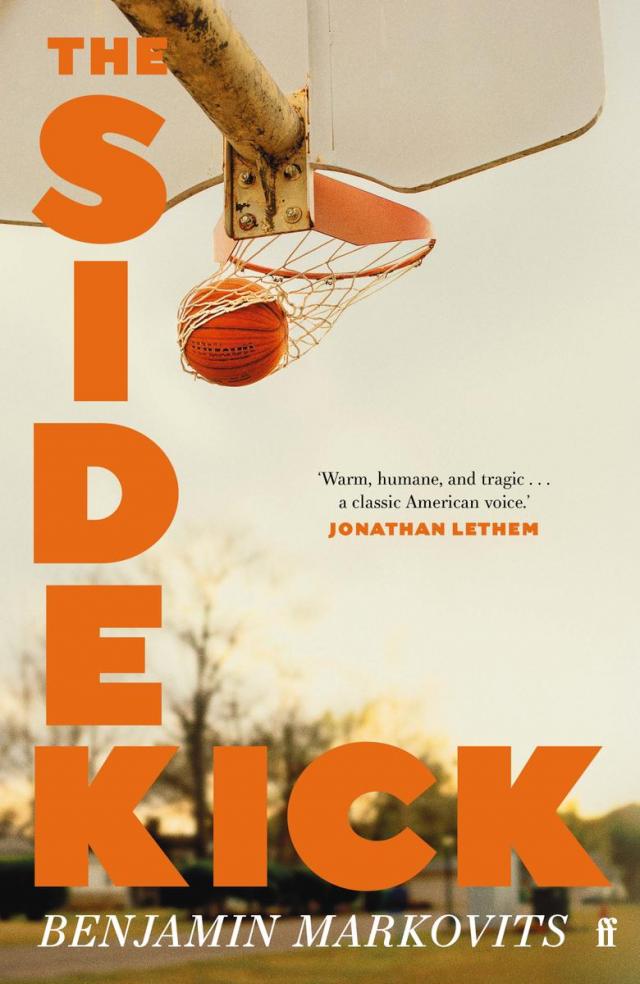


It was a moment he must have been dreaming of all his life and Marcus did what he had always dreamed of doing—and launched himself into a three-pointer that touched … air.
Megan said, “Somebody’s going to pay for that.”
She had come to the bar to order drinks; I could smell the smoke on her.
“What do you mean?”
“Hello, Brian,” she said. It almost surprised me that she remembered my name. But it was nice to hear her say it, like I’d been there all along at the back of her mind. “That’s just what he’s like. If he messes up, he takes it out on somebody else.”
“This is a different level. You can’t just take stuff out on these guys.”
The barmaid came over and Megan asked for a pitcher of Shiner Bock and a basket of cheese fries.
“Where are you sitting? There’s actually table service,” the lady said, and Megan told her, “There actually isn’t.”
“You can’t just take stuff out on Reggie Miller.”
“Who’s the worst player on the Pacers right now?” she asked me. “I mean, on the court?”
“I don’t know.” It was still early in the season, after the lockout. Teams hadn’t found their rotations yet. “Al Harrington maybe.” Harrington was one of those kids who jumped straight to the pros out of high school. Later he turned into a pretty good player, but this was his rookie year. He was nineteen years old and lucky to get eight minutes a game.
“Marcus told me once, if you want to pick off a pass, just look who’s got the most power on the other team, and guys will pass it to him even if it’s not a good pass.”
“You can’t just …”
But then Harrington caught the ball on the post and didn’t know what to do with it. Walker was on him, and Reggie circled to the corner. Harrington tried to loft it to him and Marcus reached up and took the ball out of the air. Somebody had put a song on the jukebox, “Tecumseh Valley,” which was nice and quiet but still too loud for me to hear the announcer.
Megan was laughing.
She waited for the beer and food and we talked while she waited.
“Is that why he went pro? Because of you.”
“What do you mean?”
“My mom probably told me things she shouldn’t.”
“Oh, that,” she said. “He wanted me to … press charges. That’s what he wanted. But I just … didn’t want to go through all that. He couldn’t understand it. Like, why wouldn’t you, if you can.”
The pitcher came but the fries took a little longer. “He thinks everything is a power play,” she said. “He thinks everybody’s trying to get an edge on him. That’s just what he’s like. I used to tell him, some people are just … trying to get along, but he didn’t buy that.”
“Are you still in touch?” I asked her.
“Sometimes about … financial stuff. How about you?”
“No.”
“The first thing he did when he got his first paycheck …” The music was sad and she turned away a minute. “He gave me some money, which he said, he wanted me to get some help for my mother, which is what I did. So she has a full-time carer now.”
“You look great,” I said.
“Well, it makes a difference. I’m full-time now, too.”
“You know what my dad always called you?”
“No.” She laughed again, she could move easily between different emotions.
“The brown-eyed bombshell.”
“I always liked your dad.”
“Can I call you sometime? I don’t think I have your number.”
“I don’t see why you would.”
Then the food arrived and she went back to her friends outside.
*
A version of this story went into the piece. I sent it first to two people, my father and Amy Freitag, so she could show it to Marcus. Dad got the email after breakfast; and then, that afternoon, when I stopped by to see the kids, he didn’t mention it. We took them to the park.
The swimming pool closes at the end of summer and doesn’t open again until May. It just lies there, full of leaves. One of the water pipes must leak, or maybe the supporting wall needs reinforcing, because you often get streaks of mud spreading out from the bank of grass by the pool onto the basketball court next door. Anyway, it’s often empty and the kids can run around.
Albert is just at the age that I was when we moved to Austin. He’s strong enough to make a free throw underhand but doesn’t want to learn.
“Nobody does it like that anymore, Uncle Brian.”
“Nobody did it like that when I was a kid. Who cares, it works.”
It’s an old argument, and I tell myself, let it go. There are things you can say, which, if acted upon, might make a difference. Take the shots you can make, keep your elbow in. But then you tell yourself these things all the time and where did it get you.
“Let an old man try,” my dad said and pulled off his sweater. Even in April, when it’s eighty-five degrees, he wears one of the cashmere sweaters my mother used to give him at Christmas, and that Betsy gives him now. He does yard work in them, too; they don’t last long.
It’s a small court, and all the markings are small in proportion. He stood at the free-throw line and held the ball in his hands, like a pot, by the sides. Then bent his legs and let go and it bounced hard off the back of the rim.
“Give me another shot,” he said. “The rim’s low. I read your piece.”
So we had this conversation, with him shooting free throws and me chasing the ball down and passing it back.
“You going to tell me what you think?”
“I’m choosing my words,” my dad said.
“That doesn’t sound good.”
I’m writing this down line by line, but the conversation actually took about half an hour. The shadow of the swimming pool fence grew diagonally and crisscrossed the court. Grit from the ball got in my hands, and then, when I wiped my forehead, dripped into my eyes. It was hot enough for that. And, of course, when you argue, the kids argue, too. Troy kept kicking the ball into the grass and then Albert took it away and Troy fell down. If you step in, there’s grievance, if you don’t, there’s bloodshed. But they have a long day at school. The playground is really their happy-hour drink after work, where things get messy.
“All day long, I’ve been trying to figure out why you want to do this.”
“Do what?”
“Get back at him like this. And for what?”
“This is my job, to write about sports. If anything, I’m too sympathetic. At least that’s what people accuse me of.”
“Your head is somewhere you don’t see everything right-side up.”
Maybe I wanted to have this fight, and expected it. And that’s why I sent him the piece. But still when it comes you feel indignation—a heat and pressure rising in your chest.
“Is anything I wrote untrue or unfair?”
“All of it, Brian. All of it. I don’t recognize him from this story. You make him seem like a badly damaged person.”
“Well, he is.”
“If he took up with this young woman, which on the face of it, I can’t say I like, still, this is none of our business. And what goes on between two people is not something we can judge.”
“I don’t judge him. I tell a story.”
“But what upsets me most is … the feeling that you have some grudge against him, which I don’t understand at all.”
“Come on, Dad. This is what I do.”
“You haven’t done this before.”
Afterward, when I dropped the kids at home and went home myself, I thought of other things to say. When Marcus plays basketball, he uses whatever he’s got against you—he holds nothing back. Yet for most of my life with him I’ve withheld something, some judgment or insight. Later that night, my dad called. He said, “I’ve been thinking about our conversation, which I must tell you, I found extremely upsetting.”
“Forget about it.”
“Maybe it’s my fault. I should have addressed these feelings sooner.”
“Since I was fourteen, I’ve been in his shadow.”
“That’s not true, Brian.”
“He never pulls any punches. Why should I.”
All day long I had watched the boys fight, and all their fighting was basically a bid for attention. I’m better than you, no you’re not. I can do this and you can’t. Why should he get away with everything, and not me. Maybe healthy people outgrow these feelings, or just suppress them. Or maybe neither. They just realize certain facts and feel depressed about it, and like there’s nothing they can do.
I tried to explain this to my father but he misunderstood me.
“Okay, so he’s better than you at what he does. There’s no shame in that. That makes you a normal person. Marcus is better at what he does than almost anybody. But you can live a better life, a normal life. That’s what you should do.”
*
Meanwhile, without Mickey, the Sonics tried to hang on. For once, the NBA was front-page news in Austin. You could hear people talking basketball at the 7-Eleven, where I used to buy Ho Hos for the kids before picking them up from school, or at the Avenue B Grocery, where I sometimes ate lunch. Marcus was usually coy about local advertising, but Ross Mason, who ran the grocery, had put up a signed photo behind the register of the 1995 Burleson varsity team from a newspaper clipping about the State Semifinals. There was Marcus, kneeling up front, with his hand on a basketball; there was me, almost skinny and seventeen years old, standing a little apart at the end of a row.
“Do you want me to sign, too?” I asked, but Ross was ringing up another customer. I don’t think he heard me.
In March, the Sonics went seven and ten and dropped to eighth in the West, neck and neck with Utah. They got a big win in Salt Lake, when Tony LaMarca came off the bench at the end of the game (Roundtree had fouled out) and blocked a layup by Mo Williams. This was the first week of April, but then they lost both ends of a back-to-back at the Staples Center, and the Clippers and Lakers put clear water between them. Houston and Utah and Austin were fighting for the last two spots.
For a week, Amy Freitag didn’t answer my email, which was almost a relief. I figured, okay, that’s something else I don’t have to deal with. But then it started bugging me and I decided to call again.
She picked up and I could hear in the background the noise of some kitchen appliance. A juicer, or maybe a vacuum cleaner. After moving out of Mount Bonnell Shores, Marcus rented the penthouse at the Four Seasons Residence on San Jacinto. Right downtown, with views over the water. Then the sonic space seemed to expand in my ear—Amy must have drifted out to a balcony. Even then you could hear the noise of drilling or hammering or haulage rising up from the neighborhood below. Austin was, as the websites like to say, under construction.
“Hello, Brian,” she said.
“Did you read it?”
“I read it.”
“Did you show it to Marcus?”
“I gave it to him. You should know, I sent it to Joe Hahn, too.”
“Can I talk to him, Amy?”
“Come on, Brian. What are you trying to do?”
“My job. Can I talk to him?” She didn’t answer and I said, “You owe me that much, Amy.”
“For what?”
I meant, getting me in trouble over that article. But there’s no point going into something like that. For these people, even the nice ones like Amy, journalists are just a means to an end.
“Is he there now?”
“Brian, he’s got a lot going on. Things like this don’t help.”
“I don’t know why not … it’s very sympathetic. Can I talk to him?”
“If he wants to talk, he’ll call you.”
And that was it. The sonic vista in my head closed down again, and I was on my own.
Pete Morgentau wanted it to run on the final day of the season, just after the Sonics’ last game. If they make the playoffs, great. This sets the stage. If not, that’s fine, too, it’ll be a nice postmortem. I mentioned my problems with Amy Freitag, and he said, “Brian, this had to happen, right? If not now, when the book comes out.”
So I told him what Fred Rotha said. You won’t be able to work in this business again.
“People exaggerate these things. Who do you think Sam Smith writes for now? Chicago Bulls dot com. Anyway, judging by the book,” Pete said, “I think you’re about ready to put this relationship behind you.”
For days the sense of something … impending had been growing in me, like a change in the weather. I feel these things mostly in my back. A cold coming on or a cold front or even depression activates the nerve running from my butt down the back of my leg. I can’t sit in cars, even the driver’s seat, without taking a minute afterward to unfold myself. At a certain age you realize that any pain that shows up in one place will probably end up somewhere else. But realizing this doesn’t help, you just have to wait.
A nurse from UrologyAustin called to book another appointment—my three-month scan. Just a routine final check, but every time these medical dates approached they absorbed a certain percentage of my desktop capacity. Back pain is one of the symptoms of testicular cancer … that’s the kind of useless information I mean. Then one day the phone rang and Marcus was on the other end, his famous voice was in my ear.
“You wanted to talk to me,” he said. It was four in the afternoon, I must have fallen asleep.
“Did Amy show you the piece?”
“She showed it to me.”
“Did you read it?”
“She told me what it was about.”
“Did you read it?”
“Come on, Brian. I never read what you write anyway. I don’t need to read it. It’s always about me.”
“You might learn something. It’s very sympathetic.”
But you can get tired of your own self-defenses; they start to sound different over time. For a while he didn’t say anything and I thought he might have hung up, or was maybe looking at his phone or watching TV.
“What makes you think you know me?”
“Give me a break, Marcus. Don’t make it like that.”
“You don’t know my life.”
“Who knows you better than me? I remember when you got cornrows, after Betsy cut your hair. You were living with us …”
“Brian, Brian.”
“I thought we were friends.”
“We had an arrangement. You got what you needed from me, I got what I needed from you.”
“This is what people call friends.”
“It was always your house, I always had to come to your house.”
“Come on, Marcus,” I said. “Who are you kidding.”
“Oh well.” He breathed in heavily through his nose. “Amy said, why don’t you call him. That’s all he wants, a phone call. So I called you. If this comes out, it’s over, right. You know that. No more access. Not now, not ten years from now. We’re done.”
“I don’t see why. This is what I do. You do what you do, this is me.”
“Yeah, well. You know the rules.” Then he said, because he couldn’t help himself, or maybe because it wasn’t over yet, and he wanted to talk to me the way we used to talk twenty-odd years ago, when we were kids. About making varsity, every day after school. “Man, I wanna taste the playoffs again. I want to taste it.”
“What’s so great about the playoffs?”
“People just play hard. When you beat ’em, you really beat ’em.”
That was it, he hung up. They had two games left in the season and probably had to win both.
42
I started waking up in the night, worrying about edits. For that last week, I spent all day on the phone, checking email, talking to fact-checkers, talking to lawyers. ESPN wasn’t taking chances; the piece went through several drafts. They cut the stuff about an abortion, and Caukwell’s gambling, or arranging payments for the Dillard family. Bankruptcy details tend to be more complicated than interesting, and the symbolism seemed strong enough on its own: a girl he met at the high school where he used to play; her father owned the building where he grew up. We tried to make contact again with Marcus Hayes, or at least Joe Hahn. But they weren’t returning emails. And at two in the morning, I woke up, thinking, Is it true? Do I believe this version of events? But at a certain point you have to sign off; the story is over.
Winnikoff called me on the cell. They were flying me out to Atlanta when the piece came out. He wanted to go over my schedule, the turnaround was pretty tight. Inside the NBA on Friday morning, then the Jim Rome Show in LA. After that, back to Bristol, Connecticut, for an ESPN special on Marcus Hayes. A podcast in New York with Alana Sissons. These days you don’t just publish a story, you go door to door. The quiet in which I wrote the book was ending. All of my private feelings were going public; it was like coming out of the closet.
Before he hung up, Steve said, “Are you sure you want to do this? We’re big enough to take the heat but I’m worried about you. I just want to make sure that you’re happy.”
He was a funny guy; English by birth, or half-American. He left London to go to Harvard and never went home. In conversation his accent was hard to place. He was hard to read in other ways, too, but I liked him.
“I’m happy,” I told him.
I was sitting in the doctor’s reception area, waiting for my scan. When the phone went dead I started thinking, if you don’t think about your breathing, maybe you’ll breathe normally. Which was stupid, which was just a kind of magical thinking. My blood tests were fine, my last three urine samples came out clear. But even if you’re fine, it’s true: all of your worries are short-term worries, all of your pleasures depend on this idea … that nothing more important is going on. If the ambulance waits outside, would you still watch the end of the game? I don’t know.
Then Dr. Kleinman called me in and I lay back on the blue strip of paper.
“You know the drill,” he said. A nurse draped a blanket over me and I inched my butt off the table, and pulled down my pants and boxers, and positioned my dick so it lay pointing up on the skin of my belly. Then he pulled away the blanket and applied cold gel to my balls.