Imposture, page 12
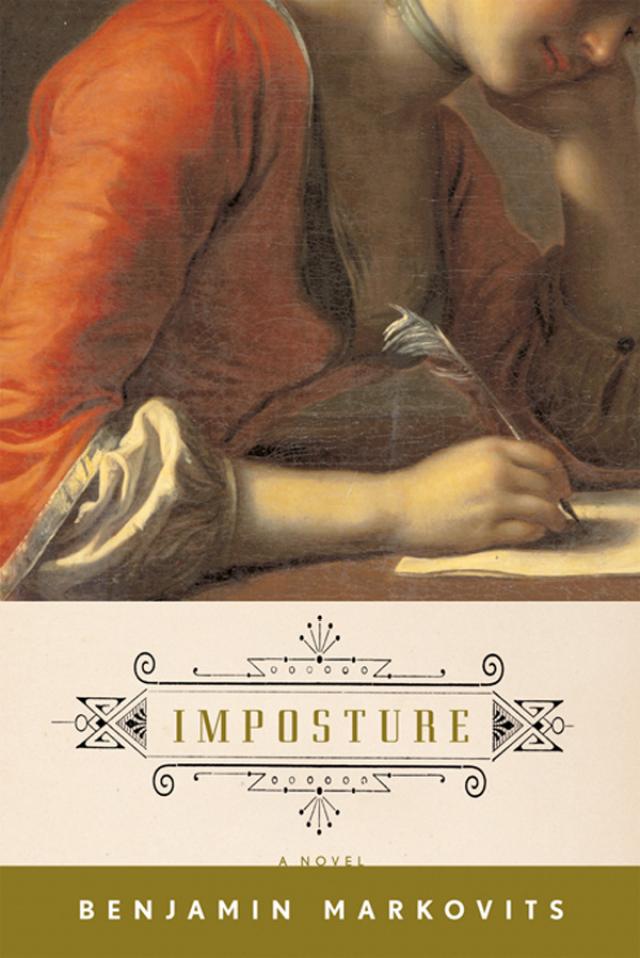


Towards the end of that wet week, without a word written, after five steady days of unremitting blankness, Polidori had attempted to take out his distemper on Byron. His ankle had more or less healed: at least he had learned that his licence to complain of it had run its course. He sat at the small side-table between the balcony windows. He wanted his composition to be remarked upon. But nothing came. His heart was as dusty as a summer road; he choked almost physically on the dryness of his thoughts. He had no talent for lies, and the truth struck him as both too plain and various to be worth the telling. He was surrounded by impressions: Byron’s restlessness over a large Italian novel; the drip of rain on the patient water below them; his melancholy gratitude for the greyness of the light. With a headache brewing, he couldn’t bear the sunshine. But how should he select among these details, when the only thing pressing its weight upon him was his own dull thoughtlessness?
‘What are you writing?’ Mary had asked, kindly calling over from her chair by the fire – she grew easily, girlishly chilled, and the wet weather had got into her bones. She lit a small blaze after breakfast every morning. Polly answered, with a malice equally deliberate and obscure, ‘The story of a skull-headed lady, spied through a peephole.’ Byron’s ears pricked up at this; he was beginning to lose interest in their ‘game’ and could never grow bored without persuading others into boredom. He stretched from the settee and walked over to the doctor, resting his hand on the chair-back so that his knuckles pressed against Polly’s spine. Polly tried to cover the blank page under his hand, but Byron had seen it, and remarked, ‘I am relieved to see that your ghost, at the very least, dresses according to tradition in white.’
Polly knew that Byron was looking for a quarrel; still, he couldn’t resist. In a dry spell the day before, just at twilight, the clouds too thick to let the rain through, some of their party had attempted to go out on the water. (Shelley had stayed behind; there were times even he couldn’t bear what he called the ‘weight’ of B’s company, and, in particular, the close evidence of Mary’s crush. The fact was, he’d hardly written a word since they’d met.) The sunlight milky and moon-like over the lake; that peculiarly peaceful chill hour of evening after a day’s rain. Deep breaths of pent-up spirits. Polly, who wanted to join them, volunteered to row and then resented his usefulness, the dependence it suggested. Besides, his ankle had begun to throb. In the cramped vessel, he let his arms pull wide; his oar struck Byron in the knee. The poet, especially in the company of women, liked to play the stoic. Mary sat in the bow, where Polly’s carelessness just caught her, from time to time, with the odd dose of wet. It was his silent revenge on all of them.
Still, he could not suppress the feeling, that he suffered most, perhaps: from the labour of it; from the constriction his arms felt stroking through the rain-sodden waters; from the confinement of his own timidity. He daren’t attack them in the open. These petty gestures suggested rather the constraint than the outbreak of his spite. At the third knock, Byron, wincing, hid his face against his arm; then, quietly, he asked the doctor to mind where he pulled. ‘Take more care, for you hurt me very much.’
Polly seized his chance to bring their conflict into the open. In a rush of honesty not unlike physical courage, he said, ‘I am glad of it. I am glad to see you can suffer pain.’ Byron suddenly lifted his hand and retracted it again: the gesture of a gentleman refraining from striking another man’s dog. After a minute, he said, ‘Let me give you a word of advice, Polidori. People don’t like to be told that those who give them pain are glad of it. They cannot always command their anger; they are liable to do something rash. But for Mrs Shelley’s presence, I should probably have thrown you into the water.’ Mary said nothing. It was the tacit sympathy in her silence, for Byron‚ their little communion, that upset Polidori most of all.
As he sat at the side-table, he felt the awkwardness of Byron’s knuckles on his spine. Surely deliberate: Polidori was forced to shift in his seat to the side. And then, resenting his own accommodation, he suddenly asked, ‘Pray, what is there excepting writing poetry that I cannot do better than you?’ Mary, a smile already in preparation, looked up at Albé, as she called him, and waited for his reply. B hesitated a moment, without withdrawing his hand from the back of Polly’s chair. In fact, he was just as out of sorts and fed up with the venture as Polidori; but he had the wit to turn his peevishness into a kind of gallantry. There were three things, he said at last. ‘First, I can hit with a pistol the keyhole of that door. Second, I can swim across that lake. And third, I can give you a damned good thrashing.’ Polly pushed his chair back against Byron’s foot, stood up quietly and walked out. He did not come down for supper, and Byron, in the end, ‘humbly’ (this was his own word) came up to see him and beg his pardon.
The next day, having made up, Byron admitted that he had tired of ‘prosing’ and offered Polidori a piece of his own inspiration. Polly at last had the scrap of narrative on which he could feed his imagination: ‘Two friends – shall we call them Lord Ruthven, and his protégé, Aubrey? – were to travel from England to Greece; while there, Ruthven should die, but, before his death, obtain from his young friend an oath of secrecy with regard to his decease. Some short time after, on Aubrey’s returning to his native country, he should be startled to perceive his former companion moving about in society, and should be horrified at finding that he made love to his sister.’ Out of this germ, The Vampyre had grown; but the thought of Lord Ruthven’s seduction of Aubrey’s sister put Polidori in mind of Frances, whom he had not laid eyes on since he walked out of her house in Milan three years before – another source of unhappy reflections. His sister breathed not fifteen minutes’ walk from where he sat. It was a meeting he longed for and dreaded in equal measure, so he turned from the prospect of it, as if from a dark side road, into the bustle of the thoroughfare.
‘In the spring of 1816,’ he repeated, ‘I accompanied Lord Byron on his second tour of the continent.’ And then, keeping to the task at hand, Polly continued: ‘From Dover, Byron said his farewells at last, to Scrope, to Hobhouse – the latter weeping freely as he ran to the end of the wooden pier. Hobhouse had been the poet’s companion on his famous first pilgrimage: the young man’s face, plain and strong as an elbow, hardly reddened or shifted as the tears streaked down it. He hoped to join us later; it was a part of Lord Byron’s attraction that his departures seemed always more permanent than the journeys of other men. Byron pulled off his cap and waved it – afterwards confessing to me, that wherever there was grief at parting, he had a woman’s appetite for seeing it increased. Only the servants remained in tow: Fletcher, Byron’s valet, a Swiss named Berger, and your humble narrator, who counted himself (already) as a friend.’ And who, in jealous greed, was hardly upset to see Hobhouse left behind. Once more, Polly’s journal had shifted its attention inward; and again he stopped short, uncertainly.
To fill the empty minute, he stood up and retrieved the jar of laudanum from the bureau and poured a thumb’s breadth of liquid into a glass. He had, in the past, been accustomed to a night-time dram, but had given up the habit after his student days. Before drinking, he sat down again and wrote, on a fresh sheet of paper: ‘Among his many talents, Lord Byron was not least distinguished by his talent for quarrelling, and, which was perhaps still more remarkable in him, the grace of his reconciliations. He had tremendous powers of kindness, of forgiving, and of being forgiven.’ He stopped again and recalled, with a force and precision that almost robbed him of his breath, the long solitary afternoon that followed their spat over the ghost story. A passage of time, which, for several reasons, he had allowed to gather dust in his memory. Polly, confined by stubbornness to his room at Diodati, had not stirred from the small chair at the foot of his bed for several hours. The light, grey as it was, had slowly darkened as the morning gave way to afternoon and evening. But for once his thoughts had ceased to race within him; they had rather the stillness of concentration. Clarity and certainty had replaced confusion and restlessness. They resembled a jigsaw after the last interlocking piece has been carefully smoothed into place: the perfection of the image came at the price of his freedom to adjust it. After sunset, he rose stiffly and fetched his medical bag from the foot of his bed; he stretched his legs, and particularly the tendons of his left foot, gratefully, as he stood at his dressing table and mixed a glass of soda with cyanide. He set it down and considered a minute whether it might be honourable to leave a note for B, when Byron himself came into the room with hand outstretched, a gesture, that, on seeing Polidori in tears, he quickly turned into an embrace.
CHAPTER ELEVEN
POLIDORI AWOKE DRY-THROATED and sweaty with leftover dreams. Still fully dressed, he sat up and noted, through the open doorway, the empty glass on his desk in the next room. In the white morning sunshine, it cast little webs and concentrations of light on the green baize. He had not slept well. The laudanum seemed at first only to expand his sleeplessness, to tug at it several ways at once. His consciousness stretched over many levels; these were connected by darkly imagined stairwells and abrupt shafts. He attempted to descend, further and further, into his thoughts but could not reach the waters of sleep, whose drip he heard everywhere multiplied around him. The dankness of the walls promised an imminent arrival; their slickness shone in a dim light whose source never became apparent until it grew and woke him through uncurtained windows.
There was nothing to eat, so he wiped the glass dry against his shirt and filled it with water from the pitcher on his nightstand. Some of its old acridity remained. The water was hardly even cool; it had been standing in the sunshine. He undressed and returned to his front room and sat down at his desk and for three hours did nothing – in a kind of suspension whose liquid base was the bright half-sleep of a morning after. Then, suddenly emerging from it, he dressed again and went out into the street: the bells of St Jude were ringing and had reminded him of his appointment.
It was a good brisk walk to Bagnigge Wells. The London traffic had the softness of Sunday, that little patience with delays and fine weather. Prints of spring leaves patterned the blue skies, which had a dusty spaciousness, a recently swept look. He sweated lightly into his collar as the terraces fell off from the roadside and gave way to the scratchy untidiness of farms. Ashamed of his own damp heats, he removed his jacket and carried it over one arm; the other held his walking stick. It seemed to him impossible, in the open air, in the blue light of day, that he could be taken for anything but what he was: a shabby young man looking for a turn in his luck.
Bagnigge Wells was, as Byron used to say, ‘as dirty as Nature’. A warm unsettled wind had scattered the dust of the dry ground over the grass and the leaves of the trees. It was hardly empty. Strollers in twos and threes, examples of every class, occupied the weaving lanes, which touched and parted at irregular intervals like lovers’ hands. There were trees between them, oaks and laurels; fences of box-hedge. And here or there a grove had been woven together from the top branches of an alley of holly-trees, so that between their netted fingers, the sunshine scraped through only in bright scattered edgings. Everywhere the sound of water, like coolness audible, from various fountains green with dust. A series of benches along the river, sectioned from the rest, served the ale-drinkers; and Polly heard, from time to time, mild cries of triumph and despair issuing from a bowling-green and a skittle alley. Polly had been, once, to Vauxhall Gardens, and though he expected nothing like its grandeur at King’s Cross, still, he was surprised by the modest seclusion around him. It was the decent haunt of mostly respectable people who wished to taste, in suitable miniature, the pleasures of Nature. How ridiculous it was to imagine his lordship venturing into such a middle-class retreat, to pursue – in the company of her father! – a thin high-shouldered creature whose only charm perhaps lay in the girlish restlessness of her small breasts, long fingers and wriggling lips. Yet in spite, or perhaps on account of, the borrowed scorn he felt – in the role of the famous poet – he suffered from a familiar sense of his own internal silence, the contrast he made with the pleasant spirits around him.
One field over, a dozen cows stood at ragged attention, and their line of sight led Polly’s eyes to a peaked brown hut in a corner of the gardens, under an ilex tree. It took him a minute to recognize Eliza, by the unwashed colouring of her throat, by her hitched-up shoulders; and then her father, by a slightly more muscular bulk around the armpits and his back, which still suggested the discomfort of a child being held up under his arms.
For a minute he stood back to observe them. They might, almost, have been mistaken for lovers. Her attendance on him was quick and fretful, and suggested that involved intimacy which scratches at and relieves an impatience with herself as much as with him. Like trees, they stood in the shade they cast themselves: everyone around them seemed to stand in a slightly different light. Privacy, even in public spaces, brings its own clouds. Their skins – a whimsy struck him – must grow very irritable with the constant chafing of their affections. The father had bought for Eliza, from the hut, a glass of syllabub; but in the exchange of money, had set down his own and tipped it over with his foot. The syllabub, Polly guessed by the way the father blew over it, was only dirty; at least, something in the way Mr Esmond protected it betokened a man stubbornly making himself contented with a treat he had spoiled himself. Eliza, pawing, was trying to take it from him; he resisted, and the motions of their mutual irritation drew them cloyingly and tenderly into each other’s arms. Mr Esmond kissed the top of her hair, and they began to eat and walk at once, with some difficulty.
Polly almost decided to leave them on the spot. His interruption would seem like an intrusion, and he supposed, with a blush of shame, that Eliza had never for a minute suspected so great a man as Lord B would ever take up her humble invitation: she hardly had the appearance of a woman expectantly glancing round. And yet something about her fussing made him linger. The little game of her concern reminded him of Frances. He knew, as well as anyone, the way a daughter’s or a sister’s love rubbed up against a fuller expression, and grew pettish from frustration of tenderness. And he imagined her touching him with her thin, long fingers, adjusting his collar, tucking his hair behind his ear, and then his neck almost ached with the absence of her hands upon it. In any case, she had seen him by now; and the face of joy she made – her front teeth bared awkwardly beneath her top lip as she tried to restrain herself from smiling too largely – awoke in him, to his own surprise, not so much shame or distaste as something more nearly answering.
Her father limped slightly, lagging behind her; and then made an awful, indescribable gesture, which Eliza didn’t see, and which Polly was too surprised to remark upon. Mr Esmond seemed to bow, approaching; but then thought better of it, and, having ducked his head, lifted it again like a bird pulling its beak out of its feathers. Resenting his own obeisance, he stiffly held out his hand. But Polly was too far away to reach it, and Mr Esmond, stretching towards him, stumbled and almost fell down; Polly, helplessly, had the sense of letting him fall. Eliza’s father caught himself in time and staggered to a standstill – as if Byron’s fame were an impenetrable shield that a humble clerk such as Mr Esmond dared not, could not broach. Eliza, who had missed the performance, simply said, ‘My lord, you cannot guess how honoured we are, how happy you have made my father.’ And then the poor man attempted to fix an expression on his face to match her sentiments; it was rather obscured by his beard. Polidori decided in the end simply to nod at him. He remembered now what he had grown accustomed to in Byron’s company: the imbecility that his fame brought out, like a latent colour, in most ordinary people. Eliza took Polly’s arm in hers (showing off, for her father’s sake, an intimacy with the great poet she did not yet possess), and between the two of them, guided their steps through an arch of laced trees.
The beginnings were awkward enough. Polly, shyly, left it up to Eliza to take them both in hand, and she hardly had the character or confidence (as far as Lord B was concerned) to serve as cicerone. Even so, Polidori was surprised by how snugly engaged he felt. It occurred to him, how well such a family would have suited him: the company of loving and hapless people, their warm exchange of sympathies and failures. Mr Esmond offered Polly a taste of his syllabub. He was quite full and on the point of throwing it away. And Polly, having seen it kicked in the dirt, wondered whether there was any sly humour in the gesture – a quiet sort of revenge he was peculiarly placed to appreciate – and happily accepted it. He ate, with deliberate greed, pursing his lips around the heaped spoon and sucking. Perhaps he could shock them by a realistic display of the manners of a peer. And the childishness of it, and the rush of sugar (it was the first food he had eaten all day), loosened something in his temper, and he, kindly condescending, began to enjoy the part he had come to play. He said, to put Mr Esmond at his ease, a line borrowed from Lord B, ‘Now confess, sir, you expected to find me a Timon of Athens or a Timur the Tartar: gloomy and misanthropical.’