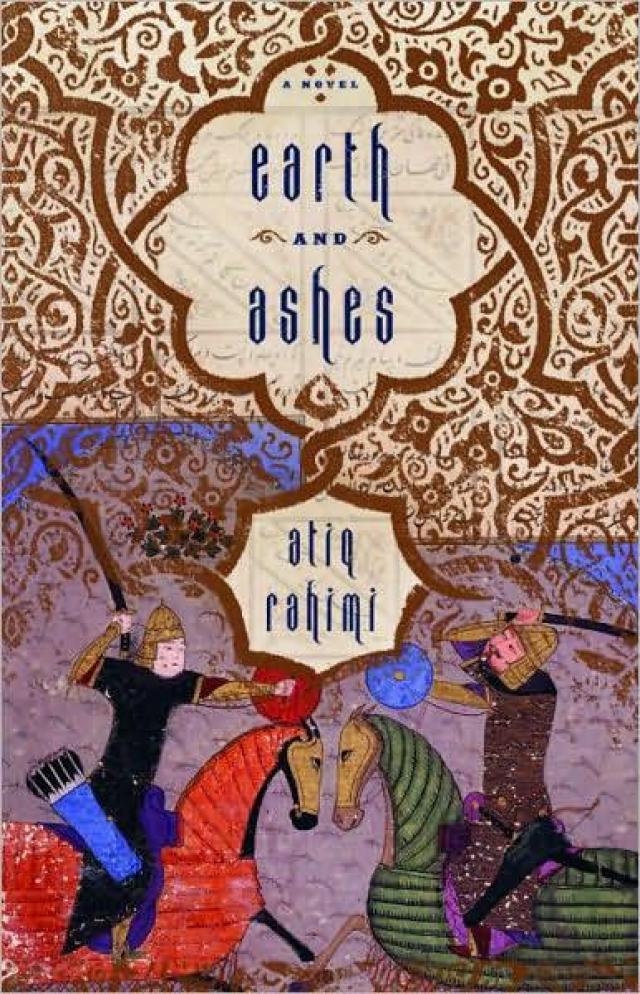
Earth and ashes

Earth and ashes

Atiq Rahimi

Literature & Fiction / Poetry / Politics

Synopsis:When the Soviet army arrives in Afghanistan, the elderly Dastaguir witnesses the destruction of his village and the death of his clan. His young grandson Yassin, deaf from the sounds of the bombing, is one of the few survivors. The two set out through an unforgiving landscape, searching for the coal mine where Murad, the old man's son and the boy's father, works. They reach their destination only to learn that they must wait and rely for help on all that remains to them: a box of chewing tobacco, some unripe apples, and the kindness of strangers.Haunting in its spareness, Earth and Ashes is a tale of devastating loss, but also of human perseverance in the face of madness and war.Publishers Weekly:The devastation of Afghanistan during the Soviet war is succinctly and piercingly conveyed in Earth and Ashes by Atiq Rahimi (trans. from the Persian by Erdag M. Goknar), a novella-length account of an old man's futile journey. Dastaguir and his grandson Yassin wait beside a guard post on the road to the mine where Dastaguir's son Murad works. The family's village has been bombed, and everyone else in the family is dead; Yassin was deafened by the attack. While he waits for a ride to the mine, Dastaguir is visited by fantastic visions ("You find yourself standing on the branch of a jujube tree, stark naked"). The blasted dreamscape of Rahimi's story and his tightly controlled prose make this a sobering literary testament to the horrors of war.Biography:Born in Kabul in 1962, Atiq Rahimi was seventeen years old when the Soviet Union invaded Afghanistan. He left the country during the war, eventually obtaining political asylum in France. Rahimi now lives in Paris, where he makes documentary films. Earth and Ashes is his first book.
Read online
  • 58
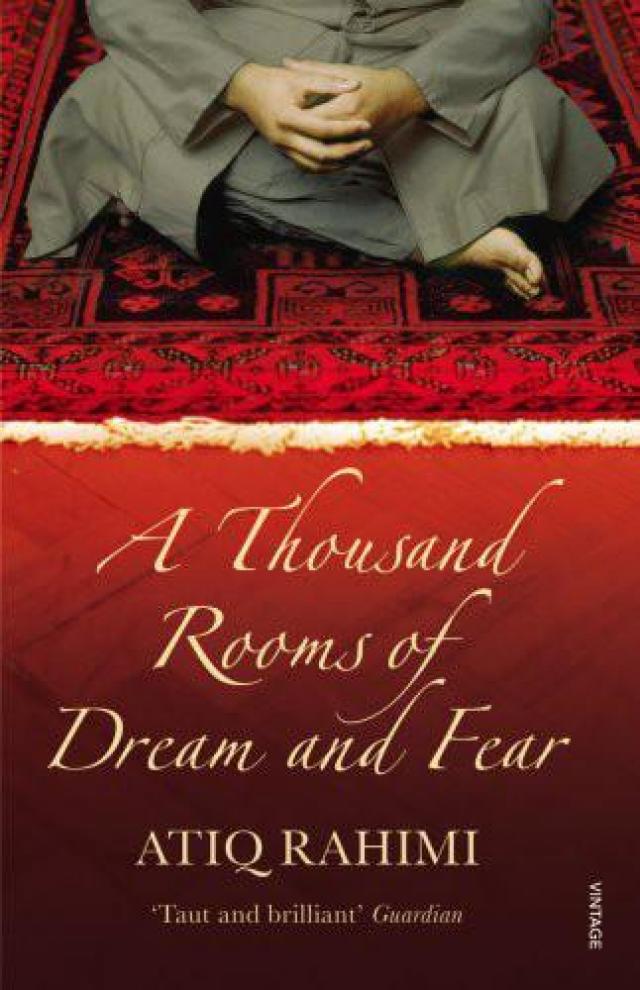
A Thousand Rooms of Dream and Fear

A Thousand Rooms of Dream and Fear

Atiq Rahimi

Literature & Fiction / Poetry / Politics

From BooklistStarred Review Fiction can express pain and suffering as little else can, as in this slim novel set in Afghanistan in October 1979, a time between coups and the Soviet invasion. Narrator Farhad, a 21-year-old university student in Kabul, goes out drinking with a friend, forgets the curfew and password, and is apprehended by jackbooted soldiers who beat and kick him, leaving him unconscious in a sewer. Mahnaz, the widowed mother of a young son (her husband was jailed as a political prisoner and executed), takes him into her home. What might seem a simple, compassionate act is not only brave, exposing Mahnaz to danger when the returning soldiers search for the student, but also prohibited by the Muslim culture. Farhad, hallucinating and between life and death, stays for days with a woman without a husband and sees not only her hair but also her breast, as she offers her milk to her brother, a young man traumatized by repeated military torture. In prose that is spare and incisive, poetic and searing, prizewinning Afghani author Rahimi, who fled his native land in 1984, captures the distress of his people. --Michele Leber Review“The language has the rhythm of a Sufi prayer; the novel offers an insight into the deepest fears of the people of Afghanistan.”—_Los Angeles Times_“That sense of losing one’s identity, of being subsumed by a greater, if illogical, power, is a key theme in Atiq Rahimi’s taut, layered novel..._A Thousand Rooms of Dream and Fear_ is the intimate narrative...of an entire desperate, anguished country.” —_Washington Post_ “An intensely intimate portrait of a man (and by extension his country) questioning reality and the limits of the possible...full of elegant evocations..._A Thousand Rooms of Dream and Fear resonates deeply because, no doubt, Rahimi has written a true and sad account, but the story could easily be that of any other Afghan, of any other denizen of this modern, anarchic state. In the end, we are left to wonder whether Rahimi has presented us with a story, a dream, or a nightmare, though it is likely all three.”—Words Without Borders_ “An original and utterly personal account of the pressures a totalitarian society exerts on the individual in 1979 Afghanistan, before the Soviet invasion... A flawless translation does justice to Rahimi’s taut, highly calibrated prose.” —_Publishers Weekly_“In prose that is spare and incisive, poetic and searing, prizewinning Afghani author Rahimi, who fled his native land in 1984, captures the distress of his people.”—_Booklist_, starred review “Rahimi is an author known for his unflinching examination of his home country as much as the experimental styles in which he writes... _A Thousand Rooms of Dream and Fear takes risks in its structure...But Rahimi’s carefully-controlled new novel exploits these uncertainties, joining the past to the present and legend with fact, creating an appropriately surreal narrative, one that rings through with truth.” —ForeWord Magazine_ “A taut and brilliant burst of anguished prose....both a wonderful and a dreadful little book.” —_The Guardian_ “A beautiful piece of writing.” —Ruth Pavey, The Independent “Short but powerful...The beauty of the language lends this work a haunting clarity.” —_The Herald_ “The novella is verbal photography...[it] seems the real thing...seamlessly translated.” —Russell Celyn Jones, The London Times
Read online
  • 49
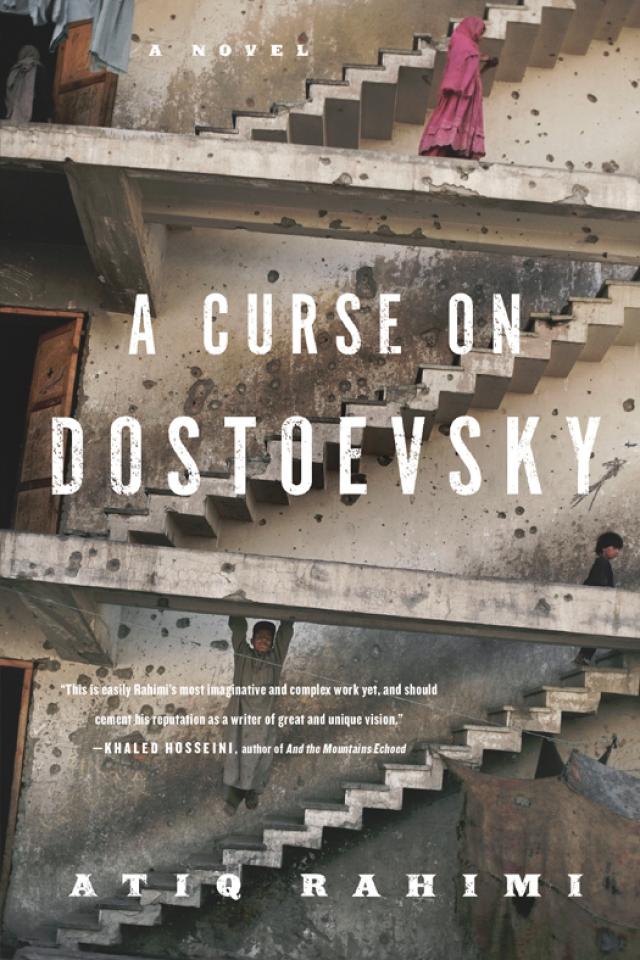
A Curse on Dostoevsky

A Curse on Dostoevsky

Atiq Rahimi

Literature & Fiction / Poetry / Politics

Reading Dostoevsky in Afghanistan becomes “crime without punishment” Rassoul remembers reading Crime and Punishment as a student of Russian literature in Leningrad, so when, with axe in hand, he kills the wealthy old lady who prostitutes his beloved Sophia, he thinks twice before taking her money or killing the woman whose voice he hears from another room. He wishes only to expiate his crime and be rightfully punished. Out of principle, he gives himself up to the police. But his country, after years of civil war, has fallen into chaos. In Kabul there is only violence, absurdity, and deafness, and Rassoul’s desperate attempt to be heard turns into a farce. This is a novel that not only flirts with literature but also ponders the roles of sin, guilt, and redemption in the Muslim world. At once a nostalgic ode to the magic of Persian tales and a satire on the dire reality of now, A Curse on Dostoevsky also portrays the resilience and wit of Afghani women, an aspect of his culture that Rahimi never forgets.Review“Rahimi turns his attention to Crime and Punishment and juxtaposes literature against the Muslim world in Kabul, the themes of civil war, chaos, sin, guilt and redemption for Afghani women again being the theme. ‘Crime without punishment?’” —Electric Literature "A darkly comic meditation on life in a lawless land…In restrained prose, Rahimi explores both the personal and the political; it’s both in dialogue with a classic and is daringly outspoken." —Publishers Weekly “Atiq Rahimi brilliantly re-imagines Crime and Punishment and, in a daring feat of creative panache, transplants Dostoevsky’s classic morality tale to modern-day Afghanistan. This is easily Rahimi’s most imaginative and complex work yet, and should cement his reputation as a writer of great and unique vision.” —Khaled Hosseini, author of The Kite Runner and A Thousand Splendid Suns "In a rare imaginative feat, Rahimi renews many of Dostoevsky’s original psychological insights and opens piercing new ones.  Unforgettable." —Booklist (Starred) Review “Atiq Rahimi, like the great story tellers of Afghanistan, is a master of using a small moment to tell the sweeping story of the pain and loss of war.  In A Curse on Dostoevsky he yet again imprints images in the memory, as he captures both the unspeakable absurdity of the Afghan civil war and the ingenious ways Afghans have found to move beyond it.” —Qais Akbar Omar, author of A Fort of Nine Towers: An Afghan Family Story "Rahimi does a masterful job both in echoing Dostoevsky and in updating the moral complexities his protagonist both creates and faces." —Kirkus “Here, Atiq Rahimi sings an incandescent, raging story, which dissects, in a highly sensitive way, the chaos of his homeland and the contradictions of his people.” —L’Express“In the light of the Russian writer, [Rahimi] describes his country so that we may understand it like we never have before. His latest novel isn’t only breathless, beautiful, and strong, it is indispensable…He dared—and succeeded.” —Le PointAbout the AuthorAtiq Rahimi was born in Afghanistan in 1962 and fled to France in 1984, where he has become an award-winning author (2008 Prix Goncourt) and filmmaker (2004 Prix un certain regard, Cannes). The film adaptation of his novel The Patience Stone, which he co-wrote and directed, was selected as the Afghan entry for the 2012 Oscar for Best Foreign Language Film. In recent years, he has returned to Afghanistan many times to set up a writers’ house in Kabul and offer support and training to young writers and filmmakers. He lives in Paris. Polly McLean is a freelance translator from Oxford, England. Winner of the 2009 Scott Moncrieff Prize, she has translated titles by Catherine Deneuve and Sylvia Kristel, as well as the award-winning Secret by Philippe Grimbert.
Read online
  • 37
183