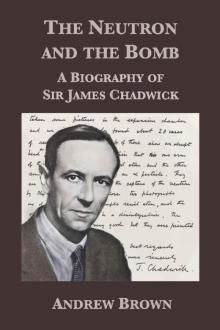
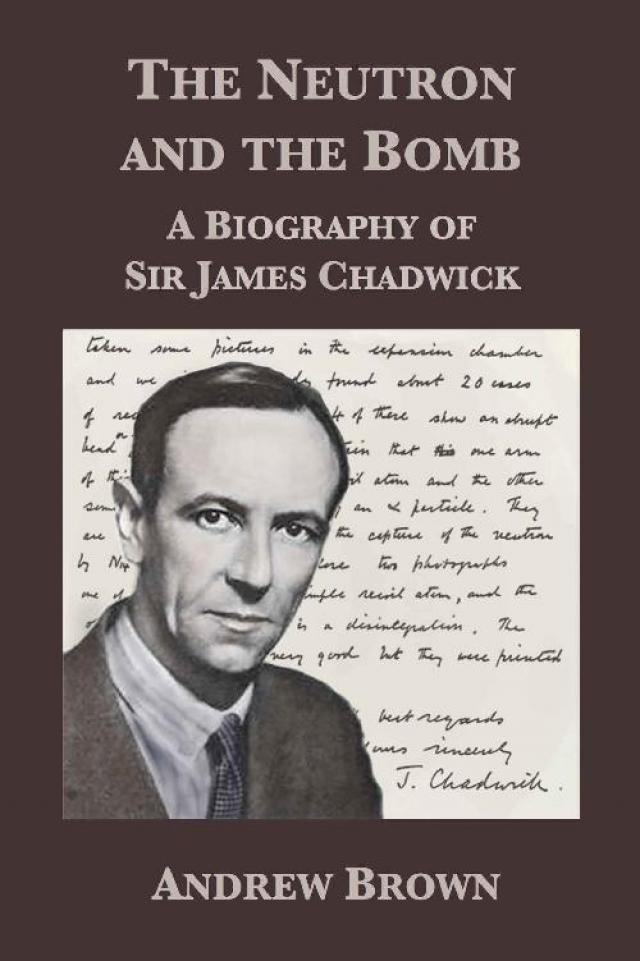
The Neutron and the Bomb, page 2


While I have had access to all Chadwick’s papers in the Churchill Archives Centre, his file at the Archives of the Royal Commission for the 1851 Exhibition at Imperial College, London, the Public Record Office in Kew, letters in the Niels Bohr Archives, Copenhagen, Cambridge University Library, and in the Bancroft Library at Berkeley, not to mention the National Archives near Washington, there are still documents and letters which remain classified. Some are retained by the UK Atomic Energy Authority at Harwell, and others at the Cabinet Office in London. Some of the wartime letters between Chadwick and Peierls that have never been released in England were available at the National Archives, but possibly as a result of the Gulf War, they were recently recensored by the US authorities.
A.P.B
Andover
July 1996
Acknowledgements
Although I had this book in mind for some years, it was only after moving to the USA in 1990 that it became a realistic proposition. I started, and finished, my research with no qualifications as a physicist or as a historian. Almost everyone I approached for help, responded generously and with warm encouragement. My initial boost was from the late Sir Nevill Mott, who was at the 1932 meeting of the Kapitza Club when Chadwick announced the discovery of the neutron. He arranged for an invitation to the Chadwick Centenary Meeting in Cambridge in 1991, through the good offices of Yao Liang and the Cavendish Laboratory, and Peter Gray, the Master of Gonville and Caius College. Peter put me in touch with Chadwick’s daughters, Judy and Joanna; they have read each chapter as it appeared and helped with numerous details, as well as supplying photographs. The Caius old-boy network alerted Ernest Pollard, who worked as Chadwick’s research student in the late 1920s, and he has fired off letters and phone calls to me to check on progress in the most positive way.
At the 1991 meeting, I was taken under the wing of Margaret Gowing, the historian, who introduced me to Sir Mark Oliphant and the late Sir Rudolf Peierls. These two remarkable men, apart from making wonderful after-dinner speeches, corresponded with me and read several chapters. Through Sir Rudolf, I came to know Lorna Arnold, the historian at the UK Atomic Energy Authority, who supplied me with invaluable pointers to material in the public domain, and lucidly conveyed her deep knowledge of wartime and postwar atomic history. A chance encounter in the queue for tea at the Cavendish led to a mostly one-sided exchange with Jeff Hughes, a historian of science who was finishing his Ph.D. thesis on the Laboratory. He saved me enormous amounts of time, and also kindly but firmly corrected some wayward tendencies in interpreting events. He directed me towards material that I might have otherwise overlooked — most importantly in the Royal Commission for the Exhibition of 1851 Archive, where Valerie Phillips could not have been more charming or helpful.
Charles Johnson, the current Lyon Jones Professor of Physics in Liverpool, put me in touch with David Edwards, who is a notable historian of science on Merseyside. He acted as my guide on a whirlwind tour of Liverpool, including a productive visit to the University Archive, and also introduced me to Dave King, who had just completed a thesis on the Liverpool synchrocyclotron. John Holt, an early student of Chadwick’s in Liverpool and later professor there himself, gave me transcripts of various talks he had given about Chadwick and amplified other material I had gathered from the archive. Maurice Pryce and the late Bernard Kinsey were two other members of the wartime department who wrote to me. Joseph Rotblat, who was so close to Chadwick in Liverpool and at Los Alamos, was eventually in London during one of my visits and gave me a three hour interview, which he supplemented by meticulous comments on material that I wrote.
Dorothy Dennis of the Bollington Public Library and George Longden unearthed local information that allowed me to flesh out the meagre facts at my disposal concerning Chadwick’s childhood. The acquisition of other published information was accelerated by Bruce Kupelnick, whose intimate knowledge of the Widener Library at Harvard allowed the most obscure journals to be located in the stacks. It was Bruce, too, who alerted me to a lecture to be given at Harvard by Maurice Goldhaber, on his time at the Cavendish. Once again I had the thrill of presenting my account of events to a man who was there and recalled them in fascinating detail. My meeting with him led to further information from Hans Bethe.
Unexpected help came from two of my patients in New Hampshire. Ernst Gutbier translated Chadwick’s 1914 paper on the continuous β-spectrum for me. The late Heinz Nitke, who was just starting a physics Ph.D. in Berlin in 1932 when Chadwick discovered the neutron, eagerly straightened out some basic scientific misconceptions for me, and with equal tact improved my English on more than one occasion.
Lord Bauer is the economist mentioned in the introduction, and he patiently tried to explain the nuances of the Peasant’s Revolt to me. Francis Crick wrote to say that he did not even know about the affair until it was over! David Shoenberg entertained me to lunch at Caius and provided insight into Chadwick’s relationship with Kapitza, as well as recollections of his difficulties as Master. His fellow Caian, the medieval historian Christopher Brooke also talked to me about the mastership and helped me on diverse matters of college history. Sir Denys Wilkinson wrote me a letter coruscating with anecdotes. Lord Sherfield spoke to me about life in the British Embassy in Washington during the 1940s. Aage Bohr recounted his wartime memories of Chadwick and the close friendship with his father.
Such oral and informal material was invaluable. On many occasions I could check it against historical documents and my admiration for the clarity and accuracy of my informants’ memories for events of five and six decades ago is boundless. I apologize if I have forgotten any other contributors. The major collection of Chadwick’s papers is held in the Churchill Archives Centre in Cambridge, where my research was constantly assisted by Alan Kucia and his staff. Anne Neary, the archivist at Gonville and Caius College, was always ready to help. Hilary Coote provided photographs from the Cavendish Laboratory. The Public Record Office in Kew were unfailingly efficient in producing wartime files, and I was made welcome by Jerry Lee at the Cabinet Office Historical and Records Section.
Anders Bárány persuaded the Nobel Committee for Physics to release material concerning Chadwick’s nominations to me. Finn Aaserud, the Director of the Niels Bohr Archive in Copenhagen, has been both a stimulating critic and an invaluable expert; Felicity Pors has also helped on several occasions with material from the archive. The staff of the Niels Bohr Library at the American Institute of Physics, especially Joe Anderson, have trustingly sent me much valuable material. At the National Archives in Washington, I benefited from the encyclopaedic knowledge of John Taylor, like many before me, and he also put me in touch with Stanley Goldberg, who is writing a biography of General Groves. When the Manhattan Project files were moved to the Archives 2 in College Park, Maryland, Marjorie Chalante located some important documents for me. Peter Hanff and Bill Roberts of the Bancroft Library, University of California at Berkeley, provided copies of the cache of letters between Chadwick and Lawrence. Dale Mayer, archivist at the Herbert Hoover Library, West Branch, Iowa, did some diligent searching for me. I would also like to record my gratitude to library staff at the Massachusetts Institute of Technology, Memorial Library Andover, and the University of Cambridge.
My good fortune extended to having Oxford University Press as my publishers. Donald Degenhardt, the commissioning editor, could not have shown more trust in a tiro author. He moved on to new pastures after handing over to Susan Harrison. I am indebted to her as well as Janet Walker and Keith Mansfield for their expertise and enthusiasm. I am grateful to Susan Marcus for preparing the index.
One of the enriching pleasures of writing a book, I have discovered, is that it brings one into contact with new people, like all those mentioned above. It also offers the opportunity to entice old friends to indulge in one’s latest obsession. My father-in-law, John Ballantyne, and Michael St. Clair have been devoted readers of the unfolding manuscript. Penny Phipps freely applied her famous powers of persuasion. Broad support and valuable advice have come from Thelma Bates, Bleddyn Jones, Graham and Betty Hines, Tom and Nicki Shields, Charles and Annabel Merullo, Jane Maddox, Mary Catterall, Frank Bunn, Cathy Shaer and Ben U. My partners at Radiation Oncology Associates have feigned interest in radiological history, and permitted me to make sudden visits to England.
The drawbacks of authorship have been more apparent to my family. My wife has displayed a surprising degree of tolerance as papers spilled over from my desk onto hers. To our three sons, the answer to their most frequently asked question is ‘twenty’. The book is dedicated to them with my love.
1 ~ Obscure origins
Bollington lies in the lee of the Peak District, sheltered by hills from the north and to the east. The land on which it stands was carved from the Macclesfield forest, one of England’s great medieval hunting reserves. A climb to the top of Kerridge hill to the east of the village is rewarded by a grand panoramic view. Looking to the south-west, you will see the old market town of Macclesfield about three miles distant, standing high on its own escarpment, and below you, Bollington cradled in a wide valley which broadens into the fertile Cheshire plain to the west. On this precipitous windswept ridge, the Gaskell family erected a beacon to commemorate the Battle of Waterloo in 1815. In fact it was more than a beacon — a white stone summerhouse built in a conical shape so that it resembled a giant beehive. The villagers christened it White Nancy and it became the symbol of Bollington.1
During the first hundred years of its existence, White Nancy witnessed radical changes in the village below as the Industrial Revolution transformed the appearance of the valley. By the beginning of the nineteenth century, all the necessary inventions had been made to mechanize the production of cotton, which until then had been a true cottage industry. Across the Pennines in Derbyshire, Arkwright had opened the first power driven mill in 1771.2 His carding machine, which separated out the cotton fibres, and his water-frame, which spun the fibres into long thread, were also engines of social change and led to the spectacular expansion of the industry over the next seventy years. Lancashire became the cotton county, but Bollington had enough natural geographic advantages to become a prime site on its own.
The first requirement was water, both in a fast flowing river to provide power and a humid atmosphere to help the cotton fibres cling together by reducing the electrostatic charges created by friction. This permitted spinning to take place at higher speed without breaking the fibres — an important economic advantage. There had been a watermill in Bollington since the time of Edward III, and its annual rainfall made it as damp as anywhere in England. Coal was also plentiful with the Adlington and Poynton collieries a few miles to the north. During the first half of the nineteenth century, the steam engine replaced water as the primary source of power and Bagshaw’s directory for 1850 tells us that the two together provided ‘four hundred and fifty-eight horses power’ to the Bollington mills. The early mills were constructed from the local Kerridge free stone, quarried from the adjoining sandstone hills. The stone was prized for its ‘whiteness’ by church stonemasons — it has a pale golden colour — and the huge cotton mills presented a noble appearance.
In 1831 the Bollington cotton business received another boost with the opening of the Macclesfield Canal. It provided a convenient artery for transporting coal to the mills; even though it was eclipsed in many ways by the coming of the railway in 1869, 95 per cent of the coal in 1880 still came by barge. The canal also gave the Bollington producers better access to Manchester, the major cotton marketplace 18 miles to the north-west. The industry prospered and further expansion took place in the 1850s with the building of the Adelphi and Clarence Mills by the Swindells family.3 These were constructed on the banks of the canal and came to dominate the landscape. Massive buildings with flat roofs, they were buttressed by square towers (which contained much needed dust extractors) and enlivened by large, rectangular windows. Their tall tapering chimneys spewed black smoke that could shroud the valley in gloom. Within a few years, apart from the canal, they were also served by the Macclesfield, Bollington and Marple railway,1 which ran past their front doors as it bisected the village in a south-north direction. The leading textile manufacturers had appointed themselves to the committee that determined the route the line should take through Bollington. Their influence ensured a direct and ready means of access to all their markets and indirectly led to the construction of a graceful stone-arched viaduct at Bollington which carried the track over the River Dean.
The success of the cotton industry meant that the population of Bollington trebled from fifteen hundred in 1811 to four and a half thousand in 1851.3 Rows of stone cottages sprouted in the shadows of the mills to provide homes for the workers. The 1851 census showed that only one-quarter of the people living in the area closest to the mills were born outside the county of Cheshire. This undermines the local folklore that Bollington is ‘a Derbyshire village, in Cheshire, peopled by Lancashire folk’. The increased numbers needed not only dwellings but places of worship and schools for their children which were provided, often on adjoining sites. In 1851, however, the legal minimum age for employment in a cotton mill was still only nine years.
With the exception of the cotton famine caused by the American Civil War (1861-1865), when half the families lost their entire income and two thousand depended on charity,3 the second half of the nineteenth century was a time of gradually increasing prosperity and leisure for the Bollington mill workers. During this period cotton brought in about one third of Britain’s overseas earnings, and the Lancashire mill owners boasted that they met the needs of the home market before breakfast and devoted the rest of the day to exports.2 The Bollington mills had a reputation for supplying fine cotton to the lace makers of Nottingham, and Mr Oliver proudly told his workers that ‘the goods they produced were worn by the very richest people, the most beautiful people, and he didn’t think there was a crowned head in the civilized world who had not got in his household some of Oliver’s cotton’.3 From the earliest days the spinners and weavers had banded together in their own trade unions and now took leading roles in educational, religious and sporting societies. In July the mills shut for the Wakes week holiday and the town resounded to the noises of the fairground, steam organs and the Bollington Brass Band.
James Chadwick was born in this lively and industrious place on 20 October 1891. His parents, John Joseph and Anne Mary, were both in their late twenties. Anne, whose father was a gardener, worked as a domestic servant. James was her first child and was named after his paternal grandfather, who was a hand-loom, silk weaver. In later years, Chadwick liked to say that he was born in the country and that his parents were country people.4 His birth certificate shows that he was born in Clarke Lane, on the southern outskirts of Bollington, where there were indeed several small farms. The family home was probably one of a row of rustic, stone cottages which were occupied by agricultural labourers, and quarry and mill workers. From there, his father, a cotton spinner, could walk to work at the Adelphi Mill along the canal towpath. Despite the general improvement in conditions, cotton spinning remained a deafening and dusty occupation. The workers were not particularly skilled and by the end of the century the British industry faced competition around the globe. In one cyclical downturn in 1895, so many Bollington cotton workers were out of work that it was suggested they might be usefully employed in road mending. It may well have been this slump that prompted John and his wife to leave Bollington and the mills to seek a better life in Manchester. James, as yet their only child, was left behind in the care of his grandparents.
As an old man, James Chadwick could remember, or was prepared to tell, little of his boyhood.4 He absorbed from his grandfather a love of gardening, and remembered the enjoyment of climbing trees. His early schooling was at the Bollington Cross School,1 which was built in the 1840s on land given by Samuel Greg Jnr., another cotton merchant. It was designed and used both as a school and a church. There was a distinctly ecclesiastical style to the building: the schoolroom, illuminated by stained-glass windows, contained an organ, choir stalls, lectern and pulpit. The headmaster was Herbert J. Sutton who doubled as the choirmaster and was also active in village life as secretary of the Horticultural Society. The headmaster’s son, Herbert Jnr., was James’ closest boyhood friend and shared the spoils of at least one early adventure. The two boys took a day off from school to go bird-nesting; seventy years later Chadwick retained a ‘quite vivid memory of being caned very severely for it’.4 The closing years of the century gave the villagers many opportunities for public celebrations, and James Chadwick would have surely witnessed or participated in some of them. In 1897 Queen Victoria’s Diamond Jubilee was marked by huge tea parties for the schoolchildren, and bonfires were lit by White Nancy. The first reservists were given a joyful send off to the Boer War from the railway station in 1899, and the Relief of Mafeking in 1900 was the occasion for impromptu parties and processions.1 This time a flag was placed on White Nancy which temporarily became the ‘Spion Kop’1 and the target of spirited attacks by the children.
When in later years Chadwick occasionally spoke about his childhood in Bollington, it was usually to recall his grandmother with affection. Relations with his own parents, particularly his father, seem to have been less happy. He once remarked rather darkly: ‘There are some things that I remember as a very small child but I don’t tell them to anybody.’4 At some time in the first years of the century, Chadwick left Bollington and joined his parents in Manchester. By then they had two other sons, Harry and Hubert, and had lost a baby daughter. It is easy to imagine why the transition was difficult for a sensitive ten year old boy to make: the simultaneous loss of his doting grandmother, his friend Sutton and the simple delights of the rolling, wooded fields of Cheshire. In return, a crowded struggling household in a grimy backstreet of a big city, where he as the eldest child was expected to take all sorts of responsibility for younger brothers whom he scarcely knew. In his teenage years James began to show an intellectual precocity that may have added further strain within the family and increased his sense of solitude. Looking back, he made the laconic admission ‘I’m afraid I don’t have a great family feeling.’4 This lack of affection is borne out in the paucity of his remembrances.