

Bulibasha, page 1


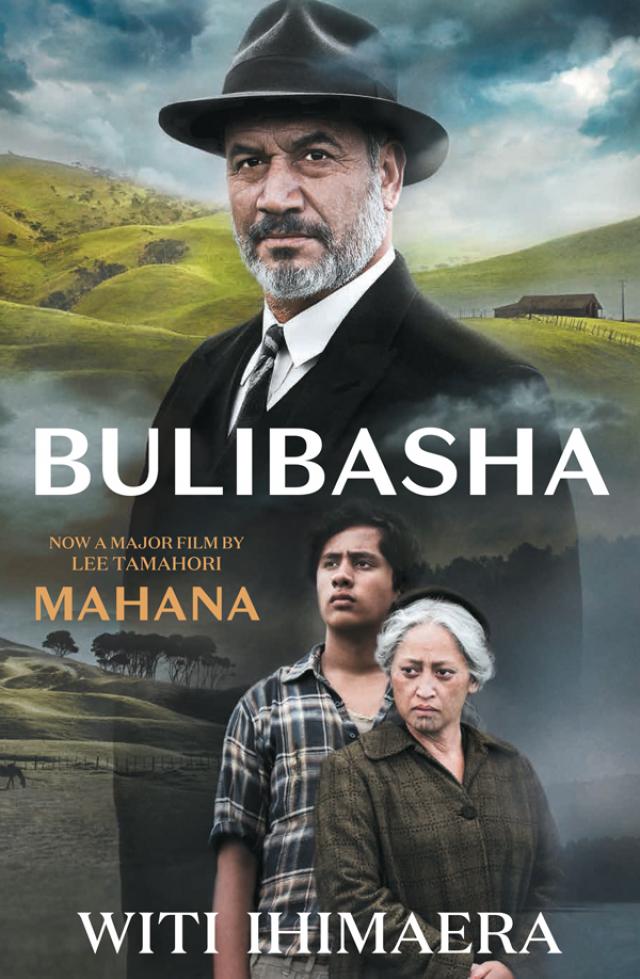
BULIBASHA
NOW A MAJOR FILM BY
LEE TAMAHORI
MAHANA
WITI IHIMAERA
Contents
Copyright
Prologue
Part I
Chapter 1
Chapter 2
Chapter 3
Chapter 4
Chapter 5
Chapter 6
Chapter 7
Chapter 8
Chapter 9
Chapter 10
Chapter 11
Chapter 12
Chapter 13
Chapter 14
Chapter 15
Chapter 16
Chapter 17
Chapter 18
Chapter 19
Chapter 20
Chapter 21
Chapter 22
Chapter 23
Chapter 24
Chapter 25
Chapter 26
Chapter 27
Chapter 28
Part II
Chapter 29
Chapter 30
Chapter 31
Chapter 32
Chapter 33
Chapter 34
Chapter 35
Chapter 36
Chapter 37
Chapter 38
Chapter 39
Chapter 40
Chapter 41
Chapter 42
Chapter 43
Chapter 44
Chapter 45
Chapter 46
Chapter 47
Chapter 48
Chapter 49
Chapter 50
Chapter 51
Chapter 52
Chapter 53
Chapter 54
Chapter 55
Chapter 56
Chapter 57
Chapter 58
Epilogue
Illustrations
Author Note
About the Author
Read More
PENGUIN
UK | USA | Canada | Ireland | Australia
India | New Zealand | South Africa | China
Penguin is an imprint of the Penguin Random House group of companies, whose addresses can be found at global.penguinrandomhouse.com.
First published by Penguin Books (NZ) Ltd, 1994
This edition published by Penguin Random House New Zealand, 2016
Text © Witi Ihimaera, 1994
Photography © Jennifer Raoult, 2016
The moral right of the author has been asserted.
All rights reserved.
Cover design by Sam Bunny © Penguin Random House New Zealand
Cover artwork by Mark Gowing Studio
ISBN 978-1-74-228810-9
Prologue
It was Tobio who gave the name Bulibasha to Grandfather. I was twelve then and still obedient. My father Joshua had been shearing at a station near Matawai. He was on his way home when he saw Tobio weaving this way and that on the roadside, and he stopped the car to help this drunk Maori before he got run over. As he approached, however, Dad realised that Tobio wasn’t drunk at all. Tobio was dancing, a queer dance with slaps to the chest, stamping of feet, flicking of wrists and snapping of fingers. And Tobio wasn’t a Maori.
– Komm Zigany, Komm Zigany, spiel mir was vor –
‘Are you all right?’ Dad asked.
Tobio stopped in mid-click and mid-stamp. He grinned at Dad, revealing white teeth in a rich red mouth. He tossed his black curls. He had green eyes and wore a golden ring in his right ear. He was in his early twenties.
‘I dance to be happy,’ he said. He put his arms around Dad and burst into tears.
Dad brought Tobio home to Waituhi. Grandfather was doubtful about having him around, especially with three spinster daughters. He was even more concerned when he found out where Tobio was from – Romany.
‘A gypsy,’ Grandfather said.
‘Yes!’ Tobio replied. He had a fierce and proud look in his eyes. ‘Romany yes, gypsy yes.’
And he proceeded to tell us, amid copious tears, the sorry story of how he had come to be in New Zealand.
‘I was born in Romania,’ he began, ‘in Salonta, not far from the Hungarian border. All our family we live the gypsy way, you know? We travel all year round from Salonta to Oradea to Marghita to Carei and back again. Winter, summer, spring, autumn always the same. My father break horses, my mother sell fine clothings to rich ladies. We never steal and never take pretty babies –’ He gave a sly look at my youngest sister Glory. ‘Except now and then!’
He shouted, grabbed Glory and started to kiss her all over. Then he burst into tears again.
‘So sorry,’ he said. ‘She look so like my little sister, you know? Well, life not too good in Romany just now with communisti takeovering of Hungary, and my father say, “You go to Oakland in California. We have uncle there. You go, stay there, work for uncle, then send for us.” So that what I promise to do. I cry –’ He showed us. ‘I do not want to leave Salonta, my beloved Apuseni mountains. I travel many days alone to Timisoara then Craiova to Bucuresti. Cry all the time–’ He showed us again. ‘I have many bad adven-tures. Then at Bucuresti I meet a man who tell me go to Constanta, the port. So I go. And there, I hardly believing my eyes what I see, is ship leaving for Oakland! So I work my passage many months and arrive –’ Tobio looked at each of us sorrowfully. ‘I arrive in this country, not the America Oakland but the New Zealand Oakland. You know? Au-ckland.’
‘E hika,’ Mum said.
Tobio stayed with us all that year, working for Grandfather who, despite his earlier misgivings, discovered that Tobio had the same gift for breaking horses as his gypsy father. During that summer Tobio became part of the Mahana Four gang, bossed by Uncle Hone, travelling from one shearing shed to the next.
The Pakeha owners of the stations were intrigued by Tobio’s presence among us. They often invited him to stay with them rather than with the clan in the shearers’ whares. At first Tobio was flattered, then puzzled and then understanding. He began to refuse the offers.
‘They think I same as them,’ he said. ‘Is better here with you. Maori and Romany are same people. Same blood.’
Tobio was a bit crazy. He was a strange, wilful, passionate presence among us. He sometimes caused fights between his lovers and was often found in the middle of them, laughing for joy. He had a great need to be loved, and would often encourage jealousies among those who wished to woo him.
He loved Maori life and the family, and greatly admired Grandfather Tamihana.
‘This is like my own family, you know?’ he said to Grandfather. ‘You are like my father. You live just like us, wandering all over. I am at home here but I am not at home. And I am not yet at Oakland.’
By the end of that year we had come to love Tobio. We thought he was happy with us. However, when winter came he began to dance more frequently, a lone dancing shadow on our landscape.
– Komm Zigany, Zeig heut was du kannst –
He was lonely for his own kind. We knew that if he did not find them soon, his heart would break.
Tobio had earned sufficient to get by ship to Hawaii, and had organised a visa for America. When Grandfather gave him the extra to get him to California, he burst into tears.
We all went to the bus station to see Tobio leave for Auckland. He was excited, childish, unbelievably innocent, rushing from one of us to the next and showering us with kisses. When the time came for him to board the bus he grew grave and dignified. He bowed before Grandfather.
‘In my country,’ he said, ‘all the gypsy peoples they go to the monastery in Bistrita. Thousands of the Romany go. Some from Hungary too, from the Ukraine, from the Bulgaria, all go. My father –’ Tobio paused, gulping, ‘he take me there once.’ He stood up straight. ‘There, all the gypsies agree who will be their leader. We crown him King of the Gypsies. Bulibasha.’
He took Grandfather’s hand and kissed it. Then he was gone. Soon after he left my conflict with Grandfather began.
Part I
Chapter 1
In those days, if you wanted to get to Waituhi from Gisborne, you had to cross the red suspension bridge over the Waipaoa River just past the Bridge Hotel. The hotel is still there but the bridge was long ago replaced.
Dumped on land now owned by the region’s premier vintner, Matawhero Wines, the bridge is a worrying reminder that things shrink as you get older. I remember it as an imposing superstructure which cast shadows over our Pontiac as we drove across. When the river raged in winter the swollen silt-laden waters slammed tree trunks against its pontoons. In reality, the bridge was very small and short, redolent of the times before constant flooding of the Gisborne lowland compelled engineers to slash shortcuts across each S-bend and to open out the river’s width like a gutted stomach. Back then the river had a narrow course – a slender eel threshing toward the delta at the sea.
Something else happened when human engineers simplified that complex landscape of river bends. With every sculpting movement of bulldozer and grader, they stripped the river of its mythology. Engineers control it with scientific and analytical precision, monitoring its rise and fall by computer, taming its wilfulness by the flick of a button. This simplification has led to an acceleration of time. The epic dimension that existed when you travelled at thirty miles an hour maximum on a twisting, turning road has gone. Once it took almost two hours to get to Waituhi. Now the journey takes half an hour.
Once you crossed the bridge, you turned either left to Hukareka or right to Waituhi. Most people turned left because that was the main highway ac ross the Whareratas to Napier, Hastings, Waipukurau and, eventually, Wellington. Hukareka just happened to be on the way. But if you turned right, Waituhi was your only destination. There was something superior about that, as if our small village was as important as Wellington. Certainly it was more important than Hukareka which was like a horse’s fart, a strong smell of processed hay in the air which you passed in a hurry.
The road to Waituhi alternated between tar seal and shingle. My sisters and I used to watch out for the shiny black surfaces and, as we approached, would yell, ‘Kei konei! Te rori Pakeha!’ Look! The Pakeha road!
For a glorious few seconds the air would clear of dust and we would be able to gulp its freshness.
The first piece of tar seal came at the showgrounds, that privileged place where the Pakeha farmers brought their horses to jump. Our father Joshua would sometimes slow down as we passed to allow my sisters and I to peer at the red and white figures on their prancing horses. We called the Pakeha the silver people because they always had silver knives and forks while we used tin. They paraded shining silver horses too, with names like Queen’s Guardsman or Lady Jane or Vanity Fair, not Pancho Villa, Blacky or Piebald like ours. Their horses had saddles and bridles, and their riders got dressed in hunting coats and cute little caps; everybody clapped when a Pakeha horse jumped a fence. We hoped nobody clapped when we rode ours, otherwise the owners would know we were borrowing again. You wouldn’t see three or four Pakeha jumping on one horse as you would on a Maori horse, either.
The second section of tar seal came at Patutahi where there was the local hotel, the general store selling everything from sweets to saddles, the blacksmith, the petrol station owned by Mr Jenkins and, most hated of all, Patutahi School. There was also a movie theatre which was bigger than the one at Hukareka by a mile, and sportsgrounds for rugby and hockey. Once part of Maori country, Patutahi was owned by the descendants of those soldiers who had fought against Te Kooti Arikirangi in the 1880s. Pakeha were in power here. The publican, Mr Walker, was a Pakeha and so were the skinny spinsters Miss Zelda and Miss Daisy who owned the general store with their brother, Scott, but that was the preordained order of things. The whole township of Patutahi proclaimed Pakeha status in that no-dust zone. Pakeha were served first at the hotel. Pakeha imposed their language on all the signs. Pakeha were always boss.
We were taught by Pakeha. Mr Johnston – we called him Three Legs on account of his randiness – was our headmaster and Miss Dalrymple taught us English, history and something called music appreciation. Miss Dalrymple also caned us out of our culture and gave us lines if we spoke in Maori. She was not unkind; some belief in Christianity and British Empire made her assume she knew what we wanted. The irony was that although our teachers were our superiors, they were in a minority among us. Perhaps this explains the zeal with which they imposed their beliefs. Convert the Maori before they rebel.
The Pakeha also happened to be our creditors, giving us our groceries and petrol and beer on the tick in those long lean winter months when there was no work. I doubt if any of us managed to get out of debt during the summer. There always seemed to be money owing on the tally which Miss Zelda had displayed above the counter at the general store.
Once past Patutahi there was no more seal. From here to Waituhi was dust and more dust, the constant characteristic of Maori country. As a consequence everybody, including our father, drove in the middle of the road, kept in front of other cars and wouldn’t let anybody pass. Better to be in front where the sweet air was than behind in a dust cloud kicked up by another car.
Some sense of spitefulness used to overcome my sisters and I whenever we were on the road in our Pontiac and a car came up from behind. Immune to the honking and the swearing – ‘Get over, you bastard! Let us pass!’ – we fluttered our eyelashes, shocked at the swearing, as if we were the Royalty of the Road. Oh how we hated it if a car managed to squeeze past. We would wind down our windows and pelt the back with stones we carried specifically for that purpose. As for our father, he would drive on oblivious to all until we had arrived at Waituhi. Then, if the cars behind happened to belong to some of our relations, he would wind down his window and feign surprise –
‘Aue, kia ora, cuz. I didn’t know it was you behind me.’
Sometimes there’d be reckless races along those roads by young men like my handsome cousin Mohi. ‘Yahooo!’ The boys would hang out of the cars or ride astride the mudguards, eyebrows and hair caked in dust, their arms slapping at the doors as if riding wild mustangs.
You could always tell when you had reached Waituhi. On the left of the road was the terraced hillside where the Dodds’ house stood, a two-storeyed white colonial house which thought it owned the hill. On the right were the tall maize cribs like a wall curving around the road. Then, there it was, the village of Waituhi – a road with houses on either side and, in their back yards, the best maize, kumara, pumpkin and watermelon crops this side of Heaven. And, to one side was the Waipaoa River, ruling all our lives. It had the sweetest-tasting water in the world.
First came the Pakowhai part of Waituhi, with the small church and muddy road along which were grouped the houses of Pakowhai marae. The houses here were four-walled boxes painted red or green or, on a bad day, both red and green with some yellow and purple added in just for fun. Sometimes you’d see an old kuia smoking in the sun.
Along the straight was the Rongopai part of Waituhi. Here the houses were strung amid flax and huge Scotch thistles, the symbol of our warrior prophet Te Kooti Arikirangi for whom Rongopai marae was built. That was in the 1880s, after the government pardoned him and we expected him to be allowed to return to us. Although he was stopped by police, his presence still lived among us – as did that of the artists who created Rongopai. The houses here were more brightly coloured than at Pakowhai, as if the owners wanted you to know that they were the ancestors of the people who had painted the interior of the meeting house. A riot of red, green, yellow, purple and blue, the houses proved that artistry isn’t always inherited from generation to generation. You might see a farmer urging his horse to pull a flat dray from one field to the next.
Around the corner from Rongopai was the Takitimu part, with Takitimu marae just beneath the village graveyard. Here the houses were built away from the road, appearing like solitary ships on a heaving sea of yellow grain. Except for the indomitable Nani Mini Tupara, who looked like an old Incan princess, Takitimu people were more constrained than the rest of Waituhi, and that showed in their colour schemes – they left all other colours out except purple and green.
Further along was the Wi Pere part of Waituhi. Here my granduncle Ihaka lived in the old Pere homestead with my grandaunt Riripeti, whom some called Artemis. It was Riripeti who took on Te Kooti’s mantle after he died, and who held Waituhi together through the First World War, the great flu epidemic, the Depression, the Second World War and the post-war era. That was why Granduncle Ihaka lived with her rather than she with him. She headed the Ringatu part of Waituhi, and when she said jump we all jumped – including Grandfather Tamihana. Although a woman, Riripeti was the only one Grandfather acknowledged to be above him. Her line of ancestry was higher.
Our home, where my sisters and I lived with our father Joshua and our mother Huria, was in the Rongopai part of Waituhi. There we lived with Grandmother Ramona and Grandfather Tamihana.
Chapter 2
There was surely no better place to live in the whole world than Waituhi. That is, unless it was Sunday. On that day the roosters worried about crying ‘Cock a doodle doo!’, fearing that too loud an utterance might bring down the wrath of God and get them thrown prematurely into the cooking pot. The dogs, too, were silent. Sometimes I would look out the window and even see people pushing their cars past the homestead to start them up further down the road.
As if He lived here.
What made Sundays even worse was that Glory and I had to get up earlier than usual to milk the cows because church meetings started at eight. I wished I was Maui the demigod who tamed the sun, and that I could either stop Sunday from coming or else hurry us all to Monday. No such luck.
‘Simeon? Are you awake?’
‘No.’
‘The cows are waiting,’ Glory said. ‘I’ve already got them in the bail. Hurry up, otherwise we’ll be late for prayers again.’


