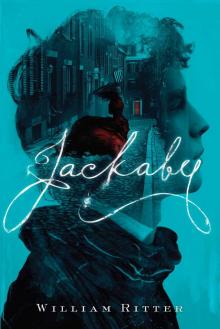
Rook, page 3


“Got to be a clurichaun,” said Jackaby. “Was he drunk? They’re usually drunk.”
“Drunks I can handle.” Marlowe sighed. “I miss drunks. Dealt with drunks my entire career. But drunks who won’t stay put behind locked bars? Drunks who can kick down a wall? Drunks who mutter nonsense that turns out to be actual magical curses? Yesterday a little old lady waved a knitting needle at Allan and turned his tie into a live python. Well, mostly live. I think it was made of yarn. Fabric pins for teeth.”
“Is Allan all right?” I asked.
“He’s fine.”
“And the python?” Jackaby said.
Marlowe rolled his eyes. “Allan named it Susan. He’s been feeding it balled-up socks. Not every incident wraps up so nicely, though. These ones are just the misdemeanors and minor violations. Violent crimes and missing persons numbers are way up, too. Can’t always tell if the perpetrator is paranormal or not. Some cases we just can’t explain. That’s why I reached out.” He looked squarely at me again. “I know you asked for some time, but—”
“It’s fine,” I said. “I’ve had time. I’m ready.”
Marlowe might not have had my mystical magic eyeballs, but he had been working with criminals his entire career and had developed a talent for knowing when someone was lying. He raised an eyebrow at me, his aura prickling skeptically.
“Really,” I insisted. “I can do this.”
Marlowe nodded. “I’ve given Inspector Dupin command of the Paranormal Division. He can get you started. Go see what he’s got for you.”
Inspector Dupin was just emerging from the evidence locker as we made our way toward his office. His aura sizzled like oil over a high flame.
“Inspector!” Jackaby called. “Just the fellow we’re looking for.”
Dupin glanced up from the clipboard he was signing. “Didn’t you quit?” he said. “Afternoon, Miss Rook. How are the visions?”
I faltered only for a moment. “Unceasing,” I answered.
“Fair.” He nodded, handing the clipboard back to the evidence clerk. “You here to help or get in the way?”
“Help,” I said.
Dupin gestured for us to follow as he made his way back through the hallways. “Let me know as soon as Thompson is back,” he said, tapping the duty sergeant’s desk. “I want him to take lead on the Humans First mess. We’re going to need statements. And could we get someone to clean out interrogation room one? It still smells like wet dog in there.” He continued moving through the station. “I thought you were broken,” he said, glancing at me as we walked. “I could use help, but the last thing I need is a project.”
“I’m not broken,” I said. “And I’m nobody’s project.”
He turned to Jackaby. “She ready?”
“Ask her that.”
Dupin turned back to me. “Well?”
“I—I think so,” I said. The inspector’s aura did not resonate with confidence at my reply.
“She’s ready,” Jackaby declared.
“I was thinking I might be of use on a recent missing persons case,” I said, trying to sound more confident this time. “There’s a woman—her name is Horne. I was wondering if I could see her file?”
“Mary Horne?”
“That’s the one. You know the case?”
“Sure.” Dupin shrugged. “Witch. She got caught peddling illegal substances and split before we could arrest her. Nothing exciting—some otherworld herbs and powders and things. We were looking for her suppliers more than for her, but I guess she got spooked. Neighbors filed the report when she didn’t turn up for a few days, but she’s most likely just gone into hiding somewhere. Not a high priority.”
I scowled. “Did she have any family?” I asked. “Children? There was a girl.”
“I don’t know. If she did, they ran when she ran. Look, they’re probably holed up in someone’s basement right now playing checkers. I’m not worried about her. All the petty Mary Hornes of this city are just symptoms of a bigger problem. We’re focused higher up the chain. Come here.”
He walked us just around the corner to the detainment wing.
“See that cell?” He nodded toward the lockup on the corner. I tried not to let my stomach get woozy as I peered in. “I’ve got a whole crew of tough guys in there right now who know more about a smuggling network than they’re saying. With any luck, those are the guys who are gonna lead us to the top of this thing. Mary Horne was just one of their many shady customers.”
“I see. Would you like me to interrogate them?” I asked.
“What? No.” Dupin shook his head. “I’d like you to stay out of the case entirely. It took us a month and a half to arrange the raid, and cracking these guys for information is delicate work.”
“You don’t think I can do it?”
Dupin raised an eyebrow. “Not exactly what I said.” His aura spun a hazy, dubious orange as he surveyed me. “You want a case? Great. I’m sure we can find something for you that’s not flagged for oversight and liable to start a riot if it goes south.” He waved over a constable from across the detainment hall.
“I can do this,” I said. Not if you can’t even look at a handful of suspects without their auras making you woozy, my thoughts added, but I kept that to myself.
“No,” Dupin said flatly. “We’ll find you something . . . smaller.” His lack of confidence in me resonated uncomfortably well with my own self-doubt. I took a deep breath, trying not to let my anxious thoughts spin out of control entirely and prove the inspector right. What would Jackaby have done?
I stepped past Dupin into the miasma of auras that was the detainment area.
“Miss Rook, please—” Dupin began.
“They’re chock-full of interesting clues, this lot,” I said, trying to channel my inner Jackaby. The prisoners glanced up as I approached. There were goblins, trolls, elves, and humans all tucked into the cell together. Some of the paranormals maintained glamours to hide their inhuman features, their magical masks overlapping their true faces, like dizzying double exposures. It made me appreciate the ones who didn’t bother. My head was already aching, but I did my best to keep a confident tone as I glanced from face to face.
“Let’s see. That one there has a pinkish, sparkly energy ground into his shirt cuffs. He’s been working with pixie dust. Lots of it. And the one on the end has been to the Annwyn recently—I can see the soil caking his boots.”
“Already documented all of that,” Dupin said. “We have samples in evidence. If you please . . .”
I swallowed. “What about secrets?” I said. “I can see them bubbling with secrets; can you? Those two on the bench together are sharing a secret—something about money, I think. And the fellow in the corner. He’s keeping an especially big secret. It’s dangerous—positively fizzing.”
“That’s enough, Miss Rook,” Dupin said, but I was finally feeling the rhythm of it.
I focused hard on the man in the corner of the cell. He had a stubbly chin and a mop of dusty brown hair, and his aura was swimming with nerves. He tensed under my gaze, his energy humming like a piano string about to snap.
“He’s draped himself in lies,” I said. “But there’s one secret in particular that’s pushing all the others aside. He’s desperate to keep it hidden. It’s something about who he is—no, who he works for. That’s what you’re looking for, isn’t it, Inspector?”
Dupin said something else, but his voice suddenly sounded far away. I was focused entirely on the twinkling light of the prisoner’s deep, dark secret, everything else fading into the background. This was it. I was doing it.
“The man’s loyalties,” I mumbled, “I can feel them. They’re . . . well, they’re . . . here. How bizarre. It’s almost as if he actually works for . . . well, for you.” I blinked, and the police station gradually came back into focus all around me.
“Did she just say Mick’s a cop ?” one of the other inmates hissed. I could feel every eye in the room suddenly fixed like arrows on the man in the corner.
“Oh,” I said. “Oh.”
“Get him out of there,” Dupin grunted.
The room erupted in a flurry of shouts, threats, snarled curses, and a clattering of keys. My head spun as I was ushered back around the corner and shoved into an empty briefing room. It was several minutes before Inspector Dupin joined me. His lips were pursed. His aura was a tight, white-hot knot.
“Sorry,” I whispered, meekly.
“Two months,” he said. “He’s been undercover for two months, building up that identity, establishing trust.”
“Yes.” I nodded. “That makes a lot of sense now.”
Dupin pinched the bridge of his nose in very much the same way Marlowe tended to when Jackaby was speaking.
“Right,” I said. “So maybe I should just work on that missing persons case I mentioned? Yes?”
“He said no?” Jackaby asked as we stepped out into the sunlight together.
“Emphatically,” I confirmed. “He doesn’t want me poking around anything that even brushes shoulders with his ongoing investigations.”
“Not the most auspicious start.” Jackaby’s feet scuffed the cobbles as he led the way along Mason Street.
“Not a complete loss, though,” I added. “He said that if I can manage to arrive tomorrow morning without starting another riot, he would still find me a nice petty crime to sort out. So that’s something.”
“A step in the right direction,” said Jackaby. “You’ll be back up to monsters and murderers in no time.”
“Hooray,” I managed, unenthusiastically.
Perhaps starting simple was for the best. It was pressure enough to get my gift to work on demand; it would be another thing entirely to have matters of life and death resting on my abilities. And yet, my mind kept drifting back to that sketch of Mary Horne . . . and to the soot-streaked face of the girl who was missing her.
chapter three
The trouble with the truth is that it sticks around, even when you’ve had enough of it. This is why good parents, as a rule, lie to their children early and often. Not cruel lies—quite the opposite. Lies can be kind. They can be soft and comfortable. They can weave into existence a world that makes sense and follows rules. There are no monsters, the lies coo. Everything is going to be okay, they purr. The grown-ups know exactly what they’re doing. The lies are a warm blanket.
Inevitably, however, those lies begin to dry and peel away. They itch. Like frantic lizards shedding their skins, we scramble to free ourselves from the discomfort of the lies that no longer fit, not knowing that there are few torments in this world more harrowing than the naked truth.
“Miss Rook?” my mentor called. He shifted the strap of his satchel, which cut across his chest. The midmorning sun beat down on the weathered flagstones as we walked. “Are you all right?” he asked.
I swallowed. A million disconcerting images and wild apparitions danced in front of my eyes at all hours of the day and night. If they had simply been hallucinations, I might have had the slim comfort of being able to tell myself they weren’t real, but my visions were something much more insidious: they were the absolute, unrelenting truth.
“I’m fine,” I lied.
“Good.” He nodded. “Because we’ve arrived. It’s time to go to work, Detective.”
New Fiddleham was a city that wore many faces. There was the stern, sober face of the Business District uptown, and the scarred, aging face of the Inkling District on the other side of the river. The one staring back at us as we rounded the last turn was clean-shaven and respectable, as metropolitan faces go. Shops lined either side of a broad lane, and the men and women making their way up and down the sidewalks were clad in fine hats, fitted waistcoats, and bright, clean dresses. Neighborhoods such as this one tended to wear their pedestrians like posh jewelry, showing them off proudly in the light of day. I had been down my share of another sort of street, the kind that wore its pedestrians more like knuckle-dusters, tucked away just out of sight, but always waiting and ready.
When Jackaby had been the lead detective and I merely his assistant, our services had typically been requested in those shadier corners of town. I was silently grateful that this case, our first case in months—my first ever since inheriting his unique gifts—would begin in sunnier environs.
The case that Inspector Dupin had plucked off the top of his inbox that morning had brought us to the stately storefront of Talman’s Timepieces & Fine Jewelry. A policeman held the door for us as we approached. His aura was a soft orange.
“Officer . . . Schmitz,” said Jackaby, reading his badge. “Nice to meet you.”
The man raised an eyebrow. “We’ve met, Mr. Jackaby,” he said. “On several occasions.”
“Have we?” Jackaby looked him up and down. “Sorry. New eyes. Well—old eyes. Still getting used to them again. Hold on—I think I do remember you. Pumpkin-colored aura, right?”
“I’m afraid I wouldn’t know about that,” Schmitz said. “Miss Rook.” He tipped his cap to me as I approached. “Thank you both for coming.”
I nodded and took a deep breath before crossing the threshold.
The door clicked shut behind us with the tinkling of a bell. “The manager should be out again in a moment,” Officer Schmitz informed us. “Feel free to have a look around, though.”
The narrow shop was alive with the gentle, steady ticking of clocks and watches. Display cases lined the walls, proudly housing ornate necklaces and brooches set with fine diamonds. The sun had let itself in through the broad front window and was leaning lazily on glass countertops, carelessly smattering the walls with tiny splashes of color.
At least rainbows hadn’t changed. Everything else in the world had gained a magical aura since I had inherited the sight—people, rooms, doorknobs—but rainbows were still just rainbows. This was probably because rainbows were mere tricks of the light. But a part of me wondered if perhaps rainbows had always been magic that common people could see. Rainbows did look like auras. Maybe they were auras that slipped through the cracks to dazzle average folks, allowing humans a peek at the magic we were missing.
I let my gaze drift across the shop again. Catching only the tiniest colorful glimpse of magic in a mundane world sounded marvelous. Of course, auras weren’t even truly colors, not exactly. It was as if the sight had so much magic to feed into my unprepared brain that it just processed it all in whatever manner it could, rubber-stamping parcels of input with whatever labels my mind could accept. Sometimes, the ethereal colors of an aura would spill into smells and tastes, but somehow they still felt the same to me. It was like when you see a certain shade of blue and something inside of you just knows that it smells of peppermint and sounds like plucking violin strings.
Jackaby was watching me intently, his head cocked like he was observing a science experiment. “What are you seeing right now?” he asked.
I straightened up and focused. The shop was tidy. Nothing appeared to be physically amiss. The tile floor was recently swept—not strewn with broken glass. The door frame was prim and white—not splintered to bits from a forced entry. There was a faint charred odor in the air, a hint of something like cigarette smoke mingling with glass cleaner and metal polish. There was nothing concrete to indicate that a crime had taken place . . . except an inescapable cloud of wrongness. It lingered about the room like a tactless party guest. When I opened my mouth, the air tasted like turnips and turpitude, and it made my tongue feel prickly.
Marlowe had been right to request a consultation. Something sinister and supernatural had definitely taken place in this room, and fairly recently, too.
“There.” I pointed to the spot that felt most saturated by the foggy aura.
“Describe it,” Jackaby prompted.
“Please don’t make me,” I said.
“Come on, Miss Rook. You need to get used to putting this sort of thing into words.”
I took a deep breath. No paint made by mortal hands could commit to canvas the hues that hung before me. “It looks . . . almost purple?” I tried.
“What sort of purple? Violet? Indigo? Be as specific as you can.”
“Sort of a . . . villainous purple?” I swallowed. “It feels crooked, like a loose tooth. And it’s sparkly, like . . . like malted pickles.” They were the right words, but even as they fell from my mouth, I knew they were nonsense. My head hurt. “Also it smells of avarice and yellow mustard.”
“Huh.” Jackaby gave a satisfied bob of his head.
“Did that make any sense to you?” I asked. If there was anyone in the world who might help me understand the knotted jumble that was my senses, it was Jackaby. All of this would have been a lot easier if the sight had stayed in his head instead of hopping to mine.
“Of course not,” he said, cheerily. “But you’re getting more willing to sound like an absolute loon in public, and I’d say that’s progress. Confidence first, Miss Rook—competence to follow.”
“That’s less than reassuring, sir.”
“Let’s try another approach. Does the room smell like anything? Not actual smells . . . but beneath those. Supernatural smells. Clandestine carrots, by chance?” Jackaby asked. “Or electric raisins?”
“A bit like turnips?” I admitted.
“Root vegetable.” Jackaby nodded. “I suspected as much. That fits.”
“But what does it mean?” I implored.
“You tell me.” He grinned. “You’re the expert now. Monet and Renoir don’t paint over each other’s canvases. You’ve got to form your own impressions.”
I drew in a slow breath and let it out with a sigh. Jackaby was rocking back and forth on the balls of his feet, waiting patiently for me to take the lead. I had not seen him look so content in all the time that I had known him. The sight had always weighed heavily on Jackaby’s shoulders. It had been a burden and a responsibility from which he had never dreamed of escaping. But now it was mine, and he looked so light he might float to the ceiling at any moment.