Gray Dawn, page 1


The characters and events in this book are fictitious. Any similarity to real persons, living or dead, is coincidental and not intended by the author.
Copyright © 2025 by The Thing Itself, Inc.
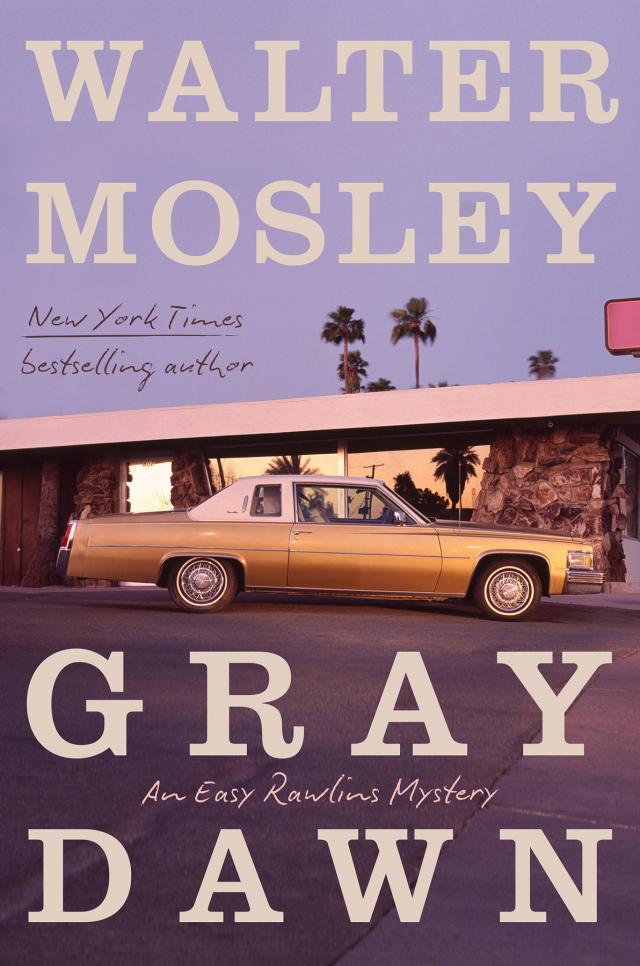
Cover design by Gregg Kulick
Cover art © Millennium Images / Simon Burch
Cover copyright © 2025 Hachette Book Group, Inc.
Hachette Book Group supports the right to free expression and the value of copyright. The purpose of copyright is to encourage writers and artists to produce the creative works that enrich our culture.
The scanning, uploading, and distribution of this book without permission is a theft of the author’s intellectual property. If you would like permission to use material from the book (other than for review purposes), please contact permissions@hbgusa.com. Thank you for your support of the author’s rights.
Mulholland Books / Little, Brown and Company
Hachette Book Group
1290 Avenue of the Americas, New York, NY 10104
mulhollandbooks.com
First Edition: September 2025
Mulholland Books is an imprint of Little, Brown and Company, a division of Hachette Book Group, Inc. The Mulholland Books name and logo are trademarks of Hachette Book Group, Inc.
The publisher is not responsible for websites (or their content) that are not owned by the publisher.
The Hachette Speakers Bureau provides a wide range of authors for speaking events. To find out more, go to hachettespeakersbureau.com or email hachettespeakers@hbgusa.com.
Little, Brown and Company books may be purchased in bulk for business, educational, or promotional use. For information, please contact your local bookseller or the Hachette Book Group Special Markets Department at special.markets@hbgusa.com.
ISBN 9780316573252 (ebook)
LCCN 2025933152
E3-20250809-JV-NF-ORI
Contents
Cover
Title Page
Copyright
A Note from the Author
1.
2.
3.
4.
5.
6.
7.
8.
9.
10.
11.
12.
13.
14.
15.
16.
17.
18.
19.
20.
21.
22.
23.
24.
25.
26.
27.
28.
29.
30.
31.
32.
33.
34.
35.
Discover More
About the Author
Also by Walter Mosley
Explore book giveaways, sneak peeks, deals, and more.
Tap here to learn more.
A NOTE FROM THE AUTHOR
I’ve been writing about Easy Rawlins and his coterie since somewhere around 1988. His first appearance was in a short story called, I think, “Rent Party.” It was about an unnamed young man who had opened his Fifth Ward, Houston, apartment for a wild party. The story started with this young man standing at the front door, taking a ten-cent admission fee from friends, acquaintances, and those strangers who had heard about the event.
He greeted everyone, calling those he knew by name.
When a woman named EttaMae Harris walked up, looking fine and late-1930s hood-glamorous, he felt his heart throb. She was beautiful, strong, trustworthy, and willing, the young man knew, to stand up for her friends. He felt something akin to love for this woman. He would have spoken to her about this feeling except for one thing… That was the next person to show up at the door—Raymond “Mouse” Alexander.
Mouse was trouble. He cheated at cards, messed with the wrong women, disobeyed all the commandments and laws. Ray was everything that the young man was not, but still EttaMae loved him, loved him with all her heart and soul.
The young man greeted Mouse, who handed over his dime and then smiled, saying, “Hey, Easy, how you doin’?”
This was the birth of Easy Rawlins, a character I’ve never felt the urge to introduce because he had always been the teller of his own tales. But this time, with Gray Dawn, something has changed. Easy’s experiences and his world have slipped far enough into the past that, it is possible, many will not understand the reason for his fictional existence.
Easy, and his friends, exist to testify about a volatile time in Black, and therefore American, history.
Ezekiel’s combined tales are kind of like a twentieth-century memoir, a fast-paced unspooling of events that came from a people, an entire so-called race, that had been fighting for liberation and equality longer than any living soul could remember. Black people, during the Great Enslavement, weren’t considered wholly human, and, even after emancipation, were promoted only to the status of second-class citizenship. They were denied access to toilets, libraries, equal rights, and the totality of the American dream, which had often been deemed a nightmare. These somewhat-citizens worked hard, suffered terribly, and, despite all that, made this country a shining example, a beacon of freedom in the face of freedom denied.
Easy is a passionate soul. He identifies with the underdog because he has been that man, because his children (by blood and by choice) are in danger of inheriting this unwanted mantle. He speaks for the voiceless and tries his best to come up with answers to problems that seem unanswerable.
His friends fall into categories that were, at the time, unimaginable for Black folk. In Jackson Blue and Paris Minton, you have IQ prodigies, both of whom can understand anything that has been written or postulated. There’s Fearless Jones, the urban warrior who understands only what the heart demands. You also have Amethystine Stoller and Anger Lee (EttaMae too), women who survive, and even thrive, when the odds are steady against them.
There is, of course, Mouse. Raymond Alexander, a lifelong criminal, rebel, speaker of truths we’d rather not know, the only Black man you’ll ever meet who is not afraid of anyone or anything at any time or place.
And then there’s Easy, possibly the most dangerous character you’ll ever meet. When you see Easy you think you understand him, but, in reality, he is always something else. He is the truth-seeker whom most people do not suspect of such grandiose purpose. They see a Black Man, a man who has been beaten so often that he could never pose a threat that is not immediate and physical. They have no idea that Easy has learned how to open any door, either physical or conceptual. He gleans your secrets, secrets you might not even know that you have.
These characters are not superhuman. It’s just that their quite normal talents must be hyper-present in a world that is set against them for reasons that are clear and still make no sense. They face mouths and doors that utter the words “Whites only.” They are stopped by authorities who see their guilt in the color of their skin. They are heroes whose purpose is to undermine enemies who often do not recognize their own culpability. Their history is almost from another dimension, a place, a series of events that have not happened for the keepers of the official history of this country, this world.
So, when a so-called white security guard stops Easy for being in an office building, a place where Easy has many powerful friends, and Easy’s internal response is hatred, some readers in the modern world might not understand where that hatred comes from. They may no longer have access to the memories of poverty forced on a people, of lynchings based on a word or a glance, of doors to public institutions barred, of children who stolidly believe in their own inferiority.
I ask the reader of this novel to consider what I have said here in the many angry, anguished, and enthusiastic exhortations of life that inform the pages of Gray Dawn.
1.
The phone was ringing. Ringing. Those evenly measured burps of jangled sound were a warning that my life was falling apart—that much I knew. I don’t know how many times it rang, but my conscious count was up to six when I finally rolled across the king-size bed to the other side, where the night table stood. Before I lifted the receiver from the cradle, I looked out the window into the wafting mists and fog that inundated the mountainside all the way down to where the ocean was usually visible. It felt like a poisonous sky had come down to choke both land and sea.
“Hello?” I whined, as if begging for some kind of miracle or release.
“What’s wrong, Daddy?”
“Feather? That you?”
“Uh-huh.”
“What’s wrong?” Fear for my daughter’s safety pulled me from sleeping dread into wakeful worry.
“Nothing. I just thought I’d use the phone card to say hi.”
I had just woken up, and I was already exhausted. It felt as if I had run full speed down a long city block, my heart thundering, breath coming in shallow gasps.
Feather was in Dijon, France, with a national high school group called the American Institute for Foreign Study. Gone for five weeks already, she was there to study French language and culture.
“What’s wrong, Daddy?”
“Nothing. Why?”
“You sounded scared or somethin’.”
“Maybe I was havin’ a nightmare, sumpin’ like that.”
“Nightmare about what?”
“I don’t know, honey, but I sure am happy to hear your voice. How’s your classes goin’?”
“Good. I got top marks in everything.”
“That’s great.” My fear ful heart began to ease. “Have you heard from Bonnie?”
“She’s in Ghana right now, but she’s comin’ when school’s over. We’re gonna go to Paris.”
The joy in her voice was greater than the weight on my soul.
“That’s great, baby. I know how much she loves you.”
Bonnie and I had been lovers when Feather was an orphaned infant, lost in the world. We were the closest things to parents she’d ever have. And that was more of a blessing for us than it was for her.
“You sound sad,” Feather said.
“A little bit. Jesus and Benita spend most’a their time on the water, and you’re fifty-seven hundred miles away. All I got here is the dogs and June gloom.”
“I don’t have to go to Paris if you don’t want.”
“Yeah, you do. I’m okay. And I want one’a those little statues of the Eiffel Tower.”
“Okay,” she said softly. “But if you need me, I could come home.”
“You havin’ a good time?”
“Yeah,” she replied with a little more gravitas than she meant to express. Probably thinking about a sip of wine, her first cigarette, or maybe a kiss. That’s what I thought.
“I gotta go to a lecture, Papa,” she told me.
“Bien. Allez,” I said back.
The second after hanging up I was beset by a pack of dogs.
The two little ones felt like birds prancing wildly on my chest. But number three, Prince Valiant, weighed 180 pounds when the vet last hoisted him on a scale. PV was what Fearless Jones called mostly bull mastiff, stronger than your everyday wolf, friend to loved ones, and death to any threat.
I followed them down the stairs to the first floor and the exit to the backyard of our lighthouse-like dwelling. The smallest mongrel was Frenchie. He was the oldest and the titular leader of the pack. The next was a brown mutt who only wanted to play. These two each got a bowl full of dry food. The big dog, Prince Valiant, was fed three pounds of ground meat twice a day.
Back when I was a child in New Iberia, Louisiana, three pounds of prime ground beef would be enough to feed a family of three for two days. Back then I was, and everyone I knew was, so poor that the end of the Depression was no big deal because we didn’t even know it had happened. In those days a nickel would buy a sandwich that lasted from morning till night. It was a hard life, but I felt loved and cared for. So, at the age of eight, I was terrified when my parents died and I had to hop a boxcar to make it to the Fifth Ward of Houston, Texas. I went there to find my grandfather. After a week of wandering around, asking people if they knew him, I met a madwoman who pointed the way. My granddad gave me a place to sleep but said I had to provide my own victuals. By the time I was used to supporting myself, Uncle Sam said I had to go to war in Africa and Europe. After World War II, I went to California, where, they said, a poor soul could sleep on the ground and eat off the trees.
I did well, became one of the few colored private detectives in Southern California, invested in real estate, and experienced a few fortunate windfalls. Now I lived in a gated community atop a mountain for the fee of a penny a year. I had money in the bank and in the ground. I adopted and raised two children and had quite a few friends, a couple that I even trusted.
Considering where I came from, I’d done very well indeed.
But two years ago I was involved in a missing person case, and by the time I’d found the victim—a forensic accountant—he was dead. That by itself wasn’t so bad, but somehow I fell for the woman who hired me to find the man—her ex. She had committed a murder for which I would never have turned her in. She was justified but I had to let her go.
I went through the rest of the morning almost mechanically. After watering the rose garden on the roof, where I smoked my one cigarette of the day, I went down to the second-floor kitchen and made coffee and buttered toast. After that I donned a short-sleeved off-white dress shirt, brown trousers, blue-and-brown argyle socks, rubber-soled shoes made from black fabric, just in case I came across the unexpected necessity to run, and, finally, a dark, dark brown sports jacket.
Before taking the funicular down the mountain I went to the rough-cut Olympic-size, almost natural grotto of a swimming pool that was just perfect for my daughter to practice in for her swimming meets.
Looking down at the water, I could imagine Feather’s laugh and the smooth, steady strokes of her hours of practice. For some reason this made me climb over to the edge of our mountaintop and scale down the side until reaching the tall, and sometimes electrified, twelve-foot-high razor-wire fence that circled the six homes comprising my community.
Sitting there at the edge of the barrier, I felt like this was some kind of symbol of my life, a prisoner in a paradise of my own making.
I wanted another cigarette but had none. I wanted the fog to dissipate, but that wasn’t to be either.
“What are you doing out here, my friend?” a rough voice in a deep accent asked.
I didn’t have to turn to know that this was Erculi Longo, sire of the four adult brothers who protected the rich woman’s mountain. He was burly but not tall, old but looked less so, and deadly as a Tasmanian devil, at least that’s what his sons had told me. His pants, shoes, and workman’s jacket were neither gray nor brown, creating a kind of natural camouflage. His dark eyes and dark olive skin spoke of both sides of the Mediterranean, the Maghreb.
“Signor Erculi,” I greeted. “What are you doing down the hill?”
“I saw you,” he explained. “And I say to myself that you never have climbed down here before.”
“I don’t know,” I confessed. “Just seemed like somethin’ to do.”
That called up what I’d come to know as the Sicilian Stare. It was a silent inquisition unafraid of what you might have thought or wished to hide. There was a powerful mind behind that weathered face, the kind of focus that few human beings could manage. His family had been through a decades-long feud with a rival clan. When a shift in power came about, and the body count was piling up, Erculi decided to move his sons to America, where they’d have a chance to breathe and breed. He somehow met Orchestra Solomon, the owner of our mountain, and she realized how he could protect her and those she had chosen to live in her little community.
“You miss Feather?” he asked at last.
“Yeah.” I nodded toward the mist.
“But it is something else,” he concluded.
It was my turn for silent reflection. This was probably the longest talk I’d ever had with the stoic warrior. I understood that his gaze was an offering that I had a debt to answer.
“I don’t know, Signor. I feed my dogs, water the roses, go to work, and do whatever is asked of me. But it’s all habit. I could lie on my bed all day long and that would be just the same. I eat food but don’t really taste it. I drink liquor but it doesn’t feel like anything.”
Giving a shrug he said, “That is what we must do. Life is not pleasure for men like us. Life is only the future. It is our children… and their children. It is our young people. They see the world with new eyes when ours grow old and gray. We go blind and toothless… for them.”
I hadn’t been to church in many years. A minister’s palaver about sin and eternal life, the sacrifices of the testaments old and new, the hope of forgiveness, none of that seemed, in any way, true. I’d lived with good and evil since before I could speak, and I had never been able to separate them. In the life I’d lived through, good men turned their backs on suffering and bad ones loved their brothers without reservation.
I hadn’t been to church for a very long time, but it felt like I was in the pews on that mountainside with that patriarch who had also been a slayer.
“So, what should I do now?” I asked honestly.
“Go to work, my friend.”
2.
Doing as the Sicilian elder suggested, I made it down the side of the mountain riding the vertical railway, descending into the mist as I went. Firing up the old brown Dodge, I made it to my office on Robertson Boulevard a few minutes before 6:30 a.m. I expected to have some hours alone to read and wait for the sun to burn away the fog. But after scaling the steep staircase to our third-floor offices, I found our receptionist and detective in training, Niska Redman, already at her desk and hard at work. Seated in her plush blue padded swivel chair, with one denim knee up to her chest, Niska was poring over one of six white-pages phone books open across her wide desk.