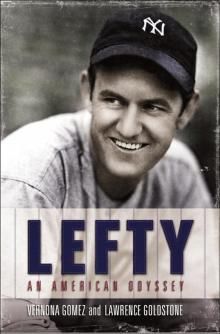
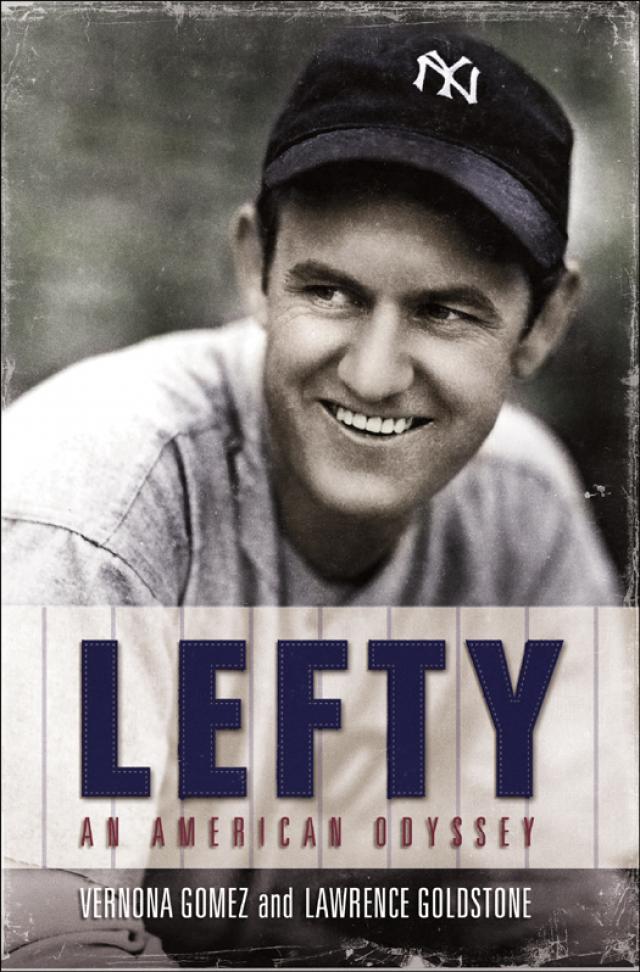
Lefty, page 41


“Losing a young son in a tragic accident leaves an unquenchable sadness. When Duane died, I took all his pictures off the walls. I packed away his guitar, his records, and his sound system. Then I stopped listening to music on the car radio. Pictures of Duane and hearing the popular songs he loved come over the radio put a knife into my heart. I couldn’t stand it.”
Karin Moffat added, “Duane was all about winning, but a win at Sears Point was especially important to him. When you think about it, Duane did win the race because he did what he had to do. He could have driven right over that guy and killed him or maimed him for life. But Duane didn’t. He chose another way. There are different ways to win.”
“He had a very strong, sweet personality that no one who met him could forget,” June said. “I think of him often and I always wonder what Duane would have done with his life. Lefty does well under pressure and I fall apart. When Duane died, I was shattered, broken into a million pieces. I needed someone like Lefty to be cool about it, to think levelly. I couldn’t think straight, couldn’t see straight. I was numb. Our son was dead. It couldn’t be worse. The worst tragedy of our lives. I was out of my mind. I didn’t know where to turn for help. I went to the parish priest and told him I couldn’t stop grieving. I thought he’d be compassionate and show me a way out of my despair. But the priest was very curt. ‘What’s the matter with you? You don’t have a problem. You are the problem.’ I left the rectory in tears. I didn’t return. A few years later, over a cup of coffee, I read in the Chronicle that the priest had jumped off the Golden Gate Bridge. When I had talked with him, he made me feel like such a loser. I wish I had known at the time that he was the problem.”
After a time, June began to cope. “I began yoga and Transcendental Meditation. And I decided to get more mileage out of my hours in the pool by swimming for needy children. Over time, I found that I had the will and the strength to move on. I was stronger than the tragedy of Duane’s death.”
June also began driving cancer patients to area hospitals for radiation or chemotherapy sessions, then picking them up and returning them home after the treatments were completed. Their relatives often wrote letters thanking her not only for the taxi service but for the inspiration. One letter read, “My mom says June’s energy and encouragement was the best medicine she’d ever had. June told her, ‘You’re going to make it. I know you will. Hang in there.’ ”
Perhaps the most remarkable occurrence in that horrible tragedy came as Duane lay in state in a funeral home. John Winkin, who would go on to become one of the most revered and respected collegiate baseball coaches in the nation, recalled, “The day of Duane’s wake, Lefty was scheduled to give the Breakfast of Champions speech at the Babe Ruth World Series in Manchester, New Hampshire. With his son lying in a coffin, Lefty phoned the banquet from the funeral parlor. He gave that speech by telephone over the loudspeaker to the young ballplayers in the national tournament. Lefty told the boys, ‘Go out and do your best for the team. Go out and win. Never accept defeat.’
“Lefty Gomez was an inspiration to me personally,” Winkin went on. “My daughter had run away from home and there were rocky years trying to straighten things out. She’d come home, then run away again. I’d get discouraged, discouraged enough to give up. Then I’d think of Lefty and say to myself, ‘Wait a minute, Winkin. Lefty gave that speech to those Babe Ruth ballplayers while his son lay dead in a coffin in the next room. Your daughter is still alive.’ ”
Sixteen years later, soon after Lefty died, June opened his brown leather wallet and found among the family snapshots and business cards a picture of Duane and his girlfriend smiling in tux and gown just before they went off to the senior prom. Underneath the photo Lefty had tucked the $10 bill he had given Duane before the Sears Point race, “in case of an emergency.” A doctor had found the bill in Duane’s pants pocket and Lefty had carried it for the rest of his life.
1 Getting a doll for Christmas did not seem to hurt John’s development. He is now an attorney, father of two, and CEO of a software company.
42.
“WE’RE GOING TO MISS LEFTY”
In the fall of 1973, Lefty was approaching the mandatory retirement age at Wilson and assumed he would be “put out to pasture.” But instead Tom Mullaney approached him and asked, “How would you like to keep working for Wilson, Lefty?” June later said, “Tom Mullaney gave Lefty his life back because he didn’t retire him at sixty-five.”
Lefty thus continued on his furious schedule, still logging 100,000 miles annually. For almost three years he encountered no difficulties, but then, on October 26, 1976, he experienced chest pains while playing in a golf tournament. They continued to bother him the following day. Lefty brushed off the episode, but June called her cardiologist son-in-law, who said, “Get him to a hospital, even if a cop has to arrest him and take him in handcuffs.” Lefty muttered, “I don’t know what all the fuss is about,” but at Stanford Medical Center, after a series of diagnostic tests, he was told he needed bypass surgery.
The doctor was heart transplant pioneer Norman Shumway, who revealed during Lefty’s first visit that he was a rabid Detroit fan. He recalled a number of games where Lefty had bested his Tigers when he was a kid. “How many times did you beat us?” Shumway asked. Lefty said he didn’t remember, but he’d look it up.
Back home, he checked the record books and found he’d beaten Detroit twenty-four times while losing seventeen. The next day, Lefty returned to Shumway’s office with a printed sign: “Detroit Tigers 24, Gomez 17.” Afterward, Lefty admitted to inverting the record. “I love you as a surgeon,” he told Shumway, “but I’m never sure about a fan. I wanted to keep my doctor happy.”
Shumway wanted to operate in mid-December, but Lefty persuaded him to wait three weeks so he could spend Christmas with his grandchildren, including John and Andrew, who were flying in from the East Coast. Presents for all of them were, of course, under the tree on Christmas morning. Andrew was eight at the time.
“John and I got Pong, the original classic videogame, and we hooked it up to Grandma and Grandpa’s television. But more importantly, Duane’s Gibson guitar was under the tree with my name on the holiday tag. I loved guitar and Grandpa Lefty said they were giving it to me because Duane’s music should go on and I was the one to do it on his Gibson. I was thrilled with the gift, but being only a kid, I don’t think I could possibly have realized how difficult it was for them to part with something that Duane loved.
“Grandpa Lefty rarely mentioned Duane’s death. The only time I ever saw him really distressed was the time he temporarily lost the old ragged miniature camel that hung from the rearview mirror of his car, a long-ago Father’s Day gift from Duane when he was five years old. When I found it under the front seat, Grandpa’s face broke into a smile and he said, ‘Good work, Andy,’ and he gave me a hug.”
On January 14, Lefty had successful heart surgery. In the intensive care recovery unit, Dr. Shumway asked, “Lefty, do you know you had a triple bypass?”
“No, Doc,” Lefty replied, “but if I did, it’s the only triple I ever got in my life.”
Within weeks, he was again traveling for Wilson and promoting youth baseball and soon afterward had fully resumed his grueling schedule. In July, he told a sportswriter at Candlestick Park, “It’s been about six months since the operation and I feel great. When I went on the operating table, I prayed, ‘Let me finish this game, God,’ and here I am. Dr. Shumway’s orders are to walk a lot. That’s easy for me. I walked a lot of guys when I was pitching.”
The Hall of Fame induction six years earlier was the beginning of a seemingly endless series of honors that were bestowed on Lefty in his seventies. In November 1978, a thousand people attended his seventieth-birthday party at the St. Francis Hotel in San Francisco. Gery and Bing Russell helped coordinate. Friends came from across the nation. Among the guests were Joe DiMaggio, Joe Cronin, Billy Martin, Giants owner Bob Lurie, Padres owner and McDonald’s founder Ray Kroc, Gene Autry, Johnny Mize, Frank Crosetti, Maye Lazzeri, Elaine Klein, Eleanor Gehrig, Reder Claeys, Buddy Hassett, Tommy Henrich, Dorothy Ruth Pirone, Satchel Paige, and Ted Williams. Norman Shumway, ignoring Lefty’s true record against his beloved Tigers, came to wish his former patient well. Only Paul Fung, in Germany, could not make it, but sent a telegram, which he signed “Mascot, little Paul Fung Jr.” Other telegrams of congratulations and friendship poured in.
The affair was formal, of course, and at one point Vernona, in a long red gown with a spray of flowers in her hair, descended the spiral staircase to use the ladies’ room. As she was walking across the hall to return to the ballroom, a man fell into step with her. “Hey, listen,” he said eagerly, “I’m going to a sensational party for a Hall of Famer, Lefty Gomez. How about going with me? You can crash the party and I’ll introduce you to Lefty. He’s a legend.”
“That sounds like fun,” Vernona replied. The two went back to the party and the would-be lothario fetched her a drink. After a few minutes, the man escorted her to the guest of honor and said, “Lefty there’s someone here who would love to meet you.”
“Hi, Dad,” Vernona said.
The deflated suitor sighed. “You got me,” he said.
The following year, 1979, Lou Spadia, former owner of the San Francisco 49ers, teamed with the San Francisco Chamber of Commerce to create the Bay Area Sports Hall of Fame. Rather than a museum, like at Cooperstown, the BASHOF would operate largely as a vehicle to promote youth sports. So, instead of spending money on a building, plaques of those in the Hall were to be hung in the United Airlines pavilion at the San Francisco airport, allowing funds normally used for upkeep to go instead to the kids.
The first group of honorees included Joe DiMaggio, Willie Mays, Hank Luisetti, Ernie Nevers, and Bill Russell. The following year, the inductees were Lefty O’doul, Frankie Albert, Bob Mathias, Helen Wills, and Lefty Gomez.
To introduce him at the induction ceremonies, Lefty turned to Jack McDonald, the man who had scooped his sale to the Yankees from the Seals in 1929. “I was very pleased when Lefty asked if I would introduce him,” McDonald said, “but I think he chose me because he knew I wouldn’t make the intro too damn long.”
The plaques at the airport attracted any number of those who would not make a special trip to a museum. It also attracted some other viewers.
“It was one of those last-minute plane commutes to Las Vegas,” Gery said. “I rushed to the San Francisco airport, figuring I’d probably have to fly standby. I checked in at the United counter and asked the agent if there was a seat available. The guy looked and said, ‘Yes, there is. It’s funny, we have another Gomez on board. I think it would be amusing if I put you side by side.’
“ ‘Sure,’ I said. ‘What’s his name?’
“ ‘He’s a ballplayer. Hall of Famer. Lefty Gomez. Matter of fact, before you get on the plane, go over and look at his plaque from the Bay Area Hall of Fame that’s in the United pavilion.’
“Knowing that Dad only flew first-class and I always flew coach, if the agent was going to give me an upgrade, I’d humor him. When I boarded, Dad was sitting in a first-class aisle seat with an open briefcase balanced on his knees. I said, ‘Excuse me, sir,’ and made a move to the window. He looked up and said, ‘Gery? Where are you going?’
“ ‘Las Vegas and I’m sitting with you.’
“ ‘Since when do you fly first-class?’
“ ‘Since right now.’
“Just then, the United agent ran on the plane to see if we had introduced ourselves. He said to Lefty, ‘This fellow here has the same name as you do, Mr. Gomez.’ ‘It’s even funnier,’ Lefty replied. ‘This is my son, Gery, and he belongs in coach.’
“At the Las Vegas banquet that night Dad sat on the dais while the master of ceremonies gave him a twenty-minute introduction. When he finally got to the podium, he began his speech by saying, ‘I thought my clothes would go out of style before he handed me the mike.’ ”
In 1982, Tsuneo Ikeda, owner of the Nippon Sports Publishing Company, invited Lefty and June back to Japan to celebrate the fiftieth anniversary of the 1934 tour. Ikeda moved up the commemoration by two years because few participants were still alive. Babe was long gone, as was Lou. Even the old spy Moe Berg had passed from the scene. In fact, only four members of the American team remained, Lefty, Charley Gehringer, Earl Averill, and Joe Cascarella, but only Lefty made the trip. There he would meet the three surviving members of the Japanese team.
Where Lefty and June had taken weeks to arrive by boat in 1934, this time they arrived in hours. “We flew directly from San Francisco to Tokyo on a Japanese airline and with the time zones, we lost one whole day,” June said. “We arrived at three in the morning, our time. We were exhausted. Tsuneo’s son Ike greeted us with newspaper reporters who wanted interviews and photographs. We went with Ike to the Keio Plaza Hotel, where Lefty did a press conference. When we went to rest, the reporters informed us that they would be back early the next morning. No sleep, nothing to eat, but we expected that with the changing time zone, so we dealt with it.”
The schedule was daunting, as many as fifteen interviews and appearances in a day, shooting television documentaries, followed by banquets in the evening. The schedule was choreographed to the minute. The most important events were the public appearances. Lefty, for example, threw out the first ball at the Japanese World Series in Tokyo. “They asked me to wear my old Yankee uniform. I’m fit and I’m trim but I still think they clocked me at twenty-one miles an hour.”
The Japan of 1982 bore little resemblance to the country Lefty and June had visited as newlyweds. Skyscrapers dominated skylines, automobiles had replaced bicycles as the main mode of travel, and women wore Western dress in place of kimonos. Lefty and June traveled by bullet train instead of rickshaw.
And substantial changes had taken place at the games themselves. As June reported, “Reserved seats at the ballpark reminded me of my old grammar school chairs, with a little shelf next to the seat. During the games, girls ran up and down the aisles taking orders for full-course dinners. What a luxury to have the Japanese delicacies brought to you as you watch the game. A far cry from fighting your way for a greasy hot dog with mustard.
“In the States, there are pregame and postgame interviews, but in Japan after each inning a TV commentator talked with the players in the dugout. A bench roundup. In the heat of battle, it must be a challenge for a hitter to keep his cool when an aggressive reporter says, ‘I see you’ve fanned in your last two at-bats. You’re not helping the team. What’s the problem?’ On the other hand, if a player hit a home run, a young girl ran out with a bouquet of roses. He held up the bouquet, the fans cheered, and the player ran off.
“If a pitcher was knocked out of the box, he couldn’t run into the dugout and sit on the bench like an American player. He had to go to the sidelines and throw the ball back and forth to a catcher to show the crowd he still had his stuff. Just not the right stuff for that day. I doubt it’s good for the pitcher, because his arm is already tired and he’s discouraged at having been pulled out of the game. But he went out there, throwing the extra pitches.
“The Japanese fans are passionate. It was comparable to what baseball was to the fans of the thirties in the U.S. In many ballparks, there’s a sign with a gauge on the side that looks like a giant thermometer. As the fans scream, it records the volume. In addition, the fans wave all sorts of flags. Home runs, double plays, the last out of an inning … all the plays are marked by flag waving and screaming.”
The tour had originally been scheduled for two weeks, but Lefty and June were such a hit that their hosts extended their stay by a week to allow the Gomezes to travel around the country and sightsee free of obligations.
After Lefty and June returned home, he was invited to throw out the first pitch at the fiftieth anniversary of the first All-Star game, also to be played in Comiskey Park, July 6, 1983.
“In 1983, June and I celebrated our fiftieth wedding anniversary and the fiftieth anniversary of the All-Star game. On July 5, I pitched in the Old-Timers’ Game, then the following day threw out the ceremonial first pitch. In the inaugural game, I worked three innings, gave up no runs, and allowed two singles. Fifty years later, I worked a third of an inning and gave up one run and two hits. They talk about pitchers losing three inches off their fastball. Me? I’ve lost sixty feet.”
But the fiftieth anniversary of the All-Star game wasn’t the fiftieth All-Star game. Because baseball had initiated an ill-fated two–All-Star game schedule in 1959—which lasted only four years—there had been a previous fiftieth anniversary game celebration in Seattle in 1979. For that one, Lefty and Carl Hubbell had been honorary captains. King Carl, who by then was living in Phoenix, had also by then become one of Lefty’s closest friends.
In October 1984, another invitation arrived.
Charles M. Conlon is widely considered the greatest baseball photographer in history. Working from 1908 until 1942, Conlon captured thousands of images of virtually every star player for three decades. His photograph of Ty Cobb stealing third base in 1909 has long been considered one of the game’s iconic images.
In October 1984, the Smithsonian’s National Portrait Gallery in Washington, D.C., held an exhibition of Conlon’s work. As Lefty remembered, “Ballplayers who had been captured on Conlon’s glass negatives were invited to attend the opening of the exhibition but many had to decline due to prior commitments or illness. For example, Hubb had suffered a stroke, so of course couldn’t attend. The three who did attend the festivities were Leo Durocher, Bill Terry, and me.