

Rash Reckless Love, page 32
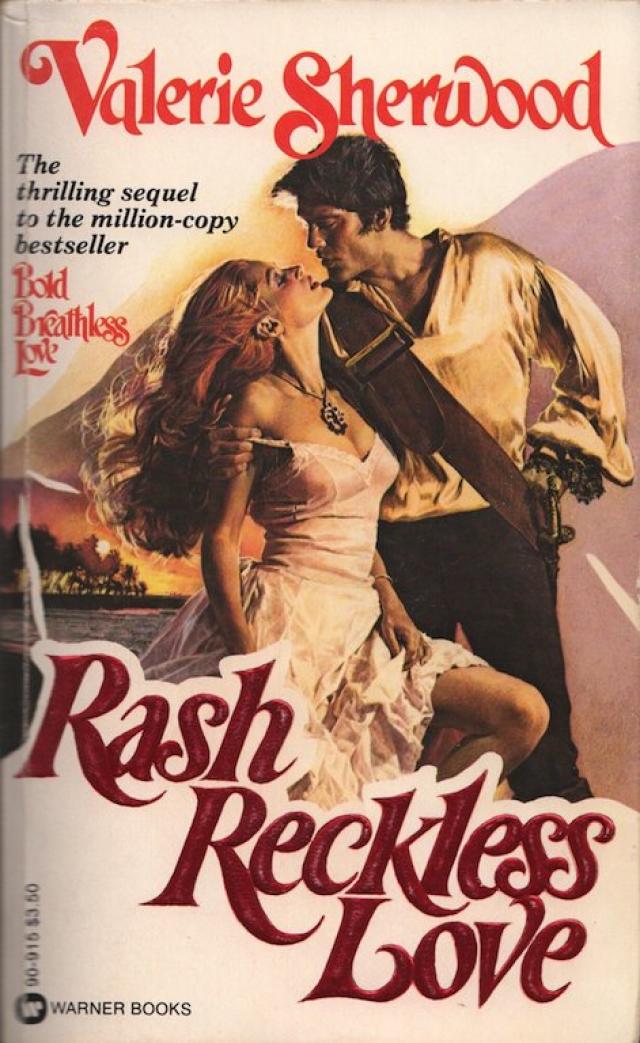


He too began to run, pelting down the driveway after the girl, with her pink skirts flying, aboard the sorrel mare.
CHAPTER 22
The ladies in the carriage—and there were four of them, the Waite sisters—had been singing “Greensleeves.” Their big pastel skirts overflowed the carriage sides and bounced merrily as the wheels jolted along the roughest part of Mirabelle’s driveway. Their light voices, raised in song—and laughter too, for there wasn’t a one among them who could carry a tune—had so diverted the elderly black driver in his stovepipe beaver hand-me-down hat that he had turned his grizzled head to look at them and was letting the horses find their own way down the familiar drive.
Thus it was that none among them had noticed the thud of oncoming hooves fast approaching—until it was too late.
The two young gentlemen, charging down their makeshift race course, rounded the blind turn neck and neck—and parted in surprise and horror as they found themselves faced with a head-on collision with a rearing horse and a carriage full of screaming women.
Ross managed to come to a skidding halt, pulling his bay mare’s head back so hard that the poor beast slid along on her haunches. Lance, swerving to avoid the oncoming carriage, shot off his careening roan’s back like an arrow to land unhurt but crestfallen in a clump of underbrush.
The ladies were not so lucky.
With their horse plunging and rearing up into the air, their delicate vehicle overturned and sent them off in a colorful heap, legs and arms waving, into the dusty road.
Into this scene rode Anna Smith.
“Are you hurt?” she cried, dismounting with a flash of silken legs that for once nobody noticed.
“Oh, Mis’ Chloe!” the driver was moaning. His black face had gone ashen and he was down on his knees in the blue velvet trousers of which he was so inordinately proud, kneeling beside a rather large young woman in pastel green silk who was struggling ineffectually to rise. Now she fell back with a moan.
“Ross Wybourne and Lance Talbot, you have caused me to break my ankle!’’she shrilled in the strident voice that had frightened off all the young men of the island and left her at eighteen an “old maid.” Her face reddened until it was almost the color of her russet hair. “And I hold you, Anna, responsible!”
“Oh, Chloe, perhaps it isn’t broken.” Anxiously, Anna pushed the wailing black driver aside and bent to touch the injured ankle.
Chloe gave an angry moan. “Of course it’s broken—and it’s your fault for letting this pair of rakehells tear down your driveway as if they were leading a cavalry charge!”
“They were only racing to see who would take me to the ball at your house,” protested Anna. “None of us saw you in time. There—does this hurt?” She was testing the ankle with gentle fingers.
“Of course it hurts!” snapped Chloe.
“Here, Mattie, Alma, Sue—help me get her up.”
“I’ll do that,” cried Ross. “Lance, take her other side— we can boost her up gently.”
“You’ll not touch me, either one of you!” shouted Chloe.
“Let them help you,” insisted Anna. “They’re stronger than we are.”
Over violent protests, as the other young ladies dusted themselves off and muttered, Chloe was helped to her feet. Gingerly she tested her right foot.
“Can you stand on it?” wondered Ross.
For answer, Chloe gave a sharp shriek and staggered—but remained upright,
“She can stand on it,” said Anna with satisfaction. “It isn’t broken after all. Do you think you boys can right the carriage?”
Lance nodded. He was still somewhat shaken from being flung headfirst into the bushes and his handsome face was scratched. The nervous gray hitched to the carriage was still pawing the ground and shaking, but the black driver seized the reins and began to soothe the beast as the two young gentlemen set their broad shoulders to raising the fallen carriage.
Once it was back on its wheels they assisted the complaining Waite sisters back into it.
‘‘Now lift Chloe back in,” directed Anna, who had become used to command with Papa Jamison away so much.
This was accomplished with a large amount of groaning and several shrieks from Chloe.
‘‘Now we’ll all go back to the house,” Anna looked at Grenfell, who had just come up to them and was staring helplessly about him. “Mount and help me up before you, Grenfell. We’ll lead the way.”
Grenfell complied with alacrity, for any contact with Mistress Smith’s delicious body was more than welcome. He was quite flushed as he helped her up before him on the horse and she could feel him trembling as they led the carriage down the driveway to the front steps with Ross and Lance, thoroughly sobered and disheveled, bringing up the rear.
Ignoring Grenfell’s look of mute appeal as they reached the steps—he had actually considered tightening his grip on her, wheeling the horse and running away with her for all time despite what his mother or anyone else might say—Anna dismounted and turned a level look on Ross and Lance. “We’ll bring Chloe into the drawing room and let her rest on a couch—you two can carry her. Boz”—to the avid-eyed boy who had come to watch—“go get some brushes from Tessie. We’ll brush the dust off the girls’ dresses and if any seams are torn out Tessie will stitch them up for you. And we’ll all eat these little cakes Mossy just baked and have some limeade.”
“I think I need something stronger than limeade,” complained Chloe, who had a secret passion for rum and often stole a nip from the dining room at home.
“We’ll break out a bottle of Canary,” decided Anna, noting the sudden shake of Sue’s head, for Sue was aware of Chloe’s secret nipping and disapproved. “Boz, before you go for the brushes, run tell Mossy we need some glasses and a bottle of Canary.” She led the way into the house, through the cool dim hallway into the main drawing room, where Chloe was deposited on a couch with her sprained ankle propped up on green velvet pillows.
“At least, if you had to hurt your ankle, Chloe, this is a fine place to lie in state!” laughed pretty, scatterbrained Alma. “This house always impresses me, Anna. All that forest of silver—” She nodded toward the arched doorway that led to the dining room. “And especially”—she gave a heavy theatrical sigh—“those candlesticks. There’s nothing like them on the island—they look like pillars!”
Anna glanced toward the huge square-based candlesticks that dominated the heavy sideboard. They stood like Grecian columns, three feet tall and ornamented with fat cupids and twining vines. She knew Alma’s remark was occasioned not by their beauty, which was considerable, but because they were worth a fortune.
“Mamma Jamison told me I could have them for my dowry when I marry,” she said in an altered voice. “They were part of her dowry when she married Papa Jamison.”
“You’ll have to marry an earl at least to find a table massive enough to support them!” giggled Alma.
“They do look too heavy for an ordinary table,” frowned Sue, studying the candlesticks. “One gets the feeling ordinary table legs would buckle under their weight. Do you ever use them, Anna?”
“Not on the dining table—they dwarf it,” admitted Anna. “They look too big even on that enormous sideboard. Mamma Jamison came from a huge house in Sussex. It had tremendous rooms and tremendous furniture.”
“I love everything at Mirabelle,” sighed Mattie, Deborah Waite’s third daughter, and quite plain. “Especially this room—now that you’ve taken down the black hangings.”
Anna tried not to wince at this reminder of Mamma Jamison’s death two years ago, and of the long period of mourning during which she and Papa Jamison had worn unrelieved black, and the house had been somber with black funereal hangings and all the mirrors turned to the wall as was the custom in mourning. But her voice as she answered Mattie was not quite steady, for she’d loved Mamma Jamison with all the fervor of her young heart and had felt lonely and bereft when she died.
“Yes, it is a lovely room.” Her somber gaze took in the familiar high tray ceiling and the big paneled cedar fireplace with its double wooden doors closed for the summer months. “Mamma Jamison ordered these drapes herself,” she said softly, looking at the handsome flowered brocade hangings that flanked the windows. “She didn’t have time to get them hung before she died.”
“You’ve certainly added some nice touches,” declared Sue Waite, settling her buff-colored skirts down on a high-backed chair. “That pair of carved stools and all these velvet cushions and those andirons are new, aren’t they?”
“Yes,” smiled Anna. “I think Mamma Jamison would have liked what I’ve done with the room.”
“Anna has put her touches over the whole house,” Sue told the others. “You should see her bedroom, what she’s done with it! A new coverlet all the way from France!”
“I loved the old coverlet,” sighed Anna. “But last Guy Fawkes Day, when my horse balked at jumping over a bush and threw me, and the doctor said I must rest in bed until we found out if I’d really got out of the fall scot-free, Doubloon was carrying in my dinner and she tripped on the Turkey carpet and spilled a whole trayload over the coverlet.”
“And so you had a coverlet full of sweet potato pudding!” Sue’s laughter pealed as she spoke of the traditional fifth of November dish.
Anna’s nose wrinkled in remembrance. “And fish chowder and shark pie and cedar berry beer! We tried everything but the stains wouldn’t come out. Then on his last trip to Jamaica, Papa Jamison found a wonderful embroidered coverlet that was almost a match for the wall hangings. So it was his good taste, really—not mine.”
‘‘What a lot of trouble to go to, redecorating everything!” chimed in Mattie wonderingly. “I mean, his new wife will change everything when he remarries.”
Everyone turned to look at her.
“ ‘Remarries’?” asked Anna in an odd voice.
In the face of their startled attention, Mattie had the grace to blush. “Well, I mean it’s bound to happen sometime, isn’t it?”
“Not anytime soon,” murmured Anna. “He loved Mamma Jamison very much and misses her even more than I do.”
“Men change,” Chloe said in a spiteful voice that reminded them all she’d been jilted at the altar last year. Her mother had arranged the marriage by mail, with a friend of hers who dominated her sons just as Deborah Waite dominated her daughters. He had arrived by ship a week before the wedding, but that one week of constant criticism by Chloe, who thought him too short, too frail, too mousey, too unlettered, and too poor, had been enough. On the day of the wedding he fled and had not been heard from since. “Men aren’t faithful like women,” pronounced Chloe, glaring about her.
“Ah, come now. Mistress Chloe,” cried Grenfell in an aggrieved voice, for he was sure in his heart that he would be faithful to young Mistress Smith forever. “That’s not fair, to condemn us all!”
Before Chloe, whose jilting still smarted, could snarl an answer, Anna cut in, for Mossy had arrived carrying a tray containing a wine bottle and glasses. “Grenfell, will you help us get this cork out?” ,
Offering wine to her guests averted open warfare between Chloe and Grenfell, but Anna insisted on limeade for herself. “It’s too hot and sticky for anything that isn’t instantly cooling!” she laughed. “I live on limeade all day long—Boz can testify to that!”
“What’s this about you two racing for the chance to squire Anna to our ball, Ross?” Alma’s dark head was bent as she played with apparent absentmindedness with a yellow riband on her sleeve.
Ross, who had kissed Mistress Alma behind the hedge at a party only a fortnight ago, and would have gone further had not his hostess stumbled over them, gave her a hunted look.
“Unless of course you’ve already forgotten!” Alma’s face as she looked up at him was a model of innocence, but her light voice had an edge to it.
Ross looked from Alma, whom he had always fancied, to his young hostess, heiress to Tobias Jamison’s fortune. He was not much given to flights of fancy but behind her for a moment he seemed to see a tall white ship of which he would be master—such a ship as her dowry would bring him!
“Yes, Mistress Anna,” he said. “Ye should declare a winner, and I’ll remind you that I was as yet unhorsed when we met the carriage, whilst Lance here was airborne, barreling headfirst into a bush—and see, he bears the marks of it.” Indicating Lance’s scratches with a nod of his dark head.
Anna, witnessing Alma’s red-faced discomfiture, gave him a level look.
“I declare Grenfell the winner, Ross,” she said sweetly. “For his horse was first to reach the front steps.”
“But you were riding with him!” protested Ross.
“ ’Tis true Grenfell started late—”
“ ‘Started late’?” cried Lance. “He ran the first half of the course on foot!”
Anna frowned at him. “I distinctly heard you challenge the others to ‘a race’! You said nothing about disqualifying any who entered on foot. Grenfell started late and carried extra weight—myself. But he did finish first. I’m to the Waites’ ball with him.”
Both Ross and Lance shared a look of discomfiture and turned to glare at Grenfell, whose popinjay green velvet doublet swelled at this unexpected piece of luck.
Pretty Alma could hardly conceal her delight. “Nonetheless we’ll expect you both at the ball,” she told the two young men scoldingly. “With ladies or without them. Ross, I’ll even take pity on you and let you be my escort—if you ask me nicely enough!”
“Why, thank you. Mistress Alma.” Ross rose to the occasion and considered the smiling girl in lemon taffeta, who lifted her glass coquettishly.
Anna smiled too. She knew how Alma felt about Ross—indeed the whole countryside did, for Alma pursued Ross everywhere; Anna strongly suspected that Alma had found out Ross was calling on her this afternoon and that was the reason for the Waite sisters’ pilgrimage to Mirabelle. But even though she and Alma weren’t exactly close—it was taffy-haired Sue Waite who was her special friend—she wished Alma joy of him, for she herself had no intention of becoming engaged to Ross Wybourne.
“Have you heard the news?” asked Alma, eager to bring the center of attention back to her own pretty face. “Clara Beecham is marrying again—Chad Wright, of all people!”
“When?” came a general chorus.
“In the spring.”
“I should think Chad would be afraid to marry her,” cried Ross. “For Beecham was as dark as Chad is blond, and they’ll have all black-haired children and none of them to look like him!”
“Oh, I don’t think—”
“Come now, Mistress Alma. Everybody knows that if a woman marries more than once, her children by her second husband may look like her first husband. ’Tis called telegony!”
In the face of this generally held belief, Alma fell silent but Mattie said, her brown eyes big as saucers, “Let’s hope she doesn’t have all children with smashed-looking noses like poor Henry Beecham!” She looked awed.
In the ensuing lively discussion of whether Henry’s nose had been born that way or knocked that way, Anna thought of frail Clara Beecham at whose wedding two years ago they’d all been bridesmaids. Poor Clara—a bride at twelve, a widow at thirteen, and now at fourteen a second wedding in the offing. “Perhaps they’ll be lucky,” she murmured, and turned to Sue for agreement.
Sue was looking down with anxiety at her buff-colored silk skirts. “I do hope I’ll be able to wear this dress again,” she muttered.
“It is torn, I can see that,” said Anna quickly, peering at the rip in the hem. “I’ll have Tessie sew it up for you. Meantime, why don’t you choose one of my dresses, since we’re almost the same size? No, really, Sue, I do insist because I feel to blame for this whole thing.”
On the couch Chloe stiffened. “Remember, neither blue or green become you. Sue!” she shrilled.
"Not any shade of pink!” put in Mattie in her high insistent voice.
“And certainly not yellow!” cried Alma in alarm.
Anna gave them all a pleasant look. How well she knew that the Waite sisters had divided up the rainbow. Chloe, the oldest and most forceful—so forceful she frightened suitors off with her square jaw and the straight dark line of her thick brows—had chosen all the blues and greens as her domain. Mattie, with her mousey hair, had delightedly claimed the entire spectrum of red through pink and wine and coral. And anything even remotely yellow was claimed exclusively by pretty Alma, who thought the yellow shades set off her dark hair and had been reinforced in that belief when no less a personage than the governor had beamed at her and told her she looked splendid in her best lemon silk.
They had left kindhearted Sue with nothing but gray and buff and brown.
“If Sue does not choose something from my wardrobe—yes, and wear it to the ball—I will be very much put out,” said Anna sweetly, taking Sue by the arm.
“Remember, gray is your best color!” called Chloe stridently as Anna led Sue off toward her bedroom.
“You can’t choose gray,” whispered Anna. “For I’ve nothing gray in my wardrobe except a dove gray riding habit—and you certainly can’t wear that to the ball!” She give her friend’s arm a friendly squeeze.
In her bedroom, she threw open the big press, bursting with fashionable clothes. “Here, Sue, let me choose something that will suit you.” She pulled out a delicate pastel pink tissue gown that overlaid a shimmering soft rose satin.
Instinctively Sue’s hand went out toward it. Then, “Oh, I couldn’t—it’s pink,” she demurred, and drew back.
Their eyes met and they both laughed; Each girl was well aware that mousey unassuming little Mattie, bookish and wrapped up in her girlish daydreams, would ordinarily not have demanded colors of her own like the owner of a racing stable—Mattie was far too shy for that. But ever since Mattie had read Passion’s Perilous Price, a luridly romantic novel by the countess of Wakefield, her whole life had been changed, for its heroine, Prunella, had worn shades of red on every flaming page—pink and coral and rose and wine. Although the novel had been passed by Anna to Sue and had been read voraciously and in private by each giggling Waite sister save Chloe, who had tossed it aside as “trash,” only Mattie, bookish and unworldly, had been so affected. She had loved the novel. She read it six times and by the sixth reading every shade of red had become inescapably connected in her impressionable mind with sex and desire and passion and fulfillment. That accounted for her newly formed and passionate devotion to the red side of the spectrum. Women who wore red and pink got their man, Mattie firmly believed—and everything else worth having.


