Racing Storm Mountain, page 3


“Clever. Did you get that from a postcard?”
Cynthia chuckled. “Probably, but that doesn’t make it any less true. When I’m rock climbing, making an ascent up the mountain, the view from the top might be amazing, and there’s an undeniable pride in having reached the summit. But the real fun is the climb itself. If not, I’d just drive or take a helicopter ride to the top. Skiing? The fun is all in the wild ride. Nobody is thrilled just because she’s hanging around at the foot of the slope.”
“OK.” Swann held up her hands in surrender. “OK, I get it. Please. No more of your country wisdom.”
Cynthia laughed again. “That’s what I like about you, California. You give as good as you get.”
The two of them stopped talking for the rest of the ride as the audiobook played. She listened as the narrator told them all about Ernest Shackleton’s bold plan to cross all of Antarctica, crossing over the South Pole. By the time Cynthia rolled into her stall in the four-car garage at home, Shackleton’s ship, the Endurance, was sailing farther and farther into the deep cold at the bottom of the world. It was one of those nights, like a lot of nights, when Swann wished the drive from school was longer, so they could listen to more of the story.
As she went inside, Swann tapped a preset button on her phone, and the lights all over the house gently adjusted, dimming or brightening exactly the way she liked it. It was a little brighter than her parents’ normal setting, but Swann thought brighter was better, the light pushing away the lonely shadows a little.
“Earlier today, I made my famous goulash for supper.” Cynthia shook her hands in mock alarm. Her voice echoed through the cathedral-ceilinged living room. “Sorry. For dinner. I figured a hearty pasta dish would give you plenty of energy for tomorrow’s race. It won’t take long for me to heat it up. Would you like it now, or do you want to knock out some homework first?”
Swann draped her coat over one of the twelve chairs around the long granite dining room table and tapped another control on her phone to light up the gas fireplace in the tall central brick column, the most prominent feature in the center of the room. “I thought Mom and Dad were supposed to be home.”
“On a late flight.”
Silence fell over the place, interrupted at irregular intervals only by the faint hiss and crackle of the fireplace.
“So eat now or later?” Cynthia said quietly.
If she ate now, she’d become too tired for homework. Best work while she was still sharp. “Later,” she said.
“You got it,” Cynthia said.
“I’ll be in my library,” said Swann. “I’ll text you when I’m about ready.”
Down the hall, past the ugly color-splotch abstract painting Mom had recently bought, past the double wood doors to the home theater, around the corner past the always closed and locked door to her parents’ business office, beyond a shelf featuring several of her parents’ awards, including an Oscar, past the big main stairs and down another hallway, Swann made her way to the back spiral staircase, the one that led up into the round rooms of the tower section on the corner of the house. Up on the third floor was the single greatest thing about moving to Idaho. Swann’s library.
Dad, sensing she was disappointed by the idea of moving to this small town, had decided on his own to try to soften the blow by showing her the architect’s sketches for converting this tower room to a haven for books.
She’d had to hold back tears when she’d first seen her new library. Up by itself on the top floor of the tower, it was reached by a spiral staircase, leaving all four walls, save for four window seats with amazing views of the woods and of Lake Payette, completely devoted to bookshelf space. She had a small desk up there, but Swann did most of her homework in her very favorite spot, a padded wicker shell chair hanging from the ceiling. Wrapped in a quilt inside the hanging basket, Swann could relax. She could almost forget that her home and parents were a thousand miles away. She almost didn’t notice the heavy quiet in the nearly empty house.
CHAPTER 3
KELTON FIELDING WASN’T ONE OF THOSE NERDY KIDS WHO spent forever around school at the end of the day. He didn’t have anything else to say to the teachers, and he knew from experience that hanging out on the playground after the last bell was a great way to get beat up. But that Friday, Kelton had an even stronger need to get out of there as fast as he could.
The part. The part. The part. That afternoon, Ms. Foudy, his English and homeroom teacher, had warned him to pay attention. She’d been griping about that all week, but how could he be expected to care about some stupid poem about chickens and a wheelbarrow when everything depended on the arrival of this belt for his snowmobile? It had taken him over eight months to get the machine’s engine running, but without that belt, the thing wouldn’t actually move. He needed that belt so he could win the race. Not just because he wanted to show up all the people who’d made fun of him about his broken-down sled, but because the sale of the super-duper prize sled might help make sure his family didn’t have to move again, and if they could stay in the house they were renting now, Kelton just might be able to get Scruffy. Maybe the mean old man would sell the dog.
Passing by Eagle Pawn Shop, Kelton looked through the window to a shelf halfway back in the cluttered shop. He did this every day, and so far, every day he was relieved to see Steve’s prized possession still hadn’t been sold. It was a World War II German dagger with a skull and evil swastika carved into the steel handle. Steve said his great-grandfather had taken it off a dead Nazi during the war and had handed it down until he got it. The pawnshop owner had given Kelton $200 for the knife. As soon as he won the snowmobile race and scored his money, he’d have to shell out $250 to purchase the blade and return it to the box at the back of Steve’s closet. Everything would be fine. As long as that belt had been delivered.
The sun was low in the west by the time he reached the rickety fence near the dilapidated trailer where Scruffy lived. The dog had barked a little but stopped as soon as he got a good sniff of Kelton. Kelton reached through the fence and petted his matted damp fur. “Oh, you’re so cold, buddy. You gotta stay in your doghouse tonight, try to get out of this snow.”
Scruffy licked Kelton’s fingers while he wagged his tail. Kelton laughed. “Sorry, pal. I don’t have nothing for you.”
The little dog whined.
Kelton sighed. “Well, OK. I’ll try harder next time. It’s not easy, though. We’re not allowed to take food out of the cafeteria, and, like today, it’s hard to smuggle out chicken and noodles and green beans.” He scratched behind the dog’s ears the way he knew the pup just loved. “Now I have to get going, but I’ll make you a deal. I win this race tomorrow, I’ll buy a big sack of dog food, be able to feed you better for a long time. Maybe I’ll get you some of that canned meat type of dog food. I’ve seen that stuff before. Some of it looks good enough for people to eat. Bet you’d love it.”
Kelton stood up and took a few steps away. The dog whined. “I’m sorry, buddy. I have to go. If that belt’s here, I have a ton of work to do.” He started jogging off through the thick snow. “If the belt’s not here . . .”
He didn’t want to think about that.
A few blocks more, forgetting about trying to run through shoveled areas or through his old tracks, Kelton’s feet were freezing, his shoes full of snow. At last, he skidded to a halt near the mailbox in front of his house. He placed his hand on the little metal loop thing at the top of the mailbox door and pulled.
“Yes!” A cardboard box. But was it the right one? He yanked it from the mailbox, shoving the SECOND NOTICE bill envelopes back inside. There was still enough light out to read . . . “ ‘Kelton Fielding’! Yes!”
The box was addressed to him. It was the right weight. The right shape. He rushed up the snow-covered sidewalk and path to the house. The lights weren’t on inside and the door was locked, so he bent down to pull the spare key from the hole in the rotted part of the door-trim board.
Inside, he was careful to remove his shoes and brush off any extra snow from around his ankles onto the front rug so that Steve wouldn’t yell at him again about water being all over the floor. In the kitchen, he found a knife to help him cut the tape and open the box.
At last, he held the thing in his hands, that long loop of thick black rubber. It was finally real, but he had been dreaming about it, trying to figure out a way to get it, for so long that a part of him struggled to believe he really had it.
He carefully placed it on the kitchen counter so he could grab a clean glass to get a drink, and that was when he found the note. In this house, people had school and worked at odd hours. (Well, mostly he and Mom went to school or worked. Steve was still looking for a job.) So a lot of communication happened by notes.
KEL,
X- TRA SHIFT AT BEAR STONE 2NITE. LAST FRIDAY OF CARNIVAL. HOPE FOR BIG TIPS! BE HOME LATE. STEVE WILL FIX YOU A FROZEN PIZZA. LOVE YOU MORE THAN ALL THE SNOWFLAKES OUT THERE TODAY.
MOM
A quick survey of the house, and the fact that Steve’s 1987 Chevy Monte Carlo SS wasn’t in the driveway, told him he was on his own for frozen pizza. He smiled and turned the oven dial to 450. A twelve-year-old didn’t spend this much time alone without figuring out how to cook for himself. He was a master chef with the fro-pi.
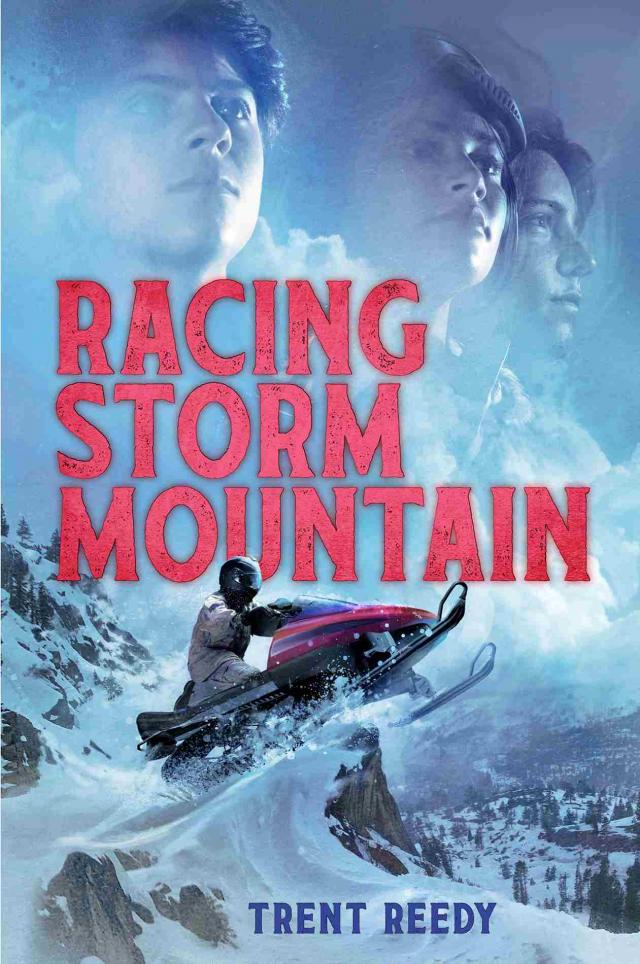
Less than an hour later, he took his snowmobile belt and two slices of Tombstone pepperoni out to the garage. There it was. His red 2006 Ski-Doo Summit 800. He squeezed the belt in his hands. “Hey there. You ready to get to work? We got a race to win tomorrow.”
Kelton shivered. This garage wasn’t special. It was filled with all kinds of old junk, but the one thing it had going for it was this big electric heater Steve had installed last year when he was working out here installing new rims and a cherry-bomb glass pack on his Monte Carlo. Mom hated when anyone ran the heater, said it cranked up the electric bill. But how much extra could it cost? Kelton could pay her back the difference from his race winnings. He turned the dial, firing up the heat, and took a bite of his fro-pi. He sat down on the back bench seat that Steve had been promising to put back into Mom’s minivan ever since he used her vehicle to haul a bunch of old scrap lumber for one of his friends.
Kelton was glad the bench hadn’t been put back yet. It was handy for when he worked out here. When he was finished with supper, he wiped the grease on his jeans and then grabbed the belt to go to work. He already had the left-side engine cover off, the tool kit out, the belt guard removed, and the tension on the secondary clutch relaxed. He’d done it weeks ago, just like the guy on the YouTube video he’d watched at the library. It was a lot easier than he’d thought it would be.
Now he checked the new belt to make sure the arrows on it were pointing toward the front of the sled. Gritting his teeth in concentration, hoping he didn’t mess this up somehow, he looped the belt around the circular metal-drum-like primary clutch before easing it over the metal lip of the round secondary clutch.
“Kind of easy so far,” he said to his sled, patting the seat when he had the belt on. For just a moment he felt a spike of panic when he couldn’t find the clutch adjustment tool that came in the Ski-Doo tool kit, but he relaxed when he found it on the workbench. “Don’t worry,” he assured his snowmobile. “From now on, I’ll put all the tools back in the onboard compartment as soon as I’m done with them.” If he’d have lost that tool, it would have been all over. He slipped the end of the tool into the hole on the secondary clutch and rotated it counterclockwise to tighten the clutch and seat the belt.
“Piece of cake,” Kelton said. He carefully returned the tool to the black pouch that came with the snowmobile and strapped it back into its compartment near the bottom of the secondary clutch.
In the maintenance video he’d watched, the guy talked about how he liked to have a couple of his friends help him with the next part, pushing the snowmobile back and forth to move the track and therefore the clutch and belt, the better to make sure the belt was fully seated. This was going to be tough. Nobody was around, and even if Steve was home, he probably wouldn’t help.
Kelton crouched down behind the sled, took a deep breath, and pushed hard, driving his legs, grunting. “Come . . . on.” It moved forward an inch, two inches, six inches. He stopped, went around to the front of the sled, and pushed it back. Then he reinstalled the belt guard and closed the machine.
“And that . . . is it,” he said.
Could it be true? After working, sweating, dreaming about getting his snowmobile running and working again, could it be ready? He smiled. “There’s only one way to find out.”
Kelton suited up. He didn’t own a nice once-piece regular snowmobile suit. Instead he put on a pair of overalls-with-suspenders-style snow pants, his old snow boots, which ran a little small, two sweatshirts, a coat, and a big waterproof light coat that had belonged to Darren. A pair of gloves and Darren’s old helmet completed his gear. He didn’t look like a pro, but he hoped he’d stay warm and dry. Even on a warmer snowmobile day, with temperatures near or even slightly above freezing, once a rider cranked up the speed on his sled, once he was out there charging through snow, especially wet snow, he could get cold very fast. Kelton had watched YouTube snowmobiling videos about frostbite. Horrible stuff.
He heaved open the garage door, shoving hard to get it to snap beyond its regular sticking point. The cold blast and wave of snow stung his cheeks at once, but he smiled, realizing the rest of him felt perfectly comfortable, a little warm even, and his face and ears would be fine once the helmet was on. He pushed it down over his head, a good fit. Then with another huge effort, he dragged the snowmobile backward. He didn’t have one of those fancy sleds that actually had a reverse gear.
“Yes,” he hissed. “That’s the way. Nice and easy.”
Out in the snow, he positioned his snowmobile just right, and then yanked the pull start to fire it up. It roared to life in one pull! It was working! For so long now, he’d been telling people about how he was right on the edge of getting this snowmobile to run, to work, and now he’d done it. He, Kelton, working out of this junked garage all by himself, had taken this expensive broken machine and figured out how to make it run and work again. He felt the vibration of its motor, of the sled’s power, shaking up through his hands, and it felt like his power. He had made this happen when guys like Bryden Simmons and Richie Hunter Higgins thought he’d never be able to do it.
As soon as his sled eased out onto the blanket of thick white snow it glided smoothly, almost as if it were floating on water. And then the moment toward which he had been working for many months had arrived. It was time to ride. Throwing his leg over the sled, he sat down behind its handlebars and flicked on the headlight to shine a beam through the heavy sparkle of snowfall. Then he eased on the throttle. Not too much. He’d warm it up in the vacant lot behind the garage, take a few laps to let that belt get seated right, just like the guy on the video said.
Gliding out into the snowy back lot, his snowmobile ran perfectly, and Kelton laughed with joy. His sled was old, but he’d learned a lot, worked hard, and fixed it up good as new. He sped up a little as he cleared the shrubbery near the garage. His sled shot ahead so easily, with so much power and instant speed even as he barely hit the throttle. What would it feel like when he took it up to full power?
Back in this lot, there were a couple of bumps, rocks, and old leaf piles, plus places where Steve dumped the grass clippings when he mowed. The thick powder covered all that now and Kelton’s Ski-Doo bobbed over it all. Turning the handlebars, Kelton eased his sled into a wide curve at the end of the lot, slowly enough that he didn’t even need to lean against the turn for balance.
Perfect. He reached back a hand to slap the seat behind him, the way a cowboy might swat his horse to put on more speed, and he throttled up. “Come on,” he said inside his helmet. “Let’s pick it up a little.”
The sled obeyed, and instantly shot ahead faster. He laughed, remembering riding with Darren on the trails outside of town. Oh, they had gone fast, trees and shrubbery beside them melting into a blur as they shot through the snow. Darren had even let him take the controls, trusting him, even though he was so young, and he’d laughed when Kelton had shouted and buried the throttle right away.
“There you go!” Darren had said, and laughed. He patted Kelton’s back, squeezed his shoulder. “Crank it up! You feel the need for speed! You’re a natural at this, kid. A pro already.”
Nobody else ever said those kinds of things about him, cheered him on like that. Mom and Darren had broken up more than three years ago, but zipping around on this snowmobile now, it felt that hardly any time had passed at all.
The two of them had enjoyed that 2006 Ski-Doo Summit 800 for weeks. But eventually the snowmobile had trouble and wouldn’t run.
Then one morning, after a night with a lot of shouting and slamming doors, Darren was gone, the snowmobile broken down and forgotten in the back corner of the garage.
Until now. Now it rode again, power, grace, and speed, and he had made it happen. He rode the snowmobile around and around that lot for about a half hour, taking it easy on the throttle, but eager to open it up tomorrow in the race.
Finally, he patted it atop the handlebars. “That’s it for tonight. Gas ain’t free.”
He drove back to park in the garage and shut down the engine before filling its fuel tank, ready for tomorrow’s race. Steve still wasn’t home, even though it was getting pretty late. That wasn’t all that unusual.
“Suppose I should go back inside,” Kelton said aloud. He also supposed he shouldn’t talk to himself so much. To anyone else, he’d seem like a crazy person, but being alone as much as he was, the quiet got to him. “At least nobody’s around to make fun of me about it.”
Instead of going into the boring empty house, he remained in the garage, practicing, as he had countless times before, different positions and leans on the sled, useful for traversing high snowy slopes or for getting the snowmobile unstuck in thick snow. It would have been better if he could have practiced out on actual slopes, but he hadn’t had that luxury. A guy like Hunter Higgins could take out his family’s fancy newer snowmobile whenever he wanted, November through March, could get all the practice he needed. People like that had no idea how lucky they were, perfect families and everything handed to them. “Bet they never even go off the trail,” Kelton said.