

The Bergdoll Boys, page 1


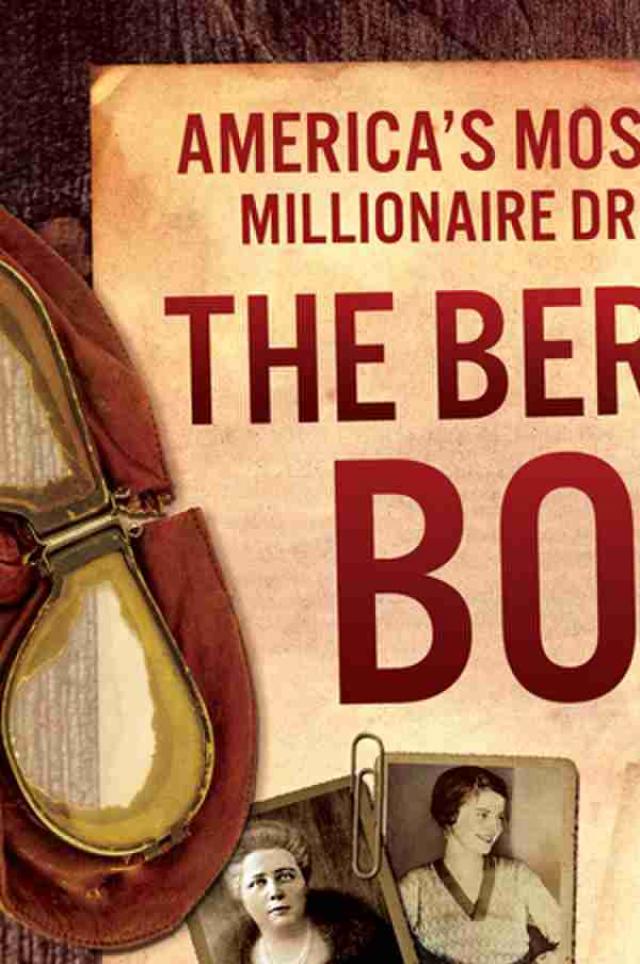
THE BERGDOLL BOYS
Other Books by the Author
Hang on and Fly: A Post-War Story of
Plane Crash Tragedies, Heroism, and Survival
Association Island: General Electric’s Vacation Paradise
Henderson Harbor: Fishing, Boating, and Summer Recreation
www.TimLakeBooks.com
THE BERGDOLL BOYS
America’s Most Notorious Millionaire Draft Dodgers
TIMOTHY W. LAKE
Havertown, Pennsylvania
Brookline Books is an imprint of Casemate Publishers
Published in the United States of America and Great Britain in 2023 by
CASEMATE PUBLISHERS
1950 Lawrence Road, Havertown, PA 19083, USA
and
The Old Music Hall, 106–108 Cowley Road, Oxford OX4 1JE, UK
Copyright 2023 © Timothy W. Lake
Hardcover Edition: ISBN 978-1-955041-08-9
Digital Edition: ISBN 978-1-955041-09-6
A CIP record for this book is available from the British Library
All rights reserved. No part of this book may be reproduced or transmitted in any form or by any means, electronic or mechanical including photocopying, recording or by any information storage and retrieval system, without permission from the publisher in writing.
Printed and bound in the United Kingdom by CPI Group (UK) Ltd, Croydon, CR0 4YY
Typeset in India by DiTech Publishing Services
For a complete list of Brookline Books titles, please contact:
CASEMATE PUBLISHERS (US)
Telephone (610) 853-9131
Fax (610) 853-9146
Email: casemate@casematepublishers.com
www.casematepublishers.com
CASEMATE PUBLISHERS (UK)
Telephone (0)1226 734350
Email: casemate-uk@casematepublishers.co.uk
www.casematepublishers.co.uk
Cover images: Grover Bergdoll fingerprints (U.S. Department of Justice); wanted poster (U.S. Department of Justice); Berta Bergdoll (Temple University Urban Archives); Emma Bergdoll (postcard); Bergdoll Brewery logo and trademark (Bergdoll Family Collection); 1950 Protective goggles (Wikipedia); Peccary driving gloves (Wikipedia); Sauer gun used by Bergdoll to kill a kidnapper in 1923 (Bergdoll Family Collection); Grover and Erwin Bergdoll sitting on an airplane (Chester County Historical Society/Roger Grigson)
To Polly Holmes Davis, whose love, encouragement, advice, and support
inspired me to complete this incredibly challenging project.
Contents
Foreword by Louis Erwin Bergdoll
Introduction
Bergdoll Family Tree
Prologue: A Milk Can Full of Gold
1Bergdoll Beer
2Emma: The Bergdoll Matriarch
3Race Cars and Millions
4Speed Demon Bergdoll
5Airplanes and Millions
6Grover’s Historic Flight
7Clipped Wings
8Insane or Just Crazy
9Bergdoll’s War
10The Bergdoll Casket
11Captured
12A Man without a Country
13Bribe for Gold
14Escape
15Congressional Investigation
16Death of a Bergdoll Fixer
17Kidnap on the Hochzeitsfeier
18Kidnap in das Hotel der Krone
19Bergdollism
20More Gold
21Friedel Schmidt
22Explosive Allegations
23Berta Bergdoll
24Wreck in the Machine Shop
25Hiding in Plain Sight
26Senate Investigation
27Surrender
28BenetNasch
29Final Flight
Epilogue
Appendix I: Grover’s Wright B flyer
Appendix II: The Bergdoll Beer Recipe
Select Character Biographies
Acknowledgments
Foreword
My father was Erwin R. Bergdoll. I was born in 1955 when he was 65. I never heard anything of his history, exploits, or family matters when I was growing up. It’s hard to believe, but he never spoke of his 1911 racing win at the Fairmount Park Motor Race in Philadelphia, Pennsylvania. Nor did he speak of building the many Erwin Special race cars and racing them throughout the country. He died when I was ten years old. At a young age, I can understand why nobody spoke of my family’s infamy. What could a child make of such things? On a couple of occasions, I did get to hear about my uncle Grover crashing one of my father’s handmade racecars, destroying it when it burned. My father never let that go and would bring it up on occasion, very quietly, and like it was just to himself. There would be a couple of choice expletives thrown in.
While I never met my uncles Louis and Charles, or my aunt Betty, I did meet Uncle Grover a couple of times. He lived with my family for a short period in the early 1960s. I also never heard a word about past family history from him either. Neither directly nor from overhearing the adults talk.
It would have been great to be regaled with racing stories and talk of early flight. My sister, Mercedes, thought Grover was a menace and did not care for him at all. I thought of him as kind of amusing. In one of the only times Mercedes and I ever had what you would call a babysitter, it was Grover. My parents went out alone for an unknown reason. Uncle Grover took us out and about in the woods on our farm in Honey Brook, Pennsylvania, and we picked mushrooms with his directions. We went back to the house where he cooked them, and we ate them. I have to say they were quite good, and I remember the taste to this day. When my mother returned and heard about this, even though she didn’t show it, I think she was quite livid. I believe, although I don’t know, Uncle Grover may have become persona non grata over this, right then and there. I never saw him again.
I’ve always been relieved that my father didn’t join his brother, Grover, and make a career out of evading the draft. Thinking about it, my father’s draft evasion could very well be how I can write this. I discovered in this book that Grover was somewhat brilliant and he’d studied several different subjects. Just this year a friend contacted me about books of my uncle’s that he had acquired in a collectibles purchase. He wanted someone in the family to have them, so I reimbursed him. I wanted to help offset his expenses but he wouldn’t hear of it. Some of Uncle Grover’s writings in the books had obvious use to an aviator, like navigation. Others are more of a mystery, such as toxicology. The notes are handwritten and very meticulous. They contain hand-drawn sketches that show some decent amount of skill. Oddly enough one book contained the Manual for Noncommissioned Officers and Privates of Infantry of the Army of the United States, of which Uncle Grover proudly claims ownership with his name stamped inside the cover, GROVER C. BERGDOLL. A rather ironic collector’s item!
Uncle Grover, it seems, was always looking for a way to make a splash and gain notoriety. Often his zeal got him into trouble, like flying his Wright B Flyer around City Hall in Philadelphia, racing his many cars around the streets recklessly, and eventually running from the draft. His taunting of various authorities has always been a mystery to me. I’ve never been able to reconcile why he would insult his pursuers, and if nothing else, further motivate them. The Pot of Gold story and his subsequent escape are hard for me to understand. Why anyone would be released to recover buried treasure leads me to believe his draft evasion was not that big of a deal with the authorities who held him. This happened, regardless of the anger of the public concerning his actions. His exploits became so much that they created a rift in the family that was never reconciled to this day.
When my cousins, Louis and Wilbur Bergdoll’s place at 22nd and Green Street in Philadelphia suffered a fire in the 1980s I thought I could try to mend the rift, but it was not to be. I knew they were up in their years, and looking at the place I figured they could use some help. I offered my services to Wilbur and helped out a bit. One day I stopped in and Wilbur had some coins out to go to a show. I came to realize that day that he didn’t trust me because he wouldn’t invite me in. I decided to no longer darken his doorstep with my visits. My father had a hand in that rift, but I think to a much lesser degree than Uncle Grover. I believe my father was forgiven in the family even if I’m fairly certain he never forgave himself. He lived out the rest of his life on the farm in Honey Brook in self-imposed seclusion. He didn’t want to talk to anyone about these affairs, and suspected anyone who tried to see him was looking for a sensational story.
In light of my grandmother Emma’s involvement in the legal affairs of my father and Uncle Grover, I’ve come to the belief that she was overindulgent with them as young men. Her involvement was such that she and Uncle Charles, and their cohorts, were tried and convicted of conspiracy in the draft evasion affairs. I can’t put myself in her situation in that time, so while I’m inclined to frown upon their actions, I have to withhold judgment. That my uncle was living in virtual exile for 20 years, while he was married, is just one more oddity to me. His jail term was roughly a quarter of his self-imposed imprisonment.
The various machines of the boys disappeared over time from their storage at the Bergdoll family farm in Broomall, Pennsylvania. Uncle Grover’s Wright B Flyer is now in the Franklin Institute in Philadelphia. Uncle Louis’ Bleriot, a French aircraft, is now at a museum in New York. My father’s championship Benz race car is missing. I thought it was in the Mercedes Benz museum in Stuttgart, Germany, but the research in this book indicates they have an earlier model. In an act of revisionist history, the Wright B Flyer was restored to factory specifications rather than how it was flown over Philadelphia and the surrounding areas with BERGDOLL painted across the bottom of the lower wing. They were all taken under questionable circumstances.
Louis Erwin Bergdoll in front of his uncle Louis J. Bergdoll Bergson’s magnificent Philadelphia Italianate mansion, 2019. Long legs and short torsos are physical traits for the Bergdoll men, except for Grover. (Timothy W. Lake)
My father’s racing trophies—I saw three of them—were no doubt to me stolen and sold by my brother, Erwin, Jr. I pieced this together from reading a newspaper article about my brother and his subsequent jailing for stealing from my father. It’s only circumstantial, but the trophies disappeared, my brother was jailed, and one of the trophies appeared somewhere else.
This book tied together many things that I had already thought about. It gave me additional insights into things that were news to me. Throughout my life, I have encountered people who either loved my family or reviled them. Many times, when someone authored a story about some aspect of my family history, be it aviation, beer brewing, automobile manufacturing, or auto racing, the family infamy always is mentioned. As the Don Henley song states, “We love dirty laundry!” This book is the fairest treatment of my family history that I have ever read.
Louis Erwin Bergdoll, 2023
The Bergdoll boys of Philadelphia and their sister. Top to bottom, left to right, Louis Bergdoll Bergson, Charles Bergdoll Brawn, Elizabeth Bergdoll Hall, Grover Bergdoll, and Erwin Bergdoll. Each inherited fortunes from the Bergdoll Brewery leading to the decades-long drama that is The Bergdoll Boys. (Bergdoll Family Collection)
Introduction
Philadelphia, Pennsylvania, 1994
Exploring the Franklin Institute science museum one day in 1994, I entered the Hall of Aviation to find the exhibit of a 1911 Wright B Flyer, the 13th airplane mass-produced by the famous Wright Brothers with a design in which they deviated from their original glider by installing the elevator in the tail.
There was scant information to satisfy my curiosity about why the plane was in Philadelphia, not the Smithsonian National Air and Space Museum in Washington. It also appeared shabby. The fuselage fabric was discolored with brown stains, and a large flat aluminum pan sat beneath the engine catching dirty oil drippings. A small plaque said the plane last flew in the 1930s. I didn’t give it much attention, and neither did anyone else.
Several years later, while delivering the news on Philadelphia’s WCAU-TV, I received a press release from the museum that explained how their Wright B Flyer was being dismantled and sent to Ohio for restoration. Again, there was very little information about the origin of the airplane, except that it was the most intact example of a Wright Brothers airplane, containing more original parts than the famous Kitty Hawk glider on display at the Smithsonian. I grew determined to explore the real story behind this airplane. Who owned it? Who flew it? And why was it in Philadelphia at the Franklin Institute?
What I discovered about the original owner who purchased the plane from the Wright Brothers in 1912, shipped it to Philadelphia on a rail car, and flew it from his private grass strip in the Pennsylvania countryside is one of the most dramatic and captivating stories I’ve encountered in my long career as a newspaper and broadcast journalist.
This rare and rudimentary airplane performed 748 successful flights around eastern Pennsylvania and New Jersey, astonishing people in their farm fields, rowhouse windows, churches, and on the beach. Some of these flights set early aviation records, while others raced steam locomotives on Pennsylvania’s Main Line railroad and scattered spectators and horses at the prestigious Devon Horse Show.
On and on, it flew through virgin airspace with a daring pilot who could have been nicknamed Glorious Grover long before Lucky Lindy if not for one inglorious mistake. Instead, the original owner and pilot of this now million-dollar one-of-a-kind airplane flew it for less than two years and then stashed it in a garage on his family’s Pennsylvania country estate.
Grover Bergdoll’s 1911, most original Wright B Flyer has been displayed at the Franklin Institute Hall of Aviation in Philadelphia, Pennsylvania since it was last flown in 1934. Whether sitting on the floor or hanging from the ceiling, its provenance has always been ascribed to the Wright Brothers, with scant information about Bergdoll. (Franklin Institute)
Since 1933, Grover Bergdoll’s Wright B Flyer has undergone three restorations, most recently in 2002–2003. (Timothy W. Lake)
Then, as a millionaire brewery-heir celebrity, he converted his cash to gold and fled the country as the most notorious draft dodger in American history.
For many years I’ve been researching the incredible life of Grover Cleveland Bergdoll, the man who bought the airplane from the Wright Brothers in 1912 and was trained partly by Orville Wright to fly it. I read Roberta Dell’s 1977 book, The United States against Bergdoll. (A.S. Barnes and Company). I determined that while Dell told a good story, she did not have access in the 1970s to the wealth of materials available from around the world in the Internet research age that I could gather from the United States, Canada, France, and Germany on the Bergdoll story.
However, I put the project on hold to write and publish three other books already on my agenda: Henderson Harbor (2012), Association Island (2013), and Hang on and Fly (2015).
During my research, I discovered that the late Alfred Bergdoll, Grover’s eldest son, wrote a 645-page manuscript that he annotated into a diary of the Bergdoll family. His margin and full-page longhand notes are nearly illegible. Still, after many hours studying his script and understanding the family foibles, I could piece together his positive and negative comments about his father’s ignominious life. Alfred wished to publish the story, but I found it in less than first draft form, nowhere near publication-ready, and missing key parts of the story.
Within the diary-manuscript, the personal, intimate, and emotional elements of the story of Grover Bergdoll and his dedicated wife and gun-waving, check-writing mother are all there. It includes a delicious tale of how Grover and his mother withdrew thousands of dollars in gold coins from the U.S. Treasury to fund his escape. Today, people still hunt for Bergdoll’s gold, said to be buried in the hills of Maryland, West Virginia, or Pennsylvania, or maybe nowhere.
Some of Alfred Bergdoll’s recollections and figures in the diary-manuscript are conjecture, and challenging to prove. However, of the many items in this story up for discussion, one thing is sure. Like his son, Alfred, Grover Bergdoll was a meticulous record keeper who put everything on paper, usually with his typewriter. Grover was also a knowledgeable man who studied and kept diaries on mathematics, physics, engineering, chemical components of explosives, ballistics on German rifles, formulas for light and bullet refraction, meteorology and astrology, ancient Egyptian history, celestial navigation, and wind impacts on aerial navigation. He even recorded much of his life with his own cameras and produced photographs in his own studio and darkroom. He was a highly intelligent man but, at the same time, his intellect hovered near the edge of insanity.
And, while his life unraveled for public display of his personal tragedy, a long-time family friend told Congress, Grover had too much money at a young, unsupervised age, enabling his unwise decisions.
Later in life, it appears that Grover’s poor decisions were influenced by mental illness and a lifetime of being pursued and denigrated, leading to selfishness, paranoia, destructive and abusive behavior, and abandonment.
With Bergdoll’s family’s permission and support, I have utilized portions of Alfred’s diary in this story, adding to my deep research. As the oldest of nine surviving children to Grover and Berta Franck Bergdoll, Alfred was able to witness most of the tragic events of his father’s adult life.
Alfred’s richly scandalous story was virtually hidden away from view by all but a few who were determined to read it. I am glad I found it filed away in a Philadelphia archive, and I’m grateful that Alfred wrote and saved his diary-manuscript, the Curse of the Bergdoll Gold. I also appreciate that Alfred’s sister and executor of his estate, Katharina Bergdoll, permitted me to utilize the narrative for this book. Without it, the Bergdoll story could have been told, but it would not have been complete.


