

J G Ballard, page 1
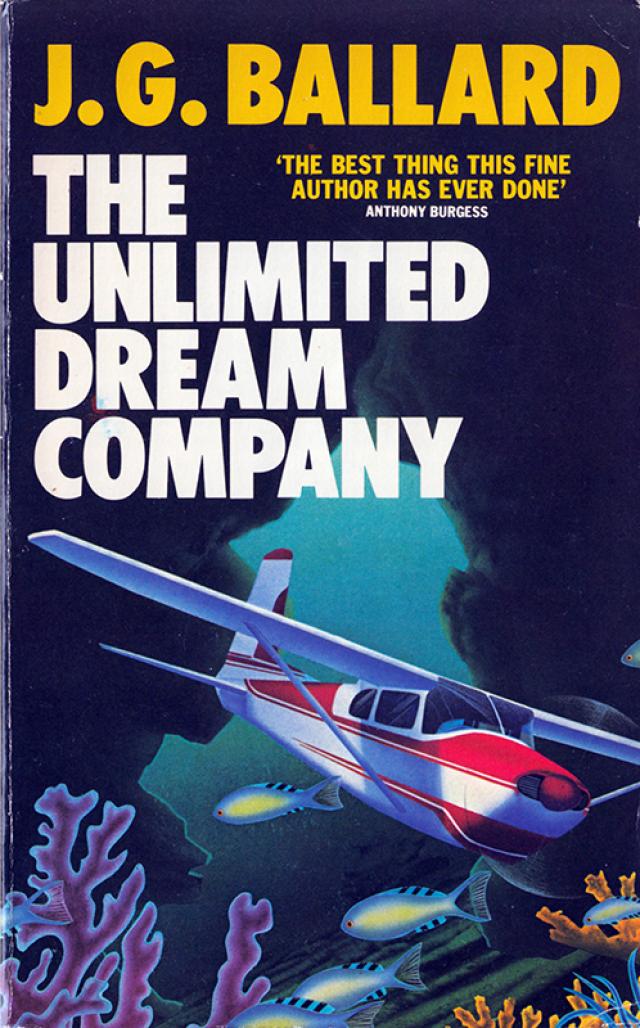


J. G. Ballard was born in 1930 in Shanghai, China, where his father was a businessman. After the attack on Pearl Harbor Ballard and his family were placed in a civilian prison camp. They returned to England in 1946. After two years at Cambridge, where he read medicine, Ballard worked as a copywriter and Covent Garden porter before going to Canada with the RAF. In 1956 his first short story was published in New Worlds and he took a full-time job on a technical journal, moving on to become assistant editor of a scientific journal, where he stayed until 1961. His first novel, The Drowned World was written in the same year.
‘J. G. Ballard is a leading figure in a very rich and developing field. His earlier work was usually cast as science fiction, but he has long since worked loose from that pocket. Like many excellent contemporary writers, from Italo Calvino to Thomas Pynchon, he draws on science-fiction methods to create a magical modern fantasy. A writer of enormous inventive powers, he has, like Calvino, a remarkable gift for filling the empty, deprived spaces of modern life with the invisible cities and the wonder worlds of the imagination.
The Unlimited Dream Company is a book of this kind, a remarkable piece of invention, a flight from the world of the familiar and the real into the exotic universe of dream and desire.’
Malcolm Bradbury, New York Times Review of Books
By the same author
NOVELS
The Drowned World
The Drought
The Crystal World
The Wind From Nowhere
Crash
Concrete Island
High-Rise
Hello America
SHORT STORIES
The Four-Dimensional Nightmare
The Terminal Beach
The Day of Forever
The Disaster Area
The Overloaded Man
The Atrocity Exhibition
Vermilion Sands
The Venus Hunters
Low-Flying Aircraft
Published by Triad/Granada in 1981
ISBN 0 586 05205 4
Triad Paperbacks Ltd is an imprint of
Chatto, Bodley Head and Jonathan Cape Ltd and
Granada Publishing Ltd
First published in Great Britain by
Jonathan Cape Ltd 1979
Copyright © J. G. Ballard 1979
Printed and bound in Great Britain
by Cox and Wyman Ltd, Reading
Phototypesetting by
Elanders Limited, Corby, Northants
Set in Plantin
This book is sold subject to the condition that it shall not, by way of trade or otherwise, be lent, re-sold, hired out or otherwise circulated without the publisher’s prior consenr in any form of binding or cover other than that in which it is published and without a similar condition including this condition being imposed on the subsequent purchaser.
Contents
The Coming of the Helicopters
I Steal the Aircraft
The Vision
An Attempt to Kill Me
Back from the Dead
Trapped by the Motorway
Stark’s Zoo
The Burial of the Flowers
The River Barrier
The Evening of the Birds
Mrs St Cloud
‘Did You Dream Last Night?’
The Wrestling Match
The Strangled Starling
I Swim as a Right Whale
A Special Hunger
A Pagan God
The Healer
‘See!’
The Brutal Shepherd
I Am the Fire
The Remaking of Shepperton
Plans for a Flying School
The Gift-making
The Wedding Gown
First Flight
The Air is Filled with Children
Consul of This Island
The Life Engine
Night
The Motorcade
The Dying Aviator
Rescue
A Mist of Flies
Bonfires
Strength
I Give Myself Away
Time to Fly
Departure
I Take Stark
Miriam Breathes
The Unlimited Dream Company
CHAPTER 1
The Coming of the Helicopters
In the first place, why did I steal the aircraft?
If I had known that only ten minutes after taking off from London Airport the burning machine was to crash into the Thames, would I still have climbed into its cock-pit? Perhaps even then I had a confused premonition of the strange events that would take place in the hours following my rescue.
As I stand here in the centre of this deserted riverside town I can see my tattered flying suit reflected in the windows of a nearby supermarket, and clearly remember when I entered that unguarded hangar at the airport. Seven days ago my mind was as cool and stressed as the steel roof above my head. While I strapped myself into the pilot’s seat I knew that a lifetime’s failures and false starts were at last giving way to the simplest and most mysterious of all actions—flight!
Above the film studios helicopters are circling. Soon the police will land on this empty shopping mall, no doubt keen to question me about the disappearance of Shepperton’s entire population. I only wish that I could see their surprise when they discover the remarkable way in which I have transformed this peaceful town.
Unsettled by the helicopters, the birds are rising into the air, and I know that it is time for me to leave. Thousands of them surround me, from every corner of the globe, flamingos and frigate-birds, falcons and deep-water albatross, as if sprung from the cages of a well-stocked zoo. They perch on the portico of the filling-station, jostle for a place on the warm roofs of the abandoned cars. When I lean against a pillar-box, trying to straighten my ragged flying suit, the harpy eagle guarding these never-to-be-collected letters snaps at my hands, as if she has forgotten who I am and is curious to inspect this solitary pilot who has casually stepped off the wind into these deserted streets. The barbarous plumage of cockatoos, macaws and scarlet ibis covers the shopping mall, a living train that I would like to fasten around my waist. During the past few minutes, as I made sure that none of my neighbours had been left behind, the centre of Shepperton has become a spectacular aviary, a huge aerial reserve ruled by the condors.
Only the condors will remain with me to the end. Two of these great vultures are watching me now from the concrete roof of the car-park. Fungus stains the tips of their wings, and the pus of decaying flesh glints between their talons, carrion gold shining in the claws of restless money-changers. Like all the birds, they give the impression that they might attack me at any moment, excited by the helicopters and the barely healed wound on my chest.
Despite these suburban pleasantries, I wish that I could stay longer here and come to terms with everything that has happened to me, and the consequences for us all that extend far beyond the boundaries of this small town fifteen miles to the west of London. Around me the streets are silent in the afternoon light. Toys lie by the garden gates, dropped in mid-game by the children when they ran away an hour ago, and one of my neighbours has forgotten to turn off his lawn sprinkler. It rotates tirelessly, casting a succession of immaculate rainbows over the ornamental pond at the foot of the garden, as if hoping to lasso a spectral fish from its deeps.
‘Mrs St Cloud…! Father Wingate…!’ I miss them already, the widow who tried to finance my flying school, and the priest who found my bones in the river bed.
‘Miriam…! Dr Miriam…!’ The young doctor who revived me when I had almost drowned.
All have left me now. Beckoning the birds to follow me, I set off across the shopping mall. On a beach by the river is a hiding place where I can wait until the helicopters have gone. For the last time I look up at the vivid tropical vegetation that forms Shepperton’s unique skyline. Orchids and horse-tail ferns crowd the roofs of the supermarket and filling-station, saw-leaved palmettos flourish in the windows of the hardware store and the television rental office, mango trees and magnolia overrun the once sober gardens, transforming this quiet suburban town where I crash-landed only a week ago into some corner of a forgotten Amazon city.
The helicopters are nearer now, clattering up and down the deserted streets by the film studios. The crews peer through their binoculars at the empty houses. But although the townspeople have left, I can still feel their presence within my body. In the window of the appliance store I see my skin glow like an archangel’s, lit by the dreams of these housewives and secretaries, film actors and bank cashiers as they sleep within me, safe in the dormitories of my bones.
At the entrance to the park are the memorials which they built to me before they embarked on their last flight. With good-humoured irony, they constructed these shrines from miniature pyramids of dishwashers and television sets, kiosks of record players ornamented with sunflowers, gourds and nectarines, the most fitting materials these suburbanites could find to celebrate their affection for me. Each of these arbours contains a fragment of my flying suit or a small section of the aircraft, a memento of our flights together in the skies above Shepperton, and of that man-powered flying machine I dreamed all my life of building and which they helped me to construct.
One of the helicopters is close behind me, making a tentative circuit of the town centre. Already the pilot and navigator have seen my skin glowing through the trees. But for all their concern, they might as well abandon their machine in mid-air. Soon there will be too many deserted towns for them to count. Along the Thames valley, all over Europe and the Americas, spreading outwards across Asia and Africa, ten thousand similar suburbs will empty as people gather to make their first man-powered flights.
I know now that these quiet, tree-lined roads are runways, waiting for us all to take off for those skies I sought seven days ago when I flew my light aircraft into the air-space of this small town by the Thames, into which I plunged and where I escaped both my death and my life.
CHAPTER 2
I Steal the Aircraft
Dreams of flight haunted that past year.
Throughout the summer I had worked as an aircraft cleaner at London Airport. In spite of the incessant noise and the millions of tourists moving in and out of the terminal buildings I was completely alone. Surrounded by parked airliners, I walked down the empty aisles with my vacuum-cleaner, sweeping away the debris of journeys, the litter of uneaten meals, of unused tranquillisers and contraceptives, memories of arrivals and departures that reminded me of all my own failures to get anywhere.
Already, at the age of twenty-five, I knew that the past ten years of my life had been an avalanche zone. Whatever new course I set myself, however carefully I tried to follow a fresh compass bearing, I flew straight into the nearest brick wall. For some reason I felt that, even in being myself, I was acting a part to which someone else should have been assigned. Only my compulsive role-playing, above all dressing up as a pilot in the white flying suit I found in one of the lockers, touched the corners of some kind of invisible reality.
At seventeen I had been expelled from the last of half a dozen schools. I had always been aggressive and lazy, inclined to regard the adult world as a boring conspiracy of which I wanted no part. As a small child I had been injured in the car crash that killed my mother, and my left shoulder developed a slight upward tilt that I soon exaggerated into a combative swagger. My school-friends liked to mimic me, but I ignored them. I thought of myself as a new species of winged man. I remembered Baudelaire’s albatross, hooted at by the crowd, but unable to walk only because of his heavy wings.
Everything touched off my imagination in strange ways. The school science library, thanks to an over-enlightened biology master, was a cornucopia of deviant possibilities. In a dictionary of anthropology I discovered a curious but touching fertility rite, in which the aboriginal tribesmen dug a hole in the desert and took turns to copulate with the earth. Powerfully moved by this image, I wandered around in a daze, and one midnight tried to have an orgasm with the school’s most cherished cricket pitch. In a glare of torch-beams I was found drunk on the violated turf, surrounded by beer bottles. Strangely enough, the attempt seemed far less bizarre to me than it did to my appalled headmaster.
Expulsion hardly affected me. Since early adolescence I had been certain that one day I would achieve something extraordinary, astonish even myself. I knew the power of my own dreams. Since my mother’s death I had been brought up partly by her sister in Toronto and the rest of the time by my father, a successful eye surgeon preoccupied with his practice who never seemed properly to recognise me. In fact, I had spent so much time on transatlantic jets that my only formal education had come from in-flight movies.
After a year at London University I was thrown out of the medical school—while dissecting a thorax in the anatomy laboratory one afternoon I suddenly became convinced that the cadaver was still alive. I terrorised a weak fellow student into helping me to frogmarch the corpse up and down the laboratory in an attempt to revive it. I am still half-certain that we would have succeeded.
Disowned by my father—I had never been close to him and often fantasised that my real father was one of the early American astronauts, and that I had been conceived by semen ripened in outer space, a messianic figure born into my mother’s womb from a pregnant universe—I began an erratic and increasingly steep slalom. Rejected would-be mercenary pilot, failed Jesuit novice, unpublished writer of pornography (I spent many excited weekends dialling deserted offices all over London and dictating extraordinary sexual fantasies into their answering machines, to be typed out for amazed executives by the unsuspecting secretaries)—yet for all these failures I had a tenacious faith in myself, a messiah as yet without a message who would one day assemble a unique identity out of this defective jigsaw.
For six months I worked in the aviary at London Zoo. The birds drove me mad with their incessant cheeping and chittering, but I learned a great deal from them, and my obsession with man-powered flight began at this point. Once I was arrested by the police for being over-boisterous in the children’s playground near the zoo where I spent much of my spare time. For five minutes one rainy afternoon I was gripped by a Pied Piper complex, and genuinely believed that I could lead the twenty children and their startled mothers, the few passing dogs and even the dripping flowers away to a paradise which was literally, if I could only find it, no more than a few hundred yards from us.
Outside the courthouse, where I had been discharged by a sympathetic magistrate, I was befriended by a retired air hostess who now worked as a barmaid at a London Airport hotel and had just been convicted of soliciting at the West London Air Terminal. She was a spirited and likeable girl with a fund of strange stories about the sexual activities at international airports. Carried away by these visions, I immediately proposed to her and moved into the apartment she rented near Heathrow. At this time I was obsessed with the idea of building a man-powered aircraft. Already I was planning the world’s first circumnavigation, and saw myself as the Lindbergh and Saint-Exupéry of man-powered flight. I began to visit the airport each day, watching the airliners and the thousands of passengers taking off into the sky. I envied them, their profoundly ordinary lives crossed by this incredible dream of flight.
Flying dreams haunted me more and more. After a few weeks spent on the observation decks I found a job as an aircraft cleaner. On the southern side of London Airport was a section reserved for light aircraft. I spent all my free time in the parking hangars, sitting at the controls of these wind-weary but elegant machines, complex symbols that turned all sorts of keys in my mind. One day, accepting the logic of my dreams, I decided to take off myself.
So began my real life.
Whatever my motives at the time, however, an event that morning had profoundly unsettled me. While watching my fiancee dressing in the bedroom, I felt a sudden need to embrace her. Her uniform was decorated with flying motifs, and I always enjoyed the way she put on this grotesque costume. But as I held her shoulders against my chest I knew that I was not moved by any affection for her but by the need literally to crush her out of existence. I remember the bedside lamp falling to the floor at our feet, knocked down by her flailing arm. As she struck my face with her hard fists I stood by the bed, choking her against my chest. Only when she collapsed around my knees did I realise that I had been about to kill her, but without the slightest hate or anger.
Later, as I sat in the cockpit of the Cessna, excited by the engine as it coughed and thundered into life, I knew that I had meant no harm to her. But at the same time I remembered the dumb fear in her face as she sat on the floor, and I was certain that she would go to the police. Narrowly missing a stationary airliner, I took off on one of the parking runways. I had watched the mechanics start the engines and often badgered them to let me sit beside them as they taxied around the hangars. Several of them were qualified pilots and told me all I needed to know about the flight controls and engine settings. Strangely, now that I was actually airborne, crossing the car-parks, plastics factories and reservoirs that surrounded the airport, I had no idea what course to set. Even then I realised that I would soon be caught and charged with stealing the Cessna after attempting to murder my fiancée.


