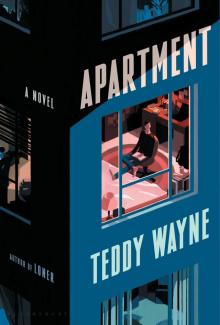
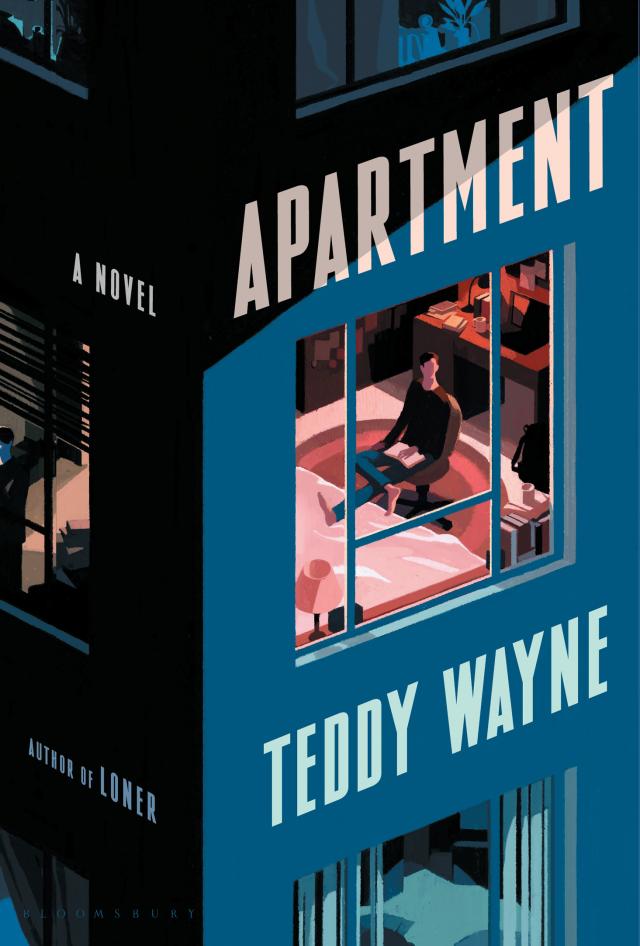
Apartment, page 17


“You know, getting out of this apartment might be a good thing,” he said. “For both of us.”
By “both of us” he meant me alone. I was the one who needed to be ejected from my cocoon, not he who had survived without one his entire life.
“Because it builds character?” I asked.
The chipped-tooth, tragicomic smile I’d seen so many times appeared—fleetingly, with less behind it, but still a farewell more generous than I deserved.
Then he closed the front door gently behind him and was gone.
A few hours later the movers arrived and began hauling furniture to their truck. They abandoned Billy’s desk and everything else I wasn’t taking on the street for scavengers or the sanitation department. They were done in half an hour.
Before I joined the movers at my new place, I stood at the front door, surveying the hairline cracks in the ceiling, the floor barred with shadows from the window partitions. I was caught off guard by the affection I felt seeing the apartment stripped to its bones, and though I knew it would be gut-renovated and there was no need to tidy up, I picked up a broom that had been left in the entryway closet and swept the living room floor.
Then I dug through my backpack for a pen and a scrap of paper, wrote “1990–1997” and my name, and dropped it into the slot in the medicine cabinet, where, along with the discarded and immured razor blades, I would like to think it remains.
After
After some months of on-and-off work at the men’s magazine, I proved a valuable enough asset to be hired full time under Steve and joined Manhattan’s media-class army of ten-to-sixers. In addition to the principal, my father charged me interest on the insurance company penalty, and it took over a year of garnished paychecks to clear my debt.
I decided not to try to transfer to another MFA program—I had been rejected everywhere but Columbia the first time around and saw no reason why another application would yield a different outcome—but instead pinned all my hopes on the novel the literary agent had proposed I write. I worked on it nights and weekends, and three years later I sent it to him, with a reminder of who I was and a photocopy of the original “Camp Redwood” story from the literary magazine.
“Thank you for sending Camp Redwood,” he wrote a few weeks later. “I read it with interest, and revisited the short story version, too. Unfortunately, I felt there was a brilliance and originality to the writing in the story that just didn’t translate to the novel. I am sure others will feel differently, and I’ll be cheering you on from the sidelines.”
By that point I’d saved enough money that I could, with some belt tightening and part-time employment, afford my final year at Columbia. Given the opportunity, though, I had to acknowledge the truth I’d been deferring all that time: I wasn’t meant to be a writer, and I wouldn’t leave behind a novel, posthumously published or not.
Steve jumped to another magazine, and I was promoted to copy chief. I don’t mind the work. I’ve always found a certain satisfaction in copyediting absent for me in writing. There are unambiguously right and wrong answers, rules to abide by, errors to remedy. I’m good; I go unnoticed. With my raise I rented a one-bedroom on a gentrifying street in Alphabet City, which I furnished with my own purchases. I’d never considered myself a cat person, but after seeing a kitten in a nearby lot three nights in a row, the next thing I knew I was buying tins of Fancy Feast and a scratching post.
I heard nothing from Billy and, not being in touch with anyone from Columbia, received no firsthand news about him. When he was twenty-nine he published No Man’s Land. The only personal information on the book jacket was that he had earned his MFA from Columbia. I didn’t go to any of his events and couldn’t bring myself to read it. The novel was “warmly” received, meaning it didn’t rocket him to literary fame and riches; what makes an MFA workshop salivate is usually greeted with benign indifference by the public. A collection of stories came out three years later, and his updated biography revealed that he was an associate professor at a college in Idaho. The jacket for his subsequent novel stated that he was now a professor at the same school and lived with his wife and children. More books, all set in the Midwest, followed at sporadic intervals. I continued not to read them—among other reasons, I was afraid of stumbling upon a character based on me—but their time-lapse author photos revealed him growing into the weathered handsomeness of one of his old T-shirts. He had become what he’d aspired to in his relatively modest field of dreams: a midlist writer with a tenured teaching job and a family.
My mother has grown close to Thomas’s three children, who grew up nearby after he landed a job at Mass General, and sends me photos of them. As I predicted, my father retired to San Diego. We text on birthdays and holidays.
After a chimney collapsed almost a decade earlier, Chumley’s has just reopened into an unrecognizable soigné establishment with wraparound leather banquettes and a burger whose black truffle supplement costs more than the dish alone. The Eagle’s Nest closed years ago; in its location is a phone store. The ownership of Stuy Town has changed hands several times, and all new apartments are now deregulated, luxury-priced, and outfitted with stainless steel appliances, with the exception of a few units reserved for the winners of a housing lottery.
What social life I had after Columbia petered out as my peers married and had children. There was the occasional romantic encounter that might last a few weeks, but over time the succession of premature endings gradually depleted my morale, and my pursuits became fewer and further between. I didn’t really notice my incremental retreat from people until it was nearly total. Sometimes I go to a bar by the office with my colleagues to toast the closing of an issue, listen to them talk about songs and celebrities I haven’t heard of, and disappear after a drink, well before the karaoke and trivia contests begin. I’ve become the most senior employee; there are now college interns who were born after I started working there. I suspect they regard me with pity, a middle-aged bachelor with his elderly cat who inoffensively blends into the conference room walls at our Monday morning meetings. But solitude, I’ve discovered, isn’t so bad once you come to expect it.
After the election returns came in, I stayed up for the immediate hand-wringing postmortems analyzing how Democrats had brought this historic loss upon themselves, which were interrupted by the victory speech.
“The forgotten men and women of our country will be forgotten no longer,” the president-elect vowed, to roars from his supporters.
I turned off the TV and sat in my dark living room. Then I went to the bedroom and rooted through the back of the closet for a box I hadn’t opened in years. It contained everything I’d written at Columbia that Billy had edited. A set of jaundiced papers, they were the only remaining copies of my fiction; my digital files hadn’t survived computer upgrades over the years, and at some point I’d thrown out my other classmates’ and professors’ feedback.
The papers were in reverse chronological order, starting with my workshop submissions in the spring; then “Camp Redwood”; a number of partial drafts from when we were still exchanging work informally in the fall; and, finally, the beginning of my abandoned novel.
I sat on the floor and read the entire chapter, including Billy’s copious marginalia and editorial letter in his still-familiar handwriting with its unassuming precision.
The closet door creaked open a little, and I felt the static crackle of fur against my arm. “Sherwood,” I said, setting down the papers. As I stroked the knobby ridge of his spine, beneath his chin, between his ears, his eyes rolled back and his jaw fell slack with contentment, the faint drumbeat of his heart pulsing behind his foreleg and driving blood through his delicate body.
“Don’t listen to the others—this has enough ‘emotional balls in the air,’ whatever the hell that means,” went the postscript Billy had written during class, on the backside of the final page. “And it’s not ‘flinching’ either.”
I hadn’t remembered that last line—or maybe I’d stopped before reading it the first time.
I looked up at the mirror on the interior of the closet door and stared at myself for a long, unbroken time.
A paw between my shoulder blades.
“Still here,” I said.
ACKNOWLEDGMENTS
I would like to thank the following people:
My wonderful editor and friend, Liese Mayer; her assistant, Grace McNamee, who contributed invaluable insights; my publicists, Lauren Hill and Emily Fisher; the production editor, Barbara Darko; the copy editor, Emily DeHuff, whose impeccable work has not gone unnoticed (all errors are mine); the proofreader, Missy Lacock; and everyone else at Bloomsbury.
My stalwart literary agent, Jim Rutman, and for his extraliterary agenting, Will Watkins.
My early readers, for their wisdom, encouragement, and forbearance: Sarah Bruni, Amber Dermont, Alena Graedon, Robert Kuhn, Steven Kurutz, Aryn Kyle, Diana Spechler, John Warner, and Piper Weiss. For answering my medical queries, Sherwin Zargaroff, MD.
Kate, who went through this again with me, and so much else.
And lastly, Angus: this book was conceived, and a draft delivered, before you were, but your existence has since altered its pages profoundly—and more so its author. I hope you someday know how happy you’ve made me.
A NOTE ON THE AUTHOR
TEDDY WAYNE is the author of Loner, The Love Song of Jonny Valentine, and Kapitoil. He is the winner of a Whiting Writers’ Award and an NEA Creative Writing Fellowship, as well as a finalist for the Young Lions Fiction Award, the PEN/Bingham Prize, and the Dayton Literary Peace Prize. A regular contributor to the New Yorker, the New York Times, and McSweeney’s, he lives in Brooklyn with his wife, the writer Kate Greathead, and their son.
BLOOMSBURY PUBLISHING
Bloomsbury Publishing Inc.
1385 Broadway, New York, NY 10018, USA
BLOOMSBURY, BLOOMSBURY PUBLISHING, and the Diana logo are trademarks of Bloomsbury Publishing Plc
First published in the United States 2020
Copyright © Teddy Wayne, 2020
All rights reserved. No part of this publication may be reproduced or transmitted in any form or by any means, electronic or mechanical, including photocopying, recording, or any information storage or retrieval system, without prior permission in writing from the publishers.
This is a work of fiction. Names and characters are the product of the author’s imagination and any resemblance to actual persons, living or dead, is entirely coincidental.
Bloomsbury Publishing Plc does not have any control over, or responsibility for, any third-party websites referred to or in this book. All internet addresses given in this book were correct at the time of going to press. The author and publisher regret any inconvenience caused if addresses have changed or sites have ceased to exist, but can accept no responsibility for any such changes.
ISBN: HB: 978-1-63557-400-5; eBook: 978-1-63557-401-2
LIBRARY OF CONGRESS CATALOGING-IN-PUBLICATION DATA IS AVAILABLE
To find out more about our authors and books visit www.bloomsbury.com and sign up for our newsletters.
Bloomsbury books may be purchased for business or promotional use. For information on bulk purchases please contact Macmillan Corporate and Premium Sales Department at specialmarkets@macmillan.com.
Teddy Wayne, Apartment