

The Nine Unknown, page 1


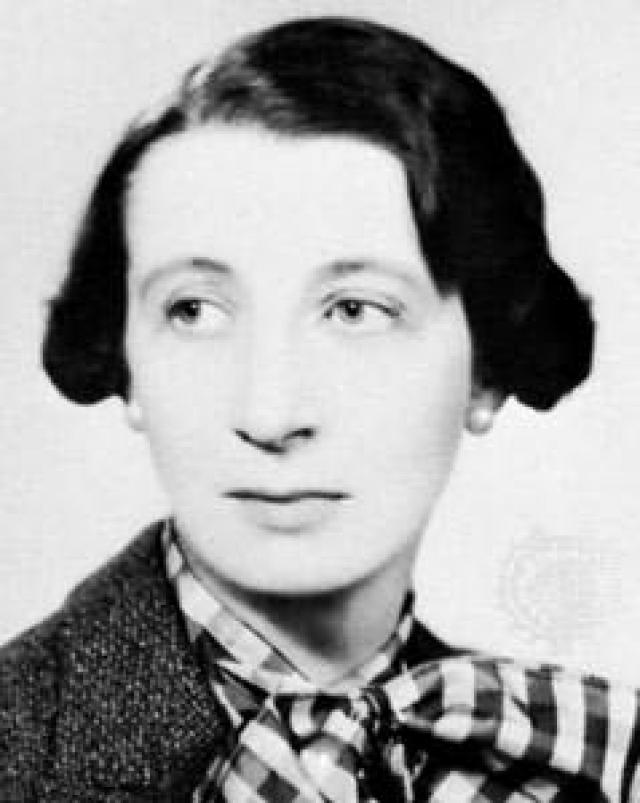
Talbot Mundy
Talbot Mundy (born William Lancaster Gribbon) (April 23, 1879 – August 5, 1940) was an English writer. He also wrote under the pseudonym Walter Galt.
Born in London, at age 16 he ran away from home and began an odyssey in India, Africa, and other parts of the Near and Far East. By age 29, he had begun using the name Talbot Mundy, and a year later arrived in the United States, starting his writing career in 1911.
His first published work was the short story "Pig-Sticking in India", which describes a popular, though now outlawed, sport practiced by British forces. Many of his novels, including his first novel Rung Ho!, and his most famous work King of the Khyber Rifles, are set in India under British Occupation in which the loyal British officers encounter ancient Indian mysticism. The novels portray the citizens of Imperial India as enigmatic, romantic and powerful. His British characters have many encounters with the mysterious Thugee Cults. The long buildup to the introduction of his Indian Princess Yasmini and the scenes among the outlaws in the Khinjan Caves clearly influenced fantasy writers Robert E. Howard and Leigh Brackett. Other science-fiction and fantasy writers who cited Mundy as an influence included Robert A. Heinlein, E. Hoffmann Price, Fritz Leiber, Andre Norton, H. Warner Munn, Marion Zimmer Bradley and Daniel Easterman. James Hilton's novel Lost Horizon was partly inspired by Mundy's work.
His related Jim Grim series, which has mystical overtones and part of which is available over the web from theosophical sites, ran in Adventure magazine before book publication. Mundy was associated with Theosophy's movement, a friend of Katherine Tingley.
Beginning in the late 1920s Mundy wrote a number of stories about Tros of Samothrace, a Greek freedom fighter who aided Britons and Druids in their fight against Julius Caesar.
Source: Wikipedia
The Nine Unknown
(1923)
Talbot Mundy
CONTENTS
"I CUT THROATS WITH AN OUTWARD THRUST!"
"PRODUCE BUT THE GOLD, THOU PORTUGUESE!"
LIGHT AND LONGER WEAPONS!
"HERE'S YOUR PORTUGUESE!"
"THE NINE'S SPIES ARE EVERYWHERE!"
"THEY FLED BEFORE ME!"
"SHAKESPEREAN HOMEOPATHIC REMEDY!"
"HE IS VERY DEAD!"
"SILENCE IS SILENT."
"CAN'T HATCH A CHICK FROM A GLASS EGG."
"ALLAH! DO I LIVE, AND SEE SUCH SONS?"
"I AM DEAD, BUT THE SILVER CORD IS NOT YET CUT."
"I FELT THE TINGLE OF THE MAGIC AND FELL UNRESISTING."
"WE'VE GOT YOUR CHIEF!"
"ABANDON CAN'T AND CANT ALL YE WHO ENTER HERE!"
"SAHIBS, THAT IS A TRUE SPEECH!"
"THERE WILL BE NO WITNESSES—SAY THAT AND STICK TO IT!"
"HE HAS WHATEVER SHE HAD!"
"ONCE WHEN THEY WHO KEEP THE SECRETS—"
"NEVERTHELESS, I WILL TAKE MY SWORD WITH ME!"
"MY HOUSE IS CLEAN AGAIN!"
CHAPTER I
"I CUT THROATS WITH AN OUTWARD THRUST!"
I had this story from a dozen people, or thirteen if you count Chullunder Ghose, whose accuracy is frequently perverted. One grain of salt is never enough to add to the fat babu's misstatements, although any one who for that reason elected to disbelieve him altogether would be just as wide of the mark as the credulous who take what he says at face value. Chullunder Ghose should he accepted warily. But the others are above suspicion, as for instance King, Grim, Ramsden, the Reverend Father Cyprian, and Jeremy Ross, all of whom regard the truth from various points of view as economical.
Chullunder Ghose considers all truth merely relative at best—likes to be thought a liar, since under that cloak he can tell diluted truth unblushing. Consequently he is the only one whose real motive for taking part in this magnificent adventure is not discoverable; he scratches his stomach and gives a different reason every time he is asked, of which the likeliest is this:
"You see, sahib , had luck being habitual is bad enough, but better than absolutely no luck. Consequently I took chances, trembling much, stirring innate sluggishness of disposition with galvanic batteries of optimism, including desire to keep wolf from door of underfed family and dependents."
He certainly took chances, and he appears to have survived them, for I had a letter from him only a week ago begging the favor of a character reference and offering in return to betray trade secrets in the event of his securing the desired employment.
Then there is Leonardo da Gama the Portuguese, who is dead and tells no tales; but his death corroborates some part of what he said to me, for one, and to others as will presently appear. His motive seems to have been mercenary, with the added zest of the scientist in search of a key to secrets, whose existence he can prove but whose solution has baffled men for generations.
The Reverend Father Cyprian, past eighty and custodian of a library not open to the public, aimed and still aims only at Hindu occultism. He regards it as the machinery of Satan, to be destroyed accordingly, and it was for that reason he gave King, Grim, Ramsden and some others access to books no human eye should otherwise have seen. For Father Cyprian collects books to be burned, not piecemeal but in one eventual holocaust.
Some lay brother peculiarly conscious of a sin appointed Father Cyprian by will, sole trustee of a purchasing fund, hoping thus to rid the world of the key to such evil as the Witch of Endor practised. For half a century Father Cyprian has been acquiring volumes supposed long ago to be extinct, and it was possibly the last phase of his beleaguered pride that he hoped instead of burning them piecemeal to make one bonfire of the lot and go to his Maker directly afterward.
In that case even pride may serve appropriate ends; for if be had burned the books as fast as acquired, King could never have studied them and drawn conclusions. He took King, Grim, Ramsden and certain others into confidence subject to a stipulation; there were and are still said to be nine super-books whose contents total tip the almost absolute of evil. King and his friends might use what Cyprian already had, and might count on his counsel and assistance; but if they should come on any of the nine books, those were to be Cyprian's to be burned along with all the others.
They were not to study the nine books, if obtained, and above all they were not to reveal their contents to any outsider; for Cyprian's purpose was, and is, to abolish the very memory of those books' existence and the deviltry they teach, or are supposed to teach. (For some say they teach wisdom.) But they might make what use they cared to of information picked up on the side, and they were free to deal with individuals as circumstances and their own discretion might dictate. Father Cyprian, in fact, cared and cares not much for consequences. He believes in cutting off the cause, and he is sure those nine books are the key which, if thrown away, Will leave the cause of necromancy impossible to rediscover. So much for him.
Jeremy Ross came laughing on the scene, laughed with gay irreverence all through the piece, and still laughs, no more inclined to take life seriously than when he faced the Turks in the three-day fight at Gaza, sharing one torn blanket with a wounded Turk and destroying his chance of promotion by calling a British colonel "Algy" to his face. On the other hand, he is as unconquerably opportunist as when he tramped Arabia, lost, and survived by means of a reputation for performing miracles.
Jeremy's admitted motive was desire to learn more tricks and their underlying principles. He is convinced that even the "rope trick, so often told of and so invariably unconfirmed, in which a Hindu is supposed to climb a rope into the air and disappear, is simply the result of well-trained ingenuity.
"A chap who knows how can do anything," says Jeremy, and he proposed to learn how all the Indian tricks are done.
The motives lie did not confess, but which were just as obvious as the laugh on his lips and the sunburn on his handsome face, were loyalty to Athelstan King and Grim and Ramsden, a kind of irresponsibility that makes him plunge for amusement into every game he sees, and a bedrock willingness to fight every combination of men and circumstances for the right to be his own master. He has no use whatever for orders from "higher up," for swank, eyewash, stilts, inherited nobility, or what is known as statecraft.
"A diplomat's like me," says Jeremy, "only I call mine tricks and he calls his statesmanship."
It was enough that King and Grim had winded the stronghold of secret tyranny. Instantly Jeremy was game to make a pitched fight and a picnic of the business of destroying it; and lie was quicker than either of them at penetrating the outer screen of commonplace deception. He got along remarkably well with Father Cyprian, in fact, astonishingly well, all things considered.
James Schuyler Grim is the protagonist of peace where there is no peace. His passion is to introduce two pauses in the strife of men where only one was formerly, and so little by little to give some sort of new millennium a chance. Arch-pragmatist is Grim. He holds men's lives, his own included, as worthless unless at work, and his highest expression of friendship is to pile task on task almost to the breaking point. He, too, resists interference from "higher up," but without Jeremy's turbulence and with much more wisdom—nearly satanic at times; which is one reason why Jeremy does not always mock him to his face.
Jeremy does mock Athelstan King, because King is of the seventh generation in the British army and respects accordingly the little odds and ends of precedent and custom that to the Australian resemble idol-worship. Jeremy was a trooper. King was a colonel but is now employed by the same multi-millionaire who furnishes supplies for Grim and Ramsden; in fact, he took Jeremy's place, for Je remy can not abide the power of purse-strings and would rather juggle by the roadside for his daily bread than yield to any man on the ground of surplus cash.
Jeff Ramsden is another independent, who rather prides himself on being slow of wit and heavy on his feet, whereas lie is really a solid thinker, building argument on argument until he is convinced, and setting one foot down before he prospects with the other. He is stronger physically than almost any two normally developed athletes, but it would probably break Jeff Rams-den's heart to lose his comfortable savings, whereas Jeremy loses his last cent as cheerfully as he would win the other man's.
Then there are Narayan Singh, and Ali ben Ali of Siktinderam, soldiers of fortune both, the one a Sikh with pantheistic tendencies and the other a Pathan with seven sons. At any rate, Ali ben Ali is pleased to admit they are his sons, and none denies that he fought and slew the indignant legal owners of the mothers, although there are cynics in the crag-top villages who vow that Ali flatters himself. The mothers' statements (there were seven) made for the most part under duress shortly before death were not considered trustworthy evidence in the land that Ali comes from.
Ali has enemies, but is a man, whatever else; and perhaps the highest compliment ever paid Narayan Singh is that Ali ben Ali of Sikunderam respects him and would think three times before challenging the Sikh to fight, even if a mutual regard for Grim and King did not put quarreling out of the question. They are awfully disrespectful of each other's gods, but came to an early understanding on the basis propounded by Narayan Singh after a night-long argument:
"If your ridiculous Allah objects to my opinions why doesn't he smite me? I challenge him! As for thyself, Ali ben Ali of Sikunderam, thou art worth a dozen Allahs, being less cowardly, more generous, and not afraid to stand up and be seen!"
"It is a pity about you, Narayan Singh," Ali ben Ali answered nodding tolerantly. "I shall make a friend of you in this world only to see you torn by devils in the next. However, that is Allah's business, who is Lord of Mercies."
"Who is a big joke!" Narayan Singh corrected. "He will turn thee into worms!" warned he of Sikunderam.
"Then I will gnaw the big thing's belly!" said the Sikh.
They agreed to postpone the debate until the next world and to be stout allies in this—a plan which if followed universally would abolish a deal of waste of time.
"For if I slew you, or you slew me," said Ali ben Ali, "there would only be half our manhood left!"
And that was a point on which they could agree at once, for neither of them had a poor opinion of himself, any more than either cared a rap for Grin's and King's idealism. What they chose to follow were the men, they being men, and like attracting if not like at least its tribute.
Burt they were also attracted as much as Chullunder Ghose was by the glamour of the unknown quantity and the lure of fabled treasure; the babu being all acute imagination and alarm, they all adventurous.
Surely ancient sciences meant nothing to them; yet it was pursuit of ancient science and of nothing else that brought the twelve together, and that might have added the thirteenth if the number thirteen had not justified its reputation by proving fatal to da Gama the Portuguese. And that was no pity, but for scientific reasons.
He drank too frequently and inexpensively, and washed too sparingly to be good company. His appetite in all ways was a glutton's, drink included, and he took his erudition as he did champagne or beer or curried anchovies, in gulps.
Nor was he nice to look at—saffron, under shiny black hair, with a pair of coal-black eyes whose whites were yellow and red with long debauch—short—stout—asthmatic—dressed always in rusty black broadcloth and occasionally white drill pants, with black boots tied with broken laces. His face was seamed and lined with tales untenable and knowledge unfit to be known. His finger-ends were swollen and his nails close-bitten. His shirt, which might have been a petticoat for stripe and color, bulged through the gap between his pants and vest, increasingly untidy as the day progressed, and he hitched his pants at intervals. He had a little, black imperial beard that only half-concealed a chin cloven not by nature but by some man's weapon. The cleft had the effect of making him look good-humored for a second when he smiled. The smile began with a sneer malignantly, passed with a peculiar melting moment through an actually pathetic phase, and ended cynically, showing yellow eye-teeth. He had no idea whatever of making himself pleasant—would have scorned himself, in fact, for the attempt if he had ever tried it—and yet he blamed the world and did the world all the injury he could for refusing to love him. He always wore a round black hat like an English clergyman's, and never took it off, even indoors, until he was seated, when he held it rolled up as if he kept his thoughts in it and was afraid of spilling them.
It was Chullunder Ghose who decoyed him into the office in the side-street off the Chandni Chowk, which is the famous Street of the Silversmiths in Delhi, and a good street if you know what goodness in a street consists of. Men—all manner of men—go by.
They had an office in a side-street, one flight up over a Maharatta drug-store, with the name "Grim, Ramsden and Ross" on a brass plate on the door. The next-door building was a warehouse for hides, hair, tallow, gum, turmeric and vicious politics, through the midst of which they had access to a back stairs by arrangement. But the front stairway by which you reached their office was a narrow, steep affair between two buildings, littered with fruit-peel and cigarette ends, and always crowded with folk who used it as a sort of covered grandstand from which to watch the street or merely to sit and think, supposing that anybody could think in all that noise.
You had to pick your way up-stairs gingerly, but going down was easier, because if you placed your foot flat against the back of a man's head, and shoved suddenly, he would topple forward and carry a whole row down with him, due to the fact that they sat cross-legged and not with their feet on the step below as Europeans would.
Existence there would have been precarious, but for Narayan Singh, Ali ben Ah and Chullunder Ghose—the first two truculent and the third a diplomat. It is fashionable nowadays to show contempt for Westerners by pushing them off the sidewalk and making remarks in babu English that challenge reprisals; so that, even though King, Grim and Ramsden can disguise themselves and pass for natives of the East, and Jeremy in plain clothes can make an Arab think he is an Aras in disguise, the firm's name on the brass plate would have been enough to start trouble, if it had not been so obvious that trouble would include a Sikh dagger, an Afghan tulwar, and the adder's tongue of the least compunctious babu in all India.
It was the babu's tongue that drew da Gama past the door. He was afraid of it, in the same way that some politicians are afraid of newspapers, and it may be that he hoped to murder the babu as the simplest road to silence. All are agreed he was surprised and angry when Narayan Singh; swaggering down the narrow passage, bunted into him as he stood hesitating and, picking a quarrel on the instant, shoved him backward through the office door. Inside he found himself confronted by the whole party, for Narayan Singh followed him through and locked the door at his back.
He stood at bay, in silence, for a minute, showing his yellow teeth, his hands making the beginnings of a move toward his pockets and repeatedly refraining. So Ali ben Ali strode up to him and, taking him in one prodigious left arm, searched him for weapons. He pulled out a long knife and a black-jack, exposed them, grinning hugely, in the palm of his right hand and returned them to their owner. There was no pistol. Then he pushed the Portuguese toward the office stool, which was the only seat unoccupied. Da Gama sat on it, putting his heels on the rungs, with his toes turned outward, whereafter he removed his round, black hat and rolled it.
The others sat around the wall on bentwood chairs, or otherwise as temperament dictated, all except Father Cyprian, who had been accorded the desk and revolving chair in deference to age. Cyprian held the desk-lid raised, but lowered it suddenly, and at the noise da Gama started, stared a second, and then swore in Portuguese between his teeth. None in the room understood Portuguese, unless possibly the priest.
"You recognize me, I believe?" piped Cyprian, almost falsetto, his little bright eyes gleaming through the wrinkles and his mobile lips spreading and spreading away into a smile that advertised amusement and was certainly a mask.


