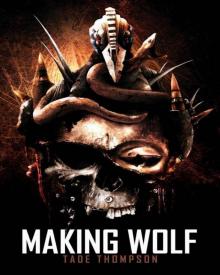
Making Wolf, page 7


My phone rang. It was Church, and I didn’t quite feel like speaking to him or explaining why I wasn’t at the hotel. I sent the call to voicemail and powered the phone down.
Chapter Ten
The Ministry of Justice was situated in an ugly building that seemed to have been designed with the sole purpose of making supplicants feel unwelcome. Each layer of security required a swipe card and created delays for visitors. I finally arrived in a waiting room where I was to see a man called George Elemo, Abayomi’s man in the ministry. The room was antiseptic, white, and surveilled by a rude camera on the exact center of the ceiling, one of those black hemidomes that looked like the eye of God. I hated not knowing who was looking at me or recording my image, but living in London, the city with the most cameras per person in the world and spiritual inspiration of Big Brother, I was used to it. Orwell was right.
Elemo came in and sat next to me without saying a word. He was a slight, fair-skinned man who wore delicate glasses and looked nervous. This was misleading because he was all confidence when he began to speak.
“Payment,” he said.
I paid him two hundred American dollars, which he counted.
“Documents.” He gave me a bundle of papers.
I checked. It had a license drenched in grandiloquent language, the bottom line of which was that I could operate within the borders of Alcacia as a private operative. It had an identification badge. It had the name and number of a police liaison officer.
“If, in the process of an investigation, you uncover a crime, you are obliged to report it. Should the police require information from you about a case my advice to you is give it to them. Otherwise, your annual renewal will not happen.”
“I see.”
“If anyone asks you, it took two months to get your license.”
“But I’ve only been in country for a few days.”
“Irrelevant. You asked a friend to apply for you because you are such a forward-thinking individual.”
Did Mr. Terse just crack a joke?
“That’s it. Go. I don’t want to be seen with you.”
I pointed to the camera.
“I switched it off beforehand. Goodbye, Mr. Kogi. I don’t want to see you again.”
While waiting for a taxi I called Church.
“Where have you been? I thought you’d been taken again,” he said.
“No, I left the hotel, but I’m fine. Listen: do you have the details on the mortician who spruced up Pa Busi?”
“Yeah. Hold on.” There was a short delay. ‘Here. His name is Olaf Johansson. He’s back in America. Here’s the number…”
I wrote it down and hung up on Church just as he was constructing questions about my whereabouts. I wanted him off balance for a while.
A taxi arrived and I got in. It had two amazingly life-like plastic testicles dangling from the rearview mirror.
“Where to, Oga?” said the driver.
“Charter.”
“Okay, charter. Where to?”
“A place to shop for men’s clothes.”
“Designer wears? I have a cousin who can—”
“I really don’t care. I just want to buy clothes.”
He shrugged and put on an akpala tape and started singing along to it. I phoned Nana, but it went to voicemail. I thought of calling Olaf Whatsisface but I couldn’t figure the time difference. I felt hot and cranky, as if the humid air was steaming me slowly.
“You must be ah Englishman,” the driver said.
“Why do you say that?”
“Oh, that’s easy. You’re not chatty, and your Yoruba is…slow. Tourist?”
“Hmm.” I had to be vague. The less these people knew the better. The traffic slowed and I signaled one of the kids selling bottled water.
“I wouldn’t do that,” said the driver.
“Why? I’m thirsty.”
“Yes, but you’ll get cholera from this ‘pure’ water.”
Three area boys walked in front of the car, all in large sunglasses and sleeveless white shirts. One of them banged on the bonnet for spite. The driver was meek and mild as they sneered at us, considering perhaps whether to cause more trouble. They were everywhere, ubiquitous like moss, like weeds, like dandruff.
I had been so engrossed in my spanking new papers that I didn’t watch our progress. Instead of heading for the shopping district, we seemed to be passing through a low-income residential. The roads were bumpy, untarred, with deep, mud-filled gutters on both sides.
“Driver, where are we going?”
“To buy clothes now. Like you said.”
“This doesn’t look like the way.”
“We’re going to my cousin, remember?”
The houses flattened to single-stories, to lost paintjobs, to shanties. People stood or squatted on roofs staring at me as the taxi trundled past. I saw a man slice the neck of a chicken open, then dip the carcass in boiling water while it was still twitching. With steam rising off it, he picked the feathers off skilfully. The children in the red dust were all barefoot, and the adults who were shod wore thongs. The flat, hard-packed ground was only interrupted by the occasional banana tree clustered around yards, but never near dwellings because the Yoruba believe they attract witches.
I knew this place. It was called “Ileri,” and everything I’d heard about the district was bad. I was therefore not surprised when the taxi driver stopped between two shacks, turned around, and pointed a gun at my head.
Careless.
They stripped me down to my boxer shorts, and I faced a corner in a room that had held other prisoners. I knew this because of the human jawbone on the floor.
The taxi driver did, in fact, have a cousin. They were arguing with each other behind me, deciding whether to kill me. I hadn’t brought my own gun because it wouldn’t have made it past the metal detectors in the ministry. They had taken my phone. I hadn’t memorized any numbers, so even if I escaped somehow, I wouldn’t be able to phone for help. They had taken about a thousand dollars plus change. They had taken my private investigator papers because those looked official and could always be worth something on the black market.
It was opportunistic bullshit. I made myself a target by acting like a visitor. An original JJC. Johnny Just Come. Asking to be taken to a shopping center, not caring where, talking like money was no object. Careless.
Ileri was so notorious that the police never came in except during the most violent of military coups and, even then, only to hide out till the rampaging soldiers lost their bloodlust.
Careless and stupid.
They had beaten me twice with sticks and electrical cables and fists. My face was lumpy, and both eyes were swollen. I could see out of the left but only partially from the right. I had lost a molar and a few caps. The first time I had fought back, but this was futile and stirred them into a frenzy. They had stripped me and threatened me. They were perhaps going to kill me. I had skirted around the most murderous rebels in the history of the world only to be killed by petty criminals with a grudge against affluence.
I was afraid, and they knew it. They whispered among themselves, wondering what to do next. They made international calls on my mobile. They charged other people to use the phone. The taxi driver called Antigua, and he said he didn’t even know anyone in Antigua. Children came into the room to stare slack-jawed and leave giggling.
Then they decided that, since I was so fresh from England, I must have relatives in Alcacia with some money to pay a ransom.
“Who do you wish to call to bail you out?” said the taxi driver, pointing the gun at me. “If they pay a reasonable amount, you’ll be gone in no time.”
“Churchill,” I said.
I could not understand some of their behavior. One man spent an entire hour prodding me with a stick. Not a sharpened one, just a regular stick broken off a tree somewhere. It did not hurt, but I could not relax because I wondered what the point was and when the more harmful implements would come out. Then he went away without saying anything.
The taxi driver returned with his cousin.
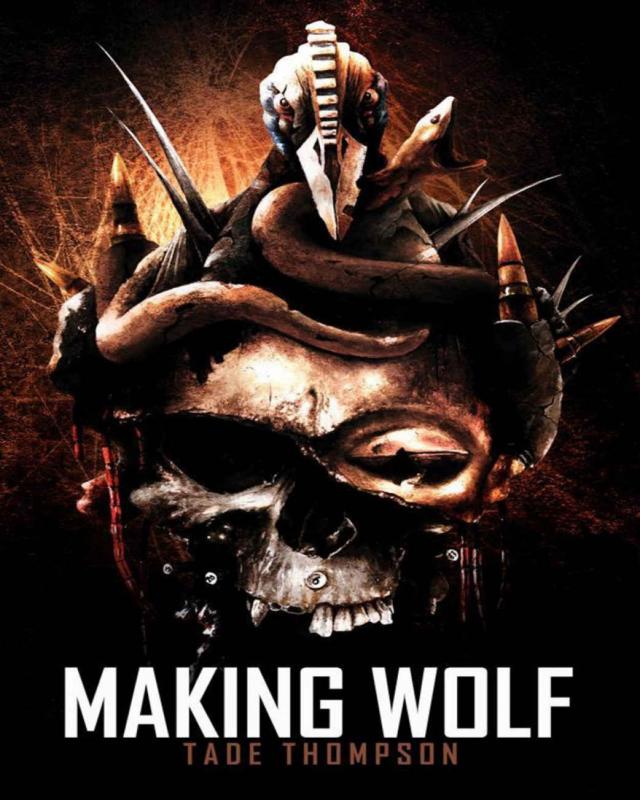
In labored English, the cousin said, “Weston Kogi, you are going to die, and I am going to have to get rid of your body. We don’t personally mean you any harm. We are just making wolf.”
Making wolf? What the fuck was making wolf?
“Weston Kogi, turn around.”
I did. The taxi driver shoved my mobile phone in my face. “Speak.”
“Hello?” I said.
“You bastard,” said Churchill. Different from usual; softer. “Have they harmed you?”
“Nothing permanent.”
“Hold on,” he said. “I’m coming. Give the phone to that mother-loving whoreson.”
They discussed terms while I tongued my broken teeth and swallowed my own blood. Soon, they left me alone again.
It is possible to sleep standing up.
They did not water or feed me. I pissed on the ground and watched it sink into the earth. Flies investigated my vicinity but left unimpressed.
“It means you are not dead, yet,” I said to myself aloud, but, with the dryness of my throat and the shreds that were left of my lips, my voice sounded like a croak.
Hours passed. Or maybe minutes. It was hard to tell.
The taxi driver’s cousin came in with a stool, waving their lone revolver around for emphasis.
“Do you like Jill Scott?” he asked, but I could tell it was rhetorical. “Big woman. So, so beautiful. Hips like that? Those would go all night.”
He went on. And on.
I collapsed, but woke up with him whacking the pistol handle against my skull.
“Wake up, wake up, do not die yet. You are money, hot money. Owo gbona. Are you still alive? Stand up!”
I stood and faced my corner, feeling more warm fluid drip down my neck. I wanted to die from the pain and humiliation. I wanted to die to deprive them of the ransom.
I heard a door open, and the taxi driver’s cousin said “I—” after which there was a loud report. For a few seconds I thought he had shot me, but, as I wasn’t bleeding any more than before, I turned around.
In the fading light I saw Church standing over the corpse of the taxi driver’s cousin. The now headless cousin. Headless because Churchill’s shotgun had atomized whatever existed above the neck stump. The red mess spread in a fan pattern on the wall away from Church. He turned to me, but I couldn’t make out his expression in the dimness.
“I’m here to liberate you,” he said. “I’m the fucking Statue of Liberty, you bastard. Come with me.”
“Bulletholes are the freckles on the neck of Lady Liberty,” I said.
“What?”
“Nothing. I’m getting delirious.”
I staggered after him.
Chapter Eleven
I had to spend some time in hospital. Nothing elaborate; just a couple of weeks for X-rays, some dental and maxillo-facial work, lots of pain killers. I discovered an allergy to all opium derivatives, which was a shame because the first dose gave me absorbing hallucinations that kept me awake for hours on end. Along with delayed but near-fatal anaphylaxis.
I didn’t see Nana while I was in hospital because Churchill was there, and I wanted to keep them apart as much as possible. He should be filed under Creatures That go Bump in the Night. There must have been terrible portents the night he was born. He didn’t tell me what transpired that night when he dragged me out of Ileri, but I read the newspapers over the next couple of days and wondered if he acted alone or with foot soldiers. He burned sixty percent of Ileri to the ground. I don’t think it was his intention; the shanties were too close together, and the fire swept quickly through the district before being stopped by a natural firebreak where the ground dipped too steeply to build on. Church shot every member of the taxi driver’s family he could find, which was four. The newspapers knew all the victims were related, and the bulletholes made it obvious that the deaths were not natural; but the reason was a mystery to them. The phrase “police baffled” was used liberally. I felt complicit, but pleased, and then disgusted with myself for that feeling.
Disgusted or no, I had had enough. I took the gun with me everywhere, including the shower. I felt prepared to use it, too. No more funny kidnappings.
We were all just making wolf.
Home.
Nana had changed her hair while I was in the disease Mecca place. She wore these long braids that reached down to the middle of her back. Each lock was garlanded with multicolored beads that clicked against each other when she moved. When she spun around she sounded like a Geiger counter.
“You’re beautiful,” I said.
“Is that all you can say? I’m more than beautiful.”
“You’re right. Words are inadequate to capture your essence.”
Outside, the loudest parts of an argument from below came in through the open window. It was the man with two wives again. One of the wives had gonorrhea and nobody owned up to how she got it. I just hoped the wet, smacking sounds were the wife beating on her own chest, proving her innocence and not the husband meting out swift and bloody vengeance.
The phone rang, an international call: Olaf Johansson. Good time as any to get back on the horse of detection.
“I understand you’ve been looking for me,” he said. I’d expected a kind of Eurotrash accent, not Tennessee by way of Manhattan.
“Yes, Mr. Johansson. I understand you’re the mortician who worked on Mr. Olubusi after his tragic death.”
“Funeral director.”
“Excuse me?”
“The preferred term is funeral director. And, yes, I did the restoration on Mr. Enoch Olubusi.”
I stroked my gun while I thought about what to ask him. “Did you find anything odd?”
“Could you be more specific? With Mr. Olubusi in fifteen separate and badly-burnt parts, it would be easier to discuss what wasn’t odd.”
“Tell me what you had to do, then.”
He sighed. “I flew in first class. I was a bit put out because they did not give me time to bring my own materials. I had to work in a government facility, a teaching hospital. There was this major in the room with me all the way through. I started work, which was essentially reconstructing Olubusi from scratch using photographs and video recordings as source material. There was nothing left after the fire. Just a very good skull, which provided an excellent template I must say, despite the exit wound. Most of—”
“Hold on, Mr. Johansson. Did you say ‘exit wound?’”
“Yes.”
“In the skull? You’re saying he was shot in the head?”
“I’m sorry, what agency did you say you work with again? I assumed you were part of the investigative team.”
I explained who I was. He ruminated for a bit, and I signaled Nana to close the window to keep out the noise.
“I counted five puncture wounds that I thought might be bullet wounds, one on the skull, the rest on the abdomen. Various other wounds could have been shrapnel, but I’m not a medical examiner. I recovered one deformed bullet and some suspicious fragments. The major took these from me and asked me to forget about it.”
“Do you have any idea when he was shot, before or after the blast that killed him?”
“Mr. Kogi, I don’t think the blast killed him. I wrote a strongly-worded letter to the government asking for a full investigation, but you know how these things go.”
“Hang on. If the explosion didn’t kill him, how do you explain him crawling out of the jeep afterwards?”
‘He did not crawl, Mr. Kogi. He was carried. I could see places where the skin had separated during the lifting. But you’re talking to the wrong person. Perhaps you want to talk to the witnesses, his bodyguards and such.”
“They were all killed in the attack,” I said.
“Were they?”
“They weren’t?” asked Nana, while starting the car.
“Apparently not. There were two survivors,” I said. I checked the clip on my gun before applying the seatbelt.
“Hmm. How is it that this never leaked, though? I mean, we know that the Head of State uses Viagra, but we didn’t hear that Pa Busi was shot or that a couple of his bodyguards survived.” She shifted into first gear. “Where to?”
I recoiled. She reminded me of the taxi driver saying “Where to, Oga?” and I found myself leaning away from her into the passenger door, feeling again the punches and kicks and beating. Shaking, unable to stop, until she placed a hand on my cheek.
“It’s Nana,” she said. “I, who have loved you. I, who have washed your face with water and blood. Be calm, Akande, my soul speaks to yours.”
I was amazed that she could remember. Akande was my oriki, which is a kind of poem each Yoruba has that speaks directly to his or her spirit or soul. Mothers use them to quieten squalling babies.
“You still know that?” I said.
She nodded, stroking my face. “What’s our destination?”
“Arodan.”
Arodan used to be a village in the south-west of Alcacia, about an hour’s drive from Ede, with population about ten, fifteen thousand. This was before I was born, but the stories were still circulating when I was knee high. In 1963 something happened there, and it just dried up, nigh overnight. All the inhabitants disappeared. Some of the buildings showed slight structural damage, but otherwise it was all intact. It had featured in an episode of Arthur C. Clarke’s Mysterious World in 1981. There was still no explanation for it that didn’t involve alien abduction or Roswell-style secret government experiments.
When proposals came for an asylum to be built in 1970, Arodan was the natural choice, and paradoxically a town sprang up around the asylum as a kind of support system for the families of those who worked there. Arodan lived again.
“Once upon a time, there was a witch in my village, a very wicked one, and she died. Natural causes. Most unfair. For days afterwards travelers reported seeing her at the intersection of footpaths where she would beat them up and drink some of their blood. The elders finally ordered the young men of the village to exhume her body, chop it into little pieces, and scatter them over a wide area for the birds of the air and the beasts of the field to eat. After that, the sightings stopped,” said Nana.