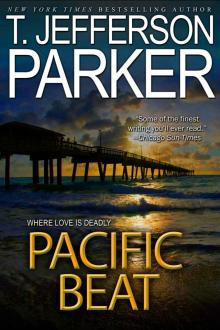
Pacific Beat, page 28


“We’ll see, Brian. My guess is a lot of things might look different to you, after June fifth.”
Dennison’s eyebrows fluttered above his flat gray eyes. “You shouldn’t make too much of that. Yeah, I’m using this case for the publicity. And Becky’s found a way to do the same. She and your mother will be all over this chemical spill in the bay, like if you don’t vote for the Flynn, Slow Growth ticket, you may as well have dumped that stuff yourself. It’s just the politics of politics, Jim. A year from now, we’ll all be doing whatever we’re doing and no one will even remember.”
“I don’t care about the politics,” said Jim.
“Maybe you should.”
Weir stopped, took Dennison by the arm, and turned him. “You know what I think? I think politics is just a circus full of assholes—everyone for himself. I think whatever happens to Newport is whatever Newport deserves. You and your developer friends can have it, if that’s how the people vote. Dice up every last inch and sell it off. Mom and Becky can preserve the whole thing in formaldehyde, legislate flattops and bouffants if that’s how it comes out. But Ann wasn’t politics, unless you’ve learned something I haven’t. Someone killed her and all you people do is try to fit it into your programs. I’m sick of the bullshit, Brian—the way you’ve used Goins to look good, the way you’re playing up half the evidence and playing down the other half, the way you and Becky snarl at each other like a couple of dogs over a stinking bone. Anybody care about the fucking truth here? What I care about is getting that guy, sticking his ass where the sun don’t shine.”
“So join up with me. Ann would be yours.”
“She already is mine.”
Dennison stopped at his car, put his hands in his pockets, and looked at Weir. He shivered once, bunching up his shoulders against the chill. “Virginia and Becky are going to point some fingers on this spill, aren’t they?”
“Christ, Brian—that’s what I mean.”
“Do me a favor, will you?”
“No. No Brian, I won’t do you a favor. I’m out of fuckin’ favors for you and everybody else.”
“If Virginia knows who did the dumping, will you tell me? Just tell me if she knows. She’s got some ideas, doesn’t she? They’re going to make an announcement, right? All I’m asking you to do is share some information.”
Jim was silent for a moment. There was just no way to get through, he thought, no way to get a train like Brian Dennison or Virginia Weir to stop and change direction. Maybe that was the way of the world.
“You know what your trouble is, Weir? You’re afraid to put yourself on the line, to take a side. Stand in the middle of the road, Jim, you get run over by traffic on both sides.”
“I’m off the road, Brian. It’s your road. It’s Mom’s.”
Then Dennison offered a haggard smile. “The only people who stay free are children and drunks. Life’s a shitty thing sometimes.”
Dennison climbed into his car and rolled down a dew-dripping window. He turned over the key but the starter just kept coughing and the engine wouldn’t catch. “Becky can use you just like I can, Jim.”
“I know that. And I also know you’ve got to get Ray back on the job. He’s got no business with Annie’s case right now. It’s hurting him. Get him out there on the streets where he belongs.”
Dennison’s car finally started. “One step ahead of you, Jim. Ray’s on the day shift starting tomorrow.”
He pulled the Jaguar up to Jim, gunning the engine. “I’ll share everything I’ve got on Ann with you, if you’ll share some of Virginia’s and Becky’s intelligence with me. It could work out in the best interests of us both.”
Weir shook his head. “You know what your trouble is, Brian? You’re an amateur.”
Dennison smiled, a little sickly. “We’ll see.”
When Jim got into the truck, Raymond was already there, his gaze flattened against the misty windshield. “It’s okay. Maybe it’s better if I don’t believe anymore that I put an angel in the ground today. Maybe it’s better if she didn’t have my child, that she was a fuckup sometimes like everybody else.”
Weir was quiet for a moment. “This may not hold much water, but that last night I saw her at the Whale, her eyes lit up when she talked about you. She wanted to call you right then, let you know I was back. You were the first thing she thought about. I think she died loving you Ray, no matter what was going on at the end.”
Raymond nodded. “Yeah. Sure. Thanks.”
Going over the bay bridge, Jim looked out to the fog-muted lights of the restaurants, the hushed spring calm of preseason Newport. The air was rank as they dropped onto the peninsula. A Newport Beach cop unit pulled in behind them and trailed along.
Raymond sat up straight, looked over at Jim, then out the window. He started drumming his fingers on the armrest, looked over at Weir again.
“What?” Jim asked.
“I want to go in the water, deep. I want to do it now.”
“Can’t see much at night, Ray.”
“I don’t want to see. I want to not see.”
Jim drove on for a while. “Okay.”
They got one of Virginia’s rental boats from Poon’s Locker and took her down to Laguna. It was a nice little Whaler with a 35hp Yamaha on it. Weir could barely see the house-lights in the fog. They anchored off of Moss Point and geared up. Jim found some glow sticks in his dive bag, and hooked one to Ray’s vest and one to his own. He checked the light batteries and water seal: okay. Night dives were always a little strange, and Raymond wasn’t used to them.
“Follow me down,” said Jim.
“How deep is it here?”
“Sixty. There’s the eighty-foot wall about fifty yards out, but we’re not going down it. Stay above sixty.”
They put on their masks, traded thumbs-ups, and spilled over.
The cold water filled Jim’s wet suit as soon was he was under. It was a chilling, sobering cold, one that erases clutter from the mind. He knew what Ray was after. His regulator drew easily and he dropped to ten feet, looking upward through his bubbles to watch Ray descending, his glow stick burning bright green against the darkness.
Weir found the anchor line, turned on his light, and motioned Raymond down. The visibility at forty feet was almost nil: There was only the beam of light on the pale rope of the anchor line, the luminescent rise of bubbles, and Raymond’s glow stick ten feet above him. The pressure mounted and Jim cleared his ears.
As he slowly descended, Jim felt the strange ebb of reality that always hit him when he was under, that replacement of the old order with a new one. Down here was the alternate world, governed by alternate law and principle. Down here, you were smaller, disenfranchised, considerably lower on the food chain.
Raymond joined him at the anchor. Jim’s depth gauge said seventy feet. He knew where the wall was, but Raymond was in no condition for the wall; not tonight—maybe not ever.
They traded okays again. Through the glass of Raymond’s mask, Jim could see his eyes—wide and a little frightened. Raymond was working hard to stay down. Like a lot of people, he left too much air in his vest, as if that little extra would give them a head start on their way through seventy feet of water. Jim reached out and hit the deflate button on Ray’s compensator. Raymond settled comfortably down beside him. Jim pointed to the rocks and Ray nodded.
Night is day for most creatures of the sea, Weir thought. They feed, travel, mate by night; the corals bloom and the anemones open; a rock outcropping that looks abandoned by day will brighten and bloom and teem with life in the darkness. Jim floated over the rocks, watching his flashlight beam. A garibaldi, bright as an orange, perused him from beside a round tan stone. A halibut wavered along the sand, its two eyes shifting alertly in Weir’s light. Jim could see the antennae of a lobster in the deep crack between two rocks. The sea grass wavered in the current, blown left then right by a breeze of water. Two silver mackerel streaked by. Jim looked behind him. Ray had fallen back twenty feet. Okay, he thought, Ray is going to be okay. The suctioned tentacle of a big octopus swirled behind a rock. Jim swam over and picked up the creature in his light. The sand was settling where the octopus had squeezed under the rock, but he couldn’t get all the way in. Three tentacles still wavered, rippling outward like whips cracked in slow motion. Jim pulled him out, felt the surprising strength of it, let go, and watched as it convulsed, hovered, then shot away from him toward the larger rocks. What an unlikely grace, he thought.
He felt the current pushing him to and fro, like the sea grass. He’d found that if you let go and let it take you, it was easy and natural, as if the currents around you and the currents inside you were the same. When you fought it was when you got into trouble, when you’d understand its ceaseless, unresistible power. That was what Raymond had to do with the current, he thought, with the current and everything else in his life. Go with it some. Don’t fight every inch of the way. It was going to take time.
He checked his air and depth and watch. Just ten minutes down. He felt good.
When he turned to see how Ray was doing, Ray was gone.
He stopped, running his light beam through the congested deep. He backtracked, swinging the light in front of him. The beam looked like a white rope for a few feet, then it frayed and dulled into darkness. He found the anchor line, but no Ray. On the surface, he tread water until he found the Whaler, which had swung north and west with the swell. The lantern glowed from the aft bench of the boat, but Ray wasn’t on it. Jim understood in a flash that Raymond had gone to the wall.
He headed back down, along the rope, then swam west toward the open sea. The wall—more of a trench—was an almost vertical drop of eighty feet that formed a valley before rising almost as sharply on the far side. When he got to the drop, Jim floated out over it. In good water, you always got a little jolt of vertigo when you did this, the sudden fear that you were about to fall straight down for eighty feet. But you didn’t. You hovered there, pinned to the sea, viewing the bottom below. It was like flying.
He could see Raymond’s glow stick descending. His depth gauge said seventy-five feet. His tank had 1,700 psi of air. Ray would be using his air faster, breathing hard. Jim felt the anger gnawing at him: Divers didn’t just leave each other and head out on their own—not at night. There were reasons, and the reasons had to do with yourself: What if your regulator clogged, your mask shield popped out, your tank strap got caught on a rock, your legs cramped? What if you just got lost?
Jim closed the distance, kicking steadily and strongly. The pressure squeezed in on his aching ribs. At one hundred feet, Ray was still ten yards ahead. Jim felt the first subversive lightness of the nitrogen buildup in his blood, brought on by pressure. Some people called it rapture of the deep. It made you loosen up, forget, take chances, get playful—all the wrong attitudes at depth. It was a hazard, and a good diver never forgot how dangerous it could be.
He caught Raymond at 150 feet, took his swim fin and pulled him back. Ray swung around lazily, smiled, offered the okay sign. Jim shook his head, thinking it isn’t okay at 150 feet, you fool—it’s too deep, too cold, too dark, and too far from the boat. Now we’ll have to decompress on the way up—five intervals, three minutes each, starting at one hundred feet. That was fifteen extra minutes of cold, wasted energy, air, Jim hooked his thumb toward the surface, twice. Ray nodded, started up, then dolphin-dove and reversed direction, heading down again. Weir caught him by his ankle. Then he took Raymond’s vest in his right hand and shook him. Ray was smiling again, drunk on the nitrogen and wanting to get drunker. Jim took Ray’s chin in his hand, straightened it, and forced Ray to look at him. He wasn’t smiling now, but he looked at Jim with a woozy expression containing something that sent a genuine shiver of fear up Weir’s back. It was a look of defeat. Ray was moving toward the ultimate surrender.
Jim guided him up to one hundred feet, then stopped and timed the decompression rest. Ray floated there, staring down the wall as if he had left something precious behind.
At seventy feet, they used the anchor line to steady themselves. By the time Jim threw his mask and fins into the Whaler and climbed over the starboard stern, he was chilled and shaking.
He took Ray’s equipment and helped him up the ladder. He already had the engine running and was cranking up the anchor by the time Ray got his weight belt off.
Ray set down the belt, lost his balance in the swell, and plopped down onto the bench. “You pissed?”
“That was stupid. You’re supposed to be there for me.” He drew up the anchor and settled it into the box behind the breast hook. “You want to fuck with somebody’s life, fuck with your own.”
Jim regretted his words as soon as he heard them. That’s what you get for diving with an amateur. What he hadn’t understood was how desperate Raymond was, how his despair was pushing him toward closure, toward anything that would end it. Now Jim was angry at himself for not knowing. Had Raymond let him down, or the other way around?
“I didn’t mean that,” he said.
“You’re right.”
“You scared me, goddamn it.”
“I scared myself. The deeper I got, the better idea it seemed just to keep going. For a while, nothing hurt and everything was okay. It was like washing it all away.”
Jim pushed the throttle forward and headed north for Newport. The Whaler bounced hard against the chop and the shoreline lights inched past them. He shivered, wrapped his jacket tight.
“But I realized something,” said Raymond. “I realized where Ann would keep the journal. It hit me at a hundred and twenty feet—clear as a vision.”
Jim looked at him and waited.
“Stop at the Sweetheart Deal on the way in. That’s where we’ll find it. That’s where we’ll find out who was … who her lover was.”
CHAPTER 24
JIM COULD SEE THE OUTLINE OF SWEETHEART DEAL FIFTY yards ahead of them. She slouched at her mooring, the mast angled skyward in an empty crucifix, the gull nest atop it an unmanned crown of thorns. Easy to see why the cops had overlooked it, Weir thought: All it looked good for was a fire hazard and a wildlife refuge. Raymond has got this wrong. Balboa Island lay at the far shore, then the mainland and Coast Highway; beyond them, the mirrored glass of the PacifiCo Tower presided from a near-distant hill, dotted like an i by the moon.
Raymond sat in front of him in the dinghy, his face pale against the night. He had not spoken the whole trip back; now he let it all out in a rush of words that seemed almost beyond his control. “I waited for it,” he said. “I knew it was coming, as soon as we found that garage-door opener. I think I knew, down somewhere, that I wasn’t enough for her. Sometimes, it struck me as okay—it seemed like she was … underappreciated. I forgave her, in advance. Annie would surprise me when I came home from work. One night not long ago, she wasn’t there to greet me as usual. I went into the bedroom and she was spread out on the bed, nothing on but a flimsy robe that was open most of the way, and a garter belt thing, and a lacy top. She was made up heavy, red lipstick, and her hair was pulled back the way I like it. There was a bottle of white wine on the nightstand, mostly gone, and she was holding a glass, resting it between her legs. Her fingernails were red, like her lips. She didn’t say anything at all—she just pulled me down. Those were the times I wanted her the most and it wouldn’t happen. I wanted her because she wanted me, but there was a short in the wiring somewhere and the whole thing got turned into fear. Mr. Night is someone who doesn’t have that problem.
“That night, I got to thinking about myself. Annie finished the bottle, got sick, passed out. I saw myself from the outside for a while, and what I saw was a good guy. A good cop. A man who married his high school sweetheart and tried hard to make a good life for her. A man learning the law. A guy who didn’t drink much or smoke. And you know what I wondered? I wondered if I might be better off—if we both might—if I wasn’t such a goddamned Boy Scout.”
Jim pulled on the oars, said nothing.
“You know something, Jim? I’ve had this feeling ever since I saw Annie down at the Back Bay, that when I kill the guy who did it, I’ll be … complete. That I’ll be worthy of her. That all the times I couldn’t do what she wanted won’t matter anymore. That when I kill him, I’ll kill that thing inside me that failed. That somehow, she ended up that way so I could become the man I always thought she wanted. Dumb, huh?”
“Yeah.”
“I want to tell you something else,” said Raymond. “As soon as I read that letter about Annie and him, there was a voice inside my head. The voice says that Annie got what she deserved. I hate myself for thinking that, but it just happens on its own.”
“Some things aren’t worth thinking,” said Jim. “I’m not sure how you tune them out.”
Raymond’s face was beveled in moonlight and darkness. “Are you with me on this? If you’re not, it would help me to know.”
Weir wondered whether Francisco Cruz had asked the same of his men, the men who had finally abandoned him to the bullets of Joaquin La Perla. For awhile, at least, the answer must have been yes. “I’m with you, Ray.”
“Because you want to kill him?”
“Because I don’t want him to kill you.”
“When we get way out on the edge, I hope you keep your footing.”
“I do, too, Ray.”
He eased up to Sweetheart Deal and tossed the line. Raymond climbed out, the Whaler shifting with the loss of weight, the beam of his flashlight crossing the rust stains on the hull. Jim took the lantern and followed him, feeling himself drawn into Raymond’s net of logic regarding this ship: Ann protesting her sale after Poon’s death, Ann cleaning her up once a year to beat the city dereliction notices, Ann clinging to this rotting vestige as if it was a direct link to Poon himself. In a sense, he realized, it was. He could see Ann in his mind’s eye, reaching from the dinghy to steady herself against Sweetheart Deal, fingers touching the rough deck, knowing that the sea in which the old boat rocked was the same Pacific that had accepted Poon’s scattered ashes, perhaps seeing herself as an agent afloat upon this great separating river, as a connection between Poon’s underworld and the world of which she was still a citizen. Touch the ocean, touch the ship, touch the Father, a finger from above meets the finger from below, each outstretched and yearning. Ann, daddy’s girl. Ann, like Poon, the unfettered, the ulterior, the unloyal.