The First Novels: Pay Off, the Fireman, page 1


Also by Stephen Leather
Hungry Ghost
The Chinaman
The Vets
The Long Shot
The Birthday Girl
The Double Tap
The Solitary Man
The Tunnel Rats
The Bombmaker
The Stretch
Tango One
The Eyewitness
Spider Shepherd Thrillers
Hard Landing
Soft Target
Cold Kill
Hot Blood
Dead Men
Live Fire
Rough Justice
Fair Game
False Friends
Jack Nightingale Supernatural Thrillers
Nightshade
Nightfall
Midnight
Nightmare
To find out about these and future titles, visit www.stephenleather.com.
About the author
Stephen Leather is one of the UK’s most successful thriller writers, a Sunday Times bestseller and bestselling author in ebook. Before becoming a novelist he was a journalist for more than ten years on newspapers such as The Times, the Daily Mail and the South China Morning Post in Hong Kong. He began writing full time in 1992. His bestsellers have been translated into more than ten languages. He has also written for television shows such as London’s Burning, The Knock and the BBC’s Murder in Mind series and two of his books, The Stretch and The Bombmaker, were filmed for TV.
You can find out more from Stephen’s website, www.stephenleather.com, his blog, www.stephenleather.blogspot.co.uk, and can follow him on Twitter at www.twitter.com/stephenleather. Stephen also has a website for his Jack Nightingale series, www.jacknightingale.com.
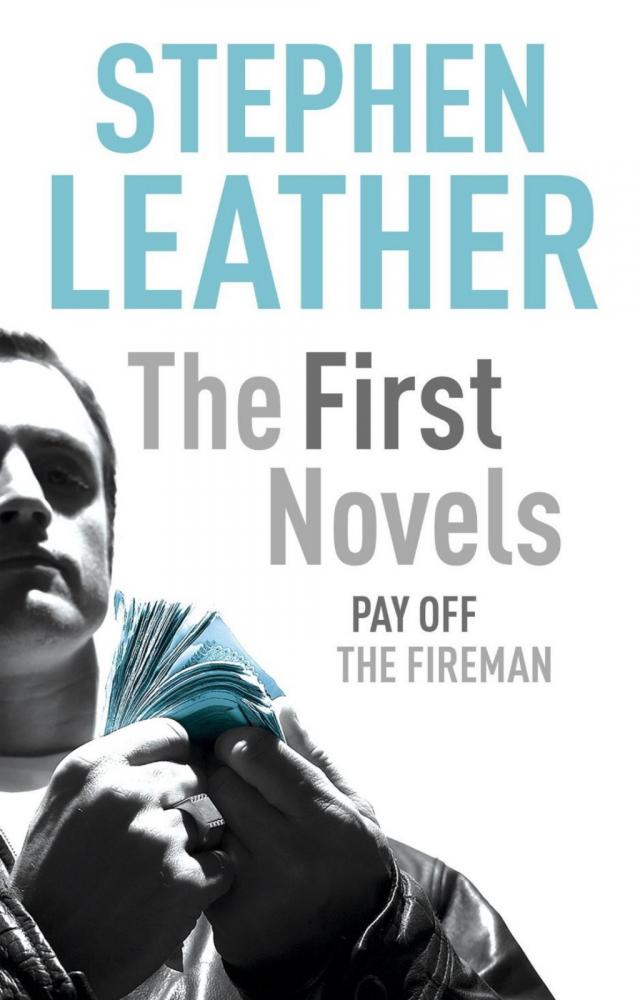
Stephen Leather: The First Novels
Pay Off
The Fireman
Stephen Leather
www.hodder.co.uk
First published in Great Britain in 2013 by Hodder & Stoughton
An Hachette UK company
Copyright © Stephen Leather 2013
The right of Stephen Leather to be identified as the Author of the Work has been asserted by him in accordance with the Copyright, Designs and Patents Act 1988.
All rights reserved. No part of this publication may be reproduced, stored in a retrieval system, or transmitted, in any form or by any means without the prior written permission of the publisher, nor be otherwise circulated in any form of binding or cover other than that in which it is published and without a similar condition being imposed on the subsequent purchaser.
All characters in this publication are fictitious and any resemblance to real persons, living or dead, is purely coincidental.
A CIP catalogue record for this title is available from the British Library
ISBN 978 1 444 77801 4
Hodder & Stoughton Ltd
A division of Hodder Headline
338 Euston Road
London NW1 3BH
www.hodder.co.uk
CONTENTS
Title
Copyright
Also by Stephen Leather
About the Author
Pay Off
The Fireman
Pay Off
Stephen Leather
www.hodder.co.uk
Copyright © 1987 by Stephen Leather
The right of Stephen Leather to be identified as the author
of this work has been asserted by him in accordance with the
Copyright, Designs and Patents Act 1988.
First published in Great Britain in 1987 by Fontana
Coronet edition 1997
All rights reserved. No part of this publication may be
reproduced, stored in a retrieval system, or transmitted,
in any form or by any means without the prior written
permission of the publisher, nor be otherwise circulated
in any form of binding or cover other than that in which
it is published and without a similar condition being
imposed on the subsequent purchaser.
All characters in this publication are fictitious
and any resemblance to real persons, living or dead,
is purely coincidental.
A CIP catalogue record for this title is available
from the British Library
Epub ISBN 9781844568666
Book ISBN 9780340672235
Hodder and Stoughton Ltd
A division of Hodder Headline PLC
338 Euston Road
London NW1 3BH
www.hodder.co.uk
For Zita
PART ONE
Only a mother could have loved the bearded, brooding face of Get-Up McKinley. Only someone with vast amounts of maternal instinct to draw on, who’d changed his nappy and breastfed him through countless sleepless nights, could have seen him as anything other than a nasty piece of work, mean, moody and malevolent. But even McKinley’s own mother would have been wary of this glowering man-mountain whose face matched the grainy picture in the newspaper cutting I’d folded and unfolded time and time again in a succession of East End pubs, until the newsprint was grimy and smeared and I’d had to repair its tattered edges with Sellotape.
I’d watched him over the top of my chipped glass, studied his reflection in the mirror behind the crowded gantry, and walked close by him to the toilet. I was sure it was him long before I heard the acne-ridden young barman call him by name.
McKinley was standing in the professional drinker’s pose, his feet shoulder width apart, his knees locked, his left hand resting on the beer-stained bar while the right held his glass, elbow crooked and parallel to the ground, the whisky emptied down the throat with a flick of the wrist, an economy of movement that a conjuror would have envied.
How do you describe six feet four inches of grizzly bear in a green corduroy jacket? I guess that’s a good start, but you’d also need to throw in a few simple adjectives like big and ugly, and try to get across the barely-suppressed aggression of the man. McKinley was angry, very angry, and I couldn’t take my eyes off the hand on the bar which was clenching and unclenching like a rattlesnake about to strike.
I’d spent three long weeks sniffing at McKinley’s trail, but I was in no position to speak to him, not yet. Give me an asbestos suit and a couple of SAS-trained bodyguards and maybe I’d have been brave enough to approach him. Maybe, but don’t hold your breath. McKinley wasn’t in a particularly receptive frame of mind just then.
The source of his displeasure was a couple of young drunks, neither good-hearted nor bad, just boisterous and rowdy, leather-jacketed, flush with drink and youth. The taller of the two had twice knocked McKinley’s drinking arm, the second time hard enough to spill his drink. Not deliberate, you understand, but that wasn’t the point, not as far as McKinley was concerned, anyway.
There’s an elaborate procedure to be followed when you spill somebody’s drink, and it depends on the sort of pub you’re in. If it happens in one of the trendy Fulham wine bars you smile politely and say how awfully sorry you are, OK yah? And you joke and it’s forgotten. In your average suburban pub you apologize and offer to buy another, an offer which is always refused, and it’s relaxed and friendly. If it happens in an inner-city drinking den, the sort of men-only places you find in Glasgow, Birmingham, Liverpool and the East End of London, anywhere the unemployment rate is high and the black economy booming, then the politeness is exaggerated, the apologies ritualistic, just in case the drunk you’re dealing with is a dangerous drunk.
‘Are you all right?’
‘Aye.’
‘Are you sure?’
‘Aye.’
‘Can I get you another?’
‘Aye.’
We were in Kelly’s Bar in Leyton, and it’s fair to say that it isn’t my normal sort of London drinking establishment; no ice or lemon to go in my G and T, overflowing ashtrays, one underworked barman paid for by the YTS who was doing nothing to quieten the two rowdies as he gave a few half-washed pint mugs a casual wipe with a grubby cloth and placed a full bottle of lemonade on the bar, just out of McKinley’s reach. No, my sort of place was about six miles or so due west, in the City or the West End, where they know the difference between a Wallbanger and a Sloe Comfortable Screw, where you need a collar and tie to get in and a full wallet to enjoy yourself, where noisy drunks don’t bump into dangerous drunks and trouble is nipped in the bud.
Everyone called McKinley Get-Up because of an unfortunate incident that happened almost seven years ago, seven years which he’d spent in Wormwood Scrubs cooped up with prisoners who went to a lot of trouble to be nice to him.
At the age of twenty-nine he’d found his vocation as a bodyguard-cum-thug protecting a wholesale drugs dealer who arranged for heroin and cocaine to be brought in from Amsterdam, Ireland, or America, anywhere he could get it, and mixed it with talc or sugar or whatever white powder was floating about before selling it on to smaller dealers.
It was cash and carry and the seventy-five per cent profit margin was more than enough to pay McKinley a decent wage. His downfall came when the drugs dealer decided to branch out and put up the money for an armed robbery.
Three up and coming young villains had made him an offer he hadn’t wanted to refuse. If he put up two thousand pounds for the shotguns, the getaway car and other expenses, he would be in for half of whatever they got from the superstore in Hackney they’d been casing for the be st part of two weeks, and they reckoned the take could be as high as £65,000.
The three geniuses behind the plan were Alvin Miller, Dick Wallace and Charlie Leonard, three ne’er-do-wells whose combined IQ was less than the tube fare from Clapham Common to Clapham South.
They’d already done over a couple of filling stations and a post office with flick knives and hatchets, but the money had been frittered away. Now they reckoned they were ready for the Big Time, but for that they needed a stake. Ronnie Laing, McKinley’s boss, was just the man to help three youngsters along the path to riches. For a price.
Laing slipped them the cash in used notes in a brown envelope and waited. Three days later Miller phoned to say that the job was off. Leonard had all but lost his leg slipping off a ladder while decorating his mum’s front room. He was in hospital, in pain and no way was the job going ahead with just the two of them. A hundred and eighty pounds was left in the kitty and Ronnie was welcome to that and the three sawn-off shotguns.
No chance, said Laing. Get someone else or all three of you will have broken legs. Like who? asked Miller. Like McKinley, said Laing, and now I’m in for sixty per cent of the action.
Twenty-four hours later McKinley, Miller and Wallace were sitting in a four-year-old Rover with Miller’s brother Tommy acting as driver, going over the plan for the last time. All three would go in carrying holdalls, put a few things in wire baskets, use three separate check-outs and then pull out the shooters. Miller would fire his, they’d get the girls to empty their cash registers while Wallace got the manager to empty his safe in the office. Simple. They’d already gone through it three times for McKinley as he sat in the back seat, his shotgun dwarfed by the fingernail-bitten hands in his lap.
They moved. Miller went in first, Wallace second. McKinley counted to fifty and followed. All the blue-handled wire baskets had gone so he grabbed a trolley and pushed. One of the rear wheels was sticking and it squeaked sideways along the tiled floor as he wandered down past the cereals picking up packets of Cornflakes and Frosties. He threw in a tin of dog food – he’d always wanted a dog – and by the time he got to the check-out Miller and Wallace were waiting, fuming silently. McKinley frowned an apology and Miller nodded twice. All three threw off their woolly caps, pulled down their stocking masks and brought out the guns. Miller pointed his at the ceiling and pulled the trigger. The noise was deafening, bits of the plasterboard ceiling fell around him in a cloud, sticking to his stocking like pieces of tissue paper to a cut chin.
‘Right, get down on the floor. Now!’ he yelled, but nobody moved. One of the young girls sitting in front of a cash register started to cry quietly. The manager came out of his office, stopped and raised his hands above his head. Still nobody moved. The fire sprinklers came on, a shower of cold water washed the pieces of plasterboard from Miller’s stocking mask and a trickle ran down the back of his neck. A couple of the girls held plastic bags over their heads and watched him anxiously.
‘Down on the floor. Everybody down on the floor. Now,’ he screamed and fired the gun again. This time everyone moved. ‘Oh Jesus, no. Get up, McKinley! Get up!’
They were all caught five minutes later in the carpark by a passing plain clothes police car packed with armed Flying Squad detectives just about to go off duty.
McKinley didn’t fare too badly in court. His gun hadn’t been loaded; Miller and Wallace reckoned he’d have sawn the wrong end off his shotgun given the chance and there was no way they were going to let him loose with a loaded gun. That, coupled with a surprising lack of previous convictions, kept the sentence down and he was out in seven years with a criminal record and a nickname that stuck.
A bit thinner now than he looked in the newspaper photograph, taken as he had left the Old Bailey handcuffed between two beefy police officers, McKinley was scowling in much the same way.
Eventually his patience snapped and he turned to his right, banging his glass down hard on the bar.
‘Why don’t you two twats just piss off?’ he thundered, but he didn’t wait for an answer, just drew back his massive fist and smacked the shorter one in the mouth, sending him spinning and staggering across the bar, blood streaming from his splattered lips.
His friend took a step back and put his hand inside his leather jacket, bringing out what looked to be a butcher’s knife wrapped in cardboard which he stripped off to reveal a polished steel blade. McKinley seemed not to notice and pulled back his fist again.
I thought the sound of the lemonade bottle in the barman’s hand would have made much more noise when it connected with the back of McKinley’s head, but it didn’t smash or even crack, it just went ‘thunk’ and McKinley’s legs folded up like a collapsing deck-chair and he slumped to the floor. The two lads decided that discretion was the better part of valour and made for the door.
‘Are you going to bar him?’ I asked the barman as together we helped the unconscious McKinley to an empty seat by the gents.
‘Are you joking?’ he replied. ‘Would you try to stop him coming in? Besides, he was provoked. McKinley’s OK so long as he’s left alone.’
The sleeping giant began growling and I didn’t want to be around when he woke up with a sore head, so I said I’d be back and walked out into the cold night air. One down, three to go.
*
Killers come in many forms. The old man going too fast in a car and mowing down a child on a zebra crossing. The thug with a knife who wants your wallet and doesn’t care what he does to get it. The pensioner who can’t stand to see his wife suffering from incurable arthritis any more and pushes a pillow against her face. The soldier firing his gun in the heat of battle.
The poisoner, the strangler, the axe murderer. There are men you can hire to kill, men who’ll beat in a man’s skull for a few hundred pounds. There are men whom you’ll never meet, who will kill for a six-figure sum paid into a Swiss bank account, half in advance, half on completion. The world is full of killers, and so are the prisons.
Me, I could never take a life. My father took me when I was twelve years old to his brother’s grouse moor near Inverness and helped me to fire his favourite twelve bore, rubbing my shoulder better when it hurt, kidding me for missing, not knowing that I didn’t want to hurt the birds or his feelings and pretending to be in pain was the only way to save both.
I guess he understood because the next time he tried was when I was fifteen, but I hadn’t changed and this time I was old enough to tell him so, to tell him that blasting birds with shotguns wasn’t my idea of fun and what was the point of raising birds just to shoot them out of the air and honest, father, I’d really rather not. It did hurt him, I know, but he didn’t say anything and the guns went back to his study and he never took them out of the guncase other than to clean them from that day on.
He was of the old school, my father, huntin’, shootin’ and fishin’, until a riding accident put paid to all but the fishing. Even that pleasure caused him pain, standing thigh high in fast flowing freezing water flicking flies at salmon, and his orthopaedic surgeon told him more than once that it was doing him no good. Humbug, my father told him, fishing and work are the only pleasures I’ve got left and I’m damned if you’re going to take either away from me. He reckoned that the only good advice the surgeon ever gave him was to lie on the floor if the pain got too bad. It seemed to work and I’d often go into his study and find him lying on his back with his ebony stick by his side, reading one of his leather-bound books or going over a balance sheet, Bach playing on the stereo.
I’d sit by him and he would explain things like shareholders’ funds, liabilities and provisions, loan capital; and by the time I was fourteen I could read a balance sheet and profit and loss account like a comic, understanding how a company operated just by looking at the figures. I was hooked faster than a careless salmon, which is exactly what he’d intended, because he had my career mapped out from the time I was born and there was no way on God’s earth that I wasn’t going to end up in my uncle’s merchant bank.


_preview.jpg)
_preview.jpg)
_preview.jpg)


_preview.jpg)
_preview.jpg)